Sensitive content

This media may contain sensitive content.

Video wird geladen...

Video konnte nicht geladen werden

Zur Startseite

HOT! Prostate orgasms are a great way to milk a man. This bound stud has 2 back to back 🍆💦💦 🔥vid EDGEU1🏠💦Seattle #EdgeHim #MilkingMuscle #cum #anal #buttplay #prostateorgasm #horny #kink #gaykink #kinkmen #fingerupthebum #fingered #bound #bondage #onlyfans

0 Kommentare

Keine Kommentare verfügbar

Kommentare vom Original-Post werden hier angezeigt

Ähnliche Videos

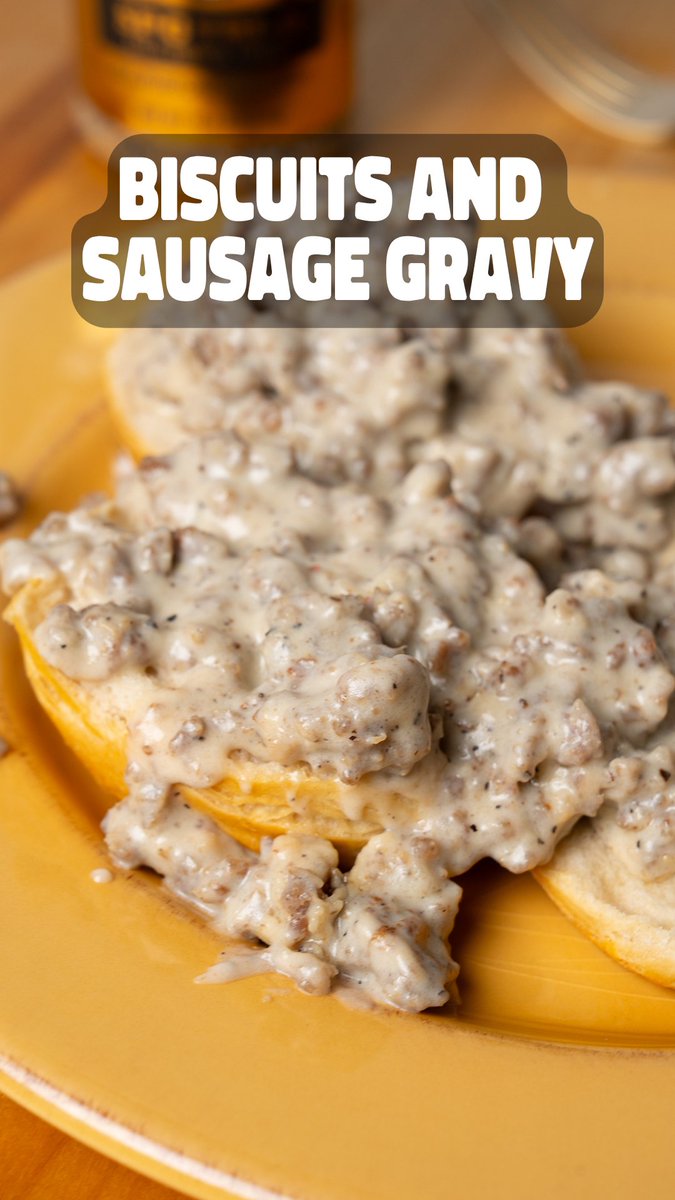
I’m takin’ a classic breakfast up a notch! Biscuits and Gravy...but we’re doing it the SPG Tri-O way!🔥 Ingredients 1 tbsp Dan-O’s SPG Tri-O (Salt, Pepper, Garlic) Seasoning 1 tbsp Dan-O’s Cajun Seasoning, 1 lb breakfast sausage 2 tbsp all-purpose flour 2 cups whole milk, divided 1 can refrigerated flaky layer biscuits Directions 1h. Bake the Biscuits Prepare and bake the canned biscuits according to the package directions. While the biscuits bake, make the sausage gravy. 2. Brown the Sausage Add the breakfast sausage to a hot pan. Chop the sausage as it cooks to create small pieces instead of large chunks. Cook for a couple of minutes. 3. Simmer the Sausage Turn the heat down to medium-low. Let the sausage simmer for a couple of minutes to draw the grease out. 4. Add the Flour Sprinkle the all-purpose flour over the sausage. Stir until the flour soaks up the grease and coats the sausage. Cook until the mixture looks drier and the flour has absorbed the grease. 5. Add the Milk Pour in the 1 cup whole milk and turn the heat up to medium-high. Stir until the mixture comes back to a simmer and starts to thicken. Add the remaining milk. Stir until it comes back to a simmer and thickens again. 6. Season the Gravy Sprinkle Generously with Dan-O’s SPG Tri-O. Turn the heat down to low. Let the gravy come together, then hold on a simmer until the biscuits are ready. 7. Build the Plate Split the biscuits open. Lay them on a plate. Spoon the sausage gravy over the top. 8. Add the Flavor Finishing and Serve Top with Dan-O’s Cajun Seasoning for extra flavor. Serve hot. Yum Yum Get Ya Sum!

Dan-O’s Seasoning

25,082 Aufrufe • vor 4 Monaten

Dear Catholics, this is not the time for Hallelujah Challenge. This is lenten season. There is an app called Hallow by Alex at Hallow. This app made me fall in love with the Catholic Church. It was this app that opened my eyes to all the beauties I didn't know that the Catholic Church has. This app has converted many people to the Catholic Christian faith. It has brought many Catholics who were confused about the Catholic faith back to the Church. If you are looking for where to grow richly in knowledge of the Catholic Church, this app is for you. It contains all the novenas and litanies you can think of. Mark Wahlberg, the popular Hollywood actor, taught me how to recite the rosary perfectly on this app. This app contains "Bible in a Year" and catechism podcast that was recorded by fathermikeschmitz during the covid lockdown. Fr. Mike read and explained the entire Bible from Genesis to Revelation and explained it in such a way that it fits in our world today. Many Genzs all over the world have returned back to the Catholic Church because of this Hallow App. It also contains many gregorian chants and radio drama of many Saints that you can listen to. Saints like St. Valentine, St. Josephine Bahkita, St. Lucy, St. Patrick, St. Pope John Paul the Great, St. Padre Pio, and too many to count. There is also the children section if you are looking at wanting your kids to grow in the Catholic faith. This app has these and many more. Hallow is currently on a #pray40 Lent challenge, and today is Day 2. (Peep my current streak lol. Is there any Nigerian living in Nigeria who has this streak???) So please, head to your playstore or applestore as the case may be and download the Hallow app. I promise you, you'd be greatly blessed by this. So, in this Lenten season, we are returning back to the Faith. We are returning back to Jesus.

Uche is a girl

17,123 Aufrufe • vor 5 Monaten

This video is one of the first times I thought biology was “cool.” It shows a neutrophil cell chasing a bacterium. Originally recorded in the 1950s by David Rogers at Vanderbilt University, the video gave me a deeper appreciation for life, even at the level of a single cell, because the neutrophil's movements seem so intentful, purposeful, aware. It wasn’t until recently, though, that I actually tried to demystify the neutrophil’s movements and understand how they happen. Here's what I learned: 1. The neutrophil's surface has thousands of protein receptors. Molecules secreted by the bacteria collide with these receptors. When that happens, the proteins change shape, slightly, and initiate a signaling cascade. 2. The neutrophil “knows” where to go because of a discrepancy in bound vs. unbound receptors. The side of the cell closest to the microbe will, probabilistically, have more "bound" receptors than the other side (because the molecules secreted by the microbe have a concentration gradient). This is how the neutrophil figures out which way to move. 3. Each bound receptor activates several G proteins located inside the cell membrane. Each G protein, in turn, switches on PI3K enzymes. In this way, the original signal is amplified; a single "activated" receptor might cause ~100 copies of PI3K to get switched on downstream. 4. The PI3K enzymes stick phosphates onto lipids in the cell membrane. The side of the neutrophil facing the bacterium now has more phosphates than the "back" side. Phosphate-binding proteins, such as GEF, accumulate and then recruit Rac, thus activating it. Rac, in turn, acts like a molecular switch, ultimately recruiting Arp2/3. (TL;DR: A bunch of proteins get activated, and the high phosphate concentration at the leading edge is the key signal for all this.) 5. At any given moment, the neutrophil has millions of actin molecules. These are the proteins used to build the cytoskeleton. Half of the actins are already “assembled” into filaments, but the other half are just floating around. Arp2/3 acts as a nucleator, grabbing onto actin and then starting a new cytoskeletal branch. More actin is assembled at the leading edge (where the Arp2/3 has accumulated), where they each push on the cell membrane with ~2 piconewtons of force. Hundreds of actin chains, pushing together, causes the cell to form protrusions. 6. The assembling actin chains push the cell at a speed of ~20 micrometers per minute (the length of about ten E. coli cells placed end-to-end.) As all of this is happening, another signaling cascade, nucleated at the back end of the cell, is dismantling actin filaments and recycling them. All this happens over a span of about 30 seconds. Much of this process is invisible; what we see, instead, is "just" a cell chasing its prey. But that's the wonderful thing about biology: A singular observation is usually more than enough fodder for a lifetime of work. The well is deep. There is always more to learn.

Niko McCarty.

127,254 Aufrufe • vor 7 Monaten