Video yükleniyor...

Video Yüklenemedi

Ana Sayfaya Dön

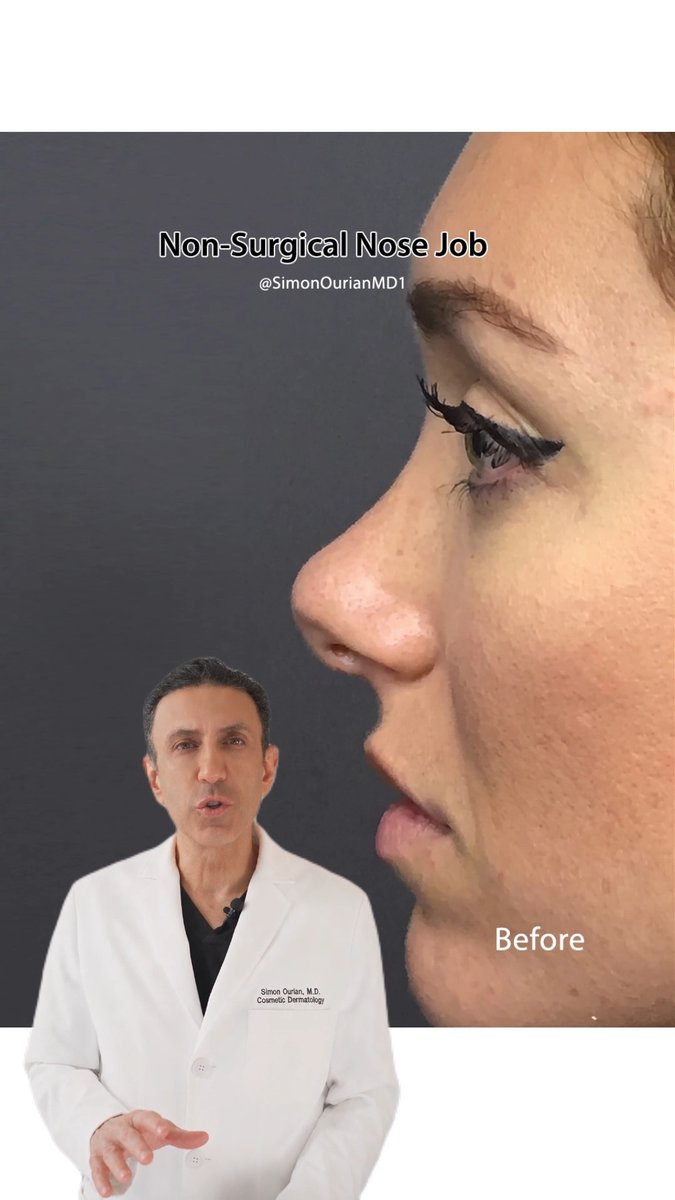
How can dorsal refinement maintain nasal stability and proper valve function? Read, "Structural Contour in Rhinoplasty: A 4-phase Technique for Progressive Dorsal Definition," by Páez Salazar et al to find out: #Rhinoplasty #plasticsurgery #PRSGlobalOpen

12,758 görüntüleme • 3 gün önce •via X (Twitter)

0 Yorum

Yorum bulunmuyor

Orijinal gönderinin yorumları burada görünecek
Benzer Videolar

New short course: Building Code Agents with Hugging Face smolagents! Learn how to build code agents in this course, created in collaboration with Hugging Face, and taught by Thomas Wolf, its co-founder and CSO, and m_ric, Hugging Face’s Project Lead on Agents. Tool-calling agents use LLMs to generate multiple function calls sequentially to complete a complex sequence of tasks. They generate one function call, execute it, observe, reason, and decide what to do next. Code agents take a different approach. They consolidate all these calls into a single block of code, letting the LLM lay out an entire action plan at once, which can be executed efficiently to provide more reliable results. You’ll learn how to code agents using smolagents, a lightweight agentic framework from Hugging Face. Along the way, you’ll learn how to run LLM-generated code safely and develop an evaluation system to optimize your code agent for production. In detail, you’ll learn: - How agentic systems have evolved, gaining greater levels of agency over time—and why code agents are a next step. - How code agents write their actions in code. - When code agents outperform function-calling agents. - How to run code agents safely in your system using a constrained Python interpreter and sandboxing using E2B. - To trace, debug, and assess the code agent to optimize its behaviours for complex requests. - How to build a research multi-agent system that can find information online and organize it into an interactive report. By the end of this course, you’ll know how to build and run code agents using smolagents, and deploy them safely with a structured evaluation system in your projects. Please sign up here!

Andrew Ng

127,724 görüntüleme • 1 yıl önce

Let's reverse engineer Disney's adorable, lifelike robot! I couldn't find a whitepaper, but this is how I think it's trained: 1. The emotional behaviors are curated by Disney animation artists, keyframe by keyframe. But it cannot be "rendered" directly on the robot because it doesn't take into account the complex real-world physics. 2. Reinforcement learning (RL) is a great tool for training low-level robot controllers. RL needs a reward function to optimize, and it's typically a task reward (e.g. walk in a straight line as fast as possible). The problem is that RL doesn't know what counts as "natural behavior", and often produces weird-looking body postures that somehow still maximize the reward. This is a human alignment problem just like ChatGPT. 3. Enters Adversarial Motion Prior (AMP): a technique that learns the human preference by training a classifier on what we consider "emotional & cute". In GAN literature, this is called a discriminator. Disney artists are good at creating such a dataset. You can then add AMP as an auxiliary reward in simulation to nudge the robot towards desired behaviors. AMP was developed by Peng et al. 2021 and Escontrela et al. 2022. 4. Add lots of data augmentation to make the controller robust to physical disturbances. In RL, it's called "domain randomization". This is a very powerful technique that bridges the gap between simulator and reality. Previously, OpenAI used domain randomization to train a 5-finger robot hand to manipulate a Rubik's Cube: IEEE news article gave hints about the pipeline: Finally, praying for world peace 🙏. I hope robotics like this will bring more joy to the world.

Jim Fan

314,694 görüntüleme • 2 yıl önce