Video wird geladen...

Video konnte nicht geladen werden

Zur Startseite

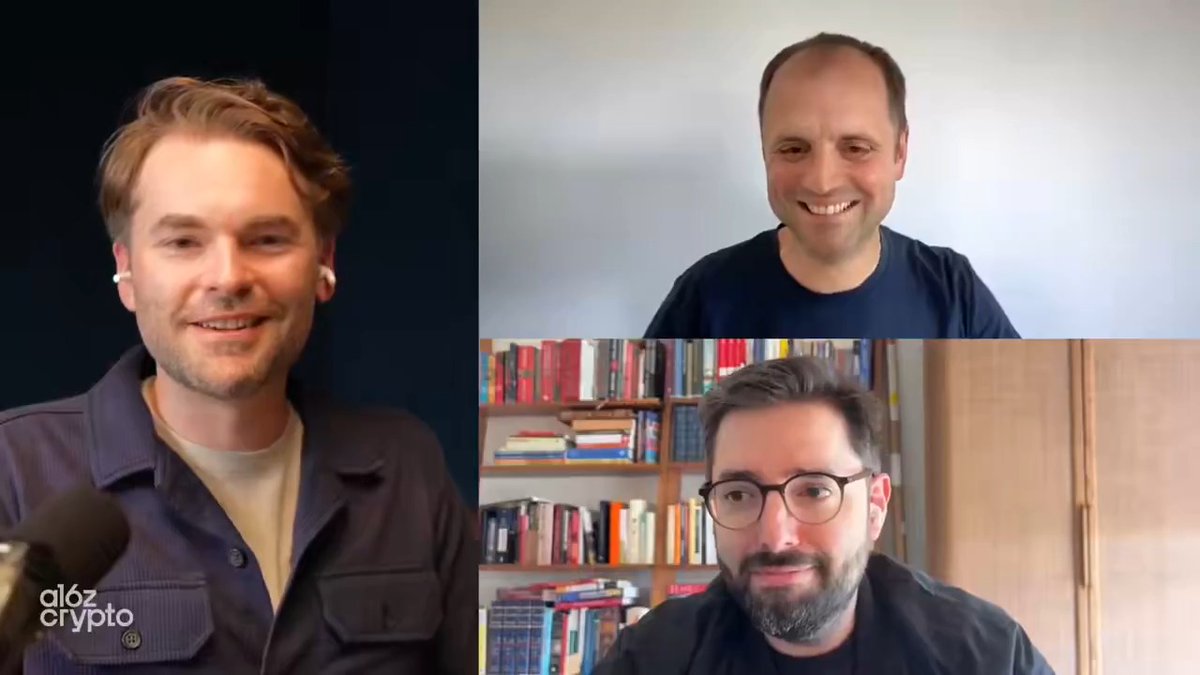
How do you actually formally verify the code underpinning Ethereum's future? In this episode (the finale of the lean Ethereum miniseries), Nico sits down with Alex Hicks (Alexander Hicks), lead of Protocol Snarkification at the Ethereum Foundation, to break down formal verification from first principles. They cover: – What...

15,143 Aufrufe • vor 5 Monaten •via X (Twitter)

0 Kommentare

Keine Kommentare verfügbar

Kommentare vom Original-Post werden hier angezeigt

Ähnliche Videos

Axiom Math's Carina Hong on why verification isn't about catching mistakes, it's how you drive the cost of a proof to zero: "Formal verification is going to make your life slightly better if you're facing a proof with one million lines. Remember the Erdős unit distance problem, the chain of thought being generated? There are actual mathematicians trying to follow it step by step and scrutinize it. That seems very difficult if you're not in that very niche domain of discrete geometry intersecting with algebraic number theory." "But if you have a Lean proof accompanying it, you can just run it. And running the Lean proof gives you that provable guarantee that this proof is sound." "I have a hot take. People think Lean is this library built on the existing Mathlib. I think it's going to grow significantly. A lot of the hurdles where Lean is difficult is that the basic definitions of some mathematical fields are just not in the library." "My hot take is the scaling law, if you go down the formal mathematics path, is going to be a lot steeper than informal mathematics. So it's not just for verification, for trust, it's also for performance, it's also for optimal generation." "Verification is not like insurance. It's not something where, oh, we want to make sure there's no flaw. That's great, but it also helps you generate mathematics, both proofs and conjectures and theories, a lot better." "So imagine the cost of proof goes to zero. Then you can massage the problem statements, and even if it's an open problem, a lot more easily, flexibly, and adaptively." Carina Hong Axiom

MTS

13,273 Aufrufe • vor 1 Monat

Ethereum is starting from the endgame. Episode 4 of TheCoordinate is a deep dive into Lean Ethereum: a clean-slate rethink of consensus, execution, and data availability. I sat down with Justin Drake from Ethereum Foundation to unpack: > need for the rewrite, > rewrite items: post-quantum security + fast finality, > endgame finality (3-slot -> 2-slot -> maybe 1-slot), > slot anatomy, networking constraints, and the "SOL slots" meme, > real-time ZK proving changing the execution roadmap, > censorship resistance with FOSSIL, > role of L2s in the world of Lean Ethereum, > incentives across proposer, builder, prover, includer, attester. If you’re building on Ethereum or trying to understand where the base layer is headed, this one is for you. This is Episode 4 of TheCoordinate. Hope you enjoy it! ------------------------------- Timestamps: 0:00 Intro: digital intelligence needs digital institutions 0:30 The big questions: Lean Ethereum, consensus/execution, post-quantum 1:25 Why Ethereum needs an endgame mindset (and a clean-slate approach) 3:30 The two “rewrite-class” items: post-quantum security + fast finality 5:52 Beamchain → Lean Consensus → Lean Ethereum (expands beyond consensus) 6:34 ZK EVM + real-time proving within a slot → “10,000 TPS” target 10:10 “SOL slots”: pushing slot duration toward speed-of-light constraints 11:09 3-slot finality (3SF) → endgame finality (2-slot / 1-slot paths) 18:19 eFP2P: erasure-coded gossip, bandwidth efficiency, scaling blobs 26:21 FOSSIL today: inclusion lists + opening includers beyond validators 39:09 Lean VM: minimal ZKVM 51:04 XMSS explained: Merkle signatures, 2^32 leaves, statefulness tradeoff 1:00:36 Rollups: 99.9% throughput on L2s + “native rollups” 1:06:53 Economics: roles (builder/prover/includer/attester), proving costs, stake capping

Soubhik Deb

86,471 Aufrufe • vor 6 Monaten

Xavier Leroy (creator of OCaml) is an expert in compilers, formal verification of software and functional programming. This interview should be an approachable resource if you're curious about formal verification of software since I was learning that on the fly during it. In this episode: • OCaml compared with Rust and JavaScript • What is formal verification and how does it work • How languages call each other across boundaries • How to address "almost-correct" LLM code • How type inference works in programming languages Where to watch: • YouTube - • Spotify - • Apple Podcasts - • Transcript - Thank you to the sponsor of this episode for supporting my work: • WorkOS: makes your app Enterprise Ready with easy to use APIs to add SSO, SCIM, RBAC, and more in just a few lines of code, check them out at Chapters: 00:00 - Intro 00:43 - What sets OCaml apart 04:39 - OCaml vs Rust 07:57 - Why is manual memory management more performant 11:21 - Javascript vs OCaml 14:00 - Famous Rob Pike quote 16:05 - Type inference and how it works 22:12 - What is formal verification and how does it work 40:07 - What made multicore support difficult for OCaml 50:17 - How programming languages interface and call each other 57:41 - The danger of almost-correct LLM code 01:05:39 - How LLMs will change programming languages 01:10:26 - Industry vs academia 01:15:05 - Most interesting unsolved problems 01:18:30 - Top book recommendations for engineers 01:21:17 - Advice for his younger self 01:23:31 - Outro

Ryan Peterman

23,942 Aufrufe • vor 1 Monat

There’s a popular theory that AI will finally make formal verification mainstream because mathematical proof of correctness will be needed when machines write most or all of the code. But will this happen? Hillel Wayne is one of the best people to answer. Timestamps: 00:00 Intro 04:32 The Crossover Project 11:37 What software engineering does better 15:30 What traditional engineering does better 18:17 Formal methods 29:32 TLA+: what it is and demo 36:58 TLA+ at Amazon 38:10 Ways distributed systems break 41:03 Formal methods and systems thinking 46:20 The value of learning math 50:23 What TLA+ is good for and isn’t 52:50 Alloy: a declarative language for software modeling 58:53 Other formal methods tools 1:01:24 Property-based testing 1:05:31 AI and the need for formal verification 1:12:29 Logic for programmers 1:14:35 Hillel’s 2025 prediction on AI’s impact 1:21:30 Book recommendation Brought to you by: • Antithesis – verify your system’s correctness without human review or traditional integration tests – and avoid bugs or outages. • turbopuffer – a vector and full-text search engine built on object storage. It’s fast, cheap, and extremely scalable. • WorkOS – everything you need to make your app enterprise ready. Two things I found especially interesting, talking with Hillel: 1. Amazon used TLA+ to find a bug almost impossible to locate without formal methods. In the paper How AWS uses formal methods, the AWS team shared that they’d found a complicated bug for which the shortest error trace to exhibit was 35 steps (!!). The bug passed unnoticed through extensive design review, code reviews, and testing. AWS concluded they wouldn’t have uncovered it if they’d stuck to conventional testing approaches. 2. Why not use formal verification for everything, then? It’s because specs in the real world are a nightmare to write. Even a simple problem like “find the file in a directory that has the most lines” gets complicated when modeled with formal methods. We would have to answer questions like: ‘do we look at ASCII or UTF-8 new line characters, what about unreadable files, and Symlinks?’ Without formal methods, we can write a simple verification that is right in 99%+ of cases. Formal methods require a lot of extra effort for the less than 1% of exotic use cases!

Gergely Orosz

34,678 Aufrufe • vor 1 Monat

Mistral AI Releases Leanstral 1.5: An Apache-2.0 Lean 4 Code Agent Model Solving 587 of 672 PutnamBench Problems Most AI theorem proving is a language model generating a proof in one shot, with a verifier bolted on at the end to check it. That's autocomplete with a grader — and Mistral just drew a clear line between that and an actual proof agent. They released Leanstral 1.5 — a 119B MoE with 6.5B active parameters, trained as a code agent that lives inside the Lean 4 compiler loop: propose a proof, read the compiler's goals and errors, refine, repeat until it compiles or the budget runs out. Verification isn't the eval here. It's the training signal. Here's what's actually interesting: → Test-time scaling behaves like a dial: PutnamBench Pass@8 climbs 44 → 244 → 493 → 587 solved as the per-attempt token budget moves 50k → 200k → 1M → 4M → 587/672 on PutnamBench at ~$4 per problem, versus an estimated $300+ for Seed-Prover 1.5 high (a 10 H20-days-per-problem budget) → Saturates miniF2F: 100% on both validation and test sets → Two RL environments in training — a multiturn prover, and a raw-filesystem code agent that edits files, runs bash, and queries the Lean language server for live goals and types → Not just math: an Aeneas (Rust → Lean) pipeline flagged 11 genuine bugs across 57 repos, 5 previously unreported — including an integer overflow in datrs/varinteger when (value + 1) hits Std.U64.MAX Apache 2.0 weights, free API endpoint Full analysis: Model weights: Project: Technical Details: Mistral AI Mistral AI for Developers Sophia Yang, Ph.D.

Marktechpost AI

56,695 Aufrufe • vor 2 Monaten

It's finally here - the Official Lean AI Company Playbook 1000+ founders, investors and execs have been flooding my DMs about. Ever since I created the Official Lean AI Leaderboard after exiting my $150M annual revenue startup, founders from across the globe have asked me this one question: "How are these lean AI companies generating millions with tiny teams?" So I spent the last 3 months obsessively tracking and collaborating with 30+ lean AI-native founders, researching the answer. Here's what I discovered: They've built operational systems that multiply human capability. Instead of scaling headcount, they've created AI-powered processes that let small teams operate at unprecedented scale. And their secret goes far beyond the specific AI tools they use. It lies in redesigning their entire company operations around a fundamentally different approach to growth and execution. After countless conversations, interviews, and behind-the-scenes exclusive access, I finally documented the exact playbook with complete systems. This comprehensive playbook includes: • A complete breakdown of the tech stack and operational workflows • The organizational design principles that enable tiny teams to do massive work • Critical inflection points where things break (and how to navigate them) • A detailed 6-month implementation plan for starting your own lean AI company (with weekly actions) • Implementation best practices from dozens of successful lean AI-native companies Want the ultimate Lean AI Playbook or help transforming your Lean AI operations? 👇 • Like and Share this post • Comment "Lean AI Playbook" • Follow me (so I can DM you) --------------- PS: Separately, I'm opening a limited number of high-impact advising slots for serious founders and operators who want to work directly with me—beyond just consuming my content. If you're ready to transform how your company operates using AI, DM me. (Please note: these are paid spots due to limited availability and time atm)

Henry Shi

121,697 Aufrufe • vor 1 Jahr