Video yükleniyor...

Video Yüklenemedi

Ana Sayfaya Dön

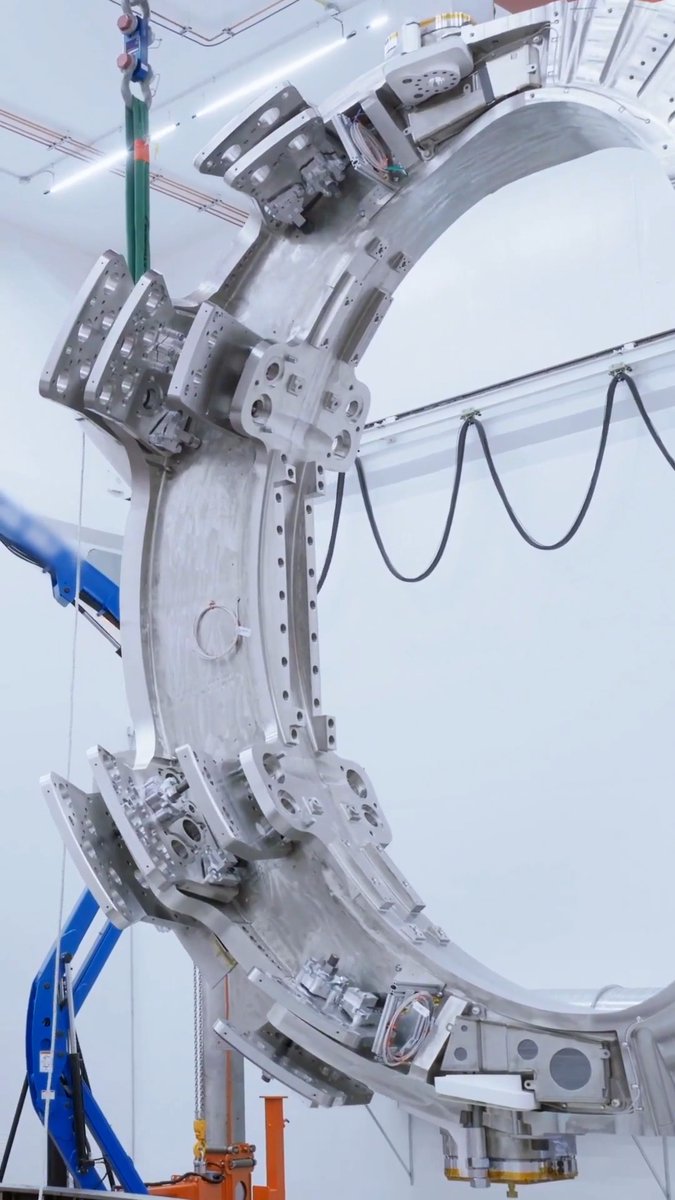
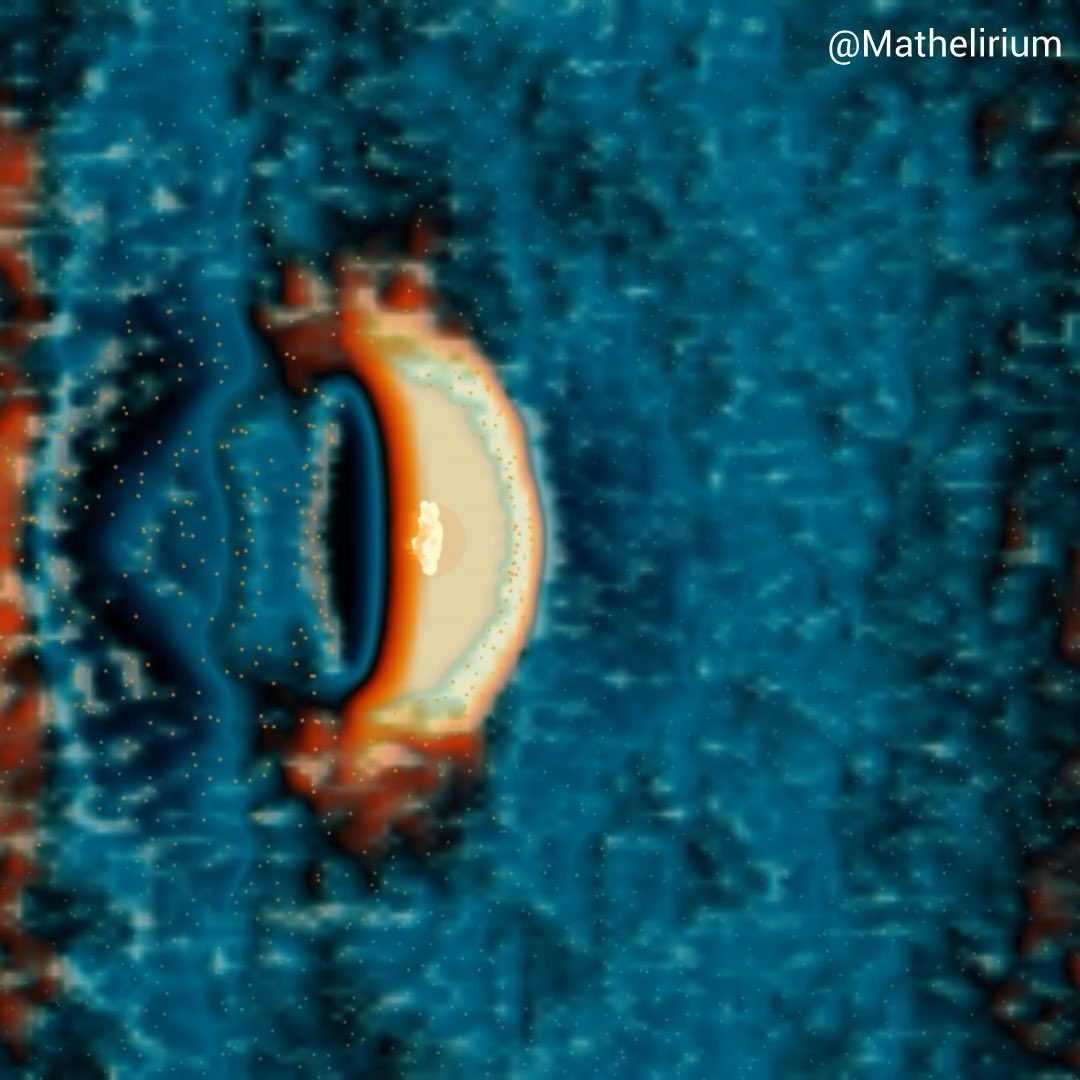
How do you bottle a star? Squeeze it until it holds itself. This sim shows a theta pinch crushing uniform plasma into a field-reversed configuration: a plasma ring trapped by its own closed magnetic field. Likely the same trick Helion and TAE use.
20,321 görüntüleme • 8 gün önce •via X (Twitter)

9 Yorum

another stupid blue checkmark. profil fotoğrafı
another stupid blue checkmark.8 gün önce

I see Vortex.

Daniel Soto profil fotoğrafı
Daniel Soto7 gün önce

Here is a great video from the 60s explaining it.

TechGeekATX profil fotoğrafı
TechGeekATX8 gün önce

No steam or turbines necessary

Mysteria Luna Media profil fotoğrafı
Mysteria Luna Media8 gün önce

@AshtonForbes

Mind-Body-Soul Science profil fotoğrafı
Mind-Body-Soul Science7 gün önce

Star pinched by external coils, soul pinched by judgment / repentance / ego-horizon collapse — both are trying to turn an open pair of boundaries into one self-holding ring. The pinch is the dual cobordism actually running. If it seals, the ring holds itself.

أَكْبَرُ kafir profil fotoğrafı
أَكْبَرُ kafir8 gün önce

If two years away, WEN?

RehanRC profil fotoğrafı
RehanRC7 gün önce

Nice. Now all you need is the mass of Jupiter, and we can have Warp Travel.

xMattePlasma✝ profil fotoğrafı
xMattePlasma✝7 gün önce

Halo! #plasma #plasmoid #poland

Vast profil fotoğrafı
Vast8 gün önce

We have been dipped…. The material laws are abundance and harmony

Benzer Videolar

Most of us were taught that PLASMA is an exotic fourth state of matter. That framing is backwards. Plasma is the normal expression of the electromagnetic field when charge differentiates and begins to move freely. Matter is the rare exception. Approximately 99.9% of the visible universe is plasma. Only about 0.1% appears as matter. Stars are plasma. Nebulae are plasma. Solar winds are plasma. The vast filaments forming the cosmic web are plasma. Plasma is not rare. Plasma is the fundamental expression of the field. Matter shows up when the field does something very specific. Electric differentiation pushes outward. Magnetic tension provides containment. When these forces reach a stable relationship, they phase-lock. In the Grammar of Projection this relationship is expressed as a coherence metric: T = |e × v| / |B × ω| Where: • e = characteristic electric or motive coupling scale of the system • v = relevant propagation or transport velocity • B = containing or stabilizing field strength • ω = characteristic oscillatory rate of containment formative pressure: |e × v| containing tension: |B × ω| When formative pressure and containing tension reach impedance match, the field stops dispersing and begins oscillating in place. Standing waves appear. Matter is simply plasma where electric formative pressure and magnetic containing tension phase-lock into a persistent repeating pattern. Atoms are stable plasma configurations. Planets, bodies, and biological systems are nested standing-wave structures of a plasma field. The implication is profound. The universe is not primarily made of particles. The universe is primarily flowing electromagnetic field. Matter is the rare moment where that flow holds in dynamic stability. A useful way to visualize this is like threads being woven together. Electric differentiation behaves like threads moving outward. Magnetic tension weaves those threads into stable relational patterns. The universe is not literally weaving fabric. The metaphor helps us visualize how flowing field tensions interlock into stable structures. When phase-lock occurs, structure appears. Structure is plasma remembering how to return to itself. So the real inversion becomes visible: Plasma is the norm. Matter is the anomaly. Which raises a much deeper question. How do medicine, neuroscience, and engineering change when we begin from the primacy of abundant plasma — and recognize matter, bodies, and technologies as coherent standing-wave structures within that field rather than designing our models around the rare 0.1% that locally stabilizes as matter? 🔗 The Grammar of Projection (compression of derivation of EM Primacy) and it's conjugate, The Grammar of Persistence, Canonical Derivations, and supplemental documents clearly indexed and archived here: The Recursion Holds. 🌀

R. Wade H. Marr

20,112 görüntüleme • 6 ay önce

Researchers at Tokamak Energy have captured for the first time a real-time, high-speed video of plasma behaviour inside their ST40 spherical tokamak, tracking visible green and red light emissions as the fusion process occurs. This visual insight comes via a camera operating at thousands of frames per second, offering unprecedented detail of how the plasma evolves, interacts with the surrounding lithium blanket and outer regions, and ultimately radiates energy. The imaging enables scientists to observe how the ultra-hot core transitions outward into cooler zones, how magnetic confinement shapes the plasma behaviour, and how impurities or outer-region interactions influence the process. By giving a ‘star-in-a-donut’ view of fusion in action, this breakthrough adds a new diagnostic tool to the development of fusion energy, helping engineers refine the magnetic confinement, optimise plasma stability and better understand the heat and light flows at play. It was slowed down by 100x. All this was for 0.3s A tokamak is one of the most advanced devices ever created to achieve controlled nuclear fusion, the same process that powers the Sun. Its goal is simple in principle but incredibly challenging in practice: heat a gas until it becomes plasma, raise that plasma to over 100 million degrees, and confine it long enough for hydrogen nuclei to fuse and release energy. Because no material container can survive such temperatures, a tokamak uses powerful magnetic fields to hold and shape the plasma like an invisible cage. The device has a distinctive doughnut-shaped (toroidal) chamber surrounded by magnetic coils. When the machine is switched on, electric currents and external magnets work together to create helical magnetic fields that trap the plasma and keep it away from the walls. As the plasma spirals around these magnetic lines, it heats up dramatically. Additional heating comes from methods like radio-frequency waves and neutral-beam injection, pushing the plasma toward the extreme temperatures needed for fusion. Inside this tightly controlled environment, hydrogen isotopes such as deuterium and tritium can collide and fuse, releasing fast neutrons and a burst of energy. The goal of tokamak research is to reach a point where the fusion reactions produce more energy than the system consumes, a milestone known as “net energy gain.” Modern machines like ITER, JET, and Tokamak Energy’s ST40 are bringing this vision closer, using advanced diagnostics, superconducting magnets, and increasingly stable plasma control. 👉

Erika 

162,837 görüntüleme • 10 ay önce

Helion energy is building what will be the world’s first commercial fusion power plant, scheduled to be finished in 3 years. Great interview by Lex Fridman with David Kirtley (CEO of Helion). Most power plants are heat engines. You burn fuel or run fission, boil water, spin a turbine, and get about 35% electricity while the rest leaves as waste heat. Helion flips the flow. The fusion reaction makes charged particles that push back on a magnetic field tied to a capacitor bank, so you get direct electricity instead of a steam loop. That path can reach about 85% efficiency from fusion energy to electrical output, which means less conversion gear and tighter control over power delivery. 🧪 How the machine works A giant capacitor bank drives coils that both accelerate and squeeze plasma. Two plasmas, deuterium plus helium‑3, are launched from opposite sides and collide in the center. By rapidly reversing the magnetic field in about 1 microsecond, the plasma self-organizes into a field‑reversed configuration that traps itself. Then the machine compresses it hard. Fusion happens, new charged particles appear, and their pressure pushes the magnetic field so the system dumps energy back into the capacitors. It is pulsed, up to 100Hz in tests, so each shot is a clean measure of input versus recovered electricity. 🛡️ Safety and waste There is no chain reaction. The device only holds about 1 second of fuel at any time, so stopping the drive stops fusion. X‑rays and some neutrons exist during operation, so you use shielding and standard controls, similar to particle‑accelerator facilities. When the pulse stops, the radiation source stops. 🖥️ Why data centers care The output is high‑voltage DC sitting on capacitors. You can invert to AC for the grid, or route DC with fewer conversions into rectifier buses for racks. That cuts losses and simplifies backup. The company is targeting 2028 for a first grid-tied plant for a large buyer, which lines up with growing AI power needs. 🧩 What is still hard Helium‑3 is scarce on Earth, so you must produce it or source it. This fuel also likes higher temperatures, roughly 200M-300M degrees, so the pulsed magnets and power electronics must be very fast and very tough. Stability is managed by giving the plasma enough “spin” and length so it behaves like a fast top that stays upright, plus thousands of synchronized switches that fire with microsecond timing. If this architecture keeps showing pulse gain and high‑efficiency recovery, you get a compact generator that skips steam, feeds a capacitor, and delivers clean power in the exact format modern compute wants.

Rohan Paul

63,912 görüntüleme • 10 ay önce