Loading video...

Video Failed to Load

Go Home

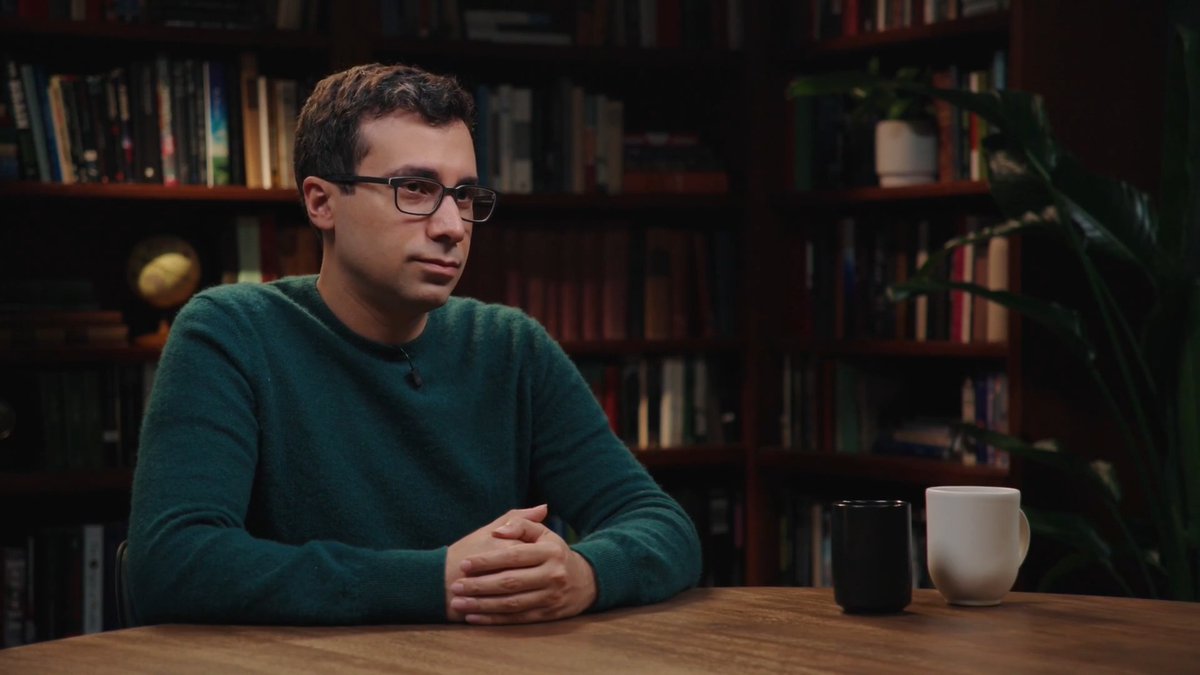
How does math research change when the cost of trying your first dumb idea goes to zero? Daniel Litt joins Greg Burnham and Anson Ho to discuss what today’s models can and can’t do in math, and how far they are from doing high-quality research. 0:00:00 What's the hardest...

178,703 views • 6 months ago •via X (Twitter)

0 Comments

No comments available

Comments from the original post will appear here

Related Videos

My conversation with OpenAI co-founder Greg Brockman This is the most detailed first-person account of the 72 hours after Sam Altman was fired. We also go deep on what comes next: the global race to AGI, why ChatGPT stopped showing reasoning, how much of OpenAI's own code is now written by AI ("it's hard to know what percent is not"), and the untold story of how OpenAI actually started in 2015. 00:00:00 Introduction 00:00:49 Meeting Sam Altman and Starting OpenAI 00:02:40 Building the Founding Team 00:04:25 DeepMind's Lead Over OpenAI 00:04:54 Changing OpenAI to a For-Profit Model 00:06:05 Breakthrough Moments at OpenAI 00:08:22 What Dota 2 Meant for OpenAI 00:10:04 Reasoning Versus Prediction 00:11:59 Tensions Grow at OpenAI 00:15:44 Sam Altman's Firing 00:17:49 Greg Quits OpenAI 00:19:56 Sam Explores Deal with Microsoft's Satya 00:20:28 Petition for Altman's Return 00:23:43 Ilya Sutskever Leaves OpenAI 00:24:59 Lessons Learned after Sam Ousting 00:28:22 The Thing Ilya Said that Greg Can't Forget 00:32:22 Is AI Going Parabolic? 00:33:24 How Much of OpenAI's Code is Written by AI? 00:36:21 Do AI Chatbots Tell Us What We Want to Hear? 00:38:06 The Global AI Race to Reach AGI 00:38:40 What Happens if US Doesn't Reach AGI First? 00:39:49 Are Countries Stealing AI Advancements? 00:40:38 Why ChatGPT No Longer Shows Reasoning 00:41:47 The Finite Constraints of Compute 00:43:38 On Investing Early in Data Centers 00:46:31 The Future of Data Center Specialization 00:47:52 How to Decide Whose Queries to Serve 00:49:08 OpenAI on Consumer vs Enterprise Models 00:53:05 Data Centers in Space? 01:00:56 What Should AI Regulation Look Like? 01:04:33 The Future of AI-Powered Entrepreneurship 01:04:44 AI and Job Loss 01:07:15 The Skills Young People Should Invest In 01:11:30 What Does Success Look Like For You? Full episode on X below. Also find it on: • YouTube: • Spotify: • Apple:

Shane Parrish

450,952 views • 3 months ago

Yoshua Bengio thinks he knows how to make provably safe superintelligent agents. Bengio built the foundations of modern AI and is the most cited living scientist. He believes his alternative training setup would: 1. Guarantee honesty 2. Prevent unintended goals 3. Produce capable agents 4. Port over most data and techniques from current LLMs 5. Not be inherently more expensive, and perhaps be more intelligent Bengio claims the honesty and lack of unintended goals can be proven mathematically, at least given particular assumptions. And his new organization, LawZero, is aiming to build a scrappy prototype as soon as possible. The architecture is called 'Scientist AI' and it's based on training a model to explain empirical observations, including what people say, rather than training AIs that mimic human behaviour or seek our approval. (Bengio's frank assessment is that "reinforcement learning is evil" and that allowing AIs to independently train their successors is "the most crazy, dangerous bet that unfortunately we are on track to do.") But skeptics question whether Scientist AI really does solve the fundamental problem of 'eliciting latent knowledge' from AI models. And with the commercial race for superintelligence so intense, it's not clear whether the proposal will be able to compete or have time to bear fruit, even if it's sound in theory. On The 80,000 Hours Podcast, links below – enjoy! • Making AI honest and safe (00:00:00) • Scientist AI in plain English (00:02:27) • How Scientist AI differs from LLMs (00:06:32) • How the training data works (00:14:02) • Can this become an agent? (00:21:02) • Why Yoshua is now more optimistic (00:32:11) • Why companies can’t stop racing (00:36:35) • A working prototype won't take long (00:49:15) • Scientist models might be more capable (00:53:34) • “Reinforcement learning is evil” (01:01:27) • Scientist AI from guardrail to agent (01:08:37) • Can safe AI still be competent? (01:12:38) • How much will this cost? (01:19:29) • Can it generalise beyond maths and science? (01:23:26) • A multi-national push for superintelligence (01:39:19) • Want to work with or fund Yoshua? (01:51:16) • Why smart people ignore AI risk (01:54:45) • Don’t let AI build the next AI (02:01:33) • Why politicians miss the real risks (02:12:28) • Why Yoshua changed his mind about AI risk (02:21:27)

Rob Wiblin

65,088 views • 2 months ago

tylercowen is bullish on AI education — here's why. 00:00 -- Preview 00:24 -- President Carlos Carvalho's AI-generated intro 03:21 -- Cowen reacts to UATX's campus 04:38 -- The AI revolution is here. Who will lose the most? 06:05 -- AI lawyers 07:17 -- Don't underestimate this 10:41 -- Changes to the "upper upper middle class" 12:38 -- How to be successful 13:43 -- The rise of managerial empires 14:02 -- When will we have the first billion dollar company with one employee? 16:05 -- 10-20 year forecast 16:19 -- Why education is so behind 17:01 -- Should you be bullish on UATX? 18:36 -- Should you still read Homer? 21:50 -- Write to think 25:01 -- Meet more people 25:42 -- How to get hired 26:54 -- Is AI your best mentor? 38:17 -- How to curb cheating 39:02 -- The new life of the mind 42:34 -- Q&A: Will there be more status associated with real education or AI education? 45:50 -- Q&A: Why do tech-savvy students need to practice using AI? 47:56 -- Q&A: Do LLMs atrophy your mind? 49:29 -- Q&A: How do you avoid AI-dependency? 51:05 -- Q&A: Isn't this vision lonely and isolating? 53:06 -- Q&A: Do students need teachers? 55:36 -- Q&A: What are the four most important courses for undergrads? 57:49 -- Q&A: Which AI company will win the AI race in the next five years and why? 59:22 -- Q&A: Can AI teach religion? 01:01:32 -- Q&A: Will AI narrow or widen our world? 01:04:37 -- Q&A: What makes us human? 01:05:42 -- Q&A: What is art? 01:08:33 -- Q&A: It's easy to catch cheaters

University of Austin (UATX)

27,770 views • 6 months ago

We don't know what most microbial genes do. Can genomic language models help? there's only one way to find out! this is a 1 hour and 42 minute interview with an MIT professor (the famous Yunha Hwang) chatting about these questions, her work in solving them at Tatta Bio, and more. zoomer captions are back too Links in reply! Timestamps: 00:00:00 - Clips + sponsor roll from the wonderful LatchBio 00:02:07 – Introduction 00:02:23 – Why do microbial genomes matter 00:04:07 – Deep learning acceptance in metagenomics 00:05:25 – The case for genomic “context” over sequence matching 00:06:43 – OMG: the only ML-ready metagenomic dataset 00:09:27 – gLM2: A multimodal genomic language model 00:11:06 – What do you do with the output of genomic language models? 00:17:41 – How will OMG evolve? 00:20:26 – Why train on only microbial genomes, as opposed to all genomes? 00:22:58 – Do we need more sequences or more annotations? 00:23:54 – Is there a conserved microbial genome ‘language’? 00:28:11 – What non-obvious things can this genomic language model tell you? 00:33:08 – Semantic deduplication and evaluation 00:37:33 – How does benchmarking work for these types of models? 00:41:31 – Gaia: A genomic search engine 00:44:18 – Even ‘well-studied’ genomes are mostly unannotated 00:50:51 – Using agents on Gaia 00:54:53 – Will genomic language models reshape the tree of life? 00:59:18 – Current limitations of genomic language models 01:08:54 – Directed evolution as training data 01:12:35 – What is Tatta Bio? 01:19:02 – Building Google for genomic sequences (SeqHub) 01:25:46 – How to create communities around scientific OSS 01:29:06 – What’s the purpose in the centralization of the software? 01:35:37 – How will the way science is done change in 10 years?

owl

44,279 views • 7 months ago