Video wird geladen...

Video konnte nicht geladen werden

Zur Startseite

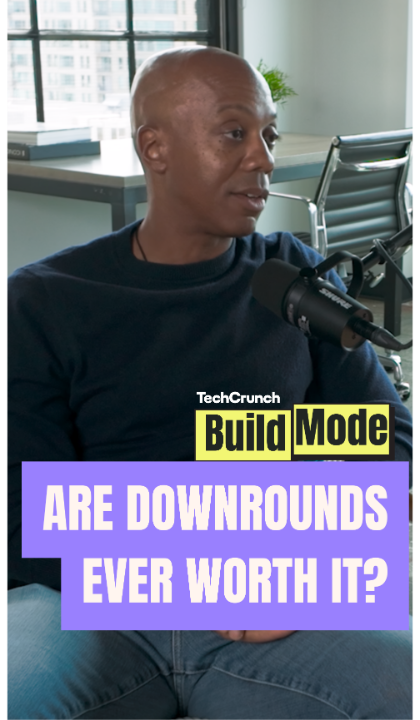
How Tier 1 & Tier 2 VC funds use pricing to 'win' rounds.. & why that doesn't work on the best founders "The strategy that they're going to employ is to use valuation as a lever to win, & it's not a crazy strategy, but it also puts a...

43,510 Aufrufe • vor 1 Jahr •via X (Twitter)

11 Kommentare

Profilbild von Peter Walker
Peter Walkervor 1 Jahr

Seems to assert that the "best founders" take the lower valuation more of the time...have seen no data at all suggesting this. It might be true! But I'm skeptical.

Profilbild von Peter Tarr
Peter Tarrvor 2 Jahren

Do You Trade Stocks & Options? I received my license for trading Stocks & Options in '05. Each day, I share options trading watchlists, market insight and professional trading strategies. ZERO cost, zero strings attached. Follow along & learn to trade strategically.

Profilbild von Dan Gray
Dan Grayvor 1 Jahr

It's price, not valuation. It's a pedantic point, but I do think professional investors should care enough to get this right.

Profilbild von Molly O’Shea
Molly O’Sheavor 1 Jahr

get which part right?

Profilbild von Morgan
Morganvor 1 Jahr

I think that's spot on - best price could just mean a lot of pain later down the road and setting unrealistic goals. I want the best price for my home and my car because once it sells, that's it - I'm done. With fundraising, I want the right price because once it closes, targets are set.

Profilbild von Cam
Camvor 1 Jahr

💯

Profilbild von Molly O’Shea
Molly O’Sheavor 1 Jahr

Brickyard been seeing this?

Profilbild von Jenny Xiao 🌌
Jenny Xiao 🌌vor 1 Jahr

The problem is that at that stage, capital has become very commoditized. Every bidder has a great team, great brand, etc. You can't really compete on anything other than price.

Profilbild von Avi Krishna
Avi Krishnavor 1 Jahr

Really? Do founders in practice ever reject term sheets from top tier funds at better valuations to take worse terms from 'lower-tier- VCs?

Profilbild von Erik Kirkegaard
Erik Kirkegaardvor 1 Jahr

"You can take less money?"

Profilbild von John D. Villarreal, JD, MBA, MA
John D. Villarreal, JD, MBA, MAvor 1 Jahr

Good clip/interview @MollySOShea. I agree with most of this, but I'll put a few modifiers from my own opinion: 1.) I think that at the margins we can quibble on T1 vs. T2 (who is in which VC "grouping"), but I think there are at least a significant amount of funds that are clearly T1 or T2 (at least based on history, size, rep, connections, talent, etc.). That's not a dis, it's just facts, IMO. For instance, I (if I had the money) can start a pro football league, but can I really honestly flex that I have the same talent on my team YR1 as the @Eagles? No, I can't. "But, JDV, we're both pro, how can you say that, we don't know for sure, these are new players, a new year, etc.." No, we pretty much know that, IMO. I may have my potential occasional issues with the @NFL draft, or scouting, or conservative/possibly lack of courage/imagination for filling NFL rosters, but for every @TomBrady story, there are at least 10-100X stories where the system got it right. This brings up a larger Q (and analogy) of the "warm intro" to VC that @pmarca was talking about and some said a study criticized, but the short story is there are always these kinds of discussions over the years on various topics. The challenge is always to figure out what's best for you, do your own diligence, find the "unfound"/overlooked alpha, and figure out where the ball/puck is going to be in future biz/tech and be there first. Nothing has changed on that basic premise, IMO. The Q is how do you build a better mousetrap and not get "trapped" into a thought paradigm/system that isn't effective. So, to that point, I totally agree with your guest. 2.) I wish more founders (and biz/tech press, etc.) would think as your guest suggests, but frankly, I've worked with a lot of founders, been a founder, been a VC and been in the game a while, and for the most part (good or bad) founders and press chase valuations. The bigger the better. Which can be problematic as the clip suggests. On the other hand some VCs may use price to "win" deals, we all know the name of the game is to fiond the best deals, get in the deal as low a val as possible, and get as much of the deal as you can (per your firm's strategy, etc.). So, a lot of founders worry about being undervalued, and I certainly get it. Which leads us to the obvious as the clip states. It is best to fairly price rounds, but that can be hard to do and can be more of an art than a science, IMO. Plus, it is often affected by the market the raise is done in (which can inflate or undervalue just based on market conditions), but let's assume we figure out true FMV, great. That then leads to the T1 vs T2 discussion, as all things being equal I'm going to want to go with a @sequoia, @foundersfund, @kleinerperkins, @a16z, @khoslaventures, @Accel, NEA, @BessemerVP, etc., etc (not trying to leave anyone out here my VC peeps, just the post is already long) vs. a new fund or whatever. Which also leads the the discussion of what value the VCs are providing beyond money, are they using the FF model/@ycombinator-type model or more traditional VC (Khosla, etc.) model, is the the same as it used to be, etc. and so it goes. Just my $0.02 NOTE: not giving financial advice, VC advice, or any other kind of advice. Everything you do is at your own risk. Not alleging any facts and all my personal opinion only.

Ähnliche Videos

The View whines that Knicks owner James Dolan accepted an invitation to have the team visit the White House: SARA HAINES: I think this puts the players in a really precarious position. Merely because Jim Dolan is admittedly a good friend of Donald Trump's. And to now put that on the players, your boss, the owner of the team you play for is extending this offer, accepting this offer. I don't - I know you might get people that refuse to go. I just think it's not fair to take any of the flowers and beauty of this moment and its unity and try to then place it on the players' back. ALYSSA FARAH GRIFFIN: I totally agree. I think it puts the players in such an uncomfortable position, cause it was honestly the first thing I thought of once they won the championship, as a new Knicks fan, is like, "Oh no, they're going to get invited to the White House and there's this political discourse. Should they go, shout they not?" I think they should go if they want to. If they're comfortable going, because the White House is bigger than any one president and precedency. HAINES: It's our house. FARAH GRIFFIN: They earned the right to go as champions, but I also think they have the right to refuse too. If any individual players don't want to, that's their decision. And I also they can use the big platforms they have. I mean, these guys all have millions of followers on social media. If they want to stand up for causes or if they want to potentially critique this administration, there's a way that everyone should win. I don't think it's fair if they do decide to go, I don't think they should get hate it. It's there place to.

Nicholas Fondacaro

67,122 Aufrufe • vor 1 Monat

THE BEST LEADERS DON’T ASK FOR “BUY-IN”. THEY DO THIS INSTEAD: “Coaches use this word ‘buy-in’ all the time. And I’ll let you in on a little secret. It’s actually not a secret if you've watched anything I’ve ever put out before. I don't like the phrase ‘buy-in’. I don't like the word. I don't like the idea. It’s not something I’m interested in. I think the coaching profession and teams would be better off if coaches simply stopped asking for buy-in. But because I know that's not going to happen on anything besides a very small scale with a few select coaches and they're going to talk about and use the phrase ‘buy-in’, then we want to at least try to do it as best as we possibly can. But between you and me — don't even use the word. Don't use the word. Don't ask for buy-in. Don't demand buy-in. Focus entirely on that second point (“Create something worth buying into”) and do your best to not use the phrase. First, don't use the phrase because so many other places and so many other people and so many other coaches do and people are tired of it. So, I think the responsibility is on us if we're going to use a phrase then we need to know how that phrase is going to be seen, heard, and perceived. And when people get tired of being told to buy in and asked to buy in and begged to buy in and pleaded to buy in and preached to buy in, they turn it off and they tune it out. So, I think even using the phrase runs that risk. That's #1. #2 is: Rather than ask for it, rather than demand it, rather than even use the phrase, just focus on your action and go earn buy-in by doing great work. Go earn buy-in without having to ask, without having to demand, without having to beg, without having to plead, without having to preach. Go deliver an experience where people do it naturally. Go set standards that are hard to achieve and help people meet them. Go figure out what's important to other people and make it important to you in a way that they recognize. Go point people in a direction that takes them where they want to go and also serves your team. Buy-in will happen when you (1) build great relationships, (2) you point people towards goals that they're interested in, (2) you call out the best version of themselves, and (4) you help them belong to something that they're interested in belonging to. You don't need to use the word buy-in to create that. You just have to go out do the work. And you have to be good enough to earn the buy-in you want.”

Brian Kight

29,829 Aufrufe • vor 1 Jahr

Col. Lawrence Wilkerson: 'China🇨🇳 doesn't want a DIRECT WAR with the US🇺🇸, which would derail their victories in the overall competition.' 'I think the Chinese in particular are very, very concerned about where the empire is right now because they know, as Ricardo Alarcón told me one time about Cuba, a dying elephant can thrash a lot of grass. And the Chinese don't want their grass thrashed. They're doing well, they're winning the overall competition in the world—economic, cultural, military, you name it, they're winning. They don't want that to be derailed, and a war with the United States, an in-your-face war with the United States, would do that. They'd win. They would ultimately win. But it would be a Pyrrhic victory in many respects, given their progress right now. So it's a difficult thing for other people in the world to deal with. 60% of the world, 60% of the GDP hates our guts. And they would have an audience, if you will, immediately if they took us on. But they don't want to because they're winning. And if they're winning, why should they want to derail that to a certain extent by taking us on directly? They're going to have to if we persist in this kind of strategy. But I think they're crafty enough to figure out a way to deal with this otherwise, and they will do that.' —Col. Lawrence Wilkerson, former Chief of Staff at the US State Department Watch the full interview in the quoted post below👇

Going Underground

67,071 Aufrufe • vor 27 Tagen