Video wird geladen...

Video konnte nicht geladen werden

Zur Startseite

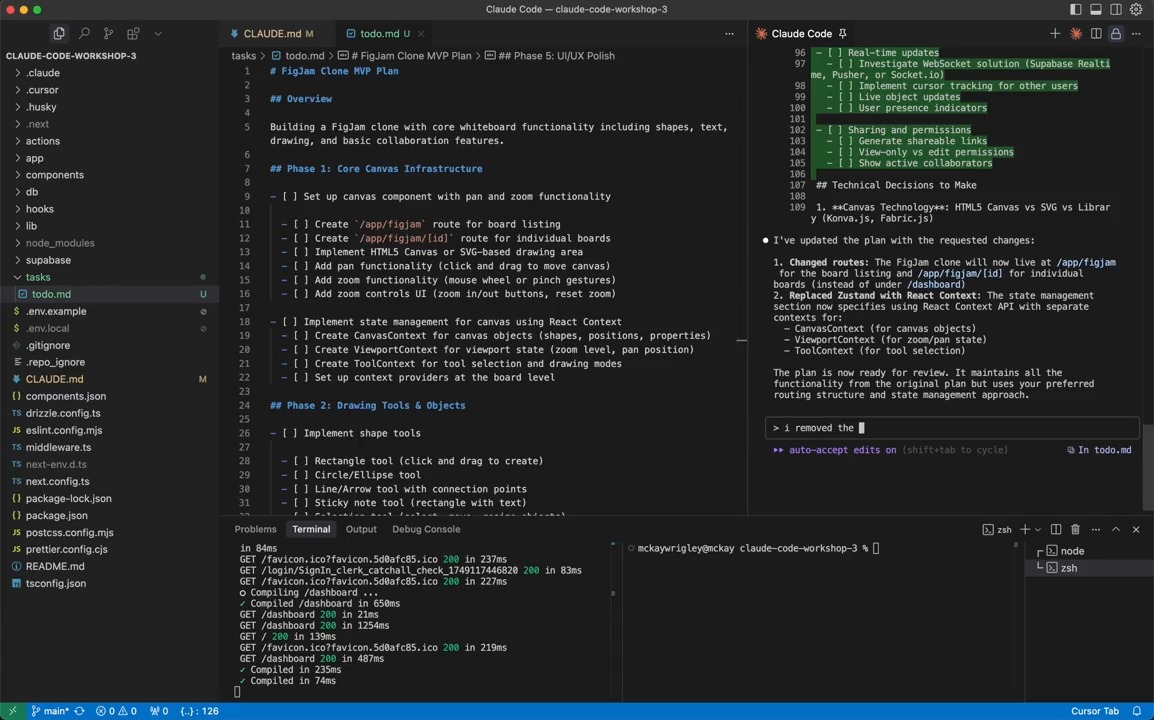
how to use claude code + outscraper + crawl4ai to build a profitable online directory in 4 days for under $250 1. scrape 50k–70k raw records with outscraper 2. use claude code to clean, dedupe, and structure the data in passes 3. run crawl4ai to verify live sites and...

121,798 Aufrufe • vor 4 Monaten •via X (Twitter)

0 Kommentare

Keine Kommentare verfügbar

Kommentare vom Original-Post werden hier angezeigt

Ähnliche Videos

I just published a new tutorial on how to build a directory using AI and no-code tools. Directories are the ultimate MVP. They let you validate an idea, build traffic, and then pivot into something bigger—like SaaS or a marketplace. Remember when Yahoo and DMOZ ruled the internet? Okay, maybe you don’t, but they did. They curated the web back when search engines were clunky and unreliable. Fast forward to today—directories are making a quiet comeback. And it’s not about nostalgia. The 5 step playbook that we go through: 1. Niche first, features later Use Google Keyword Planner to find high-volume, low-competition keywords. Lock in a matching domain. 2. Build fast No-code tools + AI = rapid setup. Let AI generate the initial content and structure for you. 3. Promote smart Share on Reddit, list your directory in other directories, and engage on Twitter. 4. SEO from day one Start with 10 high-quality articles and solid internal linking. 5. Monetize as you grow Affiliate links, premium listings, B2B sponsorships. It’s all on the table. A directory can be a side hustle that pulls in $5K MRR. Then, once you’ve got traffic, you can scale into SaaS or a marketplace. It literallyyyyy pays to have traffic for your software startup. Why aren’t more people talking about this? Huge shoutout to John Rush for giving us a free masterclass on this exact strategy. Legend. You’ll want to watch to this episode on directories. I respond to all comments and appreciate them. Audio is over here if you prefer listening: Directories are cool - it’s the perfect foundation for something much bigger. Was this interesting? Well, reply to me with if it was and what you'd like to learn next on The Startup ideas Podcast. People like to gate this type of content. I won't. I live to serve and will continue sharing this info for free.

GREG ISENBERG

120,737 Aufrufe • vor 1 Jahr

how to build an AI-first SaaS in 2026 1. start with a big market. finance, healthcare, real estate. then zoom into a sub-niche. 2. map the niche’s workflow end-to-end. literally write every step they do daily. ex: leads → scheduling → quoting → follow-ups → payments. 3. highlight where money changes hands. deposits, invoices, negotiations. those moments are where software captures value. 4. identify the repetitive mechanical tasks. anything someone does the same way every day is an automation opportunity. 5. quantify the pain. if a business owner spends 100 hours a year on something and their time is worth $300/hour, that’s a $30k problem. 6. manually perform the workflow yourself. most AI SaaS actually starts as a service. that’s why so many new YC companies begin with humans in the loop. 7. document every step. separate judgment tasks from mechanical tasks. agents handle the mechanical work. 8. turn those steps into agent workflows and connect them to real tools (email, slack, stripe, crm, APIs). 9. build media while you build the product. post daily about the workflow. use AI to research content ideas and scripts. the audience becomes your distribution. 10. launch narrow, show proof (hours saved, revenue generated), then expand into adjacent workflows until you become the default execution layer for that niche. people saying everyday that saas is dying it’s evolving into agents + software + media. full breakdown in the latest episode of The Startup Ideas Podcast (SIP) 🧃 lots of sauce in this one all for free because i can't wait to see what you build watch

GREG ISENBERG

189,054 Aufrufe • vor 4 Monaten

how to use openclaw to spin up 24/7 digital employees and build cash-flowing assets: 1. spin up openclaw (mac mini, vm, orgo, whatever) in a workspace so you can run 5–10 machines at once (main agent + sub-agents) 2. pick one boring workflow inside one industry (distributors, real estate, insurance, law firms) 3. map the workflow tip-to-tail (email/trigger → legacy software clicks → downloads → parsing → upload to crm) 4. use claude code to build the “under the hood” python pipeline (openclaw becomes the operator + trigger, code does the heavy lifting) 5. productize it as a repeatable bundle: “setup + 30 days management + new workflows each week” 6. use upwork as the lead source and the sandbox (it tells you what people pay for right now) 7. turn the best-paying workflow into a vertical workspace: 20 skills, 8 sub-agents, one invite link 8. sell it to bigger companies as “ai employees for this department” (with clear outcomes + SLA) "BuT yoU cAn'T bUiLD a BiG coMpaNY dOInG uPwoRk deAls" think about it like this “how does a $1k automation gig turn into a big company deal?” like this: 1. upwork gives you paid reps + proof someone pays for the workflow 2. those reps become case studies (“saved 12 hrs/week”, “uploaded 5k records/day”, “reduced ops errors by 80%”) 3. you stack 5–10 workflows in the same vertical 4. now you’re selling a package and not a one off deal which is tough 5. bigco buys packages because procurement 6. understands scopes + outcomes openclaw is the wrapper. claude code is the factory. sub agents/skills are the workforce. the vertical bundle is the product. episode is live on The Startup Ideas Podcast (SIP) 🧃 i will never gatekeep i want to see you win in this openclawed world i am rooting for you watch.

GREG ISENBERG

241,383 Aufrufe • vor 4 Monaten

AI AGENTS 101 (58 minute free masterclass) send this to anyone who wants to understand ai agents, claude skills, md files, how to get the most out of AI etc in plain english: 1. chat vs agents - chat models answer questions in a back and forth while agents take a goal, figure out the steps, and deliver a result 2. agents don’t stop after one response. they keep running until the task is actually finishedno babysitting required 3. everything runs on a loop. they gather context, decide what to do, take an action, then repeat until done 4. the loop is the system. they look at files, tools, and the internet. decide the next step. execute and then feed that back into the next step. over and over until completion 5. the model is just one piece. gpt, claude, gemini are the reasoning layer. the key is model + loop + tools + context 6. mcp is how agents use tools. it connects things like browser, code, apis, and your internal software. once connected, the agent decides when to use them to get the job done 7. context beats prompt all day. you don't need to write perfect prompts. load your agent with context about your business, style, and goals and then simple instructions work 8. claude.md or agents.md is the onboarding doc it tells the agent who it is, how to behave, what it knows, and what tools it can use. this gets loaded every time before it starts 9. memory.md is how it improves. agents don’t remember by default. this file stores preferences, corrections, and patterns you tell the agent to update it, and it gets better over time 10. skills + harnesses make it usable. skills are reusable tasks like writing, research, analysis the harness is the environment like claude code or openclaw that runs everything. basiclaly, different interfaces, same system underneath this episode with remy on The Startup Ideas Podcast (SIP) 🧃 was one of the clearest ways of understanding a lot of the core concepts of ai agents could be the best beginners course for ai agents 58 mins. all free. no advertisers. i just want to see you build cool stuff. im rooting for you. send to a friend watch

GREG ISENBERG

375,365 Aufrufe • vor 3 Monaten

Anthropic just released a talk on building headless automation with Claude Code. Presented by Sid Bidasaria, Member of Technical Staff at Anthropic live at Code with Claude on May 22, 2025 in San Francisco. Here is what the talk covers. Headless mode lets you run Claude Code without a person actively typing prompts from inside an automated script. Instead of a live session, a script calls Claude with a pre-written instruction using the -p flag. This opens the door for Claude Code to become a piece of a much larger, automated process. In plain terms: Claude Code stops being a tool you use and starts being a service that runs on its own. What this unlocks: Scheduled tasks: Run Claude Code on a cron schedule without anyone at a keyboard. Fix linting errors across an entire codebase. Automatically. Overnight. CI/CD integration: Trigger Claude Code as a step in your build process. Open a PR. Claude reviews it, flags issues, and pushes fixes before a human ever looks at it. GitHub automation: A project manager comments "Claude fix this" on a GitHub issue. Claude reads the request, finds the code, writes the fix, and opens the PR. Multi-machine workflows: One orchestrator dispatches tasks to multiple Claude Code instances running in parallel across different repos simultaneously. When you combine headless mode, hooks, and GitHub Actions, development teams can automate tasks that usually eat up significant time freeing senior engineers to focus on architectural problems while Claude handles the repetitive ones. If you use Claude Code for anything beyond single sessions this talk is worth 20 minutes of your time.

Elias

14,028 Aufrufe • vor 1 Monat