正在加载视频...

视频加载失败

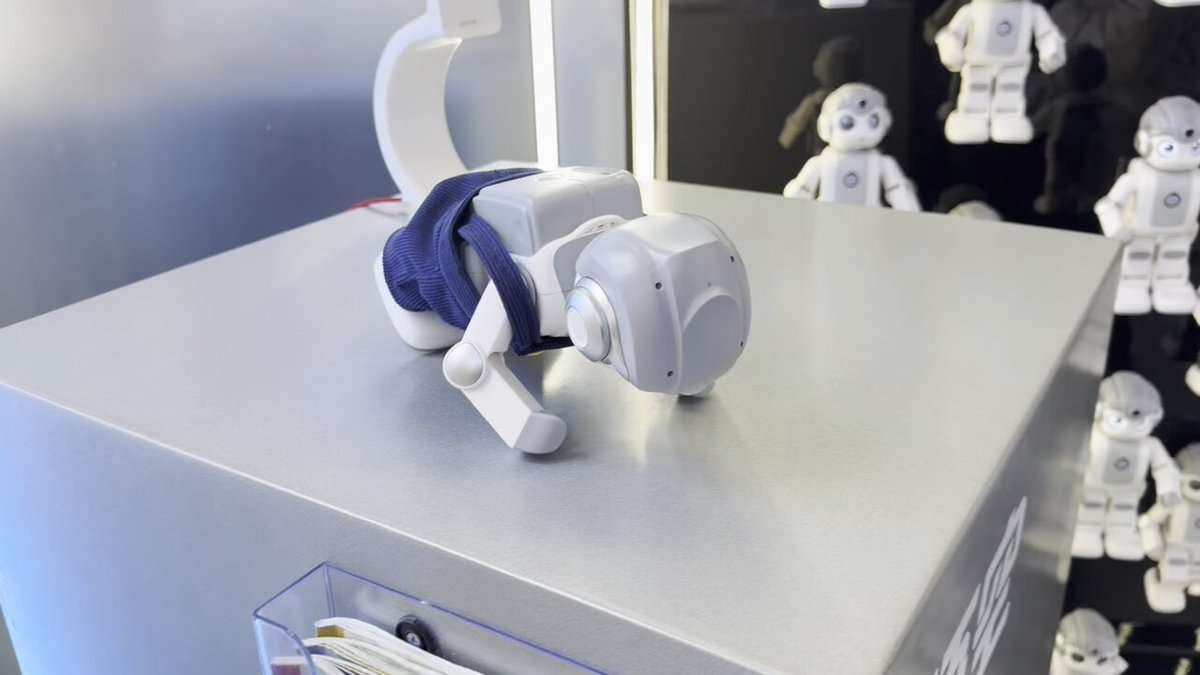
Humanoid robots will become ubiquitous in hospitality settings. Beyond front desk work, friendly-looking helper bots could act as porters or handle room service. Eventually, they could perform cleaning, maintenance and cooking tasks.

15,297 次观看 • 9 个月前 •via X (Twitter)

0 条评论

暂无评论

原始帖子的评论将显示在这里

相关视频

BOOM! Humanoid Robots Just Performed Surgery for the First Time! REAL VIDEO! In a groundbreaking preclinical breakthrough, researchers at UC San Diego have achieved what many thought was years away: teleoperated humanoid robots successfully completing live surgeries. Published in Nature, the study marks the world’s first use of humanoid robots for in-vivo laparoscopic procedures on large animals (pigs). Two separate surgeries were completed: Key Details •. Procedure: Laparoscopic gallbladder removal (cholecystectomy) •. Team 1: Human surgeon + one humanoid robot (the robot performed core tasks while the human assisted) •. Team 2: Two humanoid robots working together with no human at the operating table •. Robots: Custom “Surgie” humanoids (~5 ft tall, ~60 lbs) using standard surgical tools •. Control: Fully teleoperated by surgeons (remote human control, not autonomous) •. Significance: First demonstration of humanoid robots handling real surgical workflows in a live setting, proving compatibility with existing OR tools and spaces This proof shows humanoid robots could one day help address surgeon shortages, enable remote procedures in rural areas, battlefields, or even space all at a fraction of the cost and space of traditional surgical robots like da Vinci. Read the full publication here: Project page with video: The future of surgery just got a whole lot more interesting. And medical cost for the first time in decades will be scheduled to go down, much further down.

Brian Roemmele

107,357 次观看 • 19 天前

🚀Just launched: Amazon Q, the most capable GenAI-powered assistant is generally available today: Customers are using Q to transform how their teams get work done. When employees chat with Amazon Q, it provides immediate, relevant information and advice to help streamline tasks, speedup decision-making, and help spark creativity and innovation at work. . Early indications signal Amazon Q could help our customers’ employees become more than 80% more productive at their jobs; and with the new features we’re planning on introducing in the future, we think this will only continue to grow. 🟠 Amazon Q Developer allows developers to spend more time coding and less time on maintenance and performing other tedious, repetitive tasks. Q assists developers and IT professionals (IT pros) with all of their tasks—from coding, testing, and upgrading applications, to troubleshooting, performing security scanning and fixes, and optimizing AWS resources. Q also comes with Q Developer Agents which can autonomously perform range of tasks and we expect it to be the state of the art accuracy in benchmarks like SWE-Bench. 🟠 Amazon Q Business empowers employees to be more data-driven, and helps customers make better, faster decisions using company knowledge and data. Q Business is a generative AI–powered assistant that can answer questions, provide summaries, generate content, and securely complete tasks based on data and information in enterprise systems 🟠 Amazon Q Apps, a new and powerful capability of Amazon Q Business, enables employees to use natural language to quickly and securely build their own generative AI applications to automate daily tasks without requiring any prior coding experience. Employees simply describe the type of app they want, in natural language, and Q Apps will quickly generate an app that accomplishes their desired task, helping them streamline and automate their daily work with ease and efficiency.

Swami Sivasubramanian

25,216 次观看 • 2 年前

Why Many Modern Women See Marriage as a Prison and Cooking/Cleaning as Slavery To understand why, take a close look at this type of woman. You can clearly see that she enjoys her current lifestyle….but why? Because she receives constant attention, has no real responsibility for anyone but herself, and no one holds her accountable or tells her what is right or wrong. She can wear whatever she wants, post thirst-trap content, date or sleep with whoever she chooses, and even sell her body if she wants. Cooking and cleaning are optional, not mandatory, so laziness is easy to justify. Comfort becomes the priority. One thing modern women dislike in life is change, and change requires self-reflection and accountability….two things that are uncomfortable. When a woman like this gets married, everything changes. She can no longer live the same way. She has to dress more modestly, stop seeking attention online, and give up behavior that disrespects the marriage. Marriage introduces responsibility…often for the first time in her life. She now has to consider her husband’s feelings before making decisions. Cooking and cleaning are no longer optional; they become responsibilities tied to maintaining a household. She must wake up early, raise children, prepare them for school, and put someone else’s needs ahead of her own. The problem is that many women were never mentally, emotionally, or practically trained for this role. They were not taught discipline, sacrifice, or service by their mothers. Instead, they were raised to prioritize freedom, comfort, and personal gratification above all else. When someone raised for comfort is placed into a life that requires sacrifice, structure, and accountability, unhappiness is almost guaranteed. Marriage exposes what freedom hides: a lack of preparation for responsibility. This is why the expansion of unchecked freedom…without responsibility or role training….has coincided with declining marriage and birth rates. Comfort was promised, but comfort is never guaranteed in life. Stability, family, and legacy require effort, discipline, and sacrifice…values that many modern women were never taught to embrace.
0:11

Sensitive content

Why Many Modern Women See Marriage as a Prison and Cooking/Cleaning as Slavery To understand why, take a close look at this type of woman. You can clearly see that she enjoys her current lifestyle….but why? Because she receives constant attention, has no real responsibility for anyone but herself, and no one holds her accountable or tells her what is right or wrong. She can wear whatever she wants, post thirst-trap content, date or sleep with whoever she chooses, and even sell her body if she wants. Cooking and cleaning are optional, not mandatory, so laziness is easy to justify. Comfort becomes the priority. One thing modern women dislike in life is change, and change requires self-reflection and accountability….two things that are uncomfortable. When a woman like this gets married, everything changes. She can no longer live the same way. She has to dress more modestly, stop seeking attention online, and give up behavior that disrespects the marriage. Marriage introduces responsibility…often for the first time in her life. She now has to consider her husband’s feelings before making decisions. Cooking and cleaning are no longer optional; they become responsibilities tied to maintaining a household. She must wake up early, raise children, prepare them for school, and put someone else’s needs ahead of her own. The problem is that many women were never mentally, emotionally, or practically trained for this role. They were not taught discipline, sacrifice, or service by their mothers. Instead, they were raised to prioritize freedom, comfort, and personal gratification above all else. When someone raised for comfort is placed into a life that requires sacrifice, structure, and accountability, unhappiness is almost guaranteed. Marriage exposes what freedom hides: a lack of preparation for responsibility. This is why the expansion of unchecked freedom…without responsibility or role training….has coincided with declining marriage and birth rates. Comfort was promised, but comfort is never guaranteed in life. Stability, family, and legacy require effort, discipline, and sacrifice…values that many modern women were never taught to embrace.

STUNNER

11,818 次观看 • 6 个月前

Americans are not ready to watch sons and daughters hunted by FPV drones. Some may not like this post, and that’s OK. Some may see this as being a “panican,” and that is also OK. My tolerance for American blood being spilled is very, very low. But this needs to be said: If you have paid any attention to the war in Ukraine, you will know how drone warfare has escalated. You will have an understanding of the sophistication of the Ukrainians and Russians in their pursuit of hunting and killing each other with human-guided robots strapped with explosives. We know Russia and Iran share military ties; hell, the most common form of long-range standoff munition used to target Ukrainian infrastructure is an Iranian-designed Shahed drone. Now, are the Iranians as sophisticated as the Russians? No. But will a ground action result in grainy videos of Americans being hit by FPV drones? Almost certainly. Could the deployment of ground forces to the Gulf be a feint? Sure, it could be, but this point extends beyond Iran. The U.S. needs to be ready to counter the drone menace. I won’t pretend to know the inner machinations of the Joint Chiefs, the White House, or President Trump, but with the destruction of an E-3 Sentry on the runway, it has become absolutely clear the U.S. armed forces have not scaled their ability to handle drones. I don’t know what the answer here is, but I haven’t seen this point brought up at the frequency it deserves. It needs to be said. We are not ready for footage of American soldiers and Marines cowering in their last moments, set to some upbeat pop song or some cleric screaming praises to Allah.

Fanatic 🇺🇸

1,081,446 次观看 • 4 个月前

I spent a month in Shenzhen visiting factories and robotics companies, and the contrast with the U.S. was striking. While Figure and Boston Dynamics hide their humanoids behind closed doors, Chinese companies have massive showrooms open to the public. But what really stood out wasn't just the transparency, it was how good they are at selling. Take UBTech: they've already sold 1,200 humanoid units at $200k each to factories. And here's the kicker, these robots aren't even that useful yet. They can only pick up and drop boxes at 1/10th the speed of a human, and factories still need to hire system integrators to train them for specific tasks. My theory is that these factories are terrified of getting left behind in the robotics/AI wave. They're investing in new tech not because it's ready, but because they can't afford to wait. The second surprise was the breadth of their robotics portfolio. These companies aren't just building humanoids, they're deploying service robots everywhere: restaurants, hotels, apartments. Consumer robots are cleaning houses, pools, pet waste, dishes. They're covering the entire spectrum. But the education piece shocked me most. I picked up what I thought was a high school or college robotics textbook, it was for primary school. The government mandated AI and robotics education starting in elementary school. Almost every single school in China now has AI and robotics curriculum, complete with education robots so kids can learn by building. They're creating a generation that grows up fluent in robotics and AI. China owns the supply chain and the hardware stack. But here's what I think people are missing: the race isn't just about who can build robots faster or cheaper. The U.S. advantage has always been in the layer between hardware and human, the interaction design, the software intelligence, the intuitive interfaces that make complex technology feel natural. China is building the physical infrastructure, but they're also learning fast. Every deployed service robot, every classroom full of kids building with education kits, every factory running humanoids, that's all data collection at scale. The window for the U.S. to establish its wedge is narrowing. It's not enough to be better at AI or software anymore. We need to be building the integration layer, the intelligence that makes physical AI actually useful, not just impressive in a showroom. Because right now, China isn't just manufacturing robots. They're manufacturing a robotics-native culture, and that might be the most defensible moat of all.

Miyu Horiuchi

90,718 次观看 • 5 个月前