正在加载视频...
视频加载失败
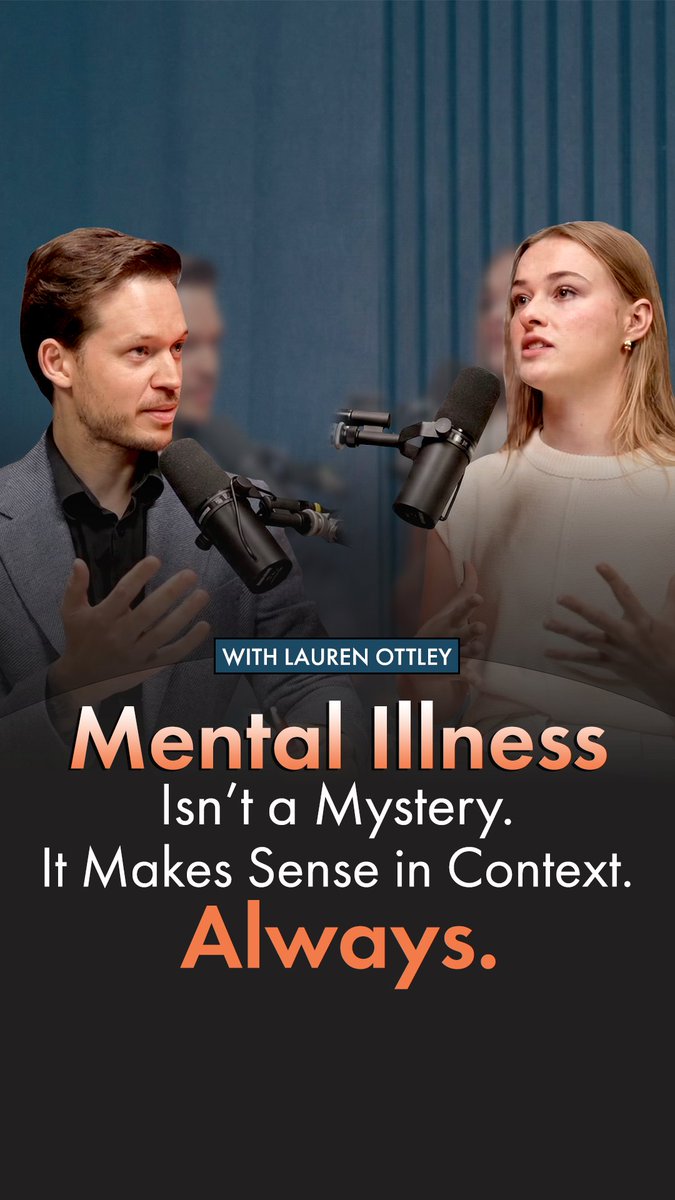
I don’t understand this "severe mental illness" thing. If someone develops anxiety after being assaulted, it makes sense. If someone becomes depressed after a loss, it makes sense. If someone develops an extreme need for control after growing up in chaos, we look for connections. But then we come... show more
24,157 次观看 • 4 个月前 •via X (Twitter)
31 条评论

You make it sound like specialized descriptive language is somehow mutually exclusive with curiosity and understanding. That simply doesn’t follow. Virtue signaling is not a substitute for a coherent argument.

You said it right at the start - you don't understand.

Exactly. “Severe mental illness” is often treated as an explanation when it is actually only a label. Fear after violence, despair after loss, hypervigilance after trauma, or a desperate need for control after chaos may be understandable human responses to what happened. But once someone is labelled “schizophrenic,” their history can disappear. Their words become “symptoms,” their fear becomes “paranoia,” resistance becomes “lack of insight,” and coercion is presented as care. The most important question should not be: “What is wrong with you?” It should be: “What happened to you—and what do you need to feel safe?” #TraumaInformedCare #PsychiatricSurvivors #PatientRights #MedicalEthics #DoNoHarm

Thank you for the salutary reminder to prospective patients that they should avoid any psychologist/psychiatrist who is narcissistic enough to impose your own definition/interpretation on experiences that only the patient themselves can decide are meaningful or not.

Well that's more due to your limits of understanding from being a psychologist. Why do you think bipolar disorder is highly inheritable? The "experiences" theory falls short to explain that. The point about trauma is also questionable. If you pick up anyone from the street and dig deep enough, I bet you will find some traumatic experience from their childhood.

What?

Simplistic, psychology-first understanding. Take 20 people with very similar traumas and stressors: only one ends up showing psychosis. Another one may go on to be ultra successful in every respect etc. Biography matters but so too does biology.

Or. Brains are an organ. An inordinately complex one. And it can go wrong. And does in much mental illness. I realise that the way psychiatry has overmedicalised this space has turned many therapists off this outlook. But let's not throw out the basic fact we *are* biology.

The first question I ask is What happened? Always something happened. Coping mechanisms develop in response to this.

Anders and John are exactly right. My psychosis was a result of various conditions in my life, primarily extreme early childhood CSA. My psychosis was extreme, long in duration, and every bit of it makes sense when you understand the context. Metacognition techniques I had learned in contemplative traditions carried me through. My psychosis, like most, was self limiting, and because I fought to go through it without medication, it resolved. Now my life is bigger, and brighter, than it was before my "onset". Despite all these successes, schizophrenia is a word that almost buried me alive, as it buries so many. We deserve better.

Ikke alene er denne udtalelse absolut forfærdelig, da den kommer fra en angivelig psykolog, det er faktisk ekstremt farlig retorik, der potentielt kan føre til ekstreme og uheldige konsekvenser. Du burde udelukkes fra enhver karriere inden for mental sundhed.

You should video yourself interviewing acutely psychotic patients and show everyone how it's done.

Would you care to explain the best way to make sense of psychotic symptoms in Acute Intermittent Porphyria, Huntington's disease and cortisone-induced psychosis? Thank you for your time and assistance.🙏
That’s why it’s absurd to say it’s genetic imo. Correlation is not causation. beliefs and trauma are passed down by family, not just genetics.

Extreme experiences may make sense as reactions to loss/trauma/assault. But that doesn't mean that talking about them or making sense of them will lead to resolution. That doesn't mean that the loss/trauma/assault hasn't caused biological changes that require more than talking.

Thank you. This is the Paradigm that will change everything. Thank you.

The key is understanding there is no separation between mental and physical, and to resolve all of the patterns of dis-ease together. There is a way to do this that was developed over millennia by Dao Yin and Chinese Medicine practitioners that are called quacks in the West.

schizophrenia is vastly misdiagnosed, especially with those with substance abuse issues.

Organic mental illness (typically Axis I) is so real that it shows up on a PET brain scan. What you’re suggesting is like telling a person with Parkinson’s or CP that they can magically alleviate their brain disorder if they just talk through their issues.

“When you take the time to understand someone’s story, it stops being mysterious.” Exactly! 👍

@NickTaber @TEWV given your stated commitment to trauma-informed care, what concrete training, supervision and safeguards are in place to stop staff defaulting to diagnosis and coercive ECT? #PublicInquiry

So what about someone with ocd who does 5-7 hours of compulsions every day? Please explain that. When it comes to the two most biologically clear disorders like ocd and schizophrenia, you’re not going to be able to explain it away. Bipolar mania is another one

It's a way of profiting from human suffering.

Just assemble the facts: No biomarkers tests. No medical scans. Only arbitrary opinions voted into existence by show of hands. Let that sink in: Medical science is voted into existence, not discovered & proven.

Who’s pretending we have an explanation for Schizophrenia?

Many are victims of Jewish gang stalking.

Some excellent points from you and @ReadReadj When people experience trauma, there will indeed be a reaction. Those of us who have been trained properly, know how to sit with a person, gently explore, make sense of feelings, and work through trauma to edge towards recovery.
I MYSELF WILL SUM THIS QUESTION ABSTRACT UP AS MUCH AS I CAN If THE BODY DOESNT DIE BUT THE SOUL (AMES) REINCARNATES BEFORE DEATH OR JUMPS TO HEAVEN ITS OBSERVERS WILL NOT JUMP WITH THAT JUMPER AND THUS THE CONFUSION WILL AWAYS REVEAL A SINNER

I think the deeper question isn’t whether these experiences are “mental illness” or “not mental illness” It’s what process gave rise to them? Every conscious mind constructs an internal model of reality from biology, memory, learning, emotion, and experience. Trauma, disease, genetics, social environment, and countless other factors all shape that model. Understanding the process doesn’t mean every perception accurately reflects external reality. But neither does applying a label explain why that experience emerged. A diagnosis is a description. It is not an explanation. Curiosity shouldn’t end with classification. It should begin there.

Hej AndersJeg skriver til dig, fordi jeg er dybt bekymret for patientrettighederne i dansk psykiatri – især den nedværdigende behandling, gaslighting, tvangsmedicinering, isolation og systematiske krænkelser, som mange patienter mødes med. Jeg er 26 år og har selv været igennem flere forløb i psykiatrien. I 2023 kom jeg i konflikt med personalet, efter jeg talte om psykedeliske rusmidler som mulig terapeutisk tilgang. En læge fortalte mig, at jeg havde ADHD, men da jeg stillede kritiske spørgsmål til diagnosepraksis, stigning i diagnoser og medicinens evidens, blev jeg pludselig beskrevet som paranoid skizofren uden sygdomsindsigt. Personalet koblede mit stofbrug direkte til seksuelle overgreb i barndommen og fremstillede mig som kronisk syg stofmisbruger. Da jeg reagerede på dette, blev jeg mødt med gaslighting og personlig afstraffelse.I mit seneste forløb (december 2025 – april 2026 på Psykiatrisk Afdeling Vejle) opsøgte jeg selv behandlingen frivilligt. Alligevel endte det med langvarig tvang. Jeg fik konfiskeret mine bøger, malerier, planter, julegaver fra niece og nevø samt to bamser fra mine bedsteforældre. Jeg skrev egne noter for at dokumentere journalfejl og krænkelser. Efter jeg blev givet injektioner og var bevidstløs, åbnede personalet mit pengeskab og fjernede flere af mine papirer. Jeg politianmeldte det, hvorefter hospitalet fjernede alle patient-pengeskabe. Jeg blev nægtet aktindsigt. Da jeg forsøgte at downloade min journal, blev den gjort ugyldig. Jeg blev pålagt selv at betale for en tolk, fordi lægen ikke talte dansk. Denne overlæge spurgte mig, om jeg skulle giftes med min kusine – en praksis, der er ulovlig i både Danmark og Sverige. Jeg blev også nægtet frit sygehusvalg i 43 dage. Patientklagenævnet har i juni 2026 tilsidesat frihedsberøvelsen i perioden 20. februar – 18. marts 2026, fordi journalen ikke dokumenterede, at betingelserne for tvang var opfyldt (lave BVC-scorer, rolig adfærd, samarbejde). Alligevel blev jeg igen tvangstilbageholdt den 27. marts. Gennem hele forløbet har der været klar diagnostic overshadowing: Mine traume-reaktioner, autistiske træk (“egen logik”, talepres, intense interesser) og naturlige reaktioner på krænkelser er systematisk blevet tolket som psykose, mani eller manglende sygdomsindsigt. Først sent fik jeg en autismediagnose. Jeg har omkring 300 psykedeliske oplevelser, som jeg oplever har været gavnlige i kriser. Jeg stiller stadig spørgsmål til, hvordan diagnoser, medicin og behandling besluttes – ofte ud fra lægers subjektive opfattelse af udtalelser frem for adfærdsmæssig sammenhæng. Jeg er nu i gang med at udarbejde en ny klage efter anmodning fra Patientklagenævnet og skal snart i retten igen. Jeg mangler også at sende min dokumentation til de danske interesseorganisationer på området. Jeg vil gerne spørge dig: Har du erfaring med lignende sager, hvor frivillig henvendelse ender i langvarig tvang, og hvor traume + neurodivergens overskygges af en skizofreni-fortælling? Og har du råd til, hvordan man bedst dokumenterer og rejser sådanne sager over for Patienterstatningen og organisationerne? Mange tak for dit arbejde. Det har betydet meget at følge. Med venlig hilsen Martin Thiemer Thrane

Neither do most psychiatrists, it seems.