Loading video...

Video Failed to Load

Go Home

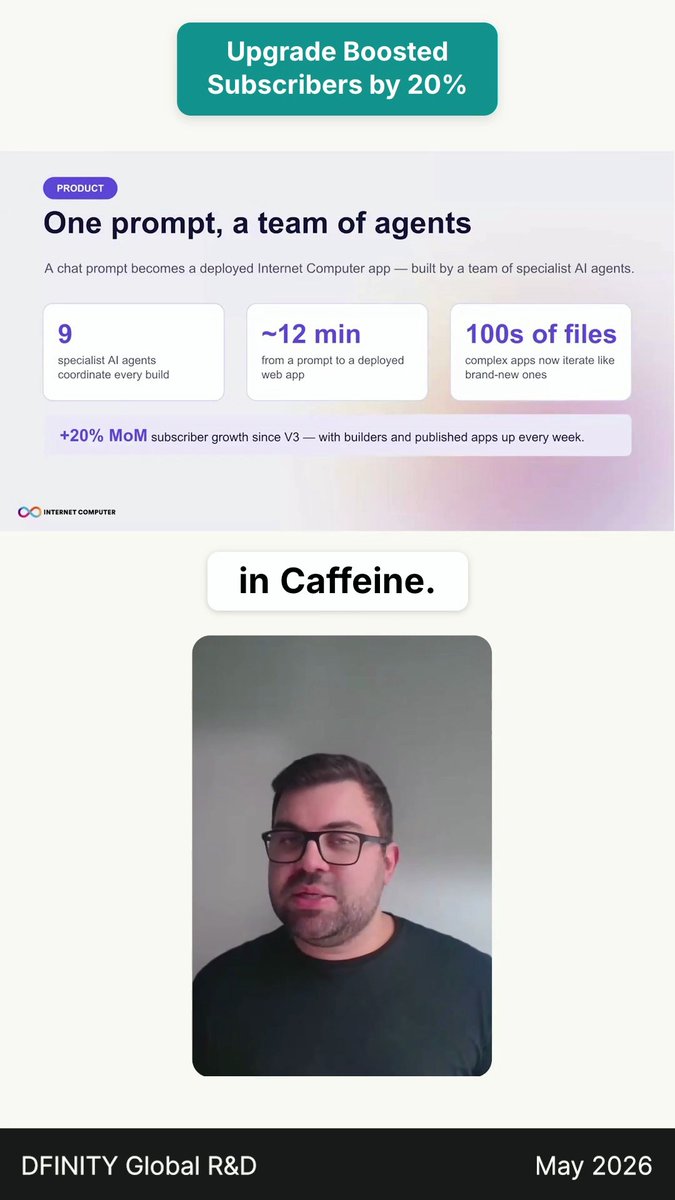
ICP's Caffeine v3 Has Recorded Huge Growth Since Launch Internet Computer (DFINITY Foundation) reported a 20% month-over-month surge in subscribers following the deployment of the Caffeine V3 parallel development engine. This release marks a significant scaling milestone for the $ICP ecosystem as it transitions toward a fully autonomous AI...

19,953 views • 1 month ago •via X (Twitter)

0 Comments

No comments available

Comments from the original post will appear here
Related Videos

Synthetic Caffeine...The Energy In Your Drink & Supplements Is A Lab Created Cocktail Of Toxic Chemicals. Nazi Germany Invented It, Then Pfizer & Monsanto 'Adopted' The Recipe For Synthetic Caffeine & Mass Produced It. Today, 90% Of Synthetic Caffeine Is Manufactured In China. Most people assume the caffeine in energy drinks & supplements comes from natural sources like coffee or tea...but the truth is the complete opposite of 'natural.' The Nazis conducted stimulant experiments with methamphetamines & when they proved unsatisfactory to elicit the response they desired, they researched & produced the first synthetic caffeine. Monsanto & Pfizer adopted the "recipe" & established factories for mass production of synthetic caffeine in the United States. Lab Created Synthetic Caffeine Production Process: It starts with Ammonia...The pungent caustic chemical used as a cleaning agent, a fertilizer & as a precursor to nitrogen compounds. The Ammonia must be converted to Urea...The same chemical found in human urine. This Urea is combined with Chloroacetic Acid to create Uracil, which is then converted to Theophylline. The addition of methyl chloride transforms the theophylline into methylated theophylline, which is synthetic caffeine. The synthetic caffeine, at this stage in chemical production, is glowing blue as a phosphorescent. Synthetic caffeine has a blue, phosphorescent glow that is considered unappealing, which is why the raw form is processed with chemicals like chloroform to remove the glow & produce the familiar white powder of caffeine. The glowing phenomenon is a side effect of the chemical manufacturing process, which uses harsh ingredients like ammonia & urea, & is not a feature of naturally sourced caffeine. The US soft drinks industry is highly dependent on synthetic caffeine, with giant soda companies requiring more than 2 million kilograms a year for their beverages alone. In total, America imports 7 million kilos of artificial caffeine annually. 3 Chinese factories are the powerhouse behind 90% of all synthetic caffeine production & export...most coming from Shijiazhuang, an economically booming yet heavily polluted industrial city in Hebei province. In the global caffeine industry, transparency is scarce. Recent FDA reports revealed shocking conditions in a Chinese plant that supplied giant soda companies, from rusting infrastructure to the absence of sanitation measures such as hairnets & gloves. The unsettling truth about this incident makes it clear that self-certification for foreign inspections can be disastrously dangerous, especially in countries with track records of food poisoning cases. Incidentally, the European Union bans synthetic caffeine import from China, due to health concerns & harmful production practices to protect European citizens. Products Containing Synthetic Caffeine: Soft Drinks Energy Drinks Some Electrolyte Powders Dietary Supplements Prescription Medications OTC Medications Gum Candy Some Cosmetics 👇Monsanto Patent Synthetic Caffeine👇 👇Pfizer Patent Synthetic Caffeine👇 👇Synthetic Caffeine - vs - Natural Caffeine👇 Speaker: Samantha Feher CAPS LOCK Podcast

Valerie Anne Smith

152,707 views • 10 months ago