Video wird geladen...

Video konnte nicht geladen werden

Zur Startseite

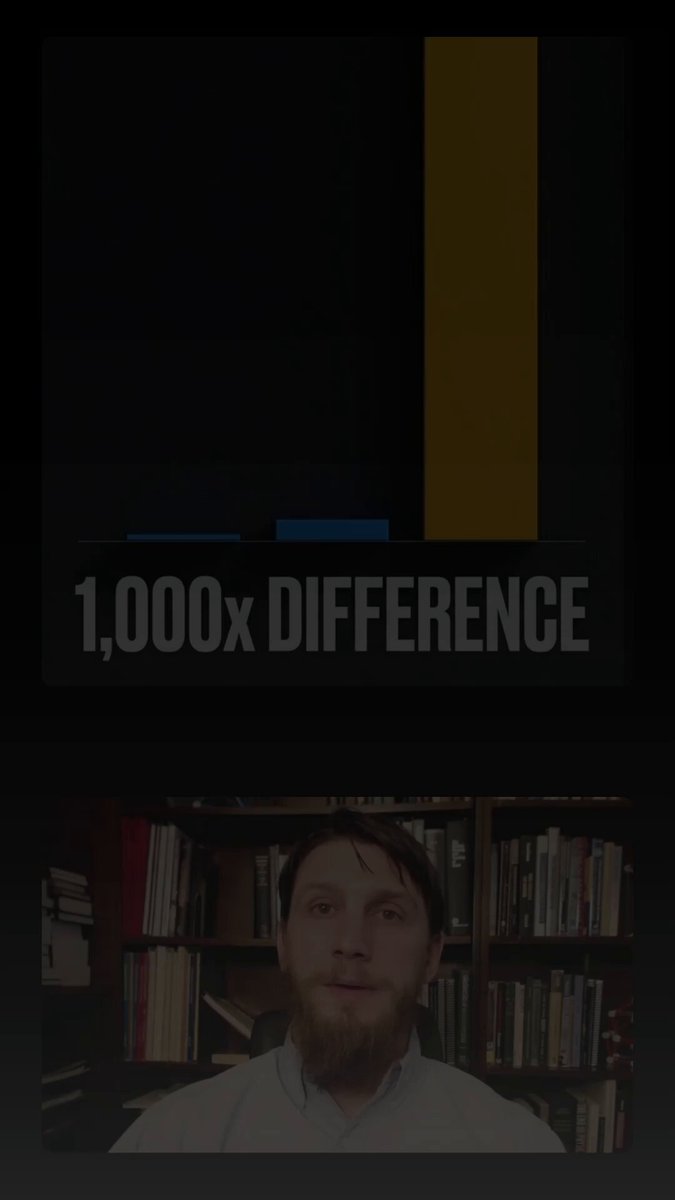
If emissions reduction were the real goal, nuclear would already dominate. First off, it is the safest energy source per unit of power produced. Secondly, it has the lowest life cycle CO2 emissions, lower than coal, gas and even wind and solar. Thirdly, nuclear runs 93% of the time....

19,281 Aufrufe • vor 5 Tagen •via X (Twitter)

34 Kommentare

Profilbild von Bill Heller
Bill Hellervor 5 Tagen

One picture is worth a thousand words...

Profilbild von michael holcombe
michael holcombevor 5 Tagen

Correct! But gas is also a great option since the emissions are only H2O and the gas of life CO2.

Profilbild von Derek
Derekvor 5 Tagen

Seems energy poverty was the plan at least until they needed energy for surveillance centres

Profilbild von WhizKidder
WhizKiddervor 5 Tagen

Newer designs need even less space, are walk-away safe (they can't melt down), produce less waste (with a shorter period of radioactivity), and some don't even need a nearby water supply for cooling.

Profilbild von CinnamonGaga
CinnamonGagavor 5 Tagen

You are going to have to get through almost 30 years of scare tactics and propaganda

Profilbild von haliday
halidayvor 5 Tagen

Yes, but China is not a major source of Uranium, with barely enough for domestic demand. So here we are.

Profilbild von UncleMac
UncleMacvor 5 Tagen

The climate change cultists are useful idiots for those who want green communism.

Profilbild von NÝlزQ
NÝlزQvor 5 Tagen

Plant biology and Plant science is NOTABLY ABSENT in ALL the global warming, climate change scenarios There are approximately 391,000 species of plants covering 32 % of Earths surfce 163 MILLION square KILOMETERS of co2 ABSORPTION and GROWTH by PLANTS EVERY SINGLE DAY

Profilbild von Richard Rothwell
Richard Rothwellvor 5 Tagen

When you imagine you are smarter than a nuclear engineer, but you can’t do the math. The expansion or not of nuclear power has little connection to the motivation for climate change mitigation, thanks to economics & risk/politics. Hansen for example favors nuclear power.

Profilbild von algar
algarvor 5 Tagen

By not choosing Nuclear it simply proves that it isn't emissions and climate change that is the concern----It is reliable, affordable energy which is the driver of Industrial Capitalism.----Climate Politics then are essentially anti capitalist eco socialism.

Profilbild von Donny Boon !
Donny Boon !vor 5 Tagen

We have a thousand years of coal in the ground! And we own it ! Let’s burn it Way less problems than dealing with nuclear power issues like placement of plants and the waste disposal of spent nuclear materials.

Profilbild von SpecialAgentRock
SpecialAgentRockvor 5 Tagen

Big oil propagandized the population back in the 70's and 80's to ensure their cartel

Profilbild von ORAC v.42
ORAC v.42vor 5 Tagen

It's a great example of how politicians have no common sense. It's not going to change because of your dreadful education. But it does make such great comedy!!!

Profilbild von Jimmy
Jimmyvor 5 Tagen

No Nukes

Profilbild von Gordon Herriman
Gordon Herrimanvor 5 Tagen

“Safest Energy Source” is a made up statistic to close coal plants. Dispatchable power that can ramp to match demand is more important than being at full power 93% of the time. Nat Gas power plant uses less land. Remove junk science and what is left to make nuclear attractive?

Profilbild von Steve Kroll
Steve Krollvor 4 Tagen

Absolutely!

Profilbild von Sharon Collins
Sharon Collinsvor 4 Tagen

Nuke facilities take large volumes of water for cooling. Waste in another issue. Atomic clock was set back in the day with advancement of nukes and technologies. People were warned so they made it a policy.

Profilbild von Keith
Keithvor 5 Tagen

But they release water vapor and water vapor is the most impactful greenhouse gas.

Profilbild von cjtjgeol
cjtjgeolvor 5 Tagen

Dumbarse leftys are usually scientifically illiterate..and don't like newqular

Profilbild von IRoly
IRolyvor 5 Tagen

Meaning there’s another agenda

Profilbild von Lawyerforlaws
Lawyerforlawsvor 5 Tagen

There have been nuns protesting commercial nuclear power since the 1970s . .

Profilbild von Isaac
Isaacvor 4 Tagen

Luego está el tema de los desechos radiactivos.... cambiar un mal por otro

Profilbild von Barry Schiff
Barry Schiffvor 5 Tagen

My view is it’s still a terrible option for terrestrial power.

Profilbild von Sanity Personified
Sanity Personifiedvor 5 Tagen

Now tell us about the fiasco in Somerset sweet pea

Profilbild von Flemming Rasmussen 🇺🇦🇩🇰🇬🇱🇪🇺
Flemming Rasmussen 🇺🇦🇩🇰🇬🇱🇪🇺vor 5 Tagen

WRONG

Profilbild von Felix Landwirt
Felix Landwirtvor 5 Tagen

Nuclear clearly has a role in the clean energy mix! I find the UAE approach fascinating: Barakah nuclear plus mega solar, all in one long-term strategy. Both work together. ⚡️🌞

Profilbild von Carlton Duston
Carlton Dustonvor 5 Tagen

Some good points.

Profilbild von GreenMan
GreenManvor 4 Tagen

Nuclear is going to have to come back whether we want to or not because it's the only true thing that can produce enough power per acreage that efficiently.

Profilbild von Salama Al Mansouri
Salama Al Mansourivor 5 Tagen

Friends, True Sustainability comes from Alignment. Nuclear power is clean, steady and reliable. I trust solutions that serve Humanity for generations. Fear-based choices only Deplete. Go with Source Flow to Thrive. WISDOM!

Profilbild von Cancel some of the Government
Cancel some of the Governmentvor 5 Tagen

How many countries currently recycle their nuclear waste?

Profilbild von David Bryan
David Bryanvor 5 Tagen

Agreed. The land use impact of say solar alone & the poor energy production are enough to rule it out.

Profilbild von 2nd tesla
2nd teslavor 5 Tagen

Solar power and turbines can be considered reasonably safe; if they break down, they can be repaired at any time. To be honest, nuclear power isn't quite as safe as claimed—the true extent of the risk only becomes apparent if an accident actually occurs.

Profilbild von British Adventure News 🇬🇧
British Adventure News 🇬🇧vor 5 Tagen

Thorium reactors would be even better.

Profilbild von Marty Davis
Marty Davisvor 5 Tagen

There's your sign 👆 touche my friend
Ähnliche Videos

2026 Conservative Claire Coutinho claims the UK's pursuit of Net Zero is driven by ideology, and that using less wind and solar could save the equivalent of around £500 per household a year 2023: Conservative Claire Coutinho, "Nothing will distract us from achieving Net Zero or driving forward with renewables" The claim that less wind and solar would save every household £500 a year is deeply misleading. Coutinho is effectively taking the result of a model that changes almost the entire future electricity system—less wind and solar, much more nuclear and gas, different grid requirements and, crucially, no carbon price—and presenting the resulting £500-plus difference as though it were the cost of renewables. The research simply doesn't establish that. The figure does not come from evidence that renewables currently add £500 to household bills. It comes from a Conservative-backed modelling exercise comparing two hypothetical energy systems and turning £320 billion of estimated economy-wide savings between 2030 and 2050 into an annual equivalent per household. Crucially, the supposedly cheaper alternative doesn't simply build less wind and solar. It assumes far more nuclear power, substantially more unabated gas, lower spending on networks and balancing, and the removal of carbon pricing from electricity generation. Of the £320 billion headline saving, £137bn comes from assumed lower network costs, £67bn from balancing and ancillary services, £22bn from subsidies and capacity costs, and £94bn from lower wholesale prices. That £94 billion is particularly important because much of that supposed saving is created by changing the rules of the comparison. The existing-policy scenario assumes generators continue paying a carbon price which rises substantially towards 2050; the alternative effectively abolishes that carbon price from 2031. Unsurprisingly, a model in which gas-fired electricity no longer carries that cost produces cheaper wholesale electricity. But that isn't evidence that wind and solar made electricity £94bn more expensive. It is principally the consequence of assuming a major carbon-pricing policy is abolished. Nor is removing carbon pricing simply £94bn of free money. Carbon pricing is deliberately intended to make polluters account for their emissions, discourage fossil-fuel generation and encourage cleaner alternatives, while carbon allowances also generate government revenue. Removing it means accepting considerably greater emissions and losing those revenues and incentives. The alternative model consequently produces hundreds of millions of tonnes of additional CO₂. The model also assumes Britain can successfully build around 20GW of nuclear capacity, while retaining much greater dependence on gas. Whether nuclear can be delivered at the assumed cost and timetable is far from guaranteed, while greater reliance on gas leaves households more vulnerable to international gas-price shocks—the same exposure that played such a large role in Britain's recent energy-price crisis. There is a legitimate argument about the costs associated with large amounts of wind and solar. An electricity system dependent on intermittent generation requires substantial investment in transmission, balancing, storage, interconnectors and backup capacity, and those costs shouldn't be ignored. But that is very different from demonstrating that wind and solar cost every household £500 a year. Nearly £100bn of the supposed saving comes from the decision to remove carbon pricing, not from discovering that wind and solar are £100bn more expensive. Coutinho has taken a £500-plus headline generated by a Conservative-backed model containing a whole package of assumptions—less wind and solar, much more nuclear, more gas, less grid investment and the abolition of carbon pricing—and presented it to the public as evidence that Britain's reliance on wind and solar is costing households hundreds of pounds. That's misleading because the model doesn't establish that. It establishes that, if you change the entire future energy system and the taxes imposed upon it, its authors calculate a lower overall system cost. Turning that into “less wind and solar will save your household £500” strips away the assumptions that actually produce the number.

Farrukh

14,159 Aufrufe • vor 1 Monat