Loading video...
Video Failed to Load
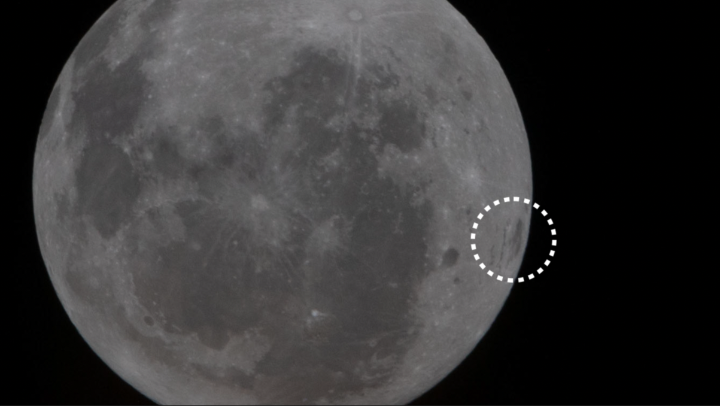
In 1996, they knew exactly what would make or break moon colonization. Without lunar ice, you're hauling everything from Earth at massive cost. With it, you produce fuel locally and moon bases become economically sustainable. This wasn't about water for drinking, this is about extracting hydrogen and using it... show more

32,125 views • 8 months ago •via X (Twitter)
0 Comments
No comments available
Comments from the original post will appear here


![[Heo Seongbeom Youtube] 260305 Jin - Moon 🌕🌏 (part1) 👨🏫It’s a solo song by Jin, and BTS are also preparing for a comeback in March. I’m really looking forward to it. I’m the moon, and you are the Earth. So it becomes a kind of love triangle. Earlier the sea loved the moon, but who does the moon love? The moon loves the Earth. That idea is reflected in this song, so let’s try interpreting it. Since when have the moon and the Earth been together like this? We’ve been together for so long, but when did it start? About 4.51 to 4.53 billion years ago. Scientists figured this out through radioactive isotope analysis, which showed that the Moon is about 4.51 to 4.53 billion years old. “Shining just by existing.” This line is directed at the Earth. But does the Earth actually shine just by existing? No. Because the Earth is a planet and does not produce its own light. If the Earth appears to shine, it’s probably because of artificial lights made by humans. “Can I stay by your side and protect you?” It sounds shy, but in reality the moon can’t help staying there, because it’s bound by gravity. And here we see the main line of the song. “You are my Earth, and to you I’m just a moon. Your small star that lights up your heart.” It’s poetic, but is the moon actually a star? No. Celestial bodies are generally divided into two categories. First, there are stars (stellar bodies). These produce their own light. Second, there are planets. Planets do not produce their own light. Instead, planets usually orbit around a star. The Earth is a planet. From our perspective, the star in our system is the Sun. So when you look at the night sky and see stars, those lights are actually other suns, each producing their own light. But sometimes when you see a particularly bright “star,” it may actually be a planet like Mercury, Venus, Mars, or Jupiter. Then you might ask: if planets don’t produce their own light, why do they shine? Because they reflect sunlight. The Moon also appears bright because it reflects the Sun’s light. #JIN #방탄소년단진 방탄소년단](https://image.24vids.com/tw-2030933386580381878/amplify_video_thumb/2030932492694536192/img/D-V07hPtq_yG5-w_.jpg)