Загрузка видео...

Не удалось загрузить видео

На главную

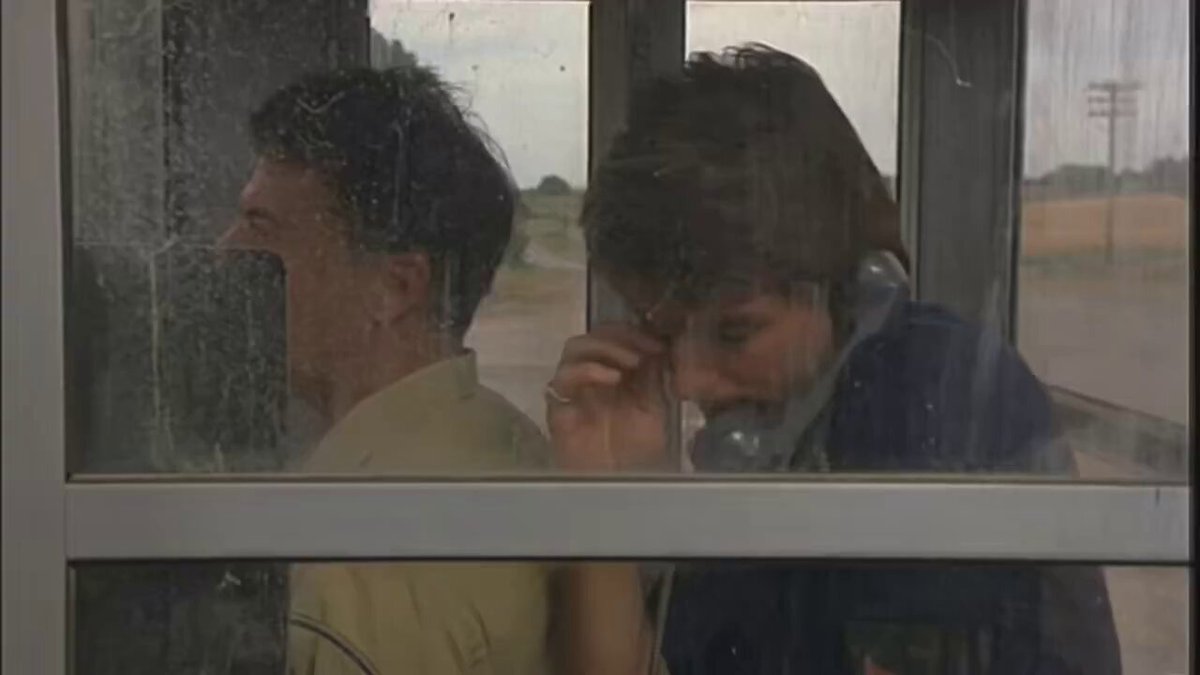
In The Hateful Eight (2015), Kurt Russell accidentally smashed a real 19th century Martin guitar worth about $40,000 instead of the replica. Jennifer Jason Leigh's shocked reaction was completely genuine. The Martin Guitar Museum never loaned guitars to film productions again.

15,648 просмотров • 1 месяц назад •via X (Twitter)

Комментарии: 0

Нет доступных комментариев

Здесь появятся комментарии из оригинального поста

Похожие видео

A truck driver in Australia once won $250,000 on a scratch card while pretending to win a scratch card for a TV news crew. He didn’t know the ticket was real until he scratched the last panel. He turned to the camera, completely flat, and said, “I just won $250,000. I’m not joking.” Then, holding his chest, “I think I’ll have another heart attack.” The “another” was the part most viewers missed. A year earlier Bill Morgan had been in a serious accident, developed a heart condition from it, had an allergic reaction to the medication that was supposed to fix it, and his heart had stopped for 14 minutes and 38 seconds. Paramedics revived him. He slipped into a coma. His family was told to prepare to turn off life support after 12 days. The day they were going to make the decision, he woke up. Fully himself with no brain damage. Within twelve months he got engaged, found work again, bought a $5 scratch card on a whim, and won a Toyota Corolla worth around $30,000 Australian dollars. That was the win that brought Nine News out to film him. They asked him to re-enact the car-winning moment in the same shop. He picked a fresh ticket off the counter at random for the re-creation. Scratched it. Won the jackpot. The cameraman thought he was acting until he saw the numbers. The shop staff opened champagne. Bill called his fiancée from the counter and told her they could now buy a house. She later said, on camera herself, “I just hope he hasn’t used all his good luck up.” She’s been with him for 27 years. They still live in the house. He’s in his mid-sixties, retired due to ongoing heart issues and arthritis, and he still walks down to the same kind of corner shop every week and buys a $5 scratch ticket. He doesn’t expect to win again. “I’ve had a bonus of 22 years,” he says. “Even if I’m not real well I shuffle down the road and smell the roses, look at the sun, and think about how lucky I am.”

Lemma the Optimist

122,513 просмотров • 4 месяцев назад

EVERYONE'S PROMPTING FOR CINEMATIC PERFECTION. THE FUNNIEST STUFF COMES FROM LOCKING DOWN THE PHYSICS INSTEAD. Fixed camera axis. No slow-mo, no replays, no cutaways. One object that moves in one direction, never stops, never reverses, never breaks the geometry of the set. That's the whole trick behind making a gameshow challenge clip read like real broadcast footage instead of an AI fever dream. Here's a full prompt built that way. Copy it, swap the character and challenge, works for almost any physical-comedy bit: SETUP: Real TV camera coverage, daytime outdoor set, real-time only - no slow motion, no replays, no freeze frames. Reference images lock venue layout, character identity, starting positions, and target pose. POINTS A & B: Fixed and never reversed. The obstacle always travels A→B, makes contact, keeps pushing - it only stops the instant she hits the water. OBJECTIVE: Match a cutout shape before the obstacle arrives. She nails the pose. The cutout is just slightly too small. That's the entire joke - not a missed pose, a missed size. POSE LOCK: Orientation matters as much as the shape. Once she's in position, back stays toward A, face stays toward B -no last-second turn to "check" on the obstacle. That's the detail that keeps it feeling like a real stunt instead of a render guessing at anatomy. TIMELINE: Beat it out second by second - buzzer, pose, contact, push, fall, reaction. No dialogue on the impact beat. Just the splash, then a second of silence before she surfaces. CAMERA: Wide ENG shot to establish the full space and the one-way geometry. Medium for the pose. Wide again for contact, so the full body and the full cutout read in one frame. Cuts never imply the obstacle moved backward. ENDING: No shouting, no crying, no laughing, no line. Just a wet, unbothered stare into the lens. That's the punchline. A few things worth noticing about why it's built this way: Fixing A and B before anything else is what keeps a multi-cut sequence from ever "teleporting" the obstacle. Direction discipline does more work here than any camera instruction. The pose isn't a vibe (do a handstand) - it's a construction: three contact points, hips up, legs locked wide, back toward the danger. That specificity is what stops the model from defaulting to a normal handstand. The failure condition is spelled out as harshly as the success condition. She fails because of size, not form removes the model's favorite shortcut - quietly rewriting the ending into a clean pass-through. Comment PROMPT and I’ll send it to you.

Nexlow

29,192 просмотров • 25 дней назад

THE FASTEST WAY TO CATCH A SYNTHETIC MODEL ISN'T HER FACE, IT'S THE FOUR THINGS AROUND IT THAT ALMOST NOBODY BOTHERS TO FAKE. ONCE YOU CAN READ THEM, YOU'LL NEVER SCROLL THE SAME WAY AGAIN. Everyone stares at the face hunting for a glitch. The face is the one thing the tools nail perfectly now. That's exactly why the real tells quietly migrated to the edges of the frame. Where to actually look: > The hands across multiple posts. A real person's rings, scars, and nail length hold steady. A generated one drifts, a ring blinks in and out, a knuckle reshapes between two shots taken "the same day" > The background twice. Real rooms repeat, the same lamp, the same chipped mug, the same clutter in the same corner. Generated backdrops rarely survive a second appearance intact > The follower-to-comment gap. Synthetic accounts often buy the reach they can't earn, so the comments feel strangely thin and generic under an enormous number > The bio's honesty. The clean operators write "AI" out loud. The ones hiding it are precisely the ones worth a second, harder look Now go back to the last account you couldn't quite call. Check the hands, not the face. The face was engineered to pass every test you'd think to run. The edges were an afterthought, and the afterthought is always the tell. The people who can read the edges in ten seconds are about to be very hard to sell to, and everyone else is still staring at a jawline that was built to be perfect.

Asher Crowe 🪺

38,134 просмотров • 17 дней назад