Sensitive content

This media may contain sensitive content.

Video wird geladen...

Video konnte nicht geladen werden

Zur Startseite

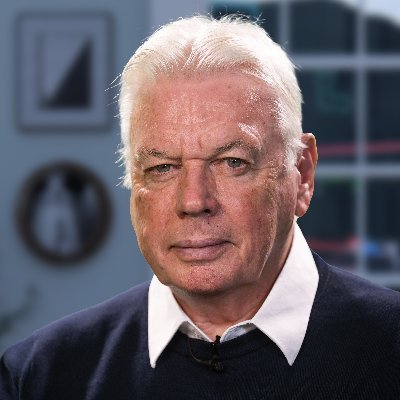
'In this compelling 2010 lecture, David Icke presents his controversial perspective on Zionism, years before the recent conflicts in Gaza. He challenges the mainstream narrative, suggesting layers of influence that shape global events. Icke questions the role of powerful elites, the media’s involvement in shaping perception, and the motivations...

69,622 Aufrufe • vor 16 Tagen •via X (Twitter)

0 Kommentare

Keine Kommentare verfügbar

Kommentare vom Original-Post werden hier angezeigt

Ähnliche Videos

Who Do You Think The 3rd Person Is? Bill Gates? Klaus Schwab? Someone Else? “Nostradamus saw in his future three men that he called antichrists. One was Napoleon, the second one was Hitler, and the third one is the one that is to come, who is said to be the worst of all, because he will learn from the mistakes of the others. A very dangerous person. He didn't like the term antichrist. He said it was a Christian term, and it was not exactly what he meant. But he said, if you think of Christ as representing people, humanity, then antichrist is someone who does terrible things against humanity, against people. And it can be the type of personality like Genghis Khan or Attila the Hun, the type that doesn't care anything about what it's doing, it only wants power. So this is what he meant by an Antichrist. But the third one, he gave us a great deal of information about him because he wanted us to do something to stop the man. He said in the Bible, in the book of Revelation and other books in the Old Testament, the people saw the same things that he saw their symbolism they could understand in their time, but they all saw the same thing. And the man he refers to as the Antichrist is the number 666 in the Book of Revelation, called the Beast. Of course he said 666 also refers to his connection to his computers. So there's a lot more to it. But he has been predicted as far back as Bible times. So he said he has a destiny to fulfill. He has to come, but after he comes, what happens after that is in the hands of mankind. Do we allow it to go through the worst case scenarios or can we lessen it? That's the point fulfill. We were given a lot of information about this man because he is so important. We have his horoscope. He was born on February the 4th, 1962 in Jerusalem, but he's not Jewish. And his parents were killed during the Israeli war and when he was about six or seven years old, and he was raised by his uncle. His uncle is a very evil man, and we have had many people see him, and we have in my work, and we had one woman who was able to put together a police composite picture of the uncle and of the antichrist. She was a psychic who had worked with police on many cases, so she knew how to do the police composite kits. But the uncle took the young boy him as his own. What the young boy doesn't know was that the uncle had his parents killed, so he could have him for himself. And he has gotten together a very powerful group of rich Arabs in the Middle East, and they've been taking care of this young boy and grooming him for the role he is to take. It's a very powerful group of people that control everything that happens in the Middle East. They're the puppet masters behind the scenes. Nusrat Dhamma said, by the time seven puppets arise in the Middle East, you will realize what is happening that they are not the real leaders of the countries, but they are the puppets being manipulated by the puppet masters behind the scenes. The young Antichrist went to college in Egypt, and we were working on this at the same time he was in college, so we were shown several scenes of him in college. We knew where he was living. We had all this information.”

Wall Street Apes

1,338,694 Aufrufe • vor 2 Jahren

Michael Jackson wasn't just the King of Pop, he was a beautiful soul the world never fully understood while he was here. Behind the music, the records, and the global tame was a man who gave endlessly, loved deeply, and used his voice to speak on injustice, pain, and humanity. Yet while he lived, the media often chose a different narrative. Instead of honoring his genius and his heart, they picked him apart, mocked him, and pushed stories that shaped public perception in ways that still linger today. It's one of the greatest contradictions of our time, how someone who brought so much light was surrounded by so much darkness in the public eye. In The Crucifixion of Michael Jackson, the Honorable Minister Louis Farrakhan breaks this down with clarity and depth. He speaks to the spirit of our brother Michael, not just the superstar, but the man. A man who stood for truth, who challenged power in his own way, and who carried a level of purity that this world often misunderstands and, at times, attacks. Now, as the world prepares to revisit his life through a new film, we have a responsibility. Not to recycle the same narratives that once tried to tear him down, but to celebrate him properly. To honor the music, yes, but more importantly, to honor the message, the compassion, and the courage he carried. Michael Jackson gave us more than entertainment. He gave us reflection. Songs like They Don't Care About Us weren't just records, they were statements. He wasn't afraid to speak on oppression, suffering, and injustice, even when it came at a cost.

TOUGHBOI9.

14,332 Aufrufe • vor 1 Monat

At a Q&A, John MacArthur is asked about Christian nationalism. The kingdom of God is not of this world. Jesus said that. He said, “My kingdom is not of this world. If My kingdom were of this world, My servants would [fight].” His kingdom is not of this world. The kingdom of this world is a separate world; they’re not linked together. Let me say it another way: Nothing that happens in any nation, whether it’s a Communist nation, a Muslim nation, or a “quasi-Christian” nation, or an atheistic nation—nothing in that nation politically, socially has anything to do with the advancement of the kingdom of God, because the kingdom of God is separate from that system. God, in His sovereignty, is building His church, “and the gates of Hades will not prevail against it,” Jesus said. So the idea that you should link up some political effort, some political process, some social process, some gain of power or influence in a culture as part of the advance of Christianity is alien to Christianity. You never have our Lord approaching anything like that, nor the apostles, and particularly the apostle Paul. He sought to gain no favor with the Roman Empire whatsoever, or for that matter, with any other of the rulers that he ran into during his life. Now, that is not to say that we are indifferent to what happens in the nation. We’ve been talking about that the last couple of Sunday mornings. We have to be the people who uphold righteousness. When we come to vote, we want to vote for that which is the most righteous option. Obviously, we can’t vote in righteousness, but we have to vote in a way that reflects our commitment to the righteousness of God. So we couldn’t possibly elect somebody who was an abortionist, somebody who was LGBTQ or LGBTQ-affirming, or any other deviation from God’s righteous moral standard. So it gets harder, doesn’t it, nowadays, because even sometimes when politicians are more conservative and anti-abortion, they may be sinful and wicked in some other categories, and it’s very hard to find out who is really honest and who is simply dishonest and seeking power. But in the end, we do what we can with the understanding that the responsibility of the church is not to advance the kingdom of this world. That’s a faulty viewpoint. Christian nationalism is usually tied to what is called post-millennialism, and that is the view that the church, somehow, by influencing the culture, can bring in the kingdom of Christ. In other words, it’s the idea not that Christ returns and sets up His kingdom, but that the church establishes His kingdom and then hands it to Him. That is not what Scripture teaches. What Scripture teaches is what we’re learning from the book of Revelation. Things are going to get worse and worse and worse. And the end of human history is not the church triumphant, reigning in the world and taking over the structures of human kingdoms; that’s not what happens. At the end of human history, the believers are persecuted and murdered, and that’s the very opposite of what Christian nationalism would anticipate. So we believe the Bible teaches that things get worse and worse, headed toward the wrath of God, which we’re seeing in Revelation, and then our Lord returns, Himself, to establish His kingdom is clearly what we read in the book of Revelation. OK?

Terri Green

12,152 Aufrufe • vor 10 Tagen

WATCH: CNN’s John Miller mentions the video and notes left behind by the alleged Minneapolis Catholic church shooter, citing their mental illness and the working motive is “he was in pain,” but NOTHING about the shooter being transgender and that they hated Christians, Jews, and Trump... Well, we’ve been looking into the shooter who law enforcement sources have identified as Robin Westman and police have been examining some of the postings online by an individual of the same name, presumed to be the same individual. It shows numerous weapons, magazines, things in preparation for the shooting along with a book and different notes. But one of them is particularly telling in that it says: ‘I have waited for this for so long. I am not well. I am not right. I am a sad person, haunted by these thoughts that do not go away. I know this is wrong’ and he goes on to describe that the action he is going to take against this world before taking his own life — which is not uncommon in these incidents, these active shooter scenarios where you see someone who reports to be in — in — in pain and trauma and that they write all of this out and leave it behind with the foreknowledge that what they're about to do is going to end their own life as well, while taking these — these strangers, these innocent people with them in the process. But investigators are going back through this material and a lot of other material trying to determine motive. So what do we know? I mean, what we know, if this in fact is from the shooter, that his motive was he was in pain. But what we don't see here and there's more to go through is what was, what was the shooter — Robin Westman in pain about specifically?”

Curtis Houck

64,113 Aufrufe • vor 10 Monaten

Mark Zuckerberg on Elon Musk’s acquisition of Twitter Elon Musk famously reduced head count by 80% after acquiring Twitter. It was controversial at the time, but Mark is asked what he thinks Elon did well during it. Mark responds: “You can agree or disagree with the exact tactics and how he did that. Every leader has their own style… But a lot of the specific principles that he pushed on: making the organization more technical, decreasing distance between engineers at the company and him, fewer layers of management. I think that those were generally good changes.” Mark also believes this was good for the technology industry as a whole: “My sense is that there were a lot of other people who thought that those were good changes, but who may have been a little shy about doing them. Just in my conversations with other founders and how people have reacted to the things we’ve done… When people see what Elon is doing, I think that gives people the ability to think through how to shape their organizations in a way that can be good for the industry and make all these companies more productive over time.” He continues: “So I think that was one thing where he was quite ahead of a bunch of the other companies on… And from the outside, it’s very hard to know. Did he cut too much? Did he not cut enough? I don’t think it’s my place to opine on that… But certainly his actions led me and, I think, a lot of other folks in the industry to think about, ‘Hey, are we doing this as much as we should? Could we make our companies better by pushing on some of these same principles?’” Video source: Lex Fridman (2023)

Startup Archive

522,371 Aufrufe • vor 4 Monaten