Loading video...

Video Failed to Load

Go Home

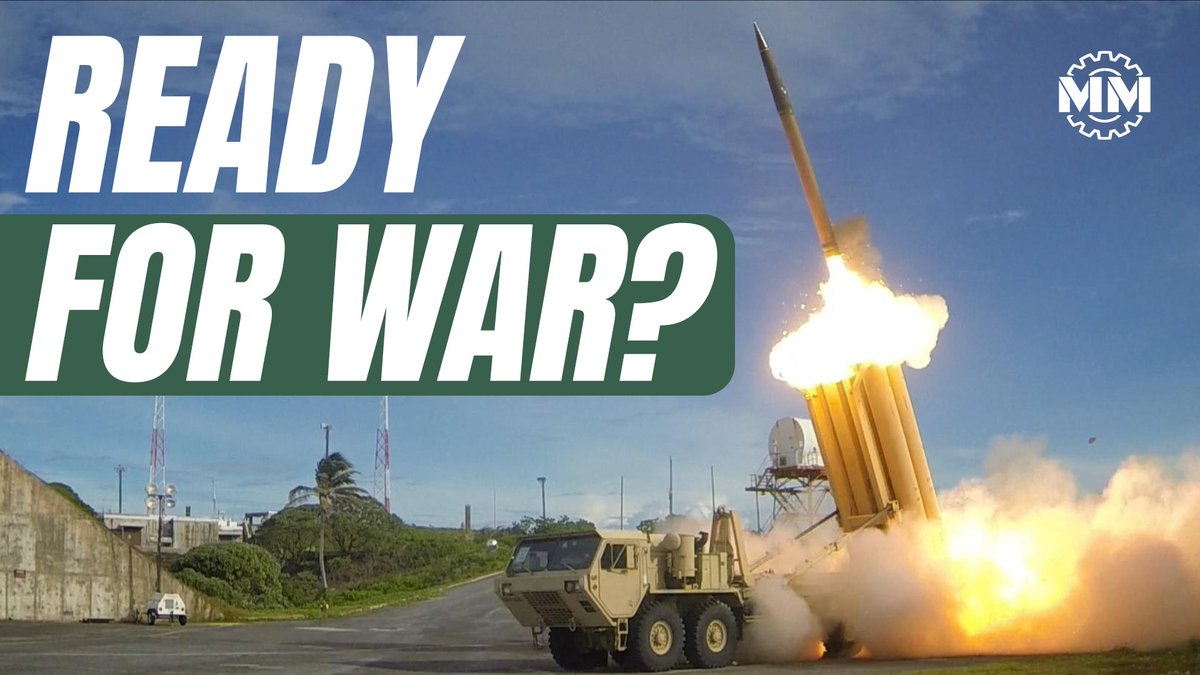
🇮🇷 Incredible scenes above Nazareth and Damascus tonight. Multiple exoatmospheric interceptions observed — Israeli Arrow and U.S. THAAD systems reportedly shot down incoming Iranian ballistic missiles in space, far above Earth’s atmosphere. These midcourse-phase interceptions were captured across northern Israel and southern Syria. Video Credit Bishara / June 15

45,231 views • 1 year ago •via X (Twitter)

8 Comments

DD Geopolitics's profile picture
DD Geopolitics1 year ago

Additional footage

ONE FOR ISRAEL Ministry's profile picture
ONE FOR ISRAEL Ministry2 years ago

Millions in Israel are viewing our Gospel videos! Help us reach Israel in these crucial days!

War Wombat's profile picture
War Wombat1 year ago

How many interceptors do they have?

Drerrie88's profile picture
Drerrie881 year ago

Looks like hypersonic re-entry vehicles to me.

M.Pirttijarvi ✝️'s profile picture
M.Pirttijarvi ✝️1 year ago

The slomo versions. Hypersonic ones. Dont think so.

Aliabbas Gulen's profile picture
Aliabbas Gulen1 year ago

This guy said it so well @Crazystockfans❇️🫶

maxpower's profile picture
maxpower1 year ago

Looks like weapons testing action

Resistance's profile picture
Resistance1 year ago

I wonder when Iran will start targeting thaads

Related Videos

Developments in the Iran-Israel war. It is currently 1:11am in Tel Aviv and 1:42am in Tehran. Main points: Iran and Israel have started targeting each other’s energy infrastructure. Iranian missiles continued to target and impact northern and central Israel. Israel has started targeting Iranian oil infrastructure, including oil refineries and oil depots. Israeli airstrikes continue to target various parts of Tehran and the surrounding areas. Iranian air defence seems to finally be doing some damage to Israeli missiles and drones. In turn, Israel has deployed dozens of small quadcopters and loitering munitions to waste Iranian air defence and saturate for larger attacks with cruise missiles. Drones launched from Iran and factions in Iraq continue to target northern and southern Israel. Missiles & drones: 2 rockets were launched from the Khan Younis area of southern Gaza by an unknown Palestinian faction. Neither were intercepted, with the IDF claiming they hit an open area with no casualties. 2 rockets were launched from Gaza, both of which impacted an unspecified section of the Gaza buffer zone. They were either targeting IDF troops, or malfunctioned mid-flight. The IDF claimed to have intercepted 2 drones, launched by either Iran or factions in Iraq, in the area of Kiryat Shmona, northeastern Israel. Consequences: Israeli outlet Haaretz confirms that 30 Iranian ballistic missiles impacted military bases across Israel, including 10 in Tel Aviv. This was at around 7am local time in Israel, prior to more missile impacts in the north of the country. Iranian ballistic missiles impacted Haifa and Tamra, targeting the Haifa Oil Refinery Israeli airstrikes and drones targeted various targets around Tehran including a central oil depot. Footage shows what appears to be wreckage of a shot down Israeli F-16 somewhere over Iran. Iranian President Masoud Pezeshkian claims that Iran shot down an Israeli F-35 fighter jet. Israeli airstrikes targeted Iran’s Bushehr Port. IDF spokesperson claimed that 7 IDF soldiers were “slightly” wounded Friday night in an Iranian ballistic missile strike on central Israel. Israeli airstrikes targeted the Yemen capital of Sana’a, reportedly killing the commander-in-chief of the Houthis. This remains unconfirmed. Al Jazeera, citing a senior Iranian official, stated that Iran is preparing for an “ongoing” confrontation with Israel, and will escalate its attacks. The head of Israel’s domestic intelligence announced his resignation, citing the failure to stop Hamas’ October 7 attacks. The IDF claimed to have killed the head of Iran’s military Intelligence, as well as the commander of the surface-to-surface missile sector. Israeli MDA spokesperson stated that 3 people have been killed and 172 others (directly) wounded. Iranian intelligence claims to have arrested 16 Mossad-affiliated collaborators and spies across Iran, The IAEA stated that 4 "critical" buildings were damaged at the Isfahan Nuclear Technology/Research Center in central Iran, including the Uranium Conversion Facility and the Fuel Plate Fabrication Plant. They added that no increase in off-site radiation is expected at the Natanz Nuclear enrichment facility after significant Israeli airstrikes, including with bunker-busting bombs. The current home-front guidelines remain in place for all of Israel, including a ban on all educational activities and large gatherings, except for essential services. Regional developments: Trump stated that “The war between Iran and Israel must end”. British Prime Minister Keir Starmer stated that new military assets are being transferred to the Middle East, including aircraft, for “contingency support”. Iran’s foreign ministry confirmed that Iran will not participate in nuclear talks with the U.S. on Sunday, stating that “Participating in talks with accomplices of the aggressor is pointless.” Pakistan’s Prime Minister Shehbaz Shariz expressed his “unwavering support” to Iran in a phone call with Iranian President Masoud Pezeshkian.

AMK Mapping 🇳🇿

38,923 views • 1 year ago

🚨12 HOUR NEWS RECAP 1. $3.2 trillion has reportedly been wiped from global markets in the last 48 hours. 2. The State Department updated travel warnings for the Middle East, placing Iran, Iraq, Syria, Yemen, and Lebanon at Level 4: Do Not Travel. 3. Trump reportedly asked Ukraine for help intercepting Iranian drones. Zelensky said yes, but with conditions. 4. A Farsi numbers station reportedly went live on 7910 kHz, broadcasting coded messages into Iran as the country’s internet connectivity reportedly dropped to around 4%. 5. NATO intercepted an Iranian missile headed for Turkey, which ultimately came down in northeastern Syria, where civilians reportedly gathered around the wreckage. 6. The Pentagon identified the fifth American soldier killed in the Kuwait drone strike as Maj. Jeffrey R. O'Brien, 45, of Indianola, Iowa. He was killed when an Iranian drone struck the tactical operations center at Port Shuaiba on March 1. All victims were from the 103rd Sustainment Command out of Iowa. 7. A Qatari F-15QA reportedly shot down two Iranian Su-24 attack aircraft Monday after they were detected flying low over the Persian Gulf toward Al-Udeid Air Base. 8. Israel launched a large wave of airstrikes across central and western Iran, destroying dozens of ballistic missile launchers and air defense systems, including launchers reportedly armed and actively being operated. 9. The Saudi Defense Ministry confirmed another wave of Iranian cruise missiles was intercepted south of Riyadh near Al-Kharj, home to the strategically important Prince Sultan Air Base. 10. Reports say at least 87 Iranian sailors were killed after a U.S. submarine sank an Iranian warship.

Mario Nawfal

67,523 views • 5 months ago

Netanyahu's Strategic Errors May Force the US into a Risky Precipitous Action In June, Israeli intelligence managed to execute a successful operation against Iranian air defenses, targeting key military leaders and assassinating scientists. But the success was confined to intelligence efforts, as the military action fell short in strategic planning. Netanyahu envisioned an operation spanning several weeks, yet Israel only had fuel and armaments for less than two. American cargo ships, tanker aircraft, and even a German A400 were rushed in to salvage Israeli logistics. The projections for interceptor missiles were even more dismal, forcing the American fleet to be summoned urgently to shield Israeli defense systems, which depleted in just over 10 days of fighting. Netanyahu and his advisors plotted a war of weeks, but failed to anticipate offensive and defensive munitions stocks that could sustain even two. Today, industry hasn't replenished even 30% of the expended volume and would require at least two years to near pre-war levels. The American force, with two CSGs, boasts around 900-1,300 VLS cells, 50-70% of which are defensive missiles, realistically yielding 500-800 interceptors. Half could be swiftly exhausted defending the fleet in the Sea of Oman, sufficient for roughly 200-300 Iranian anti-ship missiles. Following this analysis, the Haifa fleet might hold 250-400 defensive missiles, plus David Sling (15-25 monthly production) and Arrow (2-4 monthly) outputs from the past eight months, alongside regional Patriots and THAAD. That totals about 1,100-1,600 missiles. This would suffice for 700-1,200 Iranian missiles, based on proportions from the 12-day war. That equates to munitions for 15-20 days of protecting Israel. Yet there's a critical detail: the 4-5 AN/TPY-2 radars in Qatar, the UAE, Saudi Arabia, Turkey, and Israel. Losing those in Qatar, the UAE, and Saudi Arabia would severely degrade tracking precision for Iranian missiles, hampering interceptions. Such radar losses mark a pivotal shift from the 12-day war. The US and Israel will stake everything on suppressing Iranian air defenses, but if it falters, chaos ensues. Even with 250 cargo ships tapping munitions from the two CSGs and bases, the war might stretch to 20 days at best. Netanyahu appears unwilling to forgo attacks, viewing this as a prime chance to topple the Iranian regime, but his June calculations were a debacle and could drag the US into an unprepared conflict. On the Iranian side, the question is whether they can sustain a high missile launch tempo while enduring intense air defense suppression.

Patricia Marins

513,112 views • 5 months ago

🇮🇷 Iran’s Ballistic Missile Arsenal and the Regional Counter Strategy Fateh Series (SRBM) The Fateh family represents Iran’s core short range ballistic missile capability. These missiles use solid fuel, allowing rapid launch with minimal preparation time. Estimated range is around 300 km, designed for battlefield and regional targets. Later variants emphasize higher accuracy through improved guidance and terminal maneuvering, making them more difficult to intercept than older systems. Sejjil (MRBM) Sejjil is a two stage, solid fuel medium range ballistic missile with an estimated range of 2,000 to 2,500 km. Its solid fuel design significantly improves survivability by reducing launch detection time. Sejjil is intended as a strategic missile capable of reaching targets across the Middle East, including major military bases and infrastructure. Kheibar Shekan (Advanced MRBM) Kheibar Shekan is a newer generation solid fuel missile with a reported range of around 1,450 km. It features a maneuverable reentry vehicle, enabling mid course and terminal phase adjustments to complicate interception. This missile is optimized to penetrate modern missile defense systems rather than relying purely on range or payload. Why these missiles challenge air and missile defenses? Solid fuel propulsion shortens warning time. Maneuverable reentry vehicles reduce interception probability. High speed terminal phases compress response windows. When launched in salvos, these missiles are designed to stress and saturate defensive systems. How regional and allied forces aim to counter this threat Surrounding states and allied bases rely on layered missile defense. Patriot PAC 3 MSE addresses short range and terminal phase threats. THAAD provides high altitude interception against medium range missiles. Israeli systems such as Arrow complement regional coverage. Early warning radars, space based sensors, and shared command networks extend detection and response time. Base hardening, dispersal of assets, and redundancy reduce damage if interception fails. Intelligence driven preemptive strike capability remains a key deterrent factor. Strategic assessment Iran’s missile program emphasizes survivability and defense penetration rather than sheer numbers. In response, regional allies focus on integration, layered defense, and intelligence dominance. The outcome in any future conflict would likely depend less on individual missiles and more on coordination, saturation levels, and decision speed.. Can layered missile defense realistically stay ahead of evolving maneuverable ballistic threats?

Defense Intelligence

22,048 views • 6 months ago

🚨🇺🇸 🇮🇷 A new analysis puts hard numbers on America's interceptor crisis: roughly 827 Patriots and 278 THAADs left, down from 2,330 and 452. -Per the Center for Strategic and International Studies, Patriot inventories have fallen under 1,000 and THAAD sits around 250-278, after months of defending bases across the Middle East -The air defense campaign has worked, with high though not perfect interception rates, but the price was burning through more than HALF the Patriot stockpile -The warning attached: diminished stocks may force the U.S. and its partners to take MORE RISKS with interceptions, because there are no good alternatives to Patriot and THAAD against ballistic missiles, and Navy ships are generally too far away -The bigger shadow: the expended munitions create a near-to-medium-term risk for U.S. readiness against CHINA in the Pacific, with rebuilding expected to take YEARS despite expanded production -The administration's budget shows the urgency: $95 billion for munitions in FY2027 plus $21 billion in the war supplemental These are the numbers behind everything that just happened: the pause Caine argued for, the massive attack Trump shelved, and the choice he now faces after Iran's two-night salvo. Every ballistic missile Tehran fires forces million-dollar interceptors out of a magazine that took decades to fill and will take years to refill. Iran can see the same math CSIS published. That may be exactly WHY the missiles keep coming. Source: CSIS / Writer: Daniel

Mario Nawfal

32,201 views • 14 days ago

AN AMERICAN PATRIOT BATTERY MAY HAVE JUST SHOT DOWN AN AMERICAN F-15 A U.S. F-15E Strike Eagle crashed in Kuwait on March 2 during Operation Epic Fury. The pilot ejected safely with apparent injuries according to Republic World and SSBCrack, which published video of the aviator in the back of a vehicle post-ejection. Iraqi News confirmed the crash occurred in a sparsely inhabited area near the Iraq border. CENTCOM has not released an official statement on the cause. Iran’s state media claimed the Islamic Republic shot the jet down. Iran provided no evidence. NDTV reported footage showing the F-15 spiraling in what appeared to be a friendly fire engagement from a Patriot air defense battery. If that footage is authentic, the United States just shot down its own fourth-generation strike fighter with its own air defense system in the territory of its own ally during a war the United States started. Here is why this is not an anomaly. This is a pattern. On March 23, 2003, during the invasion of Iraq, a U.S. Patriot battery shot down a Royal Air Force Tornado GR4 returning from a mission over Iraq. Flight Lieutenant Kevin Main and Flight Lieutenant Dave Williams were killed. Twelve days later, on April 3, 2003, a Patriot battery engaged and destroyed a U.S. Navy F/A-18C Hornet. Lieutenant Nathan White was killed. Two Patriot fratricide incidents in twelve days. The investigation found the system’s radar misidentified friendly aircraft as incoming tactical ballistic missiles. Twenty-three years later, the same Patriot system is deployed across the same theater, under the same conditions that produce fratricide: saturated airspace, dozens of simultaneous missile tracks, hair-trigger engagement protocols activated by the single largest barrage of Iranian ballistic missiles and drones in history. The UAE alone absorbed 165 ballistic missiles and 541 drones according to Breaking Defense. Kuwait took Iranian strikes that killed three U.S. service members and seriously wounded five more according to CENTCOM. Every Patriot battery in the Gulf is operating in the most target-dense air defense environment since the system was designed. Patriot was built to track and engage ballistic missiles. When the sky is simultaneously filled with ballistic missiles, cruise missiles, one-way attack drones, and friendly strike aircraft returning from Iranian airspace, the IFF (Identification Friend or Foe) discrimination challenge exceeds anything tested in peacetime exercises. This is the first major air-to-air fratricide incident of the Iran war. If confirmed as Patriot engagement, it exposes a vulnerability that cannot be patched in the middle of a conflict. The system that Gulf states purchased for billions to protect against exactly this scenario, a mass Iranian missile and drone barrage, may be unable to distinguish between the incoming threat and the outgoing response. The pilot survived. The next crew may not. And the diplomatic payload is staggering. Kuwait is hosting American forces, absorbing Iranian strikes, burying American service members, and now potentially witnessing American air defense systems destroying American aircraft over Kuwaiti territory. Kuwait did not sign up for this geometry. No ally in history has absorbed fire from both the enemy and the protector simultaneously. Until now.

Shanaka Anslem Perera ⚡

1,112,162 views • 5 months ago

Day 7 latest updates on Iran: -IRGC Spokesman: Iran strongly welcomes the escort of oil tankers and the claim of a US military presence to transit the Strait of Hormuz; in fact, we are waiting for their presence. -Iran rejects cease‑fire negotiations and says it is ready for any potential U.S. invasion. -Strait of Hormuz is shut down: oil prices are surging The U.S. economy is in free fall. -Trump tariffs rejected by the Supreme Court -92,000 jobs LOST in February: worst since the pandemic -Markets crashing: more than $2 trillion gone this week -Trump eased sanctions on Russian oil -Then found out Russia is helping fund Iran -Trump looking at over $100 billion in damage -8 US bases completely destroyed in Mid East -Easily over 1000 troops, agents dead, more injured Iranian military capabilities report: -Complete collapse of U.S. surveillance and defense systems across West Asia. -Survival chances are over, and shelters will protect no one; IRGC missiles will strike without warning. What existential disaster awaits U.S. terrorist bases and their Zionist ally? -The targeting of the most advanced early warning radars in U.S. bases (Al-Udeid, Ali Salem, Al-Dhafra) by Iran’s Aerospace Force has collapsed the region’s air defense network by over 75%. -The destruction of the giant AN/FPS-132 radar today, the neutralization of THAAD systems, along with previous strikes, has reduced warning times from 15 minutes to just one minute. -Missiles and drones now operate freely over Bahrain, Qatar, UAE, Saudi Arabia, Oman, and Jordan, hitting U.S. targets without hindrance. -With the deployment of Heidar-110 suicide drones and Khoramshahr-4, Fattah, and upgraded Khaybar missiles, the complete collapse of remaining enemy surveillance and defense systems and U.S. bases is accelerating. -KBR ( Kellogg Brown & Root), the largest U.S. military contractors that enables U.S. death squads is on fire! The world is beginning to realize the scale of the catastrophe for enemy systems -Sirens now sound only when warheads reach their targets. -The Iranian Armed Forces, led by the IRGC, are now preparing for a wider and more devastating battle -Iranian media reports the arrest of five US and Israeli agents who were said to be conducting intelligence gathering operations in Tehran targeting religious institutions.

Truth_teller 🇷🇺

96,410 views • 5 months ago