正在加载视频...

视频加载失败

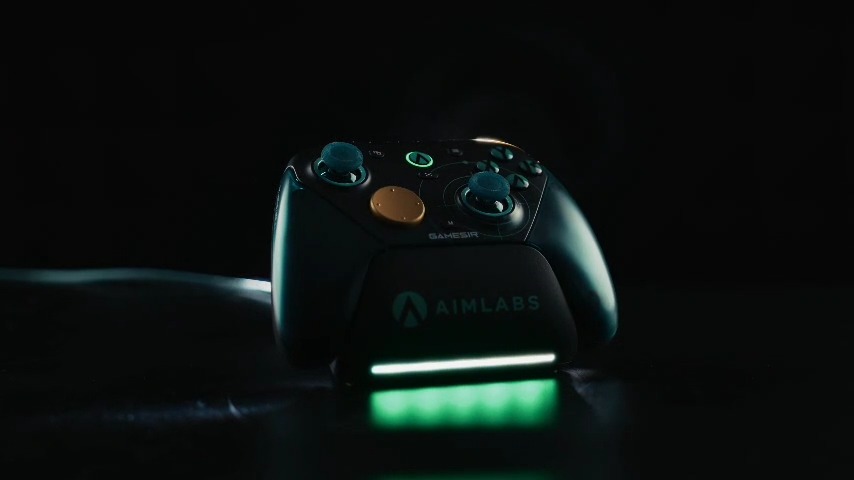
Introducing GameSir Tarantula 8K PC | The Best Controller for Competitive Gaming⚡️ 🫡Built with a highly refined ergonomic contour. 🕹️Anti Stick Drift GameSir Mag-Res TMR Sticks Gen-2. 🚄Native 8000Hz polling. 0.5ms end-to-end latency. 📀Switch between Micro Switch triggers and Hall Effect analog triggers. 🍃Ultra-Lightweight Performance. ONLY 180g. Be competitive....

80,347 次观看 • 2 个月前 •via X (Twitter)

0 条评论

暂无评论

原始帖子的评论将显示在这里

相关视频

⚙️Update Quick Video Review: GameSir Connect V1.14.4⚙️ GameSir Connect has just been updated to version V1.14.4. Over the past few updates, we have introduced many practical features to enhance your experience. Here is the video detailing all the highlights of the recent updates. We highly recommend that players visit the Microsoft Store to download the latest version from here: For details on the updates, please refer to the text below. ✅Feature 1 - Professional Tips and Explanation for Controller Settings. You can now hover your mouse over the ⓘ icon to access detailed explanations of controller terminology. These tips have been verified by the GameSir product team to ensure you can quickly, conveniently, and accurately understand the information you need. ✅Feature 2 - Enhanced Stick Customization: Expanded Curve & Calibration Settings Now, you can adjust the stick center point to fix any potential center offset after the controller has already been calibrated. In addition, you can now achieve more precise fine-tuning of the stick input curve by manually entering the coordinates for each point within a 100x100 coordinate system. Please be aware that when Zero Deadzone is enabled, it is normal for the center point to not return to absolute zero or for the data to fluctuate repeatedly. ✅Feature 3 - Support for in-app software updates and halved input latency We've now set up a dedicated server for GameSir Connect software updates. Now, you can update directly within the software. And through optimizations, the end-to-end latency for both the G7 Pro 8K PC and Tarantula 8K PC has now reached 0.25ms with the latest firmware. And only by using the latest software will you be able to receive the latest firmware updates.

GameSir

28,576 次观看 • 18 天前

[New Xbox Controller Review] #ad Special thanks to Qrdgame_offcial for supplying me with a review unit of their Ferrox M5 Xbox & PC Controller QRD Ferrox M5 The QRD Ferrox M5 is a Wireless Xbox One–style gamepad with a transparent design. Since it targets Xbox One natively, it works automatically on PC and Xbox Series S/X. The included 2.4Ghz USB Dongle also supports Switch and Android with the right adapter (USB C), but I was not able to test those in time for this review. A Wireless Xbox Controller The QRD FERROX M5 comes in a familiar Xbox layout with Hall Effect joysticks, RGB rings around the sticks, and a magnetic & detachable clear shell that shows the internals. The controller feels very similar to a standard Xbox pad in terms of shape and size, but it’s slightly lighter at compared to the usual Xbox controller weight. The lighter weight makes it easier to hold for longer sessions without hand fatigue. The D-Pad is surprisingly good at dialing special moves feels as solid and responsive as the official Xbox controller, and that’s impressive at a lower price point. I spent a few days trying out the Mortal Kombat Legacy Kollection exclusively using this controller and I did not notice any difference at all. Capabilities From what I’ve tested, the controller performs extremely well for action games, fighting games, and shooters. The Hall Effect joysticks offer smooth movement and precise control with no drift issues. The D-Pad uses micro switches, so every input is tactile and accurate. The back triggers support an adaptive “trigger stop” mode, which shortens the travel distance for faster reaction time in FPS games or quicker blocks in Fighting Games. You also get 4 back macro buttons, turbo mode, and adjustable joystick sensitivity with deadzone options. Vibration strength and RGB lighting modes are also customizable. What can it do The FERROX M5 includes an 800mAh battery that lasts around 8 hours of gameplay. It only uses the 2.4Ghz wireless connection, not Bluetooth, so it always requires the included USB Dongle. The good thing is once you sync it with your Xbox or PC, you don’t need to sync it again—it carries over between both devices automatically. The 2.4G connection is stable and low latency, and the controller has a 3.5mm headphone jack for audio and mic support. It also features a quick calibration system to keep sticks and triggers accurate over time. The overall grip and shape feel close to the official Xbox controller, comfortable for long gaming sessions, and the transparent shell gives it a distinct look. Areas of improvement I initially had trouble charging the controller while playing because connecting it to the Xbox via USB would disable all inputs, making it unusable in wired mode. But luckily QRD Support helped and provided me with an updat - I had to connect it to a PC, download the firmware tool from QRD’s website, and update the controller manually. After installing the new firmware, the controller can now charge while being used normally on Xbox, so the issue is fully resolved. The Xbox button also behaves differently on Xbox, where the single press acts like hold and the hold acts like single press; this issue doesn’t appear on PC. Syncing with the dongle took a few attempts on both Xbox and PC, but once paired, it never needed syncing again. The wireless mode is strictly 2.4G with no Bluetooth support, so it cannot connect without the dongle, though the benefit is that one pairing works across both Xbox and PC. Final Summary ✅ Hall Effect Joystick ✅ Lights in the dark ✅ Good D-Pad for input dialing ✅ Light Controller ❌ First sync can be annoying on PC ❌ No bluetooth for phone usage - Dongle is necessary ❌ Needs an update for the Xbox Wired issues which require a PC The Controller is available on Amazon for $59.99, and will be part of the Black Friday Deals on their official website for even more discount! Amazon Link Website Link

thethiny 🐰🍉

16,864 次观看 • 8 个月前

XBOX Gen-10 details: • Microsoft's next-generation Xbox (Gen-10) is the company's most ambitious and risky gaming platform, built as a Windows 11 gaming PC with a TV-optimized, console-like interface. • It supports full backward compatibility for all Xbox One, Series X|S, and legacy games, plus any Windows 11 PC titles. • Users can exit the Xbox interface to full Windows for tasks like streaming, coding, or music production, akin to Steam Deck's Linux mode. • Core hardware features an AMD semi-custom SoC codenamed “Magnus.” • AMD CEO Lisa Su: “Development of Microsoft's next-gen Xbox featuring an AMD semi-custom SoC is progressing well to support a launch in 2027.” • 2027 launch is a "best-case scenario"; Microsoft insiders are surprised by Su's timeline, pending Windows 11 polish. • Xbox President Sarah Bond confirmed a multi-year Xbox-AMD partnership for hardware and backward compatibility. • Xbox and Windows teams collaborate for a seamless, console-like OS experience atop Windows 11. • Supports multiple storefronts: Xbox Store, Steam, and Epic Games Store, with ports to PS and Switch 2. • The "Xbox Everywhere" strategy offers hardware choices via OEM partners like ASUS (Xbox Ally preview). • OEMs (ASUS, Lenovo, and Razer) to offer a range of Xbox-branded devices at different price/performance points. • Microsoft plans its own first-party Xbox handheld in the future. • NPU-powered features like auto-generated gameplay highlight clips, testing on Xbox Ally X, and rollout in March 2026. • Emphasizes cross-play, cross-saves, and cross-purchasing via Xbox Play Anywhere to grow the industry. • First-party games ported to Steam, PlayStation, and Nintendo Switch 2. • Easier developer publishing tools; major updates at GDC 2026. • Polished software experience is critical; current Ally handhelds highlight Windows issues to fix. • Epic Games Store and Steam are expected to be part of the next Xbox’s multi-store openness, alongside Xbox’s own store. • Price is uncertain (due to tariffs and costs; OEMs for affordability), but the next Xbox may skew more premium (~$1,000)—while lower-end options may persist via partners. Also, Series S support will be extended. • Echoes the original Xbox vision of Windows in the living room; Surface-like premium ecosystem strategy. via: Windows Central Jez

Idle Sloth

69,919 次观看 • 5 个月前

$AMD Strategic Price Positioning Long🧵 AMD is increasingly the most hated semi stock that can rival $NVDA dominance in GPUs and software(Cuda v. ROCm). $AMD is also the most under-owned among all Funds in 2025 according to Bank of America! For what I learnt for years as an investor with Dr. Lisa Su, all analysts and market are underestimate Dr. Su leadership. $AMD is capable of raising price, making high quality hardware with software. Dr. Su or AMD choice to adopt a lower price strategy to gain market share is a deliberate and multifacets approach rooted in competitive positioning, market dynamics, and long-term growth objectives. As an investor, it may take time like CPUs and embedded to see margin improving. 1. . Penetration Pricing to Challenge Dominant Competitors AMD has historically positioned itself as a cost-effective alternative to dominant players like Intel in CPUs and Nvidia in GPUs. By setting prices lower than competitors, AMD aims to attract customers and quickly gain market share. This is a classic penetration pricing strategy, where the goal is to capture a significant portion of the market by offering high-performance products at a lower price point. ~CPU Market Example: When AMD launched its Ryzen processors in 2017, it priced them competitively compared to Intel's Core processors, emphasizing a better price-to-performance ratio. Ryzen CPUs offered higher core counts and multi-core performance at lower prices, appealing to cost-conscious consumers, gamers, and professionals. This strategy helped AMD increase its CPU market share to 16.6% by early 2025, narrowing the gap with Intel. ~GPU Market Context: In the GPU market, where Nvidia holds an 88% share compared to AMD's 12%, AMD has been criticized for not launching GPUs at low enough prices to compete effectively. However, posts on X and articles suggest AMD is shifting its GPU strategy to focus on mainstream, cost-effective products rather than high-end enthusiast segments, aiming to regain market share through competitive pricing. 2. Appealing to Cost-Conscious Market Segments AMD targets price-sensitive customers, including gamers, small businesses, and enterprises looking for high-performance computing at a lower cost. This is particularly effective in segments where performance is critical, but budgets are constrained. ~Value Proposition: AMD’s Ryzen and EPYC processors, as well as Radeon GPUs, are designed to deliver performance comparable to or better than competitors in specific workloads (e.g., multi-core processing or AI compute) at a lower price. For example, Ryzen processors have been noted for their superior multi-core performance compared to Intel CPUs at similar or lower price points, making them attractive for tasks like video editing or gaming. ~AI and Data Center: In the AI and data center markets, AMD’s cost-effective Instinct MI300X GPUs and EPYC CPUs target enterprises seeking affordable alternatives to Nvidia’s expensive AI ecosystem. This strategy taps into an underleveraged market segment that Nvidia’s broad, premium-priced AI solutions may not fully address. 3. Building Scale and Developer Support AMD’s leadership, including Jack Huynh, has emphasized the importance of scale—gaining a larger market share to attract developer support and optimize software ecosystems. A lower price strategy helps AMD achieve this by increasing adoption among consumers and enterprises. ~Gaming GPUs: By focusing on mainstream GPUs with competitive pricing (e.g., targeting an 80% addressable market rather than the high-end 10%), AMD aims to build a larger user base. This scale encourages developers to optimize games for AMD’s technologies, such as FSR 3 (FidelityFX Super Resolution) and Anti-Lag 2, improving the ecosystem and competitiveness against Nvidia’s CUDA platform. ~Open Ecosystem in AI: AMD’s open-source ROCm platform contrasts with Nvidia’s proprietary CUDA, appealing to developers who prefer flexibility. Lower-priced hardware makes it easier for developers to adopt AMD’s solutions, fostering a broader AI software ecosystem. 4. Historical Context and Brand Positioning Since its founding in 1969, AMD has positioned itself as a challenger brand, often acting as a “second source” supplier to Intel. This role required competitive pricing to gain a foothold in markets dominated by established players. Over time, AMD has built a reputation for quality and affordability, reinforced by products like the Am9080 (a reverse-engineered Intel 8080) and modern Ryzen and EPYC lines. This historical strategy of undercutting competitors’ prices while delivering comparable performance continues to define AMD’s approach. 5. Countering Competitor Dominance AMD operates in highly competitive markets where Intel and Nvidia have significant advantages in brand recognition, market share, and ecosystems. A lower price strategy is a pragmatic way to disrupt this in CPUs: ~Intel’s historical dominance in the CPU market (servers, desktops, and laptops) has been challenged by AMD’s Ryzen and EPYC processors, which offer better value. For instance, AMD’s EPYC CPUs have driven a 122% year-over-year revenue increase in the data center segment, partly due to their cost-effectiveness, helping AMD capture 94% of CPU sales at some retailers. ~Nvidia in GPUs: Nvidia’s 88% GPU market share and premium pricing (e.g., high-end GPUs like the RTX 4090) leave room for AMD to compete in the mid-to-low range. However, AMD’s failure to launch GPUs at sufficiently low prices (e.g., the RX 7900 XT at $900 instead of its current $680) has limited its success, prompting a strategic shift toward more aggressive pricing in future RDNA 4 GPUs. 6. Market Share as a Long-Term Investment AMD’s lower price strategy is not just about immediate sales but also about long-term market positioning. By capturing market share, AMD can: ~Increase Brand Loyalty: Affordable, high-performance products build customer loyalty, especially among gamers and small businesses, creating a foundation for future sales. ~Drive Revenue Growth: Market share gains in CPUs (e.g., 16.6% in 2025) and data centers (e.g., $3.5 billion in Q3 revenue) translate into higher revenue, even if margins are initially lower. ~Influence Industry Standards: Greater market presence allows AMD to influence hardware and software standards, such as pushing for open-source AI frameworks or gaming optimizations, reducing reliance on competitors’ proprietary systems. 7. Challenges and Risks While effective, AMD’s lower price strategy carries risks: ~Profitability Concerns: Lower prices can compress profit margins, and some analysts note that AMD’s high stock valuation expects future profitability that may be delayed if pricing remains aggressive. ~Perception of Quality: Persistently low prices risk positioning AMD as a “budget” brand, potentially undermining its ability to compete in premium segments. ~Competitor Response: Intel and Nvidia can counter with price cuts or superior features, as seen with Nvidia’s feature-rich GPUs. AMD must balance price with innovation to avoid being outmaneuvered. 8. Strategic Shift in GPUs Recent reports indicate AMD is adjusting its GPU strategy to prioritize market share over competing in the high-end enthusiast segment. For the upcoming Radeon RX 8000 series (RDNA 4), AMD is focusing on mainstream GPUs priced competitively to appeal to a broader audience, rather than chasing Nvidia’s high-end dominance. This shift aligns with AMD’s broader goal of achieving 40–50% market share by targeting the “80%” of the market that prioritizes affordability over premium features. Lastly, AMD’s lower price strategy is a calculated move to disrupt Intel and Nvidia’s dominance, capture market share, and build scale for long-term growth. By offering high-performance CPUs and GPUs at competitive prices, AMD appeals to cost-conscious consumers and enterprises, particularly in the CPU and AI markets, where it has seen significant gains (e.g., 16.6% CPU market share and $3.5 billion in data center revenue). Recent price increase on MI350 and MI355 and more on MI400 signaled #AI chip leadership and pricing power, which will result in significant top and bottom line growth.

Mike

38,006 次观看 • 11 个月前