Loading video...

Video Failed to Load

Go Home

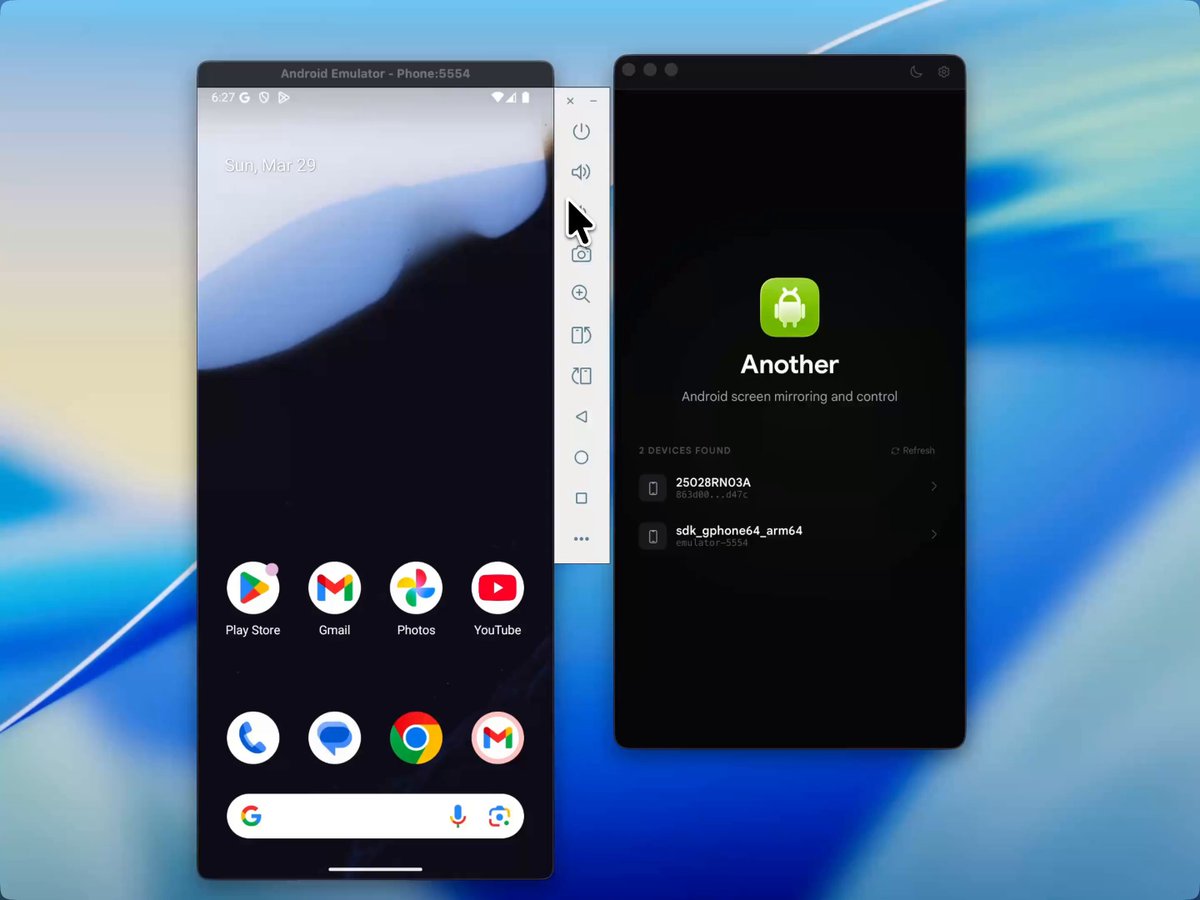
Introducing Legend Diff! Handles repos, PRs, and .diff with over 1M+ lines < 1/2 bounce 20 MB app 45 MB RAM Unified/split Syntax highlighting React Native macOS Open source If it's not the fastest app on your Mac, repost and reply for a full refund.

78,538 views • 9 days ago •via X (Twitter)

10 Comments

Hassan Khan's profile picture
Hassan Khan9 days ago

@frankcalise

Gabriel Moncha's profile picture
Gabriel Moncha6 days ago

@pierrecomputer diffs have some serious competition now

Daniel Nguyen's profile picture
Daniel Nguyen9 days ago

This guy ships!! 🙇‍♂️

VJ's profile picture
VJ8 days ago

Does it support bitbucket PRs

Jay Meistrich's profile picture
Jay Meistrich8 days ago

Oh I don’t think so, but probably could. Feel free to PR if you like ✌️

Adnan's profile picture
Adnan6 days ago

Jay, the performance maestro 👏

Alex Hunt's profile picture
Alex Hunt6 days ago

Congrats! Some serious performance sauce in there 😄

Adam's profile picture
Adam9 days ago

@mitchellh half bounce mentioned

Colin Hunt's profile picture
Colin Hunt6 days ago

Oh cool I’ve been waiting for this and then I missed it by 3 days

polymorpheus's profile picture
polymorpheus9 days ago

does it support non-alphabetic ordering? e.g., for hexagonal architecture folks, it's helpful to start in a specific order, outside-in, inside-out, etc. does it support filtering/hiding unit tests? ai writes a lot of them these days - not always useful to look at

Related Videos

I'm using macOS for more than 14 years now, in a single laptop screen setup with lots of windows open, and I'm using macOS spaces everyday to organize my windows. Switching between spaces is easy: I hit CTRL+arrow left/right, it takes no time. What takes time however, is this macOS-native transition animation that takes a bit less than 1 second, for every single space switch. I've checked everywhere in macOS settings, asked friends with the same problem, and there's just no setting to disable this effect (even with Reduced Motion ON in Accessibility settings). This UX choice from Apple alone costs me days of my time every year, as I'm working non-stop on my SaaS business for 10h a day 5-6 days a week (Crisp for those who know about it!). I calculated that with my daily use of macOS spaces, in 6 months I'd perform 100,000 switches, which costs me the same in seconds waiting for the transition to complete. This represents almost 28 hours waiting. In 1 year, I'd have lost 2.4 days just... waiting! The Hack Fortunately, some other open-source projects discovered a hack not so long ago, which allows disabling the transition when switching spaces: it involves sending to the system a "fake" trackpad left/right swipe gesture that's faster than what's expected (faster than what a human can input via the Macbook's trackpad). Above some threshold, macOS just perform the space switch with absolutely no transition. A friend of mine, Yaël 🛸, made a quick prototype in Objective-C, and it magically worked! The Solution So, I asked my friend if we could make it a proper macOS app together, in a beautiful minimalist package, and he said yes! So, we launched Space Rabbit, a tiny 2MB fully native macOS app, that allows you to optimize macOS spaces for productivity! Space Rabbit is a full rewrite of the initial prototype in modern Swift, with a tray menu bar to configure the app, and a settings window, in a macOS app packaging. Space Rabbit can be downloaded right here: We just released V2 of the app last week, fixing a ton of little bugs, especially for dual screen setups. It's actively maintained to this day as it's my daily driver. The app is open-source: and will always be free, as it's helping improve our productivity in our daily Web Dev tasks for our main businesses. We'll be happy to implement more features from user requests, if you find this app useful and use it daily!

Valerian Saliou

221,065 views • 1 month ago

Recorded my first walkthrough video for App Publishing via Manus 👉👈✨ You can now package and share your app for testing on Google Play Store and the Apple App store without setting up Xcode, Android Studio, or wrestling with build configurations. Supported platforms: • Android → Google Play (Internal Testing) • iOS → App Store (TestFlight) Ready to try it? Here's how 👇 ➡️Google Play: Prerequisites: Google Play Developer account ($25 one-time fee) Steps: 1. In Manus, click Publish → select the Android tab 2. Click Build APK — Manus packages your app in AAB format 3. Go to your Google Play Console and navigate to Internal testing 4. Click Create new release and upload the AAB file 5. Under Testers, add your email address (or create an email list for your team) 6. Copy the opt-in link 7. Open the link on your Android device, accept the invite, and install ➡️App Store: Prerequisites: • Apple Developer account ($99/year) • iPhone with TestFlight installed Steps: 1. In Manus, click Publish → select the iOS tab 2. Click Create app and follow the prompts to connect your Apple Developer account 3. Manus will package and upload your app to App Store Connect automatically 4. Wait for Apple to process your build 5. You'll receive an email from TestFlight when it's ready 6. Open the email on your iPhone, tap the link, and install via TestFlight 🔗 Full guide: Let me know what else you'd like to see next!

Natalie 🇸🇬

313,056 views • 8 months ago