Loading video...

Video Failed to Load

Go Home

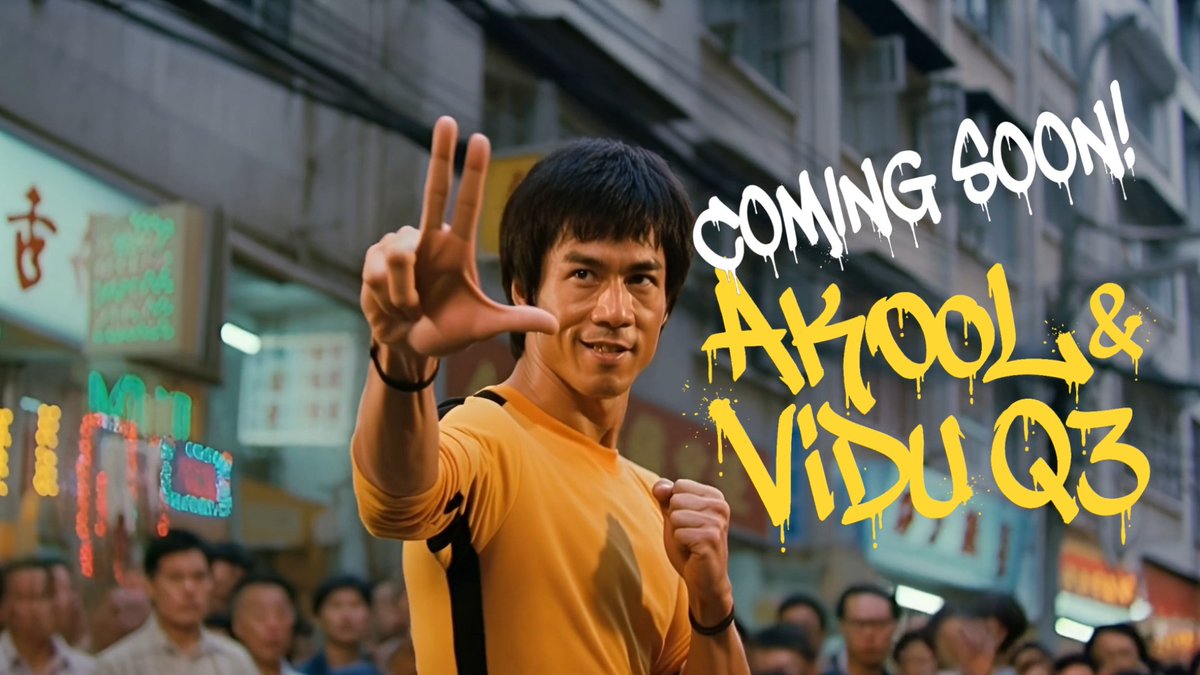
Introducing MiniMax H3, our next-gen open-weight multimodal video model, built for general intelligence beyond single-task generation. H3 understands text, images, video, and audio together, interpreting motion, sound, emotion, and cinematography as one unified creative language, delivering generation with fine-grained precision and cinematic quality. → Native Multimodal Understanding & Generation...

97,618 views • 29 days ago •via X (Twitter)

0 Comments

No comments available

Comments from the original post will appear here

Related Videos

llama.cpp isn't just for text LLMs anymore. Pure C++ zero shot voice cloning just officially landed in mainline. Text generation was only step one. If you’re building autonomous local AI agents, real time voice assistants, or edge workflows, instant low latency audio is the missing piece. Thanks to PR #26254, Alibaba’s state of the art Qwen3 TTS model family is now natively supported directly inside the llama.cpp repository under the multimodal (mtmd) framework. No Python bloat. No massive PyTorch CUDA overhead. Just raw, hyper optimized C++ running GGUF voice weights. Here is why this native update is a massive deal for the open source local AI stack: # Multimodal Architecture (.gguf + mmproj) Qwen3-TTS splits the workload between the base language model backbone and a multimodal projection adapter. llama.cpp handles this using the llama-tts binary, mapping the text model alongside its --mmproj projector to process audio tokens seamlessly. # Zero Shot Voice Cloning in Seconds You don't need fine tuning or massive dataset training. Feed the C++ engine a single 5 to 10 second .wav audio sample using the --tts-speaker-file flag, and it accurately clones the exact timbre, tone, and accent on the fly. # Real World T4 GPU Benchmark & Resource FootprintRunning the 1.7B Base model in 8-bit quantization (Q8_0): - VRAM Footprint: ~7 GB peak VRAM during active zero-shot cloning. - Audio Quality: Studio grade, natural-sounding voice output in seconds. • - Execution: Direct execution via native compiled binaries or sub process calls. # Coming Next to llama-server (PR #26603) Beyond CLI execution, a native POST /tts HTTP endpoint is currently being added to llama-server, which will soon allow you to trigger voice generation directly via standard REST API requests! # quick note on Colab compilation: Because this code was merged into mainline very recently, pre-built third-party binaries haven't fully caught up yet. Compiling llama-tts directly from source on Google Colab's free CPU instance can take about 1 hour (or ~1-2 minutes if targeting single GPU arch like -DCMAKE_CUDA_ARCHITECTURES=75). Be patient during the build step, or compile it locally on your own rig for instant execution! To test this out yourself, I built a zero config Google Colab notebook that compiles llama.cpp, downloads the Q8_0 GGUF files from HuggingFace, and spins up an interactive Gradio Studio UI so you can record/upload 3 second clips and clone voices in real time. Stop sleeping on native C++ audio. The era of bulky Python audio pipelines is officially over. Links to the free Google Colab notebook and the official ggml org GGUF HuggingFace model repository are in the replies below! available in q4 and q8 both variants, 1 GB and 1.85 GBs respectively (requires additional ~500MB mmproj gguf) Are you building local voice agents yet? What does your current audio stack look like? Drop your setups below!

Alok

47,881 views • 25 days ago

We are in an insane run of open-weight drops. Every modality, open source is winning. This is what an open source AI summer ☀️ looks like: 🧠 LLMs & Reasoning → DeepSeek-V4-Flash-0731 (my king 👑): 304B MoE refresh, Terminal-Bench 2.1 jumps 61.8→82.7 over the preview, DeepSWE 7.3→54.4. Closes in on Opus-4.8 on Agents' Last Exam (25.2 vs 25.7). MIT. → Muse-Glimmer-30B, from Meta (they are back!!): their first open agentic model. ~29.6B dense + perception encoder, 131k+ context, built to run fully local, no cloud. Apache 2.0. → Liquid AI LFM2.5-2.6B: 2.69B params, 131k context, 220 tok/s on an M5 Max in under 2.5GB RAM. Competitive with models 4x larger on agentic tasks. → inclusionAI Ling-3.0-flash: 124B total, only 5.1B active, ~12% the size of their old 1T flagship Ring-2.6, matches it on key benchmarks. MIT. → inclusionAI Ling-3.0-tiny: 7.9B total, 1.3B active, 86-90 tok/s on an M4 Pro MacBook at ~8GB peak memory. MIT. → NVIDIA Nemotron-3.5-Lightning-30B-A3B: hybrid Mamba-2+MoE+Attention, up to 1M context, runs on a single H100 or DGX Spark, SWE-bench Verified 52.8. → deepgrove maple-preview: 20B-A1B ternary-weight reasoner, 218 tok/s on a Mac mini M4, 5.3GB checkpoint. MIT. → BigBang-v1 (endless-frontier): fine-tuned from Qwen3.6-35B-A3B via a self-evolving generator/critic synthetic-data loop. Lands aggregate performance between DeepSeek V4 Flash (284B) and V4 Pro (1.6T), at 35B. Apache 2.0. 🎬 Video → MiniMax-H3: 33B dense omni model, native stereo audio, up to 2K/15s. 3.6k+ likes already. → Minimax-H3-Turbo (lightx2v): Apache-2.0 turbo distillation of H3 for fast inference. → Lightricks LTX-2.5: image-to-video update, custom Gemma-4-12B text encoder, a markedly stronger distilled model. 🔊 Voice → NVIDIA NemotronLabs VoiceChat-11B: full-duplex speech-to-speech, ~450ms turn-taking, #2 on open VoiceBench, and the first open full-duplex model with live tool-calling mid-conversation. 🛡️ Safety → Mistral Shieldstral-1.0-3B: 3B multimodal guardrail that takes your safety policy as plain text instead of fixed categories. Beats LlamaGuard-4-12B and ShieldGemma-9B on HarmBench (99.4) and ToxicChat (84.1) at a fraction of the size. Apache 2.0.

Victor M

54,264 views • 18 days ago

I’ve used all the recent GenAI video models extensively & here’s my 2¢: 🎬 Runway Gen3 Alpha - best image quality & motion for text-to-video & embedded words. Great at prompt travel changes over the course of 10 sec. And I’m super bullish on how gen3 will evolve, hopefully adopting the features listed below. Kling - best quality for image-to-video with prompt control, like eating food. Great clip extension that accounts for character (ie walking stride) & camera movement (speed & angle), rather than just using final frame. But it’s limited availability & Chinese native language is limiting. Used for Spider-Man video below (via Midjourney). LumaLabs - best for keyframe start & end control (it can not be overstated how important this is. other services should add it ASAP!) and their high dynamic action movements are really fun. Luma was used in my viral Multiverse of Memes video. PikaLabs - they haven’t gotten as much attention as others lately. But they did update their video model a few weeks ago and it looks great. Also, they are notable for their unique & AWESOME features, like video in-painting & out-painting. My perfect AI video platform would have the following features: 1) Gen3’s quality, prompt control & text embedding. 2) KLing’s image-to-video quality, prompt control & clip extension quality. 3) Luma’s multi-keyframe control & dynamic movement ability. 4) Pika’s inpainting & outpainting ability. And a video-to-video (aka next-gen Runway gen1) could be a game changer, too. It’s an exciting time to be alive 🫶 Who will get there first? 🔉🔉

Blaine Brown

26,535 views • 2 years ago

You don't need a GPU for fast studio grade voice cloning anymore. Qwen3 TTS (1.7B Q4_K_M) + mainline llama.cpp is officially the fastest way to generate zero shot voice clones using 100% pure CPU execution. Following up on my last post where we ran the Q8 model on a GPU, we just took local C++ voice synthesis a massive step further. The open source community quantized Alibaba's SOTA Qwen3 TTS model down to Q4_K_M GGUF, completely freeing local audio pipelines from dedicated graphics hardware. Here is the real world benchmark and hardware breakdown of running SOTA voice cloning on CPU: # Architecture & Model Setup Using Qwen3-TTS-12Hz-1.7B-Base-Q4_K_M.gguf paired with the 8 bit multimodal projector (mmproj-Q8_0.gguf), llama.cpp executes the entire pipeline in pure C++. No PyTorch, no CUDA dependencies, and no VRAM bottlenecks. # Real-World Memory Footprint - Baseline RAM: 1.6 GB system idle. - Peak Generation RAM: 8 GB RAM during active voice synthesis. - Requirement: Any basic machine with at least 8 GB of system RAM can run this easily. # Real World CPU Benchmarks - Google Colab Free Tier (Throttled 2 Core CPU): Synthesizes a 5 sec studio quality audio clip (~8 words) in 45 seconds. - Modern Consumer CPU (Intel i5/i7 13th/14th Gen or AMD Ryzen 7000/9000): generation should drop to 5 to 20 seconds (nearly 1:1 real-time generation speed!). # Zero Shot Voice Cloning Quality Pass any 5 to 20 second .wav audio sample to the C++ engine using the --tts-speaker-file flag. It yields clean, natural sounding cloned speech with virtually zero quality loss compared to unquantized FP16 weights. To make testing seamless, I built an updated zero config Google Colab notebook. It pulls the official pre built llama.cpp CPU binaries (zero compilation time!) launches a live Gradio web app right in your browser. Record a 5 second clip from your mic (or drop a .mp3, .wav file), type text, and generate cloned audio on CPU. Native C++ audio models are making edge based, offline AI voice agents a reality. Links to the free Q4 CPU Colab notebook and the Q4_K_M GGUF HuggingFace repository are in the replies below! Which models have you been running on your CPUs? What CPU hardware are you using for local inference?

Alok

60,514 views • 22 days ago

Google dropped a new AI paper called LUMIERE. It's remarkably flexible, supporting video inpainting, image-to-video, AND stylized video generation tasks. Say hello to “space-time diffusion” for video generation! Now what the heck does that mean exactly?! 🌐⏳ → TL;DR it utilizes a “Space-Time UNet” architecture that generates the full duration of the video in one pass, rather than generating distant keyframes and interpolating between them like prior works. Because the computation is done in this “compressed space-time representation” to generate the full clip at once, it's far more temporally consistent. → Another benefit of generating the full video at once is that you can “direct” the video generation, making it easier to hand off to other models/tasks without having to stitch together partial solutions. You can condition generations on additional inputs, meaning you get the full stack of AI video capabilities – from video inpainting to image-to-video and beyond. → New SOTA for AI video generation? User study results in the paper suggest human evaluators preferred Lumiere over Runway Gen-2, Pika Labs, and Stable Video Diffusion in terms of quality, text alignment AND motion. But as always, we need to get hands-on with this tech when Google *actually* decides to ship it. → Could this end up inside YouTube? Y’all know i’m obsessed with blending reality and imagination – so it’s the video inpainting tech I'm most excited about. I really hope this model finds its way into YouTube's Generative AI efforts, and based on their prior announcements and the list of acknowledgments in the paper I think it might! 🤞🏽 Links: 🔗Paper: 🔗Project:

Bilawal Sidhu

44,822 views • 2 years ago