正在加载视频...

视频加载失败

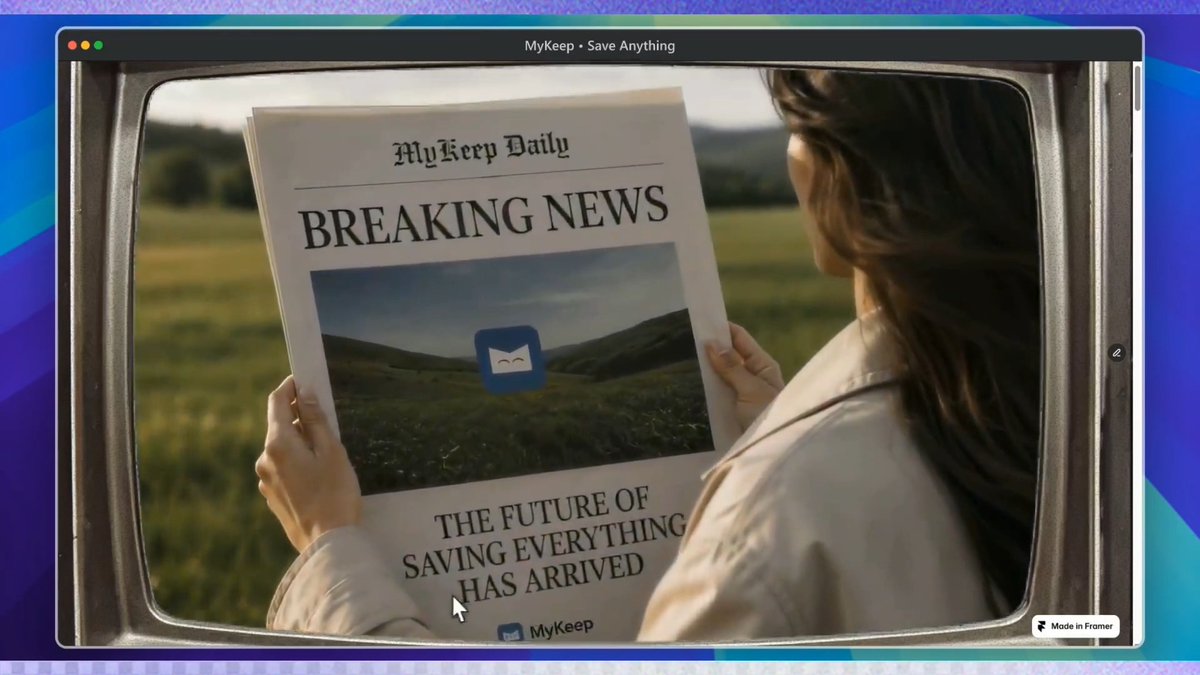
Introducing: Sazabi (Sazabi). The AI-native observability platform for fast moving engineering teams. Backed by engineering leaders from the world's top AI and dev tool companies: Graphite, Vercel, Browserbase, LangChain, Browserbase, and more. Sazabi is taking a radically different approach to observability, centered on three core principles: 1. LESS IS...

117,804 次观看 • 6 个月前 •via X (Twitter)

0 条评论

暂无评论

原始帖子的评论将显示在这里

相关视频

I miss building simple, working software. At some point, we decided to complicate everything for no reason. Today, people can't build anything without using three frameworks, 17 libraries, and a swarm of microservices. And here is a funny paradox: To understand how these complex systems work, we've had to build systems and tools that generate data we can later analyze. But the more data we produce, the harder it is to process and make sense of it. We are in the middle of an observability crisis. The tools we have are inefficient, and we don't have enough people to keep systems running. A few weeks ago, I met the team Resolve AI, and they have built a fundamentally new approach to observability and incident management: Instead of depending on humans to run a system, Resolve built a Production Software Engineer who runs the system using AI while letting people supervise. And it's not only crazy, but I think this will fundamentally change how we monitor and maintain systems in production for years to come. I recorded a quick video to showcase a simple example of how Resolve works behind the scenes. There are two main things I'd like you to notice: 1. The tool can correlate data across logs, metrics, and traces coming from different systems. You don't have to do any work to get the information that matters right in front of you. 2. (This is the big one!) The tool can diagnose what's happening and give you instructions on how to solve it. It can produce causal relationships across the entire system stack. Resolve is backed by investors like Replit's founder Amjad Masad, Reid Hoffman, Jeff Dean, Fei Fei Li, Andy Price, among others. They are currently working with a select number of companies and want to onboard a few more. If you are interested in trying them out, go to this link: Honestly, this is one of the most impressive uses of AI I've seen.

Santiago

82,074 次观看 • 1 年前

Today, we're making Error Tracking by Better Stack generally available. Sentry-compatible. AI-native. At 1/6th the price. Here's why we built it, and how to get the most out of it. What's wrong with error tracking today? Most teams use Sentry. It's solid! But at scale, the bills get brutal. Just 100M exceptions with 90 day lookback? ~$30,000 on Sentry. We charge ~$5,000 for the exact same thing. The math isn't subtle. And so most teams still end up sampling. Which means missing the exact exception that caused the outage. The bigger problem: errors are orphaned data. Your exception lands in Sentry. Your logs are in Datadog. Your traces are somewhere else. Root cause analysis becomes a multi-tab archaeology project at 3 am. We built error tracking natively inside Better Stack: the same platform where your logs, traces, metrics, uptime checks, and on-call schedules already live. Errors are just another signal. They belong together. The part that changes how your team works: Our AI SRE doesn't just surface errors. It fixes them. See a new exception? One click. The AI SRE analyzes the full context, from stack traces, environment variables, browser sessions, related logs and recent deploys, and opens a pull request. Not a ticket. Not a summary. A pull request with the fix. This is what happens when error tracking is fully integrated with the rest of your observability stack instead of bolted on separately. The AI has everything it needs to actually act. The migration is trivial: 1. Keep your existing Sentry SDK. Don't touch a single line of instrumentation code. 2. Point the DSN at Better Stack. 3. Done. Errors flow in. Your dashboards work. Your alerts work. 4. New exception appears. Click "Fix with AI SRE." Pull request lands in your repo. 5. Review, merge, close. That's the whole workflow. The AI angle is real, not a marketing badge. LLMs are genuinely good at fixing bugs if they have full context. The reason AI coding assistants sometimes frustrate engineers is incomplete information, not the model. We solve that by giving the AI SRE your entire telemetry stack as context. Stack traces, logs, traces, service maps, previous incidents and much more. All of it, in one place, at the moment it matters. Observability tools are only useful if you actually ingest all your data. At current prices of other tools, most teams can't afford to. Now you can, and your AI SRE can actually do something about it.

Juraj Masar

15,063 次观看 • 4 个月前

Multi-agent systems offer incredible potential and unprecedented risks. How do you solve for observability, failure mode analysis, and guardrailing in the era of agents? Today, we’re announcing our Agent Reliability platform to observe, evaluate, guardrail, and improve agents at scale. You can get started with the complete platform for trustworthy agentic AI today for free, and here’s how we’re solving some of the biggest challenges in agent reliability: - Observability redesigned for agents Trace views collapse under complex workflows, so we created the Graph View, Timeline View, and Conversation View to offer rich, intuitive visualizations of agent decisions, tool calls, and conversation flows. This multi-dimensional approach enables teams to pinpoint exactly where and why agents deviate or fail. - Automated Failure Mode Analysis with our new Insights Engine Our Insights Engine ingests your logs, metrics, and agent code to automatically surface nuanced failure modes and their root causes. But knowing the problem is not enough; you need to know how to fix it. Insights Engine delivers actionable fixes and can even apply them automatically. With adaptive learning, your insights become smarter and more relevant as your agents evolve. - Evaluating Agents Across Multiple Dimensions Agentic systems interact across complex pathways, and evaluating their performance requires new metrics that reflect this increasing complexity. To deliver comprehensive agentic measurements, we’ve added more out-of-the-box agent metrics like flow adherence, agent flow, agent efficiency, and more. For specialized domains and unique workflows, custom metrics powered by our new Luna-2 small language models can be rapidly designed and fine-tuned for your specific use case. - Real-Time Guardrails Powered by Luna-2 As AI agents become more autonomous and complex, failures like hallucinations or unsafe actions increase dramatically. Without real-time guardrails, these errors will hurt your user experience and brand reputation. Our Luna-2 family of small language models is purpose-built to provide low-latency, cost-effective guardrails that actively stop agent errors before they happen. With support for out-of-the-box and custom metrics, Luna-2 enables enterprises to enforce safety, compliance, and reliability at scale. Enterprises running hundreds of agents and processing hundreds of millions of queries daily already rely on Galileo’s Agent Reliability platform to protect their users, safeguard brand trust, and accelerate innovation. Agent Reliability is available starting today. Try it for free and experience the new standard in AI reliability. Learn more below 👇

Galileo

1,276,298 次观看 • 1 年前

This might be the best "AI Engineer" I've tried so far. ​ I'm an old school developer who started 30 years ago. I feel very uncomfortable letting AI take control of my code, but for the sake of science, I spent two hours building an application that took me weeks to build a couple of years ago. ​ I used Pythagora, a brand new tool backed by Y Combinator. They just released to the public. ​ Keep in mind that I use AI every day to write code, but Pythagora is something different: it's a tool that leads, and uses you—the human—as the copilot. ​ I go into more details in the video, but here is the TLDR; ​ 1. Holy molly! We've made a ton of progress on this front! This is way better than Devin when I tested it a few months back. ​ 2. Love the approach of generating a plan with sub-tasks before writing any code. ​ 3. The tools never tries to do too much: it tackles every small task one at a time, and gives you instructions so you test everything. ​ 4. It does exactly what you'd do when it gets stuck: writes a bunch of logs and uses those to correct itself. Pretty neat! ​ 5. It's fast. It runs locally. It's an extension to Visual Studio Code. ​ I'm impressed, but I don't think this tool is for me. ​ I'm not the type of developer who's ready to relinquish control. I felt I had no connection with the code because I didn't write it. It was not my code. ​ I know many people who don't care about this. I know many people who will get tremendous value out of Pythagora. I hope they keep pushing the limits, providing feedback, and helping this get to a point where old folks like me feel more comfortable using it. ​ Don't take my word for it. The best thing you can do is to give it a try and see how you feel using it. ​ Thanks to the team who built this, for all of the explanations and support, and especially, for sitting and listening to my dumb questions for 2 hours while I tested this.

Santiago

212,056 次观看 • 1 年前

David Friedberg: The AI Jobs Panic Is a Crock of Sh*t Why? The revenue potential outweighs the cost savings by 100x. “There is no job loss with AI. I've said it a thousand times, and I will say it again, and again, and again. What I see on the ground, and what I've seen at dozens of companies, including my company that I run, there are two sides to a business. There is revenue and there’s costs. On the cost side of the equation, AI can be used to reduce humans doing things that cost money, to some extent. The effect there, I would argue, is nominal. The real opportunity with AI is on the revenue side, where suddenly one engineer can do 100x or 1000x what they used to be able to do, meaning you can make more products at your company, whether those are agricultural seed products, or boats and ships, or software for companies, or clothing, or what have you. Because of AI, everyone has the ability to expand their revenue base to create more products, and that is the foundation of good economic prosperity. It is called productivity. We can grow productivity in this country with AI. So where I see AI being used is on the revenue side 100x more than the cost side. And in that equation, people are hiring like crazy. We cannot hire enough people. I just had a review meeting with my product and engineering team two days ago, and they're like, ‘We want to add an extra 15 headcount to our engineering squads because we have all this opportunity to do stuff that we couldn't otherwise do.’ So we are going to hire more people. And to Sacks' point, we are seeing that show up in the jobs numbers. The idea that AI is going to destroy jobs is a Luddite idea that is being disproven every single day, and I see it on the ground. It is only a matter of time before people wake up to this and they realize that this narrative that they've all been sold is a crock of sh*t.”

The All-In Podcast

152,399 次观看 • 2 个月前

AI is changing the software engineering craft. Anders Hejlsberg (Anders Hejlsberg) - creator of C#, TypeScript and industry legend - on why code review needs to get more enjoyable in response: #1 - AI is shifting the craft from writing code, to reviewing code: "In a sense, we're all turning into project managers. We can have an army of junior programmers, called agents, that will just spit out reams of code but someone's got to have the big picture and review all of that. And so, increasingly, our craft is going from one of writing the code, to one of reviewing the code and building the architecture of the code and overseeing the work. It's a different kind of craft. It's a different kind of enjoyment. I've always liked writing the code. To me that was the fulfilling part, seeing it work. In a way, AI robs a little bit of that, because I am less interested in reviewing code." #2 - The code review experience should be improved: "I think we could also make the process of reviewing code much more interesting than it is today. I mean, today, you see a list of diffs in alphabetical order and now it's up to you to make heads or tails of it. There are more pedagogical ways of presenting that. And you could have commentary generated by the AI that tells you what the changes are and whatever, and then tries to guide you along. So that symbiotic relationship, I think we need to work on that more and to keep the enjoyment in there."

The Pragmatic Engineer

39,011 次观看 • 3 个月前

David Friedberg: “Gaming is the future of entertainment, and the future of gaming is AI.” @jason: “Friedberg, what are your thoughts on the gaming industry versus social media versus traditional media?” david friedberg: “One way to answer that question is to think about how people spend their time.” “Do you spend more minutes on social media, or on traditional media, or playing games? And how is that trending?” “But importantly, which of those will accrue more benefit, and as a result, drive more hours spent from AI?” “One way to think about this thesis is that AI is going to ultimately accrue to video game entertainment far more than social media entertainment or traditional content.” “If you believe in AI, and you believe in the improvements in productivity, generally speaking, people in the industrialized world will generally have more free time on their hands and be able to support themselves with the deflationary effects of AI over time.” “So if there's more time on people's hands, the general market for entertainment is growing, and if the general market for entertainment is growing, gaming is the future of entertainment, and the future of gaming is AI.” “Because I think you can create dynamic, more engaging experiences that will benefit from a back and forth sort of relationship than you can with traditional content or with social media.” “If you're a noob in Fortnite, like you're an early player in Fortnite, you're mostly playing against AI, because what they do is they tune the AI to be easier to beat so that you can slowly develop your skills.” “What was happening early was they were seeing a high degree of churn in Fortnite because kids would go on and play for the first time and they'd get paired up with kids that were better than them, and so they would never win, and they would get frustrated and they would quit the game and stop.” “So the churn rate was high. So AI unlocked higher engagement and higher retention, and I think we're seeing that in a lot of different gaming platforms now.” “So AI can be used, for example, to maximally increase time, engagement, satisfaction, happiness.”

The All-In Podcast

70,365 次观看 • 10 个月前