Загрузка видео...

Не удалось загрузить видео

На главную

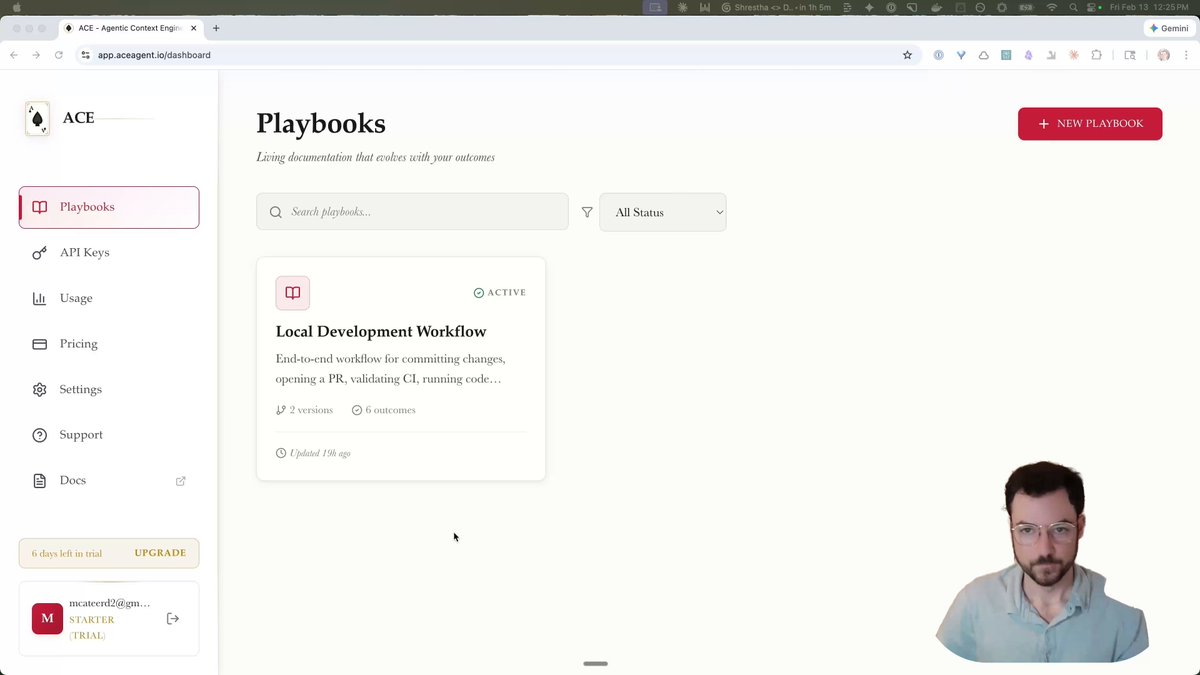
Introducing Sim Search Agents can now use your credentials to build an agentic knowledge graph to do your high-context work. Full context building and adaptive learning. Live right now in Sim!

97,785 просмотров • 3 дней назад •via X (Twitter)

Комментарии: 17

Фото профиля Marcus
Marcus3 дней назад

Now Sim orders me my burrito before I even know I want it

Фото профиля Emir Karabeg
Emir Karabeg3 дней назад

exactly

Фото профиля Waleed
Waleed3 дней назад

I love searching

Фото профиля Ethan
Ethan3 дней назад

Massive launch!

Фото профиля Emir Karabeg
Emir Karabeg3 дней назад

🚀

Фото профиля Ihtesham Ali
Ihtesham Ali3 дней назад

This is what agents were missing. Great work!

Фото профиля Emir Karabeg
Emir Karabeg3 дней назад

Indeed. Thank you!

Фото профиля Chris Howard
Chris Howard3 дней назад

@typingwala Congrats on the launch!

Фото профиля Emir Karabeg
Emir Karabeg3 дней назад

@typingwala thanks Chris!

Фото профиля Vraj Talati
Vraj Talati3 дней назад

The interesting part is not the knowledge graph itself, but whether the agent knows what to forget. Curious how you handle stale context and conflicting memories over time?

Фото профиля Harley Lewis Foote
Harley Lewis Foote3 дней назад

credentials + knowledge graph sounds like a compliance officer's fever dream

Фото профиля Mohit Mishra
Mohit Mishra3 дней назад

The real unlock isn’t just better agents—it’s better context. The more an agent understands how you work, the more useful its decisions become.

Фото профиля Mindset insider 🌟
Mindset insider 🌟3 дней назад

That’s a big shift: agents moving from simple retrieval to building a living knowledge graph around your context. Full-context understanding + adaptive learning could make agentic workflows feel much more personal and capable.

Фото профиля Athena Prime
Athena Prime3 дней назад

The interesting unlock is the context boundary: agents become much more useful when they can retain the right working set without turning every task into a blank-slate prompt. Clear provenance and user control will matter as much as recall.

Фото профиля Markandey Sharma
Markandey Sharma3 дней назад

This could be useful for workflows where the same agent needs to understand a project over a longer period.

Фото профиля Sharon Riley
Sharon Riley3 дней назад

Context building makes agents genuinely adaptive now

Фото профиля Sanskriti Naruka
Sanskriti Naruka3 дней назад

Congrats!!

Похожие видео

Build better RAG by letting a team of agents extract and connect your reference materials into a knowledge graph. Our new short course, “Agentic Knowledge Graph Construction,” taught by Neo4j Innovation Lead Andreas Kollegger, shows you how. Knowledge graphs are an important way to store information accurately but they are a lot of work to build manually. In this course you’ll learn how to build a team of agents that turn data– in this case product reviews and invoices from suppliers–into structured graphs of entities and relationships for RAG. Learn how agents can automatically handle the time-consuming work of building graphs — extracting entities and relationships (e.g., Product "contains" Assembly, Part "supplied_by" Supplier, Customer review "mentions" Product), deduplicating them, fact-checking them, and committing them to a graph database — so your retrieval system can find right information to generate accurate output. For example, you can use agents to help trace customer complaints directly to specific suppliers, manufacturing processes, and product hierarchies, thus turning fragmented information into queryable business intelligence. Skills you’ll gain: - Build, store, and access knowledge graphs using the Neo4j graph database - Build multi-agent systems using Google’s Agent Development Kit (ADK) - Set up a loop of agentic workflows to propose and refine a graph schema through fact-checking - Connect agent-generated graphs of unstructured and structured data into a unified knowledge graph This course gets into the practicum of why knowledge graphs give more accurate information retrieval than vector search alone, especially for high-stakes applications where precision matters more than fuzzy similarity matching. Sign up here:

Andrew Ng

168,153 просмотров • 1 год назад