Загрузка видео...

Не удалось загрузить видео

На главную

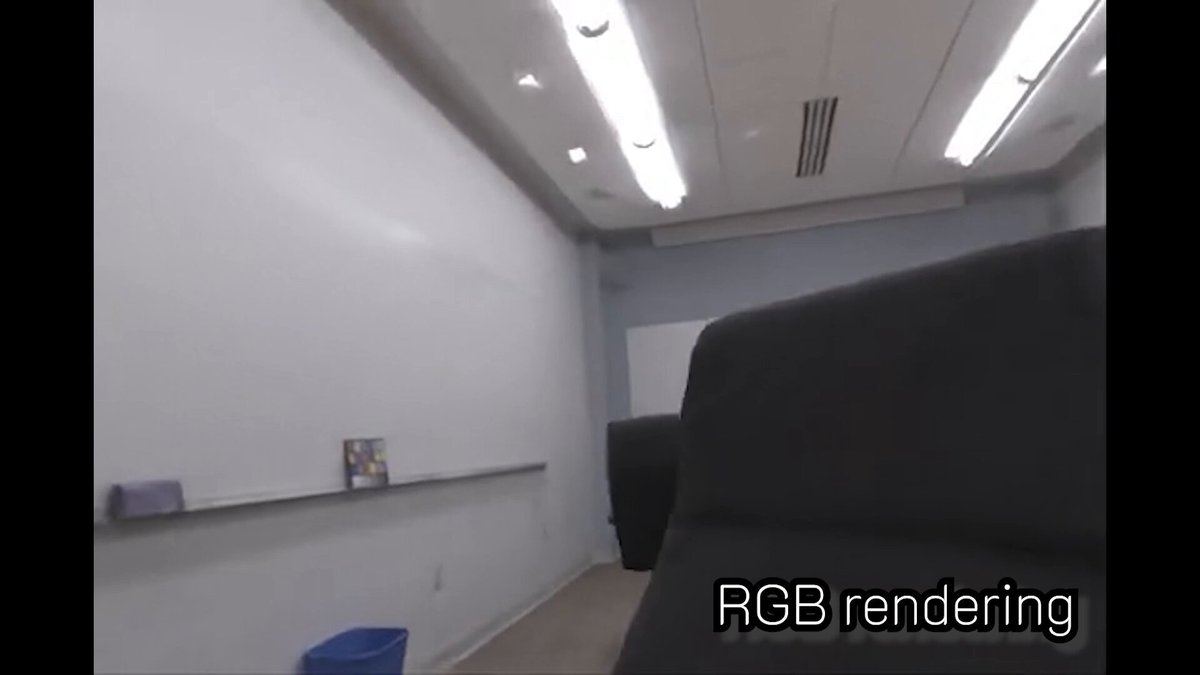
inverse rendering?

35,456 просмотров • 1 день назад •via X (Twitter)

Комментарии: 11

Фото профиля cognito
cognito1 день назад

You can run the same experiment using colmap + gaussian splat and get arguably better results

Фото профиля neilson
neilson1 день назад

some reasons this is slightly different 1. these rooms aren't real 2. any input view can be changed in realtime to change the entire scene

Фото профиля Marcin Kobylecki
Marcin Kobylecki1 день назад

I gave it a try, and I must admit I actually had quite a bit of fun with it. There is one issue, however: it lacks the production quality required for a film; the realism comes across better than the 3D animation style.

Фото профиля EX3D
EX3D1 день назад

Fucking incredible.

Фото профиля Gio Gargiulo
Gio Gargiulo1 день назад

What am I looking at?

Фото профиля professional biaser
professional biaser1 день назад

absolutely mental. literally alien tech.

Фото профиля Rowdy Burns
Rowdy Burns1 день назад

What software?

Фото профиля tommy
tommy16 часов назад

fuck…

Фото профиля Phil Gara
Phil Gara1 день назад

Amazing!

Фото профиля metamike
metamike1 день назад

Tf is this

Фото профиля Broadstreet
Broadstreet22 часов назад

Excellent

Похожие видео

MaterialFusion Enhancing Inverse Rendering with Material Diffusion Priors discuss: Recent works in inverse rendering have shown promise in using multi-view images of an object to recover shape, albedo, and materials. However, the recovered components often fail to render accurately under new lighting conditions due to the intrinsic challenge of disentangling albedo and material properties from input images. To address this challenge, we introduce MaterialFusion, an enhanced conventional 3D inverse rendering pipeline that incorporates a 2D prior on texture and material properties. We present StableMaterial, a 2D diffusion model prior that refines multi-lit data to estimate the most likely albedo and material from given input appearances. This model is trained on albedo, material, and relit image data derived from a curated dataset of approximately ~12K artist-designed synthetic Blender objects called BlenderVault. we incorporate this diffusion prior with an inverse rendering framework where we use score distillation sampling (SDS) to guide the optimization of the albedo and materials, improving relighting performance in comparison with previous work. We validate MaterialFusion's relighting performance on 4 datasets of synthetic and real objects under diverse illumination conditions, showing our diffusion-aided approach significantly improves the appearance of reconstructed objects under novel lighting conditions. We intend to publicly release our BlenderVault dataset to support further research in this field.

AK

22,959 просмотров • 2 лет назад