Video wird geladen...

Video konnte nicht geladen werden

Zur Startseite

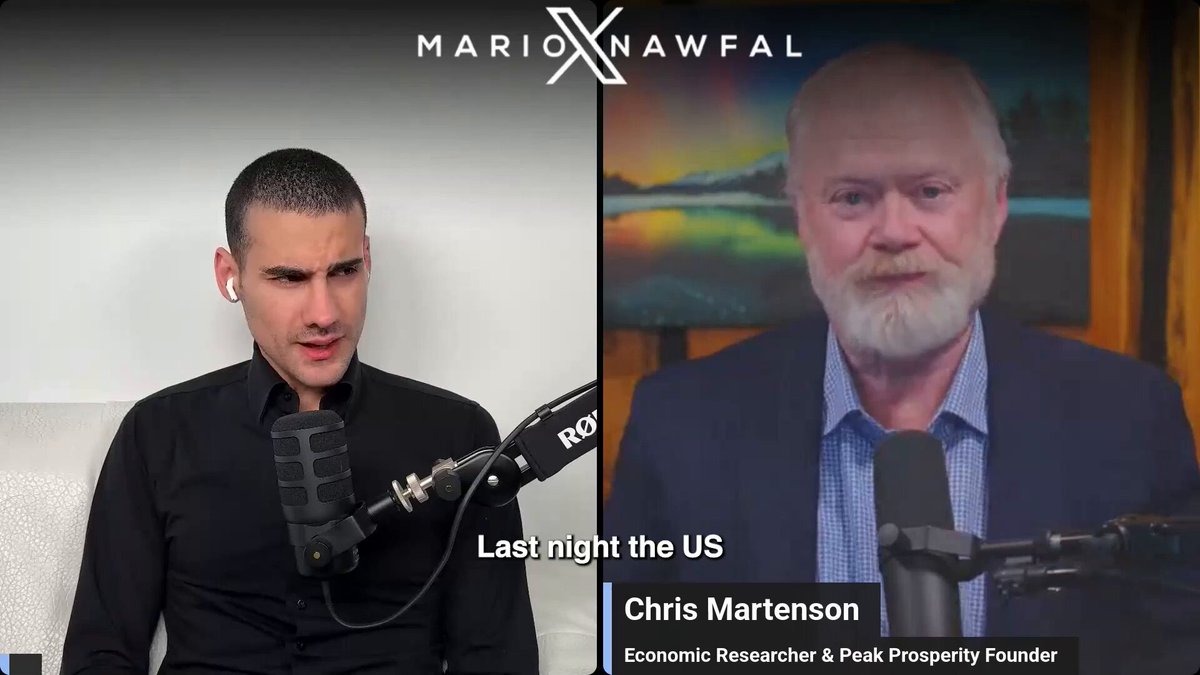
๐Ÿ‡ฎ๐Ÿ‡ท๐Ÿ‡บ๐Ÿ‡ธ Iran has spent decades preparing for a confrontation like this. The U.S. is discovering there are no easy options left. Economist Chris Martenson argues that time is becoming Washington's biggest problem. "Time is not on our side in this story. We just can't keep stretching week after week...

41,763 Aufrufe โ€ข vor 3 Monaten โ€ขvia X (Twitter)

0 Kommentare

Keine Kommentare verfรผgbar

Kommentare vom Original-Post werden hier angezeigt

ร„hnliche Videos

๐Ÿ‡บ๐Ÿ‡ฒ๐Ÿ‡ฎ๐Ÿ‡ท Forget whether Trump bombs Iran again. The real problem is that the U.S. has no clean way out. Economic Researcher Chris Martenson believes the U.S. has reached a strategic dead end after months of confrontation with Iran. His argument starts with the Strait of Hormuz. Officials keep saying the waterway is open. Reality says otherwise. Oil volumes are still depressed, insurers remain nervous, and tanker traffic never bounced back. The economic squeeze never actually ended. That leaves Trump with two bad options: Escalate with a shrinking inventory of long-range precision missiles and invite retaliation across the Gulfโ€ฆ or cut a deal that effectively admits Iran still holds the keys to the worldโ€™s most important oil chokepoint. Neither one looks like a win. The bigger risk, Martenson says, isnโ€™t missiles. Itโ€™s money. Japan imports nearly all of its oil. Higher energy prices have pushed inflation higher, driven up Japanese bond yields, and put pressure on the yen. That matters because Japan has long provided the cheap funding that helped lubricate global financial markets through the yen carry trade. As that system comes under stress, Washington has reportedly been forced to step in to stabilize markets and prevent additional pressure on U.S. Treasuries. In other words, the Iran confrontation is no longer a regional fight. Itโ€™s turning into a live stress test of the financial system that has underwritten American power for decades. If he's right, history may remember this not as a regional war, but as the moment geopolitics and global finance collided. Chris Martenson

Mario Nawfal

265,043 Aufrufe โ€ข vor 28 Tagen

๐Ÿ‡บ๐Ÿ‡ธ๐Ÿ‡ฎ๐Ÿ‡ท What happens when a war starts putting pressure on systems far beyond the battlefield? I sat down with Chris Martenson to make sense of a situation that is becoming increasingly difficult to understand through individual headlines. We started with oil. Despite attacks on shipping, disruptions across multiple regions and the growing importance of the Strait of Hormuz, oil markets have remained surprisingly calm. Chris argues that the futures market may be increasingly disconnected from the physical reality of the energy system, and that the real crisis could come when that gap finally closes. From there, we get into the U.S. Strategic Petroleum Reserve, how quickly it is being depleted, what the realistic floor looks like, and what happens when countries around the world eventually have to rebuild their reserves at the same time. We also explore Iranโ€™s growing leverage, why Tehran may simply be playing for time, and how control of Hormuz changes the negotiating equation. But the conversation goes much further than Iran. We talk about Chinaโ€™s manufacturing advantage, the vulnerabilities created by decades of globalization, and why rebuilding industrial capacity in the U.S. is far more complicated than simply bringing factories home. We get into drones and the changing nature of warfare, the growing strain on U.S. military capacity, Treasury markets, Japanโ€™s yen and the enormous carry trade sitting underneath global finance. And eventually, it all comes back to the same question: Are these separate crises, or are we watching different parts of the same system begin to break? Chris has some fascinating and uncomfortable answers. Great for having you on Chris Martenson

Mario Nawfal

294,436 Aufrufe โ€ข vor 21 Tagen