Loading video...

Video Failed to Load

Go Home

“It said the ceasefire did not include Lebanon, where its targeting Iranian backed Hezbollah fighters" Disgusting dog whistle framing from BBC News (UK) to justify I$rael’s attacks on a civilian population striking emergency workers, killing kids, journalists, shopkeepers, destroying mosques and raining down hell across the country.

39,917 views • 3 months ago •via X (Twitter)

0 Comments

No comments available

Comments from the original post will appear here

Related Videos

🚨 REPORT | Israel expands strikes on civilian infrastructure across southern Lebanon, targeting bridges, fuel stations, and financial lifelines The latest strikes and threats point to a three-part strategy: cutting off the south, hitting fuel stations, and targeting financial institutions tied to Hezbollah. ▪️ 1. Bridges: isolating southern Lebanon 💢 Israeli forces have begun bombing crossings over the Litani River, a key geographic boundary separating southern Lebanon from the rest of the country. Civilians were ordered to move north, with the military warning that “any movement southward may put your life at risk.” Bridges targeted include: ▪️ Al-Qinayat Bridge (Al-Qasmiya, near Tyre) struck today ▪️ Qaaqiya Bridge (inland south Lebanon) hit today ▪️ Burj Rahhal crossing (coastal Tyre district) confirmed hit ▪️ Zrariyeh Bridge (central Litani corridor) destroyed March 13 These crossings are critical civilian routes. Their destruction effectively cuts off large parts of southern Lebanon. ▪️ 2. Fuel stations: targeting energy access Israel says it struck fuel stations operated by the “Al-Amanah” company, claiming they generate millions of dollars for Hezbollah through accounts linked to Al-Qard Al-Hassan. But these stations also serve civilians across southern Lebanon, meaning the strikes directly hit access to fuel in already strained areas. Israel has framed the attacks as part of a broader effort to damage what it calls Hezbollah’s economic infrastructure by striking at “the heart of the civilian population.” ▪️ 3. Financial institutions: targeting Al-Qard Al-Hassan Israel has also explicitly cast these strikes as an attack on the financial system tied to Al-Qard Al-Hassan, a Hezbollah-linked institution that it accuses of helping fund military activity. But Al-Qard Al-Hassan also functions as a major financial lifeline for many Lebanese, especially in the south, providing loans and services in areas where access to traditional banking is limited. ▪️ Scale of attacks: Israel says it has destroyed more than 80 “infrastructure targets” over the past week as part of what it calls a “forward defense” campaign. ▪️ Legal implications The UN Human Rights Office warned March 17 that strikes on bridges, healthcare facilities, residential buildings, and other civilian objects could amount to war crimes, stressing that deliberate attacks on civilian infrastructure are prohibited under international law. 🎥 Video 1: Qasmiyeh crossing (not the main bridge) Video 2: Israeli military attack on infrastructure, target undisclosed

Drop Site

74,096 views • 4 months ago

Israel has backtracked and has not included Lebanon in the ceasefire. 🇮🇱🇱🇧 Following Israel’s strategic defeat in its quest to eliminate the current Iranian political regime, Tel Aviv will now focus on eliminating Hezbollah in Lebanon. Netanyahu announced that Lebanon is not included in the ceasefire despite the US, Iran and Pakistan (which has taken an important role in the negotiations for a ceasefire) announces. To this end, operations south of the Litani River are likely to intensify in what could be a long war if external pressure does not force the Zionist political regime to desist. This operation could leave Lebanon partially occupied and destroyed, as has happened in Gaza, under the pretext of fighting armed groups. Eliminating Hezbollah would represent Israel’s ultimate success in ‘neutralising’ all its neighbours, securing lasting peace in the Levant and, for Iran, a loss of influence behind Israeli lines (having Hezbollah is like having a land front against Israel). As for Lebanon, the country would have no chance of defending itself with a government and an army currently subservient to external dictates, and new dissident movements could emerge, leading to a new civil war. Hezbollah, after all, is more than a paramilitary group; it is a state within a state. In fact, the Israeli opposition is deeply disappointed with the ceasefire, branding it a humiliating defeat. Lebanon could be the consolation prize to appease the most radical sector of Zionism. To demonstrate Israel’s resolve, southern Lebanon was bombed this morning, resulting in further civilian casualties.

@Suriyak

29,778 views • 3 months ago

BREAKING: Lebanon has ordered the Iranian ambassador to leave the country by 29th March. Persona non grata. The host nation of Iran’s most successful proxy just told the patron state to get out. This happened on the same day that Hezbollah fired its 55th rocket and drone attack since March 22nd. On the same day that the IDF struck hundreds of Hezbollah targets in southern Lebanon, the Bekaa Valley, and Beirut’s southern suburbs. On the same day that the Lebanese Health Ministry reported 18 killed and 65 injured from Israeli strikes on Lebanese soil. Lebanon expelled the ambassador of the country whose proxy is fighting a war from Lebanon’s territory while Lebanon’s own citizens die in the crossfire. Process what that means. Lebanon has two governments. One sits in the Grand Serail and issues decrees. The other sits in Dahieh and launches missiles. Prime Minister Nawaf Salam has banned all Hezbollah military and security activities. He has demanded weapon surrender. He has expelled the Iranian ambassador. And Hezbollah has responded by firing another barrage into northern Israel this morning. The decrees do not reach Dahieh. The Lebanese Armed Forces remain non-engaged. The state issues orders that the parallel state ignores. The ambassador leaves. The rockets do not. Lebanon created Hezbollah’s host environment and Hezbollah consumed it. Iran’s IRGC dispatched advisors to the Bekaa Valley in 1982 during the Israeli invasion and the chaos of civil war. They trained Shiite militants. They funded mosques, hospitals, schools. They built a social infrastructure that the Lebanese state could not provide, then militarised it. Hezbollah’s 1985 manifesto pledged allegiance to Ayatollah Khomeini. Iran provides an estimated $700 million annually. Forty-four years later, the organisation that Iran built inside Lebanon is more powerful than the state that hosts it. The ambassador can be expelled. The $700 million pipeline cannot. The expulsion is not strength. It is the last card a government plays when it has no others. Lebanon’s economy loses $30 to $80 million per day from the strikes. Five hundred and seventeen thousand people are displaced. The banking system collapsed in 2020 and never recovered. The currency has lost 98 percent of its value since 2019. And now Israel is striking Lebanese territory daily because Hezbollah is using Lebanese territory to attack Israel in solidarity with an Iranian war that the Lebanese government did not start, does not support, and cannot stop. The country is being destroyed by a war between its tenant and its neighbour, and the landlord has no power over either. Hezbollah fights because Iran’s sealed packets and $700 million command it. Israel strikes because Hezbollah fires from Lebanese positions. Lebanon’s government expels an ambassador because expelling an ambassador is the one sovereign act it can still perform. The army cannot disarm Hezbollah. The police cannot enter Dahieh. The courts cannot prosecute a militia that provides social services to a third of the population. The only tool the state has left is a diplomatic note handed to a man whose organisation does not need his presence to continue operating. The Axis of Resistance was designed for exactly this: to fight from inside states that cannot control the fight. Lebanon is the template. Iraq, Yemen, and Syria are the copies. The patron state provides the funding. The proxy provides the violence. The host state absorbs the retaliation. And when the host state protests, the proxy ignores the protest and the patron state sends a new ambassador. The rockets will continue after March 29. The ambassador will leave. The $700 million will not.

Shanaka Anslem Perera ⚡

74,745 views • 4 months ago

‼️ Lebanon Under “Eternal Darkness”: Massive Israeli Coordinated Strikes Across the Country Lebanon witnessed a massive, coordinated wave of Israeli strikes today, including direct hits in central Beirut. This appears to be one of the largest single waves of attacks on the country in decades. Strikes have hit multiple areas across: •Beirut and its southern suburbs •Southern Lebanon •The Bekaa Valley and Baalbek region Locations in the capital include densely populated neighbourhoods such as Corniche al-Mazraa, Musaytbeh, Basta, Ain el-Tineh, Hay el-Lija , Manara, & others, alongside additional strikes in surrounding areas including Choueifat, Aramoun, & Bchamoun. Across the south & Bekaa, dozens of towns & cities have also been targeted in a wide geographic spread. The scale, simultaneity, and distribution of these strikes point to a highly coordinated operation carried out across multiple fronts at once. Lebanon’s Health Minister says hospitals are overwhelmed, with over 350 casualties reported across the country, including both killed & injured. Let that sink in over 350 within a spate of 10 minutes. Israeli media reports the operation has been named “Eternal Darkness,” & military leadership has confirmed that strikes against Hezbollah will continue under this campaign. At the same time, conflicting signals are emerging around the ceasefire. Israeli officials say there will be no halt to operations in Lebanon, while Iran, despite agreeing to a two-week pause with the United States, has warned it may respond if attacks on Lebanon continue. This suggests the ceasefire may be partial, not comprehensive, with the risk of escalation still very much present.

Hala Jaber

50,004 views • 3 months ago

⚡️🇺🇸🇮🇷🇮🇱BREAKING: Iran–U.S. Talks in Islamabad as Israel Escalates in Lebanon Rejecting Ceasefire despite Washington Talks. Israeli forces are raiding Nabatieh and attempting ground control in Bint Jbeil, southern Lebanon as the U.S and Iran arrive in Islamabad to hold talks. Iran’s FM Abbas Araghchi says Iran is entering negotiations with “complete distrust,” blaming repeated U.S. failures to uphold commitments, and calling for immediate international action to stop Israeli attacks on Lebanon. He stressed Iran will defend its interests fully. An Iranian delegation led by Araghchi and Parliament Speaker Mohammad Bagher Ghalibaf arrived in Islamabad and met Pakistan’s army chief Asim Munir. Tehran protested U.S. ceasefire violations, noting it agreed to talks on two conditions, release of frozen assets and a Lebanon ceasefire, both reportedly accepted via Pakistani mediation but not yet implemented. Iran has also maintained restrictions on oil tanker passage through the Strait of Hormuz. Talks are set for one day, with possible extension. Reuters, citing a senior Iranian source, reports the U.S. agreed to release frozen Iranian assets, which Tehran sees as a test of good faith and linked to safe passage in Hormuz before any permanent deal however a senior U.S. official told CBS News that Washington has not agreed to release any frozen Iranian assets, denying earlier reports. A Pakistani source told Al Jazeera efforts are ongoing for direct U.S.–Iran talks; otherwise, indirect talks will proceed within the same timeframe. Iran rejects separating Israel from the U.S., holding Washington fully responsible. Meanwhile, Israel says it will not discuss a ceasefire with Hezbollah in upcoming Washington meetings and continues operations in Lebanon. Sources: AlJazeera, Reuters, FarsNews, ISNA.

Suppressed News.

40,458 views • 3 months ago

🇱🇧 BREAKING — Israeli Strikes Across Lebanon Israeli warplanes carried out new attacks across southern and eastern Lebanon, killing at least four people and wounding several others, according to local authorities, and a journalist on the ground who spoke with Drop Site News. In Arabsalim, Israeli missiles struck a room containing bulldozing equipment near the municipality building, killing Zeinab Moussa, 80, and Maher Younes, a local butcher, 43, and injuring three others. Residents said the blast destroyed the structure, damaged nearby homes, and fits Israel’s wider pattern of striking storage sites for reconstruction equipment – sites it calls “Hezbollah depots” and “warehouses.” Further east, a wave of airstrikes hit Janta and Shmastar in the eastern Bekaa Valley, killing two people and wounding several others. Windows shattered at a nearby school, and students were treated for injuries and shock. Lebanese officials condemned the attacks as renewed violations of sovereignty, noting they mark another serious escalation despite a ceasefire signed in late 2024. (Information from Drop Site sources and L’Orient Today, NNA, Anadolu Agency) —— 🎥 1: Israeli aircraft launched a wave of airstrikes on hills surrounding the town of Shmastar in Lebanon’s eastern Bekaa region. 🎥 2: Israeli warplanes struck the town of Arabsalim in southern Lebanon. 📷 1: Zeinab Moussa, 80, killed in Israeli airstrike on Arabsalim, southern Lebanon. Moussa had previously lost two grandsons in Israel’s 2023–24 war. 📷 2: Windows shattered at Shmastar Secondary School amid Israeli airstrikes on the area, leaving several students with minor injuries and others fainting

Drop Site

22,406 views • 9 months ago

BREAKING: The ceasefire just ate itself. The Head of Iran’s Parliamentary National Security and Foreign Policy Committee just stated: after the Israeli aggression on Lebanon, all plans to open the Strait of Hormuz must immediately cease until there are assurances that Lebanon is included in the ceasefire. There is either a ceasefire on all fronts, or a ceasefire nowhere at all. The entire premise of the deal was Hormuz reopening. Trump’s condition was complete, immediate, and safe opening of the strait. Iran accepted. The ceasefire was built on that single exchange: pause the bombs, open the water. Brent crashed 13 percent. The S&P surged. The market priced peace. Now Iran is threatening to reverse the only thing the ceasefire achieved because of something the ceasefire never included. Three contradictions in 24 hours. Pakistan announced the ceasefire covers everywhere including Lebanon. Netanyahu said it does not include Lebanon and launched the largest IDF strike since Roaring Lion began: 100 Hezbollah targets in 10 minutes. Now Iran says Hormuz stays closed unless Lebanon is covered. The deal’s architect says it includes Lebanon. The deal’s beneficiary says it excludes Lebanon. And now the deal’s other signatory says the core deliverable is revoked unless the excluded front is reinstated. This is what happens when a ceasefire is brokered through intermediaries who need both sides to say yes more than they need both sides to agree. Pakistan shuttled drafts between Washington and Tehran through five mediating channels in one chaotic day. Egypt bridged language. Turkey provided backchannels. China urged an off-ramp. The framework was drafted with sufficient ambiguity that Iran could tell Hezbollah it was covered and Israel could tell its public it was not. That ambiguity held for exactly 18 hours before the IDF’s 100-target strike forced Iran to choose between Hezbollah solidarity and Hormuz revenue. Iran chose Hezbollah. The implications cascade immediately. If Iran follows through and halts Hormuz reopening, the 15 to 20 vessels currently transiting under IRGC clearance codes stop. The yuan toll revenue that was funding reconstruction stops. The ceasefire’s only tangible achievement, the strait reopening that crashed oil prices, reverses. And Trump’s conditional two-week suspension, which was explicitly revocable if Hormuz did not open immediately and safely, faces its trigger event on day one. Trump has three options. Accept Lebanon inclusion, which means pressuring Netanyahu to halt strikes against Hezbollah, which Israel has refused. Reject Lebanon inclusion, which means Iran re-closes Hormuz, which voids the ceasefire’s premise. Or ignore the threat and continue as if the 15 ships passing through a yuan toll booth constitute an open strait, which means the Islamabad talks on Friday begin over a deal that both parties are publicly threatening to revoke. The molecule crisis does not pause for diplomatic fractures. The crackers are rubble. The pipeline bypass just took a drone. The fertiliser is trapped behind the gate. The centrifuges are spinning. And the strait that was supposed to reopen as the war’s first peace dividend is now being held hostage to a front that was never agreed upon, by a parliament that legislated tolls on March 31, in a country whose supreme leader has not been seen in 39 days. One ceasefire. Three interpretations. Zero days before collapse. Full analysis on Substack.

Shanaka Anslem Perera ⚡

495,462 views • 3 months ago

🇮🇷🇺🇸 The ceasefire is less than 24 hours old and it's already being torn apart over Lebanon... Here's the situation. Pakistan announced the ceasefire applied "everywhere, including Lebanon." Iran agreed on that basis. Then Netanyahu called Trump minutes before the announcement and got him to agree Lebanon was excluded. The White House never clarified publicly until it was too late. Vance called it a "legitimate misunderstanding." That's a generous way of describing what happened. Iran entered a ceasefire believing Lebanon was included. Israel entered knowing it wasn't. Someone either miscommunicated or deliberately let Iran sign a deal under false assumptions. The result: Israel launched its largest strike on Lebanon since the war began. Iran is now threatening to withdraw from Saturday's talks and close Hormuz again. Araghchi put it plainly: "The U.S. must choose. Ceasefire or continued war via Israel. It cannot have both." Egypt accused Israel of a "premeditated" attempt to undermine the truce. Iranian news agencies report oil tankers in Hormuz were stopped after the Lebanon strikes. Vance says Israel "offered to check themselves a little bit" going forward. If Iran pulls out over Lebanon, he said, "that would be dumb but that's their choice." This is exactly the pattern I've tracked for 44 days. Every time peace gets close, Israel fills the gap with bombs. The question has always been whether Trump controls Netanyahu or Netanyahu controls Trump. The phone call minutes before the ceasefire announcement answered that question. Source: Axios

Mario Nawfal

1,275,580 views • 3 months ago

JUST IN: The intelligence unit that detonated Hezbollah’s pagers in 2024 just dropped thousands of leaflets over Beirut asking Lebanese civilians to disarm Hezbollah themselves. Israeli jets flew over Verdun, Hamra, Ain al-Mreisseh, and the southern suburbs on 13 March and released paper. Not bombs. Paper. Each leaflet carried the logo of Unit 504, the IDF Military Intelligence Directorate’s human intelligence division, a QR code linking to WhatsApp and Facebook channels, and a message: “You must disarm Hezbollah, Iran’s shield. Lebanon is your decision, not someone else’s. Unit 504 is working to ensure the future of Lebanon. If you want to be part of real change, we are here to listen.” Another leaflet referenced Gaza: “remarkable success” and the threat that Beirut faces the same if Hezbollah is not removed. Another quoted an Arabic proverb: “If your neighbour is well, you are well.” This is the same unit that coordinated the September 2024 pager operation that detonated thousands of Hezbollah communication devices simultaneously, the most devastating intelligence operation against the organisation in its history. The same unit that assassinated Islamic Jihad commander Baha Abu al-Ata in 2019. The same unit commended with the IDF’s second-highest award for clandestine operations in Syria and Lebanon between 2013 and 2018. Unit 504 does not do publicity. It does recruitment. The QR codes are not information campaigns. They are intake forms for the most effective human intelligence operation Israel has ever run against Hezbollah. Lebanese cyber security experts immediately warned the public not to scan the codes. The Lebanese Army issued advisories. Hezbollah’s deputy secretary-general Naim Qassem gave a defiant speech declaring readiness for a “long battle.” The warnings reveal the fear: not that civilians will scan the codes out of curiosity, but that some of them will scan them out of conviction. Lebanon has buried nearly 800 dead since the escalation began. Eight hundred thousand are displaced. The southern suburbs have been bombed repeatedly. The 2024 ceasefire collapsed in hours when Hezbollah launched 100 rockets at Israel to avenge Khamenei’s assassination. The Lebanese government banned the military operation. Hezbollah ignored the ban. The army with 80,000 troops watched a militia with 100,000 fighters and $700 million to $1 billion in annual Iranian funding drag the country into a war it did not choose, cannot stop, and does not control. The leaflets are addressed to that helplessness. Israel is asking Lebanese civilians to do what their own government, their own army, and the United Nations have failed to do since Resolution 1701 in 2006: disarm the militia that holds the country hostage. The request is absurd on its face. A population under bombardment being asked by the country bombing it to rise up against the militia the country is bombing. The circularity is the point. Israel cannot disarm Hezbollah from the air. Hezbollah cannot be disarmed from within without civilian willingness that does not exist at scale. And the leaflets acknowledge both impossibilities by offering a third path: intelligence cooperation, one informant at a time, one QR code at a time, one person who decides that the militia that dragged their country into war deserves to be reported rather than protected. The leaflets will not disarm Hezbollah. But they do not need to. They need to produce doubt. Doubt in Hezbollah’s ranks about who scanned. Doubt in commanders about which neighbour is reporting. Doubt in the organisation’s internal security about whether the unit that turned their pagers into bombs can turn their neighbours into informants. Unit 504 does not need Lebanon to rise up. It needs Lebanon to whisper.

Shanaka Anslem Perera ⚡

52,060 views • 4 months ago

🚨🇮🇱 🇵🇸 12 HOUR NEWS RECAP: ISRAEL–GAZA 1. Israel confirmed the recovery of the remains of two hostages -Sahar Baruch (25) and Amiram Cooper (84)- through the Red Cross, only hours after launching air and tank strikes near Khan Younis and eastern Gaza City, despite reiterating its commitment to a ceasefire. 2. Israel bombs Lebanon: Overnight, Israeli jets hit Hezbollah positions near Tyre and Baalbek after rocket fire from southern Lebanon. At least six people, including civilians, were reported killed. 3. Intelligence reports suggest Hezbollah has repositioned several missile batteries and radar systems closer to the Israeli border, prompting heightened alerts within the IDF and fears of a broader northern escalation. 4. Israel’s security cabinet and the heads of its security establishment convened with Netanyahu to discuss the strengthening of Hezbollah, described by an Israeli official as “a significant discussion in light of Hezbollah’s actions on the ground.” 5. Since the ceasefire began, more than 200 Palestinians have been killed and over 600 wounded in Gaza by renewed Israeli strikes. Many of the victims are children. 6. The attacks -primarily Israeli air and artillery strikes targeting suspected Hamas positions across central and southern Gaza- further strain the fragile ceasefire declared on October 10, with both Israel and Hamas accusing each other of repeated violations. 7. The IDF described the Gaza operations as “precise strikes” on terrorist infrastructure that allegedly threatened Israeli troops. No confirmed casualties were reported. 8. In the West Bank, Israel has erected nearly 1,000 new roadblocks and barriers since the war began, severely restricting Palestinian movement and access to basic services. 9. Under the ongoing hostage-remains exchange, Israel has recovered 17 hostages’ remains, while 11 are still missing. Israel has returned 195 Palestinian bodies, with many still unidentified. 10. The U.S. administration reaffirmed support for the ceasefire framework but stressed that Israel retains the right to respond to attacks from Gaza or Lebanon. Trump restated Washington’s backing of Israel’s security operations.

Mario Nawfal

57,165 views • 9 months ago

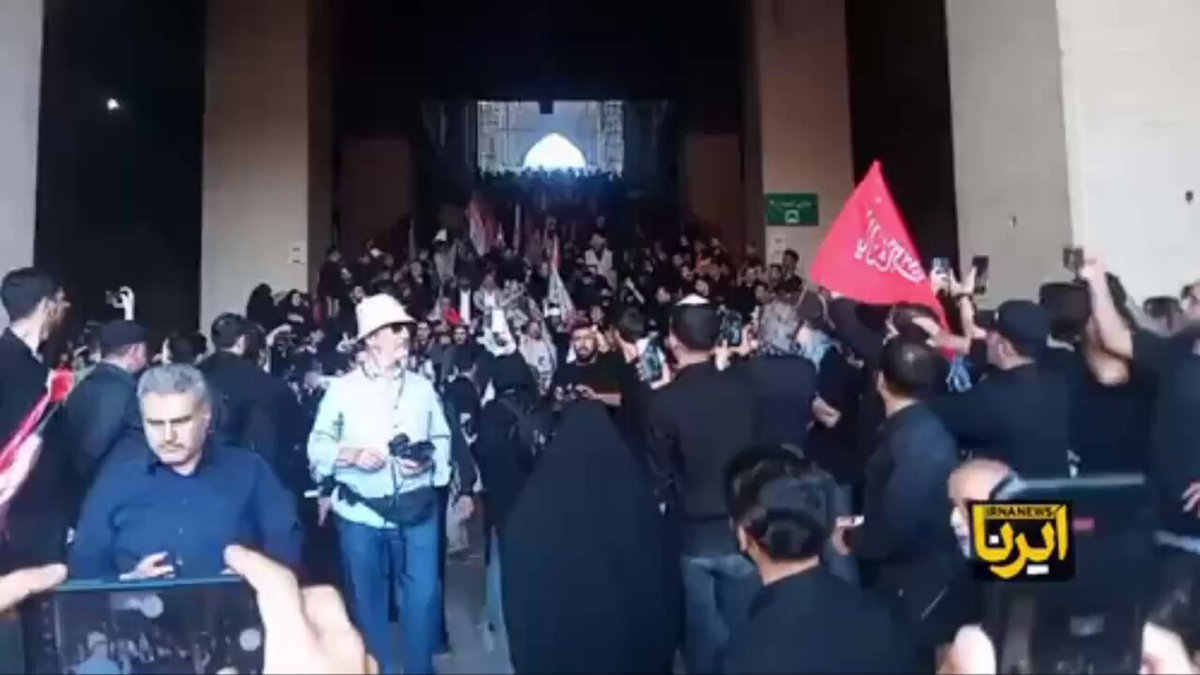
Trump said "Right now their people are very hungry." Marco Rubio declared that he knows of "no other country where there's a bigger difference between the people who lead the country and the people who live there." Scott Bessent stood at Davos and boasted: "This is economic statecraft, no shots fired." Pete Hegseth thought he could send ground troops into Iranian soil. They all had a theory. Bomb their infrastructure. Collapse their currency. Starve them into desperation. And when they are broken enough, they will rise against their own government and deliver the country to Washington on a platter. Look at these images. These are not the images of a broken people. This is one of the largest human gatherings on earth. It's a civilization expressing itself in full, with all its grief, its pride, and its cohesion. These are millions who chose, freely and defiantly, to pour into the streets to mourn their leader on their own terms. The policy did not radicalize them against their government. It did not hollow them out. It did not manufacture the desperation Washington needed. Four decades of sanctions, two wars in the region, maximum pressure, currency warfare, and a Secretary of Defense openly threatening boots on the ground, and this is what it produced: a people more visibly unified than almost any nation on earth can claim to be. This is the bill coming due for decades of strategic arrogance; the assumption that Iranians were simply a pressure point to be managed, a population to be weaponized against its own state. Washington never understood what it was dealing with.

Reza Nasri

130,656 views • 1 month ago