Загрузка видео...

Не удалось загрузить видео

На главную

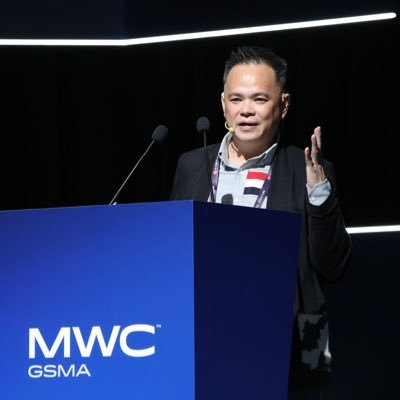
I’ve been following the evolution of foldables for a while, and what I find interesting is that the category is finally moving beyond the question of “How many screens can we fit into a phone?” The new HUAWEI Mate XT 2 ULTIMATE DESIGN caught my attention for a different...

49,096 просмотров • 22 дней назад •via X (Twitter)

Комментарии: 3

Фото профиля Vân
Vân22 дней назад

gotta get oneee

Фото профиля Senthil Venkatrajan
Senthil Venkatrajan22 дней назад

@HuaweiMobile should bring this to India 🇮🇳, I really wish to have one it looks so inspiring

Фото профиля Vai Sefuder
Vai Sefuder22 дней назад

Mais do que telas, o diferencial parece estar em como o dobrável se adapta ao uso real do dia a dia

Похожие видео

Sam Altman, CEO of OpenAI, on why the iPhone, the greatest consumer device ever made, is the wrong hardware for the AI era: Sam argues the iPhone's basic design wasn't made for a world where AI needs to live alongside your entire life. "I think the iPhone is currently the greatest piece of consumer hardware ever made by a lot. Like, incredible what that has done." The iPhone was designed for a pre-AI world. Sam Altman explains: "It was not meant for a world where you needed a piece of hardware that could absorb all of the context of your life. You know, you can use the phone, you can stop using the phone, you can put it in your pocket, but it's kind of like on or off." That binary, on or off, in use or in your pocket, is the core mismatch. A device that flips between active and dormant can't continuously absorb the context that a personal AGI would need to actually be useful to you. Sam uses the conversation he's having in that moment as the example: "This has been a very interesting conversation. I would love this to be referenced by my personal AGI later, but my phone is in my pocket and it's not going to understand." The vision he's pointing toward is a device that participates differently: "I would like a device that, if I wanted to, can participate and understand and know about this conversation." The shift Sam is describing is from a device you pick up and put down, to one that quietly captures the context of your life. Without that continuous context, a personal AGI can't actually be personal.

Big Brain AI

25,447 просмотров • 4 месяцев назад

Q: Why is company culture important? In the clip below, a16z cofounder Ben Horowitz argues that culture drives how people in your company behave on a daily basis—and particularly, how they behave when you’re not looking. Is that phone call so important I need to return it today or can it wait until tomorrow? Can I ask for a raise before my annual review? Is the quality of this document good enough or should I keep working on it? Do I have to be on time for that meeting? Should I stay at the Four Seasons or the Red Roof Inn? Should I go home at 5 p.m. or 8 p.m.? Should we discuss the color of this new product for five minutes or thirty hours? If I know something is badly broken in the company, should I say something? Whom should I tell? Is winning more important than ethics? None of these things are in your mission statement or OKRs, but they determine many important things for your company, such as how people experience your company, what you’re like to do business with, what your company is like to work at, etc. And as Ben describes, what drives the culture is all of the little behaviors and cues people take on: “this is what I have to do to succeed in this company.” Culture can feel abstract and secondary when you pit it against a concrete result that’s right in front of you, but it’s a strategic investment in the company doing things the right way when you are not looking. It’s the set of assumptions your employees use to resolve the problems they face every day. It’s how they behave when no one is looking. If you don’t methodically set your culture, then two-thirds of it will end up being accidental, and the rest will be a mistake. If you’re looking for a more in-depth guide to culture and how to build a great one, I’d recommend Ben’s book: What You Do Is Who You Are.

Michael McGuiness

180,646 просмотров • 3 лет назад

JIMMY DERMBUDDY NUFORMULA #EverydayStrongSkinWithJimmy #jimmyyjp 💬: *the reporter asked how to handle the comments on various social media platforms* 💜: I think staying calm is the best. No matter what kind of harassment you face, it’s like playing a game. I always think of it as a game, whoever stays calmer, wins. That’s just how it is for me. I have to admit that everyone uses their phone like it’s a 33rd organ; we just can't live without it. And I admit, I can't live without my phone either. But in the end, I just think, hey, sometimes we forget, we're so deep in our phones that we feel like we aren't participating in the environment around us at all. It makes it so that, what do you call it, something inside us goes missing. They call it the "soul" disappearing. Since the soul is gone, I just felt like, hey, if you ask what I'm doing this year, one thing I can say for sure is: I will try to use my phone less. 💬: Meaning, it's the goal you set for yourself for what you'll do this year. 💜: That's right, and I feel like I've already started to achieve it. Because over the past month, I’ve started opening things less. I started trying not to read too much and things like that. And I try to focus on being in the present and try to reach the goals I've set for myself. Because I think that every time we set a goal and make it a success, it's always the case that the fans or the people who like us will come to congratulate us and be happy. And it creates inspiration or other things; it creates positive energy for people on social.

mini (pepper’s babytee)࣪ ִֶָ⋆.

15,139 просмотров • 8 месяцев назад

Jon Rahm on the LIV format: “Yeah, obviously there’s been a bit of a change. There was a lot more about LIV Golf that was attractive to me, right. Yeah, maybe the format was a set back in the past, but at the same time there’s a lot of positives to it as well. And one of the things that a lot of players kept mentioning is you don’t have a wave weather difference, where you can simply get unlucky and you’re out of contention for that tournament. It’s part of the game, I get it, but it’s something you don’t have to deal with anymore. So that part is a very nice aspect. The team is what really made it for me. Being able to be part of a team, represent a team, play for my teammates, with my teammates and against my teammates, is something that to me that has always been very, very special. When you get a victory to share, it’s always better to have a team to share it with. So it’s what was the most attractive part and when we started discussions it gets to a point where even though I’m ambitious, I’m not greedy. So there’s a give and take and the format is something that I can easily overlook, and I’m pretty sure I can learn to enjoy it, I’ll just have to get used to it, but I’m pretty sure I’ll learn to enjoy it. To be honest, the more I started thinking about it, the more I started thinking about my college days that were 3 day tournaments, 54 holes, and everybody warmed up together for the most part. So it shouldn’t be an environment I’m unfamiliar with.” This is from the LIV podcast called “Fairway to Heaven”. Full link:

Flushing It

562,914 просмотров • 2 лет назад

I’ve made a short film. Look at the things around you: doors, bins, staircases, furniture, railings, doorhandles, windows. Do you like how they look, or not? Modern design has become boring, but it doesn’t have to be this way. The word “beautiful” is overused. We don’t need “beautiful” lamps, bus stops, and water fountains – we just need lamps, bus stops, and water fountains that are interesting, that actually mean something. Or, at the very least, not boring. Because the aesthetics of architecture and urban design aren’t just a bonus; they totally change how we think, feel, and behave. Boring environments make us more stressed and less productive; they erode our sense of community; they make us sadder, less trusting, and lonelier. A boring world is one where we spend even more time online and where our addictions are even harder to battle. The Problem There is global, widespread dissatisfaction with how the world looks. In this film, and the series it will lead to, we want to investigate that feeling and give it a voice. The point isn’t that we should return to the past or get rid of modernism. It’s about learning from the past in order to improve the present, and about giving the public what they very clearly want, which isn’t the eradication of modernism but the co-existence of modernism AND traditionalism. Just look where tourists go, where they take their photos, and that tells you everything you need to know about what most people find interesting or beautiful. And look at where people go on holiday. It’s always to cities filled with old architecture and design, with churches and mosques and palaces, with charming little alleyways and stone staircases and wrought-iron railings. Of the world’s fifty most visited buildings, only four were made in the 20th century, and they’re all museums or memorials. There’s a reason why posts about this go viral online all the time. Regardless of why the change happened, it is clearly the case that we no longer make things how we used to. People are rightly confused by the fact that old lamp posts (to take the example we focus on in the film) are usually so pretty, while modern ones are usually so boring. Some people say this is just an example of survivorship bias… and they’re mostly correct. But that’s the whole point! Saying old buildings are usually prettier than modern buildings is not to say that architecture used to be better, or that the past was better. It is simply to say that certain kinds of buildings, because they have been preserved, are good examples of what people like most. In which case... shouldn't we try to design at least some buildings in a way that we know people like? A Unifying Cause Everybody, from all sides of the political spectrum and all backgrounds, stands to benefit from a world that is designed more thoughtfully and imaginatively. The world could be such a colourful, meaningful, and thrilling place! So this isn’t about left versus right or conservatism versus progressivism; it’s about making our world a more interesting and meaningful place to live in. This should be a unifying cause, because everybody loses out when our homes and cities are badly designed. I want this film to unite people who think they’re on opposite sides, and to create a consensus that we need to change our approach to how we design our buildings and the objects – benches, bus stops, bins, lamp posts, aircon units – that fill our cities. The Importance of Details We are incredibly rich and have a sprawling choice of shows to stream, phones to buy, or shoes to wear… but everything feels more and more generic all the time. If you want to understand a society, don’t listen to what it says about itself – look at what it creates. You can learn everything about the Victorians – the good and the bad – just by looking at their lamp posts. And what do the ordinary details of the modern world say about us? That we are technologically advanced, very efficient… and care more about making money, about making things as quickly and cheaply as possible, than making our world an enjoyable place to actually live in. It’s important to learn about why and how things have changed, but that’s for another time. The first step is establishing that the public aren’t happy with modern architecture and design, and that something needs to be done. But what we need isn’t a total revival of so-called ‘traditionalism’; the truth is that traditionalism and modernism can (and should) co-exist. The trouble right now is that we only have one, and that people are tired of it. The Power of Noticing But this film (and the series it will, all being well, lead to) is about more than the specific argument it presents. Above all it’s about a way of seeing the world around us, a way of noticing and thinking. “How you do anything is how you do everything.” That is probably true, and it also applies to whole societies, not just individuals; a single doorbell implies everything else about the whole socio-economic and political system that gave rise to its creation. And, beyond being merely “useful”, the ability to notice details makes the world a richer place to live in, and life a richer thing to lead. This is what the film is about, more than anything: the power and joy of noticing. A Bigger Project This short film is just the beginning. We want to make a full series about the history of art and architecture, both for their own sake and also to see what we can learn about life in the twenty-first century and how to improve it. To keep updated you can join our email list over at our website, linked in the reply below. Final Words You can watch the film here on X, or over on YouTube, also linked in the reply below. So… this is where the dream begins, the dream of a new series and the dream of a more charming, more interesting, more meaningful modern world. Spread the word.

The Cultural Tutor

2,751,576 просмотров • 11 месяцев назад