Loading video...

Video Failed to Load

Go Home

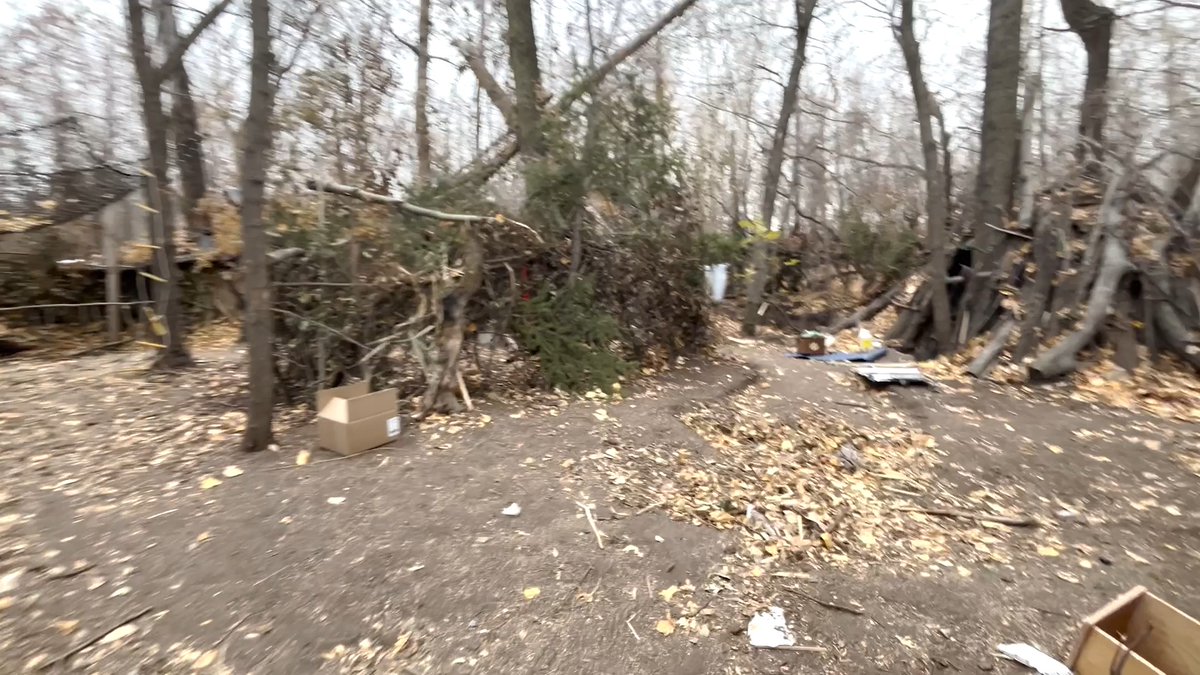
Japan's solar boom has created a landslide problem, with developers increasingly building on steep, forested slopes. A national study found almost 20% of Japan's large solar farms have been built inside landslide hazard zones. Trees have been cleared, slopes cut back, and water retention removed. In heavy rain, failures...

16,967 views • 7 months ago •via X (Twitter)

0 Comments

No comments available

Comments from the original post will appear here

Related Videos

🚨 Private solar companies are being given grant money in New York State, they’re then pressuring farmers to sell their land Also Investment firms are offering $40k a month to farmers with hundreds of acres to to sell their land “My neighbors came to my farm last week and told me something absolutely terrifying. He owns over 100 acres of land right across the street from my farm. — We were just talking about different trends that we're noticing in the area and what's happening to farms and all of these different investment firms that are coming out of nowhere to buy up this farmland that is for sale right under our noses and no one even knows it's happening. He told me the other other day for his 100 acres behind me. He has been approached by and pressured by solar companies to sell his land to them. Multiple times they have come and tried to get him to sell this land. He said they lure you in by the promise of paying you anywhere from $30 to 40k a year as a payoff for selling this property to them. This guy's in his 70s. He said it's obviously appealing to other older folks who are just looking to finally get away from farming and retire with a nice 40k a year until they die. The problem is that then 100 hundred acres of arable, beautiful, upstate New York fertile land will turn into a dystopian solar farm that will bring down the property values of everybody in this area, be a huge eyesore. It'll kill the idyllicness of in every direction, not to mention the insane battery systems and overhead wires that have to be set up at these solar farms if any of you have ever gone near them. I thanked him for not selling out to these solar companies. He said he never plans to because that would change everything at all of the farms surrounding this 100 acres of land. It just makes me think about how many other people are being pressured by these companies as we speak to sell out. Doesn't help. In New York State that grant money has been given to these solar companies. There's pressure from the state for them to turn as much of our land into solar fields and farms as possible, and it's horrifying.”

Wall Street Apes

317,315 views • 1 year ago

You will remember that a month or two ago, I posted about the solar system at my home in Johannesburg, which has allowed me to hardly use Eskom or City Power because it generates enough energy for my entire usage, including powering geysers. After that post, one of you on this page, a solar expert, reached out privately and advised me to remove the electric geysers from the main solar system. He said the solar batteries were doing too many cycles because they were powering the geysers, and that this would shorten their lifespan. His advice was simple, remove the geysers from the battery load if I wanted the batteries to last the full period that they are built for. I took that advice seriously. I then asked my plumber, Shanil, who owns Metro Plumbers, to guide me on where to get high-quality solar geysers in Johannesburg so that I could replace the electric ones. Shanil told me about a new technology called the Elon Smart Solar PV System. He explained that it is much cheaper than buying completely new solar geysers. Instead of replacing the electric geyser, you simply buy the Elon unit, which comes with its own solar panels, and it is fitted onto your existing electric geyser. That is what I did. I have now removed all four electric geysers from the home solar system that powers my home. Each of them has been converted using the Elon Smart Solar PV technology. They are now powered by their own dedicated solar panels. The four geysers are running on a total of thirteen panels. So what this means is that I will never use Eskom or City Power again because in the past, when it was cloudy for three or four days, I would return to the grid to assist the batteries. This was happening because the batteries were carrying a heavy load that included four geysers. Now that the geysers have been removed from the main solar system and converted to their own dedicated solar supply, I will never return to Eskom or City Power. Even on cloudy days unless the solar system breaks down. The system is able to generate enough power for everything that I need. I also use a gas cooker, which helps reduce the electrical load. I hope this information helps you. If I had gone for the top-quality geysers that are exclusively solar, I would have paid between R25,000 and R30,000 per geyser. That would have come to around R120,000 for four geysers. Of course, there are cheaper solar geysers that you can get, but they are cheaper for a reason. So, in essence, I saved half the amount I would have paid for the geysers if I had chosen top-quality solar geysers. If you are in Johannesburg and you are interested, Shanil’s number is +27 (76) 890-5582. He can do the work for you. The gadgets and their panels cost R60,000 from Plumbing Supplies Sanitaryware Centre in Woodmead. So I have had the system in place for a week now and it is working very well. I have deliberately allowed all the geysers to continue heating so that I could test whether everything is functioning correctly, and the water is as hot as it should be. So that is the story. I thought I should share it with you for those who might want to reduce their bills. P/s The other interesting key feature of this system is that I can control it from my phone. If it is very cloudy and the water is not as hot as I want it to be, I can simply go onto the app and instruct that particular geyser to use the grid. Unlike my previous setup, where I had to switch the whole home solar system onto the grid, now each individual geyser can independently switch to the grid and heat the water to a temperature that I have set. Once the water reaches that set temperature, it automatically disconnects. I can also decide to switch off a geyser from using electricity, in my case from my solar system, or for those who do not have solar systems, from Eskom. In the same way, I can switch it off from using the solar panels. For instance, if there are four geysers and one of them is in a bedroom that is not being used, I can switch off that geyser completely so that it is not heating water unnecessarily. This gives you control, flexibility, and saves you a lot of money in the long run. You can read more about this technology here;

Hopewell Chin’ono

67,943 views • 9 months ago

Canadian Solar [Full Investment Thesis]: Everything You Need to Know About $CSIQ “THE GREAT SOLAR RECKONING” ☀️ 🔋$CSIQ became my largest position earlier this year, after I had been studying the company since 2023. Here is my 250-page, ~three-hour presentation on Canadian Solar. I made this video to compress the 1,000+ hours of work already done here, hopefully helping speed up the learning curve for anyone interested.☀️🔋 This is not meant to be flawless. It is meant to be done. I believe $CSIQ is entering one of the most promising periods in its history. With $15B+ in total assets, three multi-billion-dollar businesses spanning solar manufacturing, storage manufacturing, and project development across six continents, and a mere ~$1B market capitalization, Canadian Solar is poised to be one of the top energy performers in 2026. The market has left this company for dead. But underneath the surface, the foundations of the business have been getting stronger: - While the solar industry wrongly spent on building overcapacity, Canadian Solar was one of the few companies slowing down and investing upstream into its project development arm. - While everyone looked to globalize supply chains, Canadian Solar has been building its manufacturing presence in the U.S. since 2023. - While much of the industry was still debating battery storage, Canadian Solar was already building gigawatt-scale projects in 2021. Today, it is reaping the benefits of having been a first mover. This is the story of a company that, despite operating in a ruthless and complicated industry, has consistently been deliberate and rational in its capital allocation decisions. It remains founder-led, with the founder still owning ~20% of the company. Shareholder value creation will always be top of mind, regardless of the market’s current irrationality. The solar industry, like every commodity industry, is deeply cyclical. I am convinced we have already seen the worst of it, and that better profitability is ahead for equipment manufacturers. This is already starting to show in CSI Solar’s Q1 2026 results, with $100M+ in operating profit for the quarter. The supply-demand imbalance for electricity should result in excess profitability. $CSIQ is about to make the undeniable obvious: Canadian Solar is a Western (actually, global) leader in renewable energy. Not middle of the pack. At the very top. They produce ~25 GW of solar modules per year and ~15 GWh of storage per year. For reference, the entire U.S. added roughly 60 GW of total generation capacity in 2025. And they do not only manufacture. They also develop, engineer, construct, and operate billions of dollars of energy assets. That creates a powerful learning and feedback loop between manufacturing and operations, allowing them to stay ahead of the curve. Their BESS experience is the clearest example. At first glance, my estimates and projections may look overly optimistic. But I would ask you to take the time to analyze each one individually. I think you will see that even my bull case uses assumptions that many people already treat as base case assumptions for comparable companies such as $FLNC, $TE, $FSLR, $AMRC, $NXT, and others. My base case assumes roughly half the profitability the industry expects from peers, and still results in an ~10x investment opportunity. Not growing into it. Worth that today. Please feel free to share your thoughts, feedback, questions, and pushback!! ☀️☀️🔋🔋 Timeline CSIQ: 0:00 Introduction 1:38 Executive Summary 11:35 Macro 18:15 Corporate History 21:00 Management & Team 25:10 Solar Industry & Market 42:47 CSI Solar - the $7B solar behemoth $CSIQ owns 57:00 Project Demand - CSI Solar 1:00:05 BESS Subsidiary with Multi-GWh Firm Orders 1:05:35 Project Demand for e-Storage/BESS 1:11:44 Recurrent Energy - The Multi-Billion Renewable Project Developer 1:34:36 US Manufacturing - 10GWs of Capacity and First Ever to Produce Solar Cells Domestically 1:56:15 Competitors 2:19:29 Litigation 2:28:32 Quality 2:30:52 Valuation & Financial Analysis 2:40:40 Conclusion 2:43:15 Miscellaneous Disclaimer: This post is for informational and educational purposes only and does not constitute financial advice, investment advice, or a recommendation to buy or sell $CSIQ or any other security mentioned here. I am not a registered investment advisor (RIA). Always do your own research (DYOR). I and/or accounts under my management or discretion, may currently hold positions in $CSIQ and may purchase or sell shares at any time without further notice. My opinions, price targets, and allocation suggestions are my personal views and can change without prior notice. Investing in stocks involves a significant risk of loss of capital. Past performance is not indicative of future results. If you found this useful, follow me for more deep dives like this. I spend a ridiculous amount of time studying this whole ecosystem. Please like and share this post if you think more people should be aware of how attractive Canadian Solar could be as an investment opportunity.

Lucas Sacerdote🔋

96,003 views • 4 months ago

🇨🇳☀️ The Truth About China’s Wumeng Mountain Solar Farms: Not the Lies Which Are Going Viral A video is spreading claiming “countless habitats were bulldozed for 40,000 acres of solar panels in Wumeng Mountain, China.” It’s dramatic… but it’s also completely wrong. If you want to learn something, read on... Here’s what’s actually happening 👇 1. Where is Wumeng Mountain? The Wumeng range stretches across Guizhou, Yunnan and Sichuan, one of China’s historically poorest, most degraded regions. Think: • Barren slopes • Karst terrain (thin rocky soil, hard for plants to grow) • Severe soil erosion • Thin, non-arable land • Over-mined, over-farmed areas It is NOT rainforest. It is NOT an untouched wildlife paradise. It has been one of China’s most ecologically fragile regions for decades. 2. What China built there? China is installing large-scale mountain solar farms on land that: • Can’t grow crops • Can’t support dense forest (for reforestation) • Has low ecological value • Was already stripped or degraded The projects follow the terrain. Nothing is “flattened.” No forests bulldozed. And many sites are dual-use agrivoltaic farms, goats and sheep graze under the panels and native vegetation returns because the land is no longer being over-farmed. 3. “Destroyed habitats”? Not even close Every major renewables project in China requires an Environmental Impact Assessment and since 2020, solar/wind cannot be built in: ❌ Protected forests ❌ National parks ❌ Primary ecosystems ❌ Wildlife reserves The chosen sites were already degraded hillside scrubland. Studies from Guizhou & Yunnan show: • Soil erosion drops sharply under solar arrays • Moisture increases • Native plants recover • Insects return and birds return Solar farms here are actually restoring the land, the opposite of the fear-mongering claims. 4. Environmental outcome: massively positive A 40,000-acre mountain solar farm delivers 6–8 GW of power. That’s enough to replace: 🔥 6 coal plants 🔥 30–40 million tonnes of CO₂ per year It uses zero water, releases zero pollution and allows vegetation to regrow. Meanwhile, Guizhou/Yunnan’s old coal basins produced decades of pollution and ecological damage. This is what cleaning up looks like. 5. Why the viral video is misleading? ⚠️ The narrative relies on: • A dramatic aerial shot • Zero local context • Ignoring land-type and terrain • Pretending this was untouched wilderness • Ignoring China’s laws protecting high-value ecosystems • Ignoring rural poverty alleviation • Ignoring the CO₂ reductions • Ignoring that mountain solar is built on non-arable, pre-degraded land If this exact project was built in Europe, it would be hailed as “green innovation.” But because it’s China, the West suddenly cries “environmental disaster.” The hypocrisy is insane. Absolutely INSANE! 6. What the Wumeng solar project actually represents ✔ Restoring degraded land ✔ Ending small coal mines ✔ Stabilising mountain soils ✔ Providing clean energy ✔ Raising local rural income ✔ Helping communities escape poverty ✔ Lowering global emissions (massively) ✔ Proving China’s renewables leadership, again China builds more solar each year than the entire rest of the world combined. This is what that looks like at ground level. Here is the truth: - There is no “eco-wasteland.” - No mass habitat destruction. - Just Western social media doing what it always does, misrepresenting China to score political points. The Wumeng solar rollout is one of the most successful examples of turning damaged land into clean energy and it is lifting entire regions out of poverty while cutting emissions on a global scale. China is the world’s largest reforestation nation, adding over 70 million hectares of new forests since the 1990s, more than any other country on Earth. From the Three-North Shelterbelt to the Grain-for-Green program, China is repairing past damage at a scale no Western nation has even attempted. Stop spreading lies about “destroyed habitats” when China is literally leading the world in restoring them. The real story is far more impressive than the propaganda being pushed online.

James Wood 武杰士

140,352 views • 9 months ago

Since last evening, efforts have been underway in the village of Myla near Kyiv to deal with the aftermath of a Russian drone strike. On-site coordination centers have been set up to assist people. All necessary services are deployed. State Emergency Service units are on the ground – with more than 300 personnel involved. A warehouse was struck, followed by a detonation. Unfortunately, the surrounding infrastructure has suffered significant damage – residential buildings, as well as a care home for elderly people and people with disabilities, have been damaged. As of now, 27 people have been reported killed. One of those killed was the head of the Dmytrivka community, Taras Didych. He was rescuing people. My condolences to the families and loved ones of the victims. Dozens of people have been injured. More than 370 people have already been evacuated, and the evacuation is ongoing. I received reports from Prime Minister Sergii Koretskyi and Minister of Internal Affairs Ivan Vyhivskyi. Those who allowed this to happen must be held accountable for their decisions. Investigators from the National Police and the Security Service of Ukraine are conducting a pre-trial investigation, and criminal proceedings have been opened on charges of official negligence. There are regulations in place – ammunition cannot be stored near homes or other residential areas. Appropriate conclusions will certainly be drawn. There were also strikes on our regions overnight – the Odesa, Dnipro, Kyiv, Zaporizhzhia, Sumy, Kherson, Kharkiv, Mykolaiv, Donetsk, and Chernihiv regions. More than 260 attack drones were involved, as well as Banderol drones. Kyiv is under virtually nonstop attack from jet-powered drones. Ukraine cannot be left alone in finding solutions to defend against such strikes, and I thank everyone who is helping with additional support packages and sanctions steps against Russia.

Volodymyr Zelenskyy / Володимир Зеленський

599,766 views • 3 days ago

The systematic destruction of livestock by Pakistan's invading military in the Republic of Balochistan 6 July, 2026 We have repeatedly stated that Pakistan's external occupying military bears direct responsibility for the insecurity and economic devastation in the Republic of Balochistan. For the past seventy-eight years, Pakistan's military has been involved in what we describe as a campaign of genocide against the people of Balochistan. During the military operation of 1973, nearly one hundred thousand livestock were looted or killed as a result of military bombardments in the Kohlu, Kahan, and Chamalang areas of the Marri highlands. Since Pakistan's occupation of Balochistan, its repression has extended beyond human lives. Today, neither our livestock nor our agricultural crops are safe. Pakistan's occupying military has deliberately targeted nomadic herders and farmers who depend on livestock for their survival, showing no hesitation in destroying their means of livelihood through what can only be described as economic devastation. On 3 June last month, the occupying Pakistani military carried out a drone strike on the home of an ordinary civilian, Muhammad Ibrahim, in Dasht Kambil, Mastung. Fortunately, no members of the family were physically injured. However, the attack killed more than 100 head of livestock belonging to the family, destroying their sole source of income and leaving them in severe economic hardship. With employment opportunities almost non-existent across much of Balochistan, a significant portion of the population depends on livestock herding and animal husbandry for survival. Many families spend their lives in remote mountainous regions alongside their animals. Tragically, these hardworking inhabitants of the Balochistan have repeatedly become direct victims of the occupying Pakistani military's violence and aggression. During military operations, their homes have been burned, men and women have been subjected to extrajudicial killings, many have been forcibly disappeared, and their only means of livelihood their livestock has been deliberately destroyed. Depriving already marginalized communities of their livestock or intentionally targeting them in this manner constitutes not only an attack on civilians but also a form of economic destruction that strips vulnerable families of their ability to survive. Comparable patterns have been documented in other armed conflicts around the world, where occupying or warring forces have targeted livestock, crops, or civilian livelihoods as part of broader military campaigns. In Sudan, particularly during the conflict in Darfur, numerous international investigations documented the burning of villages, destruction of crops, theft of livestock, and displacement of rural communities, leaving countless families without food or economic security. In Myanmar, military operations in ethnic minority regions have been accompanied by reports from international human rights organizations the destruction of villages, burning of food stocks, confiscation of livestock, and attacks on civilian livelihoods. In South Sudan, cattle raids and the deliberate seizure or killing of livestock during armed conflict have repeatedly devastated pastoral communities whose survival depends almost entirely on animal husbandry. During the conflict in Bosnia and Herzegovina in the 1990s, numerous rural communities experienced the destruction of homes, farms, livestock, and agricultural infrastructure as part of campaigns aimed at forcibly displacing civilian populations. These historical examples demonstrate that the deliberate destruction of livestock, agricultural resources, and civilian means of subsistence.

Mir Yar Baloch

17,921 views • 1 month ago

Pune Metro has been the cause for the maximum disruption of traffic and causing traffic chaos across Pune for the past decade. Besides this is a government run by thugs and thieves along with corporate executives who have pouring concrete over the entire city as their only objective. Among other things. We are trying to knock some sense into the @punemetro3 , roads and projects department to be more environmentally conscious. It’s mostly a losing battle. Unfortunately large corporate interests such as Tata Group Larsen & Toubro KPMG India are all complicit in the denuding of the cities green cover. It’s astonishing that they as of yet don’t have the capacities in-house to simply help move ancient trees 🌳 in situ at the same location or another as the case may be - so that Pune doesn’t have to sacrifice its ancient trees. Their engineering under the mandate of the chump in chief Devendra Fadnavis and his sidekick Ajit Pawar is about laying to waste a living breathing city. Never about conservation. When they’re not defending criminals like Karads or Mundes this is what they do…. Turn Mumbai and Pune into a dust bowl desert. Some notes emergent out of yesterday’s meetings with the metro officials. 1. The metro work has been the cause of the maximum tree felling in the area through Mann Hinjewadi to Shivajinagar. It also is the cause of the maximum traffic jams across the city in the past decade. 2. ⁠There isn’t a single example of the Pune IT City Metro Rail Corporation Ltd. having replanted or transplanted a single tree 🌳 fully in all its glory along this route. Not one success story. 3. ⁠What has happened instead is that trees in their hundreds and at times without permission have been butchered by the Metro authorities under the offices of Bhanudas Mane. Sakalnagar has lost 40 trees. Ganeshkhind Road over a few hundred trees. Karve road countless old growth trees. Wherever the metro goes, it creates traffic jams and destroys the road side green cover. 4. ⁠These criminals led by the offices of the Municipal Commisioner and supported by the house of Tata’s @RNTata2000 are responsible for the destruction of the green cover of Ganeshkhind Road. Aundh Baner Balewadi Road until Hinjewadi. 5. ⁠Some sad transplantation techniques have been applied along with making rudimentary compensatory plantation attempts to come up with numbers to justify further tree felling along Ganeshkhind Road. The biomass lost hasn’t been replaced by the biomass newly planted (never was meant to be). What was meant to be was to screw Pune’s population out of its green cover and its ability to fight pollution and traffic caused by the increasing heat and dust from the metro work force which will justify anything in its means to keep destroying the city and its natural capital. 6. ⁠All the officials involved have been incriminated on several counts in the courts of law, especially at NGT and Supreme Court and High Court. A current contempt proceeding also remains open towards these matters. Yet, nothing is taken seriously by any of them. Tree felling permissions continue to be applied for, they continue to be given despite strong objections raised by all citizens groups and movements. It’s a KPMG & BJP modus operandi to destroy our environment. Today Ganeshkhind Road is a former shadow of itself. The Metro work looms over everything here. 7. ⁠Despite the road department, projects department and the Metro Transit functions having made commitments to transplant trees In situ with minimum damage at the same locations preferably. Some or the other excuse is always given and not a single example of a successful transplantation of huge ancient trees along the roads exist. What does exist is gerrymandering of the records and data to keep showing trees as of lesser age, lesser dimensions, lesser numbers than what is actually reflective of reality on the ground. Continued 1/2

ameet singh

20,187 views • 1 year ago

Renewables are the key to preventing resource scarcity, argue European leaders, California Governor Gavin Newsom, and Ezra Klein and Derek Thompson, whose bestselling book Abundance became one of Barack Obama’s favorite books of 2025 and launched a political movement dedicated to what Klein calls “a politics of plenty.” The logic is straightforward and appealing. Solar panel costs have fallen more than 90% since 2010. Wind power costs have dropped by 70%. Battery storage prices have collapsed. If governments would simply clear the regulatory obstacles to building solar farms, wind turbines, and transmission lines, the abundance argument goes, clean energy would flow so abundantly that fossil fuel dependence would become a choice rather than a necessity. “The miracles of solar and wind and battery power,” Klein told the Long Now Foundation, “have given us the only shot we have to avoid catastrophic climate change.” But if renewables could prevent resource scarcity, then the world would not be in the midst of what the International Energy Agency’s Executive Director Fatih Birol called “the greatest global energy security challenge in history,” with global supply losses now totaling 12 million barrels per day, compared to about 5 million during each of the 1973 and 1979 crises. The United Kingdom is receiving its last shipment of jet fuel from the Middle East with nothing behind it. Australia saw over 500 gas stations run dry. And South Korea is considering driving restrictions for the first time since 1991. “In April,” warned Birol, “there is nothing.” It is true that solar and batteries have made enormous progress. Solar electricity costs roughly 3 to 5 cents per kilowatt-hour at the point of generation, cheaper than any fossil fuel in most locations. Battery costs have fallen below $115 per kilowatt-hour. China produces more solar panels than the rest of the world combined. But the world has installed more than 1,600 gigawatts of solar capacity and over 1,000 gigawatts of wind, and still we are in crisis. Global green energy investment was $2.3 trillion in 2025 alone. And yet when Iran closed the Strait of Hormuz, none of that capacity mattered, because solar panels do not produce jet fuel, diesel, ammonia, or the petrochemical feedstocks that underpin modern civilization. Electricity accounts for roughly 20% of final energy consumption worldwide. The other 80%, the part that moves ships, flies planes, heats buildings, and makes fertilizer, runs overwhelmingly on oil and gas. Solar and wind cannot substitute for these fuels at any price, because the energy density of liquid hydrocarbons exceeds batteries by a factor of 40 to 80 by weight. Klein and Thompson, to their credit, also support some forms of nuclear power. Abundance opens with a vision of cities powered by “clean (nuclear) and renewable (wind and solar) energy sources.” They lament America’s nuclear stagnation compared to France’s successful buildout. Klein has said that he supports advancing nuclear power alongside renewables. But, the new nuclear power plants that Klein and Thompson support do not exist. The “small modular reactors” that populate the abundance fantasy have not produced a single commercial kilowatt-hour of electricity. NuScale, the most advanced American SMR developer, canceled its flagship project in 2023 after costs doubled. No SMR has received a commercial operating license anywhere in the world. The first commercially operating SMR, if all goes well, may produce power in the early 2030s, but SMR developers have for years said that their reactors are just a few years away. Scaling to a meaningful share of global energy supply would take decades, as opposed to building conventional nuclear plants, which Japan and China have shown they can build in just two years, so long as they are standardized and the same construction crews are used. Democrats, progressives, environmental groups, and left-wing parties across Europe diverted hundreds of billions of dollars over the last two decades from developing the new oil and gas production, pipelines, refineries, and LNG terminals needed to make energy cheap and abundant. California’s aggressive climate mandates drove residential electricity prices to 34 cents per kilowatt-hour, nearly double the national average, while the state simultaneously blocked new natural gas infrastructure. And global investment in oil and gas exploration and production peaked at roughly $780 billion in 2014 and fell to approximately $350 billion by 2020, a decline driven by deliberate policy choices to restrict fossil fuel development. The European Union’s Green Deal, America’s Inflation Reduction Act, and climate policies across the developed world channeled subsidies toward solar and wind while imposing carbon taxes, windfall levies, and permitting restrictions on fossil fuel projects. The UK’s Energy Profits Levy, introduced in 2022, discouraged investment in the North Sea at precisely the moment when more domestic production was needed. The UK Labor government then banned new exploration licenses in November 2025. Germany’s Energiewende spent over €500 billion on renewables while shutting down its nuclear plants, leaving the country dependent on Russian gas and then, after the Ukraine war, on LNG that must now compete with Asian buyers for cargoes that can no longer transit Hormuz. And the UK has lost a third of its refineries in the last 18 months, meaning that even if crude oil arrived tomorrow, the country lacks the capacity to refine it into the jet fuel, diesel, and heating oil its citizens need. The only energy abundance solution that works at the scale of civilization right now is piped natural gas and oil. A pipeline delivers energy continuously, at near-zero marginal cost per unit delivered, with no exposure to shipping chokepoints, insurance markets, or geopolitical disruption. A ton of natural gas moved through a pipeline costs a fraction of what the same gas costs when liquefied, shipped by tanker across an ocean, and regasified at a terminal. The logical endpoint is a world powered by natural gas delivered through continental pipeline networks, eventually transitioning to hydrogen produced from natural gas and nuclear power. America built pipelines while Europe and Asia built LNG dependency. Saudi Arabia’s East-West pipeline, which has ramped from 770,000 barrels per day to 2.9 million since the war began, is the emergency proof of concept. If the Gulf states had built sufficient pipeline capacity to bypass Hormuz before the war, the crisis would be a fraction of its current severity. So why do so many on the Left continue to preach renewables as the solution to a crisis that renewables manifestly cannot solve?... Please subscribe now to support Public's award-winning investigative reporting, read the rest of the article, and watch the rest of the video!

Michael Shellenberger

129,641 views • 5 months ago

FCT FLOODS; THE WIKE HYPOCRISY Some people just play god in this country under this very lawless regime. Today, the FCT minister is going around demolishing houses he claimed are built on waterways to distort the Abuja masterplan. The same Wike? This video was made by Verydarkman a few months ago of a green area and waterway Wike sold with construction already ongoing. In Abuja today, almost all the green areas and waterways have been sold by Wike. Now take a look at VDM's video and take a look at pics 1 of the area Wike was inspecting today and you will see the fantastic HYPOCRISY. Let me list some other few areas: ■ IBB Boulevard, Maitama, beside H-Medix wholesale shop and near Best Buy Supermarket. ■ The new court building under construction between Ritalori Hotel and the Catholic Cathedral, directly opposite Shaffa petrol station in Area 3, Garki is directly being built on a waterway. ■ Construction currently ongoing behind Model secondary school, Maitama. Directly on a waterway. See Pics2. ■ Ongoing construction along Ahmadu Bello Way, opposite Blake Resort Garki 2. It is directly on a green area/waterway. ■ A green area of about 3.4 hectares and originally allocated as park on Abdulrahman Okene street, of Mallam Nasir Nasir Ahmad El-Rufai street in Guzape was sold and residential buildings have been built on it. See Pics3 The list is endless, as they are currently scattered across the FCT. Some are completely sand filled for construction, while others are seriously reduced with a little channel left. Yes, tempering with the green areas,gullies, floodplians, and natural drainage channels in Abuja has been ongoing gradually for years. What a serious government should do is stop it and return them back to what they were meant to be, but Wike came and it is done with impunity. Wike is even building his Hypercity Supermarket and filling station on a green area. That is too much of impunity. Steal government money, steal government land and use the stolen government money to build a supermarket on the land without a care of the world? Only in a country like Nigeria where men like Tinubu and Wike rule that such can happen. A lot of people because of sycophancy don't understand the danger of what is going on. Most parts of Abuja sits on a rocky terrain, when it rains, the water rapidly flows through these parts in-between these rocky areas and flows downwards through areas like Apo, Lokogoma, Galadimawa, Lugbe and downwards. But the problem we are having now is that, as the water flows down during the rain, most of the natural partways to flow through have been blocked and the water get stocked. This is what result into the Abuja flooding, and the more the rain, the more the flooding. What Wike is doing now is trying to use the power of his office oppress. To say 'I can do whatever i like, and get away with it', and think he can use people as scapegoats for what he is a major culprit just to mislead gullible Nigerians. The media has been so disappointing. How come when Wike speaks to them they don't ask him these questions? Or they don't see these things? #unmutedthepodcast #tegatalks Madam PresIdent: With me, it is All About Nigeria Arewa Daddy Lauretta Onochie Queen Bashir El-Rufai Hon. Mohammed Bello El-Rufai oseni rufai Yusuf Tukur, PhD

Samuel Omogor

37,493 views • 14 days ago

.World Health Organization (WHO) and partners went to Khan Younis yesterday to assess the health facilities there. The team described the destruction as "disproportionate to anything one can imagine". No building or road is intact, there is only rubble and dirt. Hostilities in the vicinity of a WHO warehouse have left it destroyed. Attacks and hostilities have left Nasser Medical Complex, Al-Amal and Al-Khair hospitals non-functional. These facilities have no oxygen supply, water, electricity or sewage system. The team saw that the Nasser Medical Complex warehouse - which supplies many hospitals in the south - was burning, and severely damaged. It is estimated that fire has destroyed the majority of supplies, including a substantial amount of essential medicines and medical and trauma supplies provided by WHO and partners. Until recently, Nasser was the backbone of the health system in the south of #Gaza. Al-Amal was one of the few hospitals offering services to mothers and children. Now they are mostly rubble. Hospital assets and equipment have been destroyed. Specialized medical devices, CT scanners, oxygen plants, generators and solar panels need to be assessed to determine if they can still function, once spare parts and engineering services become available. The team also visited Jordanian Field Hospital, which is minimally operational and receiving a limited number of patients, mostly walk-ins, and a few trauma patients. The once robust health system in Gaza is broken. WHO and partners stand ready to support reconstruction and rehabilitation efforts, but we need a ceasefire. Nothing else can bring a lasting and humane outcome.

Tedros Adhanom Ghebreyesus

600,359 views • 2 years ago

This is again a project of an unfathomable scale that's just been completed in China and barely anyone has heard of it in the rest of the world China has just finished constructing a continuous 3,046-kilometer (1,892-mile) green barrier - made of plants and trees - completely encircling the Taklamakan Desert, the world's second-largest shifting sand desert which is about the size of Germany (!). To put this in perspective, this is like building a living wall from Paris to Istanbul, or from Los Angeles to Chicago – except they built it in one of the world's most inhospitable environments. They spent about 40 years building this "green wall". The final 285 kilometers was completed in 2024 on November 28. They built the "wall" with desert-hardy plants like Populus euphratica (desert poplar), Haloxylon (saxaul), and Tamarix (salt cedar), along with innovative sand-control engineering and solar panel installations. The objective of the project is to contain the desert's expansion and to protect surrounding agricultural areas and cities from sandstorms. Before this project, many towns in the region had to be relocated multiple times due to encroaching sand. For instance, the town of Qira in Xinjiang had to move three times in its history, with sand dunes once approaching as close as 1.5 kilometers from the town center. This is easily one of human history's most ambitious and grandest ecological engineering projects. It's insane when you think about it: completely containing a desert the size of Germany! And it's also insane how little attention this has received globally: sadly we've apparently lost the capacity to be impressed by such a project, let alone have the boldness of vision to conceive of one ourselves. All resulting in the fact that whilst China is out there completing 40-year missions to tame entire deserts, we can barely fix potholes in our roads.

Arnaud Bertrand

610,373 views • 1 year ago