正在加载视频...

视频加载失败

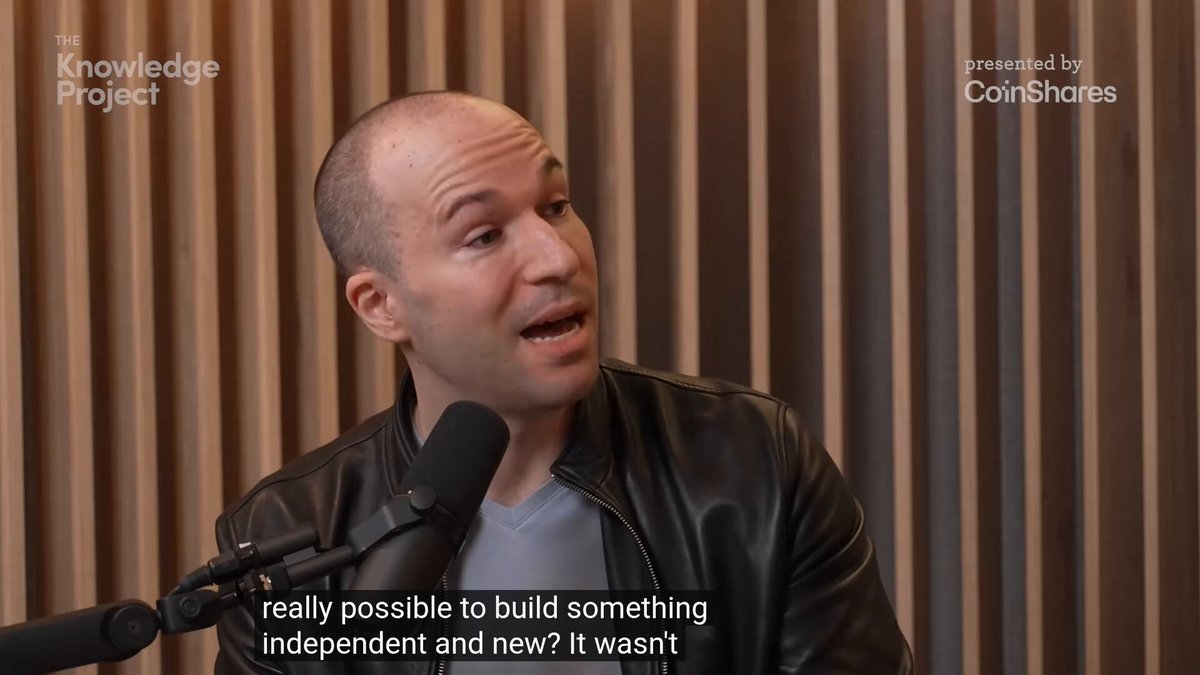
John Carmack: The code for AGI could conceivably be written by one individual After stepping down as CTO of Meta’s Oculus VR, legendary programmer John Carmack was trying to decide if he would work on nuclear fission or artificial general intelligence (AGI). He ultimately chose AGI. “I think [fission]...

39,477 次观看 • 6 个月前 •via X (Twitter)

0 条评论

暂无评论

原始帖子的评论将显示在这里

相关视频

Former Fox News host Geraldo Rivera: “By focusing on the censorship aspect and the First Amendment aspect, it’s losing sight of what should be the lead and that’s that Jimmy Kimmel owes the family of Charlie Kirk and his wife Erika, two small children, an apology. You know, you know, what’s he saying? That if you’re if you’re a member of MAGA and Charlie is a friend of MAG, of MAGA, then he had it coming. It’s just — it’s — it’s in some ways — it’s very — it’s — extremely — extremely insensitive. The country is in a country is in a very tough spot right now. Everyone is walking on eggshells. The First Amendment is not a license to incite hatred and, you know, I think that we can think that we can start the discussion once Jimmy Kimmel apologizes, then they can talk about the business aspects and whether or not he gets whether or not he gets back on the schedule and so forth, but there’s got to there’s got to be a recognition that a terrible thing has happened here, and that millions of Americans are grievously hurt by what happened. You know, there is a — Charlie Kirk was beloved by many. And to just trample over it. He’s not even buried yet for goodness sake. And to make fun of the flags at half staff and so forth. I just half staff and so forth. I just think that we’ve got to look at it with a — with a notion that the country has to be healed, that we have to work to bring people together, that we need to respect each other. You know, we don’t have to agree, but we have to respect. And I think that, you know, the audience has deserted him for a good reason.”

Curtis Houck

825,225 次观看 • 9 个月前

.Naval: Every human is a lottery ticket bet on the future of the species. One of the things that you really learn when you read David Deutsch’s theories and you authenticate them for yourself is you realize humans are universal explainers. That means everything that we know in the universe follows the laws of physics, and there’s no reason to believe otherwise. If you think otherwise, then please present your better theory that explains the world. If you can’t do that, then you have to go with the laws of physics. Well, the laws of physics are completely computable. They can fit inside a Turing machine or computer, and a computer can simulate the laws of physics with arbitrary accuracy, limited only by the specific power of that computer. If you increase the power of that computer, you can simulate them more accurately. So humans already simulate—in our minds we simulate—and through our computers we simulate the weather, we simulate quasars, we even simulate human systems. We simulate the economy. We simulate all kinds of things. So anything that can be understood, we can understand in our minds. This is something the AGI people get wrong when they talk about superintelligence. There is nothing out there that can understand something fundamentally that we can’t understand. It might be faster at it, it might have more compute, it might have more memory, but there’s no concept that it can understand that we can’t ourselves understand. So we are maximal universal explainers. That means every human is capable of unbounded creativity. Anyone could be the next Einstein or Fermi or Elon Musk or Jeff Bezos or Jonas Salk or whatever. So we can create anything. And if we can create anything, every human is a lottery ticket bet on the future of the species.

Arjun Khemani

32,810 次观看 • 1 年前

.David Deutsch: "What's currently called AI and AGI are not only different from each other, they are very close to being the exact opposites of each other. The reason is that an AI, current AI is like an AI that diagnoses diseases or an AI that plays chess or an AI that controls a huge factory. Those things have objective functions, that is they have a function that they are designed to maximize and that is why they are used in those particular applications. Or in military terms, you could say the objective is to hit the target. You might say the objective is to hit the target unless some thing specified, but it's a specified thing comes up in which case don't hit the target and so on. This is, as I said, almost the opposite of what humans do when humans think. For a start, the AI has to be obedient, that is it has to actually do the things it is programmed to do, whereas a human is fundamentally disobedient, especially when being creative. When a human plays chess, they are performing a completely different kind of computation. They don't do the same things, they don't investigate the same possibilities that the artificial chess playing machine does, because the artificial one is capable of looking at billions and billions of possibilities, whereas the human can only look at hundreds or something. They are doing something completely different. Another difference is that the human can explain, can write a book later, having become world champion, can write a book saying how I did it, as the computer program that beats the world champion can write no such book, because it has no idea how it did it. It was just following a program. I was doing this and that and that and none of that is illuminating. Also, third thing, the chess player can decide I don't want to play chess anymore, from now on I will play Go or from now on I will play tennis. If commanded to play chess, the functionality will deteriorate completely. Those things are different. What we want in an AGI is that it behaves in a way that cannot be specified in advance, because if you specified it, you would already have the answer. The AGI program has to give unexpected answers, answers to questions we didn't even know how to ask."

Deutsch Explains

72,455 次观看 • 1 年前

.Naval: You define wealth in a beautiful way. You talk about wealth as a set of physical transformations that we can affect. So as a society it becomes very clear that knowledge leads directly to wealth creation for everybody. A given individual can obviously affect physical transformations proportional to the resources available to them—but much more proportional to the knowledge available to them. Knowledge is a huge force multiplier. You then define resources as the thing that you combine with knowledge to create wealth. New knowledge allows you to use new things as resources and discard old things that maybe we’re running out of. There are lots of examples of how we’ve done that in the past. For example, in energy we’ve gone from wood to coal to oil to nuclear. But then people say, “Now we’re out of ideas. Now we’re caught up. Now we’re done. There aren’t going to be new ideas, and now we have to freeze the frame and conserve what we have.” The counter to that is, “No, we’ll create new knowledge and have new resources. Don’t worry about the old ones.” Well they say, “If you’re going to have new resources, if you can’t think of them now, it’s not real.” This now gets into the realm of people demanding that if you’re going to claim that new knowledge will be created, you have to name that knowledge now. Otherwise it’s not real. But that seems like a Catch-22. David Deutsch: It does, and it’s a bad argument. I don’t want to claim that the knowledge will be created. We’re fallible; we may not create it. We may destroy ourselves. We may miss the solution that’s right under our nose, so that when the snailiens come from another galaxy and look at us, they’ll say, “How can it possibly be that they failed to do so-and-so when it was right in front of them?” That could happen. I can’t prove or argue that it won’t happen. What I always argue, though, is that we have what it takes. We have everything that it takes to achieve that. If we don’t, it’ll be because of bad choices we have made, not because of constraints imposed on us by the planet or the solar system. Naval: It will be by anti-rational memes that restrict the creation of knowledge and the growth of knowledge. David Deutsch: Maybe. Or maybe it’ll be by well-intentioned errors, which nobody could see why they were errors. Again, it doesn’t take malevolence to make mistakes. Mistakes are the normal condition of humans. All we can do is try to find them. Maybe not destroying the means of correcting errors is the heart of morality; because if there is no way of correcting errors, then sooner or later one of those will get us. Naval: Don’t destroy the means of error correction is the base of morality. I love that. I think about places like North Korea where you can’t have elections and a revolution is very difficult because the gang in charge is armed to the teeth and they’ve destroyed the means of political error correction for a long time. That is a case where humanity is trapped in a local minimum, and it’s very hard to climb out of that hole. If too much of the world falls into that mindset, then we as a species may just stagnate because we’ve lost our biggest advantage. We’ve lost our biggest discovery, which was the ability to make new discoveries.

Deutsch Explains

143,913 次观看 • 1 年前

Mark Zuckerberg on why he prefers to recruit people directly out of college In this interview from 2005, a 21-year-old Mark Zuckerberg is asked what he looks for in a new hire. There’s two things, he says. “Number one is raw intelligence. You can hire someone who has been doing software engineering for 10 years, and if they’ve been doing it for 10 years, that’s probably what they’ll be doing for the rest of their life. That’s cool — there are some things that that person can do and they’re definitely useful in an organization and can do a lot of stuff. But if you find someone whose raw intelligence exceeds theirs but has 10 years less experience, they can probably adapt and learn way quicker. Within a very short amount of time they’ll be able to do a lot of things that [the person with 10 years of experience] will never be able to do. So that’s the most important thing that I look for.” The second thing he looks for is alignment with what the company is trying to do: “People can be really smart or have skills that are directly applicable, but if they don’t really believe in it, then they’re not going to work hard or care enough to develop the relevant experience in order to succeed. The best people I’ve hired so far have been people who didn’t really have that much engineering experience. I hired a couple of electric engineers out of Stanford to do programming stuff, and they had very little programming experience going in, but they were really smart and really willing to go at it. The guy who just wrote photos was one of those guys, and if you’re willing to just do whatever it takes to get photos out, then you’re probably more valuable than someone who is just a career software engineer.” He concludes: “Those are the things I’m looking for and why I would rather recruit people out of college.” Video source: Stanford eCorner (2005)

Startup Archive

54,625 次观看 • 5 个月前