Loading video...

Video Failed to Load

Go Home

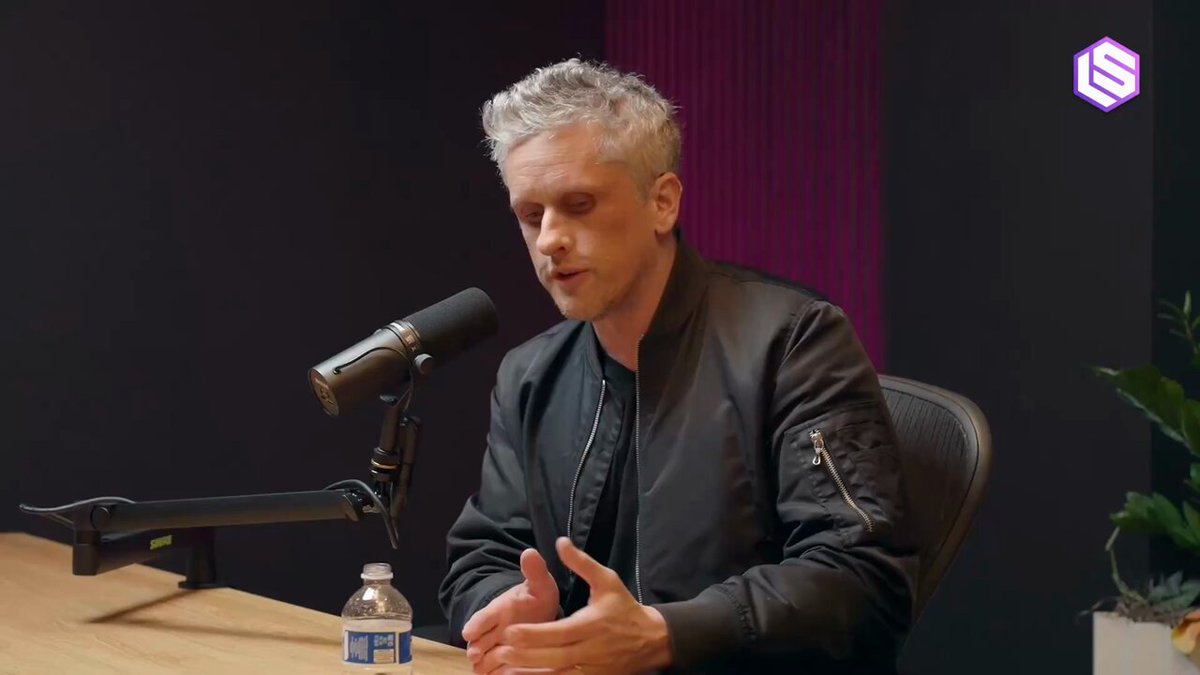
Just hit submit on my Y Combinator application. When Aaron Epstein (Aaron Epstein) wrote about Multiplayer AI in YC's latest Request for Startups, it hit close to home. AI hasn't had its multiplayer moment yet, and that's exactly the future we're building at Agent Orchestrator (AO). AO (AO) is...

11,127 views • 2 months ago •via X (Twitter)

44 Comments

Maaz's profile picture
Maaz2 months ago

@ycombinator @aaron_epstein super proud to work with you all on this! :) ao to moon!

prateek's profile picture
prateek2 months ago

@ycombinator @aaron_epstein Thanks Maaz :)

Prasad Ware's profile picture
Prasad Ware2 months ago

@ycombinator @aaron_epstein Ao to the moon

Maaz's profile picture
Maaz2 months ago

@ycombinator @aaron_epstein btw 8.7k stars kal hi hogye the 🎃

prateek's profile picture
prateek2 months ago

@ycombinator @aaron_epstein can't keep track of the numbers bro, they move too quick

Vasu Yadav's profile picture
Vasu Yadav2 months ago

@ycombinator @aaron_epstein all the best mate...

prateek's profile picture
prateek2 months ago

@ycombinator @aaron_epstein thanks Vasu!

Pulkit Saraf's profile picture
Pulkit Saraf2 months ago

@ycombinator @aaron_epstein Ao to the moon

nikhil · sys/quests's profile picture
nikhil · sys/quests2 months ago

@ycombinator @aaron_epstein lfgggggg!! team

nsxdavid's profile picture
nsxdavid2 months ago

@ycombinator @aaron_epstein Forget YC, and just do it. You don't need them. You don't need anyone. If what you have is valuable, just make it so.

Amey Muke's profile picture
Amey Muke2 months ago

@ycombinator @aaron_epstein Congrats @agent_wrapper rooting for you and @aoagents 🫡🫡

prateek's profile picture
prateek2 months ago

@ycombinator @aaron_epstein @aoagents thanks @7613Perfect 🙌

Harsh's profile picture
Harsh2 months ago

@ycombinator @aaron_epstein All the best sir , it would be an amazing addition to open source community + yc as well :)

prateek's profile picture
prateek2 months ago

@ycombinator @aaron_epstein thanks harsh! It all stems from the community :)

Akshatttt's profile picture
Akshatttt2 months ago

@ycombinator @aaron_epstein just tried it and totally loved it. rooting for you guys

Suraj Sharma's profile picture
Suraj Sharma2 months ago

@ycombinator @aaron_epstein Let's go

Devansh Tripathi's profile picture
Devansh Tripathi2 months ago

@ycombinator @aaron_epstein Lesgoooo mate

prateek's profile picture
prateek2 months ago

@ycombinator @aaron_epstein lessgooo!

Apoorv Singh's profile picture
Apoorv Singh2 months ago

@ycombinator @aaron_epstein ao to the moon 🚀

adil's profile picture
adil2 months ago

@ycombinator @aaron_epstein @aoagents is crazy man..

Vineeth's profile picture
Vineeth2 months ago

@ycombinator @aaron_epstein Grow bigggg ♥️

prateek's profile picture
prateek2 months ago

@ycombinator @aaron_epstein only way is up

samarth's profile picture
samarth2 months ago

@ycombinator @aaron_epstein super cool.

Shreyas Pandey's profile picture
Shreyas Pandey2 months ago

@ycombinator @aaron_epstein good luck 🤞

Deepak Modi's profile picture
Deepak Modi2 months ago

@ycombinator @aaron_epstein best thing going to happen for @aoagents

prateek's profile picture
prateek2 months ago

@ycombinator @aaron_epstein @aoagents thanks Deepak!

Abhishek's profile picture
Abhishek2 months ago

@ycombinator @aaron_epstein Lfggg 🔥

Aditya Pattanayak's profile picture
Aditya Pattanayak2 months ago

@ycombinator @aaron_epstein This would be a BANGER ,mark my words!!

Surbhi Jain's profile picture
Surbhi Jain2 months ago

@ycombinator @aaron_epstein lfg!

abhinav's profile picture
abhinav2 months ago

@ycombinator @aaron_epstein all the best prateek 🫡

Himanshu's profile picture
Himanshu2 months ago

@ycombinator @aaron_epstein good luck!

arjun's profile picture
arjun2 months ago

@ycombinator @aaron_epstein 🔥

Bhoomika's profile picture
Bhoomika2 months ago

@ycombinator @aaron_epstein lesgoo

Shubhu's profile picture
Shubhu2 months ago

@ycombinator @aaron_epstein to the moon!

Yash Maheshwari's profile picture
Yash Maheshwari2 months ago

@ycombinator @aaron_epstein Lesssggooo

Ashu Tripathi's profile picture
Ashu Tripathi2 months ago

@ycombinator @aaron_epstein all the best sir

Anurag Kochar's profile picture
Anurag Kochar2 months ago

@ycombinator @aaron_epstein multiplayer coding agents sounds super fascinating rooting for you guys 🙌

jaidev's profile picture
jaidev2 months ago

@ycombinator @aaron_epstein Less go. Great work

Arghya's profile picture
Arghya2 months ago

@ycombinator @aaron_epstein extremely cool stuff

Arsh Mahajan's profile picture
Arsh Mahajan2 months ago

@ycombinator @aaron_epstein Lesss gooo!!

Buchi Reddy B's profile picture
Buchi Reddy B2 months ago

@ycombinator @aaron_epstein wish you the best man!

prateek's profile picture
prateek2 months ago

@ycombinator @aaron_epstein thanks a lot buchi! :)

Shubh Srivastava's profile picture
Shubh Srivastava2 months ago

@ycombinator @aaron_epstein pure motivation 🙌

Vishal's profile picture
Vishal2 months ago

@ycombinator @aaron_epstein Looks great 🔥 Best of luck guys

Related Videos

We're only year 3 of a decade (if not multi-decades) long transformation of work. 3 years ago we bet on building an horizontal platform for work with agents, a chance to invent a new operating system for companies, from scratch, with AI as a fundamental premise. Many people considered us crazy for going after that, praising verticalized AI products as the winning strategy. But here's the thing: the time horizon of tasks successfully handled by agents has been predictively increasing form minutes to hours and will in all likelihood reach the equivalent of days and weeks of human work equivalent in the coming quarters. This is were verticalized and/or single-player AI falls short. Single-player tools, one person, one agent, confined to your machine is the wrong architecture for what's coming. We're shifting from using AI to produce things, to managing fleets of agents that do the producing. 3 years ago I wrote[1]: "ChatGPT is the Pong of LLMs. [...] Imagine, one day we'll get the DOOM, Civ, Red Alert, and Counter Strike of LLMs. Let alone multiplayer modes." Weeks long tasks in companies are inherently collaborative and mechanically spanning multiple teams. The new bottleneck in harnessing agents within organizations is coordination: multiple humans and multiple agents need to work together, with shared context, shared tools, shared goals. Agents that can hand work off to other agents or surface decisions to the right person at the right time. Humans who can review, steer, and step in without losing the thread. Teams that can run parallel workstreams and actually stay aligned. This is Multiplayer AI, and that's what we've been building at Dust. Across Datadog, Clay, Persona, 1Password, Doctolib and 3,000+ organizations globally, we've watched teams figure out what this looks like in practice. 300,000+ agents deployed. 70% weekly active. 240%+ NRR. Today we're announcing a $40M Series B with Abstract, Sequoia, Snowflake, and Datadog to accelerate our vision. Designing the right interfaces for multiplayer AI is the next frontier. Join us to redefine work by defining multiplayer AI.

Stanislas Polu

3,206,770 views • 4 months ago

We use OpenClaws to do all of our work at Every 📧. We have 25 full-time employees, so we’re one of the few companies in the world that has seen how work changes when everyone has their own personal agent in the company Slack. I chatted with Every 📧 COO Brandon (Brandon Gell) and Every 📧 head of platform Willie (Willie) to share what we’ve learned. We get into: - Why agents become mirrors of their owners, and how that influences how other people on the team interact with them - How a parallel AI org chart forms on its own. People have stopped tagging me on Slack with questions about Proof, the document editor I vibe coded, because they knew my agent R2-C2 can step in - The etiquette for human-agent collaboration is being invented in real time. Brandon's rule is that if there's an established process or documented answer, always ask the agent, not their human - Why everyone is a manager now, and why even experienced managers carry limiting beliefs about what their agents can do - This is a must-watch for anyone trying to understand how AI workers change daily operations, not just in theory, but inside a company that’s half-agent Watch below! Timestamps Introduction: How Brandon built Zosia, an AI agent to run his household: Brandon’s “aha” moment: What happened when everyone on the team got their own agent: How agents take on their owners' personalities, and why that matters inside an org: Why it’s important for agents to work in public: What we’re still figuring out when it comes to agent behavior, including memory gaps, group chat etiquette, and the "ant death spiral" problem: How we built Plus One, our hosted OpenClaw product: The cultural shift required to make agents work at scale:

Dan Shipper 📧

67,958 views • 6 months ago

i just built a 4-agent software team. everything runs from Telegram and gets managed on a kanban board. a project manager who plans the work, a backend developer, a frontend developer, and a tester. the PM reads a goal, breaks it into linked tasks, and assigns each to the right agent. the thing that makes them a team instead of four strangers is a shared kanban board. every task is a row that survives crashes, and when an agent finishes, it writes a summary of what it built and what the next agent needs to know. the next agent reads that summary before it starts. so the frontend developer never has to guess the API shape, and the tester knows exactly what to verify. the hardest part was not the coordination. it was building an agent that could actually act like a backend engineer. a backend engineer stands up a database, wires auth, manages storage, deploys functions, and keeps all of it consistent while the rest of the team builds on top. an agent doing this from scratch drowns. it burns its context window remembering which tables exist and which endpoint it created three steps ago, and the work degrades fast. so the backend agent needs a backend built for agents, not for humans clicking through a dashboard. that is where InsForge came in. it is an open-source, agent-native backend, and i added it to my backend developer agent as a skill. a skill is a step-by-step guide that teaches the agent how to do a specific kind of work. with InsForge installed, the agent stopped improvising infrastructure and followed a reliable path: create the project, define the database, set up auth, deploy functions. to test the whole team, i had them build a working Google Docs clone, AI features included. the backend agent spun up the full service on its own. database tables, user auth, document handling, and edge functions running real TypeScript, all in one dashboard. the frontend agent read that summary and built the UI on top of it, and the tester closed the loop. the result was a backend an agent could reason about end to end, instead of one it kept getting lost inside. if you are building an AI backend engineer, InsForge is worth a look, it's 100% open-source. InsForge GitHub: (don't forget to star 🌟) the full article on Hermes Kanban: Mission Control for your Agents is quoted below.

Akshay 🚀

123,101 views • 4 months ago

Here we go again 🚀! Excited to announce that we're building A1Zap (YC W25) with Pennie Li and that we're in the Y Combinator W25 batch in San Francisco! What is A1Base? A1Base gives AI Agents a real world identity for work. We do that by rebuilding Twilio and Okta from the ground up, putting AI Agents first. This means developers can make AI-first agentic applications 10x easier with our API's. ⁉️ Why are we doing this? Because there's a huge torrent of new valuable companies possible with AI agents, but to get their AI Agents to users, they have to chain custom apps, chat interfaces, awkward Slack integrations, browser bots, and wrestle with Twilio’s legacy API (which is built for marketing). We solve this by providing developers with an easy to use API to interface your AI agent with humans/coworkers/users where they are in this case in Whatsapp, Slack, Teams, SMS and more) - with AI Agent features built in. These digital workers are poised to transform how we work and we're the critical infrastructure to help them interact naturally in human workflows. We're not just building another AI tool. We're creating the infrastructure that will enable AI agents to become a natural part of the workforce - handling everything from customer support to sales development to creative work. We're backed by Y Combinator and working with founding teams who share our vision. We believe that in the near future, AI Agents with human coworkers will enable us to pursue more creative and impactful work. Our mission is to help developers build AI Agents that people can partner with and rely on as trusted allies—always with a human-first mindset. If you're thinking about the Agentic future of your company reach out! If you're looking to build your first AI Agentic company - reach out too - we have some amazing open source templates to get you started on the journey. Excited to share more of what we're up to soon 🔜.

Pasha Rayan

54,024 views • 1 year ago

I vibe coded a new product on the side while running Every 🪨—and today we're launching it for free. It's called Proof, and it’s a live collaborative document editor where humans and AI agents work together in the same doc. It’s built from the ground up for the kinds of documents agents are increasingly writing: bug reports, PRDs, implementation plans, research briefs, copy audits, strategy docs, memos, and proposals. It's fast, free, and open source—available now at Why Proof? When everyone on your team is working with agents, there's suddenly a ton of AI-generated text flying around—planning docs, strategy memos, session recaps. But the current process for collaborating and iterating on agent-generated writing is…weirdly primitive. It mostly takes place in Markdown files on your laptop, which makes it reminiscent of document editing in 1999. That’s why we built Proof. What makes Proof different? - Proof is agent-native. Anything you can do in Proof, your agent can do just as easily. - Proof tracks provenance: A colored rail on the left side of every document tracks who wrote what. Green means human, Purple means AI. - Proof is login-free and open source: This is because we want Proof to be your agent's favorite document editor. How we use Proof Every 🪨: - Brandon Gell had OpenAI's Codex write a feature plan in Proof, then tagged my personal Claw (R2-C2) in Slack to review it. R2-C2 left feedback, I added comments, Brandon's agent revised the plan, and then Codex executed on it. Brandon submitted a PR to production without writing a line of code. - Austin Tedesco texts his Claw ideas while he's out on a run, then has it maintain a running Proof doc for his weekly food newsletter. He dictates drafts using Naveen Naidu's Monologue, writes into the outline himself, and uses the provenance gutter to track what's his voice vs. the agent's. - Kieran Klaassen uses it as a lightweight scratchpad for his compound engineering workflow. He brainstorms with an agent in the terminal, shares to Proof with one click, then opens the doc to leave comments and tells the agent to go work on them. His take: Proof's job is to communicate about writing and ideas. Proof is free, open source, and requires no login. I built the whole thing by vibe coding between meetings. I sat down with Brandon, Kieran, and Austin on Every 🪨's AI & I to demo it live and talk about how it's changing the way we work. If you're building with agents and need a better way to collaborate on text, this one's for you. Watch below! Timestamps Introduction and the origin story of Proof: 00:02:00 From Mac app to collaborative web editor: 00:07:24 What makes Proof "agent native": 00:09:00 Live demo—watching an agent join and write inside a shared document: 00:14:30 How Austin uses Proof for creative writing and food journalism: 00:20:51 The challenge of multiple agents editing one document simultaneously: 00:24:30 When AI-written docs are better read by agents than by humans: 00:26:48 Brandon's agent-to-agent collaboration loop: 00:29:30 Proof as a lightweight scratchpad versus existing tools like Notion and GitHub: 00:37:09 Why Proof is open source and what that means for builders: 00:42:18

Dan Shipper 📧

33,092 views • 7 months ago

SaaS isn’t dead, it just needs to become agent-native. Linear (Linear) is a great example of how: They pivoted the product to be used by both humans and agents, and that has made them one of the premier software tools in the agent-native era. I had Linear’s cofounder and CEO Karri Saarinen on Every 📧's AI & I to talk about how a product management tool for human software developers became an agent-native tool—and how Linear’s trajectory reveals a bright future for SaaS businesses: - Speed means decisions matter more, not less. AI makes it easy to have an idea and build it without considering whether its existence is justified. When ChatGPT was released, SaaS companies were launching their own chatbots left, right, and center. Instead of jumping on the bandwagon, Linear stopped to consider whether the application was useful. (It wasn’t.) - Just because the technology has changed doesn’t mean your mission should. Karri attributes Linear’s success to never losing sight of what matters: helping teams develop great software. Instead of chasing trends, Linear focused on understanding how AI was impacting its customers’ workflows—and updating its product accordingly. - Agents are now first-class users. Linear never tried to change what it was or did well; it just expanded the user base. Companies can now kick off agents inside Linear, manage them, and track what they're working on alongside the humans on the team, which explains why Codex, Coinbase, and Brex all run their agents on Linear. This is a must watch for anyone interested in how an agent-native SaaS company operates. Watch below! Timestamps: Introduction and how Every first discovered Linear: 00:00:39 Why Linear waited to ship AI features instead of rushing to chatbots: 00:02:00 Linear's agent platform and becoming the system that guides AI agents: 00:05:06 Why "SaaS is dead" is a simplistic narrative: 00:07:42 How Linear adopted AI coding tools internally: 00:12:18 AI's impact on product building workflows—speed versus thoughtfulness: 00:17:45 The value of conceptual work and thinking before shipping: 00:22:18 How AI is reshaping Linear's product strategy: 00:29:30 Demo: Linear's agent skills, shared context, and code review workflow: 00:37:18 The future of product development and the enduring role of human judgment: 00:47:48

Dan Shipper 📧

36,359 views • 6 months ago