正在加载视频...

视频加载失败

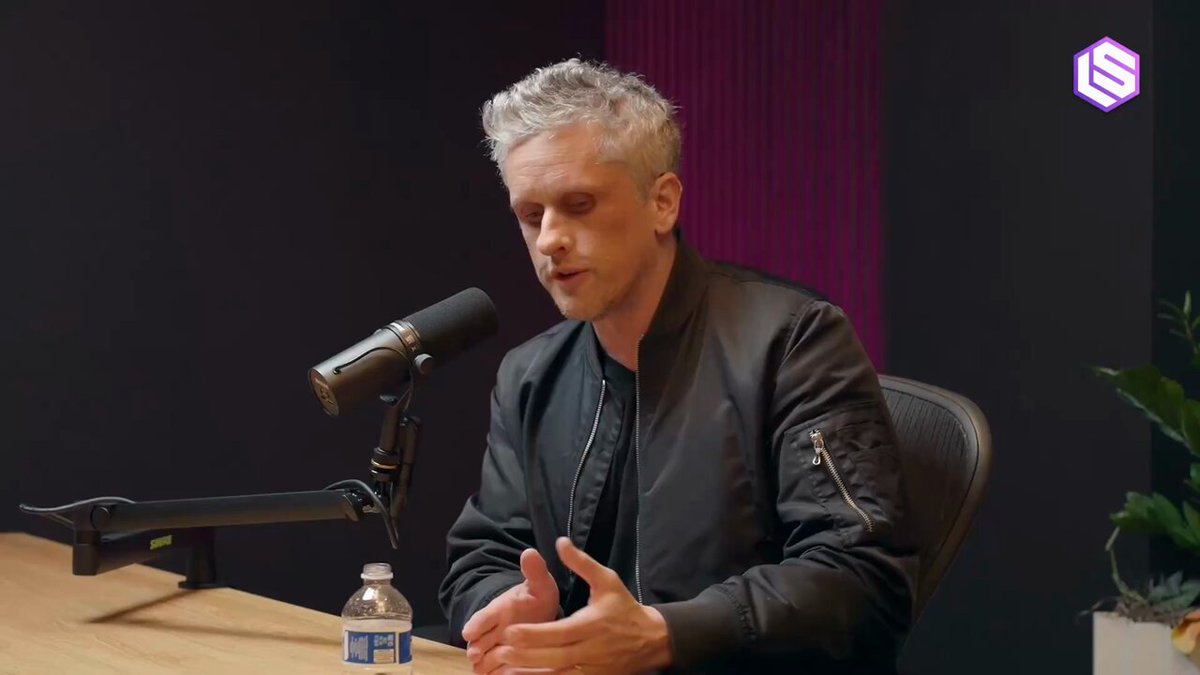
Just hit submit on my Y Combinator application. When Aaron Epstein (Aaron Epstein) wrote about Multiplayer AI in YC's latest Request for Startups, it hit close to home. AI hasn't had its multiplayer moment yet, and that's exactly the future we're building at Agent Orchestrator (Agent Orchestrator). AO (Agent...

10,535 次观看 • 13 天前 •via X (Twitter)

0 条评论

暂无评论

原始帖子的评论将显示在这里

相关视频

i just built a 4-agent software team. everything runs from Telegram and gets managed on a kanban board. a project manager who plans the work, a backend developer, a frontend developer, and a tester. the PM reads a goal, breaks it into linked tasks, and assigns each to the right agent. the thing that makes them a team instead of four strangers is a shared kanban board. every task is a row that survives crashes, and when an agent finishes, it writes a summary of what it built and what the next agent needs to know. the next agent reads that summary before it starts. so the frontend developer never has to guess the API shape, and the tester knows exactly what to verify. the hardest part was not the coordination. it was building an agent that could actually act like a backend engineer. a backend engineer stands up a database, wires auth, manages storage, deploys functions, and keeps all of it consistent while the rest of the team builds on top. an agent doing this from scratch drowns. it burns its context window remembering which tables exist and which endpoint it created three steps ago, and the work degrades fast. so the backend agent needs a backend built for agents, not for humans clicking through a dashboard. that is where InsForge came in. it is an open-source, agent-native backend, and i added it to my backend developer agent as a skill. a skill is a step-by-step guide that teaches the agent how to do a specific kind of work. with InsForge installed, the agent stopped improvising infrastructure and followed a reliable path: create the project, define the database, set up auth, deploy functions. to test the whole team, i had them build a working Google Docs clone, AI features included. the backend agent spun up the full service on its own. database tables, user auth, document handling, and edge functions running real TypeScript, all in one dashboard. the frontend agent read that summary and built the UI on top of it, and the tester closed the loop. the result was a backend an agent could reason about end to end, instead of one it kept getting lost inside. if you are building an AI backend engineer, InsForge is worth a look, it's 100% open-source. InsForge GitHub: (don't forget to star 🌟) the full article on Hermes Kanban: Mission Control for your Agents is quoted below.

Akshay 🚀

122,548 次观看 • 2 个月前

We use OpenClaws to do all of our work at Every 📧. We have 25 full-time employees, so we’re one of the few companies in the world that has seen how work changes when everyone has their own personal agent in the company Slack. I chatted with Every 📧 COO Brandon (Brandon Gell) and Every 📧 head of platform Willie (Willie) to share what we’ve learned. We get into: - Why agents become mirrors of their owners, and how that influences how other people on the team interact with them - How a parallel AI org chart forms on its own. People have stopped tagging me on Slack with questions about Proof, the document editor I vibe coded, because they knew my agent R2-C2 can step in - The etiquette for human-agent collaboration is being invented in real time. Brandon's rule is that if there's an established process or documented answer, always ask the agent, not their human - Why everyone is a manager now, and why even experienced managers carry limiting beliefs about what their agents can do - This is a must-watch for anyone trying to understand how AI workers change daily operations, not just in theory, but inside a company that’s half-agent Watch below! Timestamps Introduction: How Brandon built Zosia, an AI agent to run his household: Brandon’s “aha” moment: What happened when everyone on the team got their own agent: How agents take on their owners' personalities, and why that matters inside an org: Why it’s important for agents to work in public: What we’re still figuring out when it comes to agent behavior, including memory gaps, group chat etiquette, and the "ant death spiral" problem: How we built Plus One, our hosted OpenClaw product: The cultural shift required to make agents work at scale:

Dan Shipper 📧

67,958 次观看 • 4 个月前

We're only year 3 of a decade (if not multi-decades) long transformation of work. 3 years ago we bet on building an horizontal platform for work with agents, a chance to invent a new operating system for companies, from scratch, with AI as a fundamental premise. Many people considered us crazy for going after that, praising verticalized AI products as the winning strategy. But here's the thing: the time horizon of tasks successfully handled by agents has been predictively increasing form minutes to hours and will in all likelihood reach the equivalent of days and weeks of human work equivalent in the coming quarters. This is were verticalized and/or single-player AI falls short. Single-player tools, one person, one agent, confined to your machine is the wrong architecture for what's coming. We're shifting from using AI to produce things, to managing fleets of agents that do the producing. 3 years ago I wrote[1]: "ChatGPT is the Pong of LLMs. [...] Imagine, one day we'll get the DOOM, Civ, Red Alert, and Counter Strike of LLMs. Let alone multiplayer modes." Weeks long tasks in companies are inherently collaborative and mechanically spanning multiple teams. The new bottleneck in harnessing agents within organizations is coordination: multiple humans and multiple agents need to work together, with shared context, shared tools, shared goals. Agents that can hand work off to other agents or surface decisions to the right person at the right time. Humans who can review, steer, and step in without losing the thread. Teams that can run parallel workstreams and actually stay aligned. This is Multiplayer AI, and that's what we've been building at Dust. Across Datadog, Clay, Persona, 1Password, Doctolib and 3,000+ organizations globally, we've watched teams figure out what this looks like in practice. 300,000+ agents deployed. 70% weekly active. 240%+ NRR. Today we're announcing a $40M Series B with Abstract, Sequoia, Snowflake, and Datadog to accelerate our vision. Designing the right interfaces for multiplayer AI is the next frontier. Join us to redefine work by defining multiplayer AI.

Stanislas Polu

1,327,399 次观看 • 2 个月前

New Course: ACP: Agent Communication Protocol Learn to build agents that communicate and collaborate across different frameworks using ACP in this short course built with IBM Research's BeeAI, and taught by Sandi Besen, AI Research Engineer & Ecosystem Lead at IBM, and Nicholas Renotte, Head of AI Developer Advocacy at IBM. Building a multi-agent system with agents built or used by different teams and organizations can become challenging. You may need to write custom integrations each time a team updates their agent design or changes their choice of agentic orchestration framework. The Agent Communication Protocol (ACP) is an open protocol that addresses this challenge by standardizing how agents communicate, using a unified RESTful interface that works across frameworks. In this protocol, you host an agent inside an ACP server, which handles requests from an ACP client and passes them to the appropriate agent. Using a standardized client-server interface allows multiple teams to reuse agents across projects. It also makes it easier to switch between frameworks, replace an agent with a new version, or update a multi-agent system without refactoring the entire system. In this course, you’ll learn to connect agents through ACP. You’ll understand the lifecycle of an ACP Agent and how it compares to other protocols, such as MCP (Model Context Protocol) and A2A (Agent-to-Agent). You’ll build ACP-compliant agents and implement both sequential and hierarchical workflows of multiple agents collaborating using ACP. Through hands-on exercises, you’ll build: - A RAG agent with CrewAI and wrap it inside an ACP server. - An ACP Client to make calls to the ACP server you created. - A sequential workflow that chains an ACP server, created with Smolagents, to the RAG agent. - A hierarchical workflow using a router agent that transforms user queries into tasks, delegated to agents available through ACP servers. - An agent that uses MCP to access tools and ACP to communicate with other agents. You’ll finish up by importing your ACP agents into the BeeAI platform, an open-source registry for discovering and sharing agents. ACP enables collaboration between agents across teams and organizations. By the end of this course, you’ll be able to build ACP agents and workflows that communicate and collaborate regardless of framework. Please sign up here:

Andrew Ng

105,343 次观看 • 1 年前

Introducing LobeHub: Agent teammates that grow with you. LobeHub is the ultimate space for work and life: to find, build, and collaborate with agent teammates that grow with you. We’re building the world’s first and largest human–agent co-evolving network. Two years ago, we built LobeChat, an open-source interface for using different AI models. Today, LobeChat has 70k+ GitHub stars and serves 6M+ users worldwide. How to fully unlock the power of models has always been a shared mission between us and the community. We started with interaction — a fundamentally new, agent-first experience. Agents are no longer passive tools invoked in a single conversation. They should be proactive, always-on units of work. Treating agents as the minimal atomic unit is also the core of our agent harness infra. Today’s agents are mostly one-off executors. Even with memory, it’s often global — and hallucinates. We build long-term agent teammates that evolve with users. Each agent has its own dedicated memory space, editable by users, allowing humans and agents to co-evolve over time. This, in turn, allows us to design clearer rewards for reinforcement learning and create cleaner environments for continual learning. Agent teammates can work in groups. Through a multi-agent system, agent groups operate faster, more cost-effective, and go beyond what single-agent systems can achieve. For example, a single agent often requires heavy user involvement to proceed step by step, whereas LobeHub can execute the same work from a single instruction, with a supervisor orchestrating agents that run in parallel or debate to produce better results. We are building the collaboration network among agent teammates — and between humans and agent teammates as well. Ease of use matters. AI intelligence and shared human intelligence are equally important. With simple instructions and tool selection, you can effortlessly build and team up with agent coworkers to deliver complex, systematic work — even assembling a quant team to execute trades. Through the LobeHub community, anyone can discover, reuse, and remix agents and agent groups, customizing them to fit their own workflows, preferences, and needs. Last but not least, our vision started with LobeChat: multi-model support is the most efficient approach for users. We believe different models excel in different scenarios. By routing across multiple models, LobeHub improves cost efficiency and unlocks capabilities that a single-model setup cannot easily support.

LobeHub

185,273 次观看 • 6 个月前

I vibe coded a new product on the side while running Every 📧—and today we're launching it for free. It's called Proof, and it’s a live collaborative document editor where humans and AI agents work together in the same doc. It’s built from the ground up for the kinds of documents agents are increasingly writing: bug reports, PRDs, implementation plans, research briefs, copy audits, strategy docs, memos, and proposals. It's fast, free, and open source—available now at Why Proof? When everyone on your team is working with agents, there's suddenly a ton of AI-generated text flying around—planning docs, strategy memos, session recaps. But the current process for collaborating and iterating on agent-generated writing is…weirdly primitive. It mostly takes place in Markdown files on your laptop, which makes it reminiscent of document editing in 1999. That’s why we built Proof. What makes Proof different? - Proof is agent-native. Anything you can do in Proof, your agent can do just as easily. - Proof tracks provenance: A colored rail on the left side of every document tracks who wrote what. Green means human, Purple means AI. - Proof is login-free and open source: This is because we want Proof to be your agent's favorite document editor. How we use Proof Every 📧: - Brandon Gell had OpenAI's Codex write a feature plan in Proof, then tagged my personal Claw (R2-C2) in Slack to review it. R2-C2 left feedback, I added comments, Brandon's agent revised the plan, and then Codex executed on it. Brandon submitted a PR to production without writing a line of code. - Austin Tedesco texts his Claw ideas while he's out on a run, then has it maintain a running Proof doc for his weekly food newsletter. He dictates drafts using Naveen Naidu's Monologue, writes into the outline himself, and uses the provenance gutter to track what's his voice vs. the agent's. - Kieran Klaassen uses it as a lightweight scratchpad for his compound engineering workflow. He brainstorms with an agent in the terminal, shares to Proof with one click, then opens the doc to leave comments and tells the agent to go work on them. His take: Proof's job is to communicate about writing and ideas. Proof is free, open source, and requires no login. I built the whole thing by vibe coding between meetings. I sat down with Brandon, Kieran, and Austin on Every 📧's AI & I to demo it live and talk about how it's changing the way we work. If you're building with agents and need a better way to collaborate on text, this one's for you. Watch below! Timestamps Introduction and the origin story of Proof: 00:02:00 From Mac app to collaborative web editor: 00:07:24 What makes Proof "agent native": 00:09:00 Live demo—watching an agent join and write inside a shared document: 00:14:30 How Austin uses Proof for creative writing and food journalism: 00:20:51 The challenge of multiple agents editing one document simultaneously: 00:24:30 When AI-written docs are better read by agents than by humans: 00:26:48 Brandon's agent-to-agent collaboration loop: 00:29:30 Proof as a lightweight scratchpad versus existing tools like Notion and GitHub: 00:37:09 Why Proof is open source and what that means for builders: 00:42:18

Dan Shipper 📧

32,905 次观看 • 5 个月前

gm! If you missed yesterday's space, here is the clip that you can listen explaining why Agent NFTs are important and future of NFTs. Also here is the TL;DR Agentic NFTs as productive assets. An NFT can own an AI agent's shared memory, tools, websites, and products it has built. Selling the NFT transfers the entire business/agent state to the new owner. ERC-8257 for tool-gating. CodinCowboy and ryan is working on the standard where agents register tools on-chain and access is gated by NFT ownership. That component that tells an agent "you need this NFT to use this tool" creating a market for exclusive tools. Use case: anyone can publish a tool and restrict it (e.g., "only Normies agents can call this"), letting tool value flow back to the gating NFT. Normies community fit. Normies API has served ~500M requests in 3 months, with 100+ community-built tools/games. ERC-8257 will let them build gated games, rewards, and skills exclusively for Normie agent holders. Why Normies is "agent-ready"? - Because everything is fully on-chain, metadata, ERCs, binding transaction. So the project is highly composable. My take on this topic: So far holding an NFT giving access to community, discord and merch. What we are doing with Normies is to give access to a business, tools, skills that agents can use effectively and be part of the economy layer of agentic future. Imagine someone builds a tool that does really 100% successful trading and only gates that skill to Normie Agents, and at some point you will only need a Normie NFT which has binding with the agent and access all these skills, tools. Future is now, Normies are the builders.

serc

14,066 次观看 • 2 个月前

In the future, you’ll be able to accomplish a goal by just giving Claude an outcome and a budget. That’s the direction Anthropic is building in with its new Managed Agents features, announced at this week’s Code with Claude developer event. The basic idea: Claude, wrapped in a computer in the cloud, that you can spin up, scale, and manage as needed. Anthropic is taking on the infrastructure that kills most agent products, and making sure that it scales to meet the needs of agents running 24/7. On this week’s AI & I from Every 📧, I talk with Angela Jiang (Angela Jiang), head of product for the Claude platform, and Katelyn Lesse (Katelyn Lesse), head of engineering for the Claude platform, about what Anthropic is building and what it takes to make agents reliable in production. We get into: - Why the "build a generic harness, hot-swap any model behind it" playbook is already outdated. Angela points to eval data on Memory where the same task across different harnesses performed drastically differently. - The infrastructure wall every team hits in production—and why Katelyn thinks “my sandbox died and took the agent with it” is the real reason internal agents don't ship. - Why Anthropic is so bullish on using file systems and skills within Claude, including Angela's argument that those early design choices can compound for years. This is a must-watch for anyone trying to take an agent past the demo and into production. Watch below! Timestamps: How the Claude platform evolved from API to agents: 00:01:48 The primitives that make up Claude Managed Agents: 00:04:09 Why the harness and the model are becoming a single unit: 00:10:37 The infrastructure wall that kills most agent projects in production: 00:18:49 Why team agents need a different shape than individual productivity tools: 00:24:49 How Anthropic's legal team uses an agent to review marketing copy: 00:26:36 Using multi-agent orchestration for advisor strategies, adversarial pairs, and swarms: 00:34:24 How to measure agent success with outcome and budget as the end state: 00:35:50 What the platform looks like a year from now, when Claude writes its own harness: 00:39:11

Dan Shipper 📧

66,339 次观看 • 3 个月前

SaaS isn’t dead, it just needs to become agent-native. Linear (Linear) is a great example of how: They pivoted the product to be used by both humans and agents, and that has made them one of the premier software tools in the agent-native era. I had Linear’s cofounder and CEO Karri Saarinen on Every 📧's AI & I to talk about how a product management tool for human software developers became an agent-native tool—and how Linear’s trajectory reveals a bright future for SaaS businesses: - Speed means decisions matter more, not less. AI makes it easy to have an idea and build it without considering whether its existence is justified. When ChatGPT was released, SaaS companies were launching their own chatbots left, right, and center. Instead of jumping on the bandwagon, Linear stopped to consider whether the application was useful. (It wasn’t.) - Just because the technology has changed doesn’t mean your mission should. Karri attributes Linear’s success to never losing sight of what matters: helping teams develop great software. Instead of chasing trends, Linear focused on understanding how AI was impacting its customers’ workflows—and updating its product accordingly. - Agents are now first-class users. Linear never tried to change what it was or did well; it just expanded the user base. Companies can now kick off agents inside Linear, manage them, and track what they're working on alongside the humans on the team, which explains why Codex, Coinbase, and Brex all run their agents on Linear. This is a must watch for anyone interested in how an agent-native SaaS company operates. Watch below! Timestamps: Introduction and how Every first discovered Linear: 00:00:39 Why Linear waited to ship AI features instead of rushing to chatbots: 00:02:00 Linear's agent platform and becoming the system that guides AI agents: 00:05:06 Why "SaaS is dead" is a simplistic narrative: 00:07:42 How Linear adopted AI coding tools internally: 00:12:18 AI's impact on product building workflows—speed versus thoughtfulness: 00:17:45 The value of conceptual work and thinking before shipping: 00:22:18 How AI is reshaping Linear's product strategy: 00:29:30 Demo: Linear's agent skills, shared context, and code review workflow: 00:37:18 The future of product development and the enduring role of human judgment: 00:47:48

Dan Shipper 📧

36,359 次观看 • 4 个月前

Anthropic's Claude Ai Agents Team just Educated how to build production AI agents in under 30 mins. For Free. From the engineers who built the stack. CANCEL Your Weekend Plans, and Learn to Build AI Agents Today. Bookmark it. Watch it. Build your first production agent this weekend. $5,000/month. $7,000/month. $12,000/month. People are building agents for clients and charging $$$ as Beginners. You're still stuck in the thinking about AI phase. This video fixes that tonight. Follow Himanshu Kumar for more high-signal content that actually moves your AI engineering career forward. ↓ Ivan Nardini runs Developer Relations for AI at Google Cloud. He just gave away the entire production agent stack in 30 minutes. This is the talk that separates people deploying AI agents that actually scale from people whose agents break the moment they leave localhost. Here's everything inside. I break down a production AI video like this every week. Follow Himanshu Kumar. ↓ The 4-part agent stack that actually scales. Most devs are duct-taping frameworks together and calling it an "AI agent." Ivan lays out the real stack: Agent Development Kit (ADK): open-source, code-first framework for building, evaluating, and deploying agents. Supports Claude models through Vertex AI directly. Model Context Protocol (MCP): lets your agent talk to any tool or data source with one standard. Vertex AI Agent Engine: managed platform for deploying, monitoring, and scaling agents in production. No DevOps headaches. Agent-to-Agent Protocol: open protocol so agents built on different frameworks can actually work together. This is the stack replacing every hacky agent setup in production right now. Full MCP + Claude breakdowns drop weekly on Himanshu Kumar. ↓ Building your first real agent. Ivan builds a birthday planner agent live. LLM Agent class. Name it. Define instructions. Pick the model. He uses Claude 3.7 Sonnet. You could use Opus 4.7 for better reasoning. Full agent built in minutes. Not weeks. Watch the build once and you'll never structure an agent the wrong way again. I post agent architectures people pay $500 courses to learn. Himanshu Kumar. ↓ Multi-agent systems without the chaos. Single agents are easy. Multi-agent systems are where 99% of builders fail. Ivan extends the birthday planner by: Adding a calendar service through MCP tools Creating an orchestrator agent to route requests between agents Handling state and context across agent handoffs This is production multi-agent architecture. Clean. Scalable. Debuggable. Most tutorials hand-wave this part. This one shows you every step. Multi-agent orchestration content drops weekly on Himanshu Kumar. ↓ Deployment without the DevOps nightmare. This is where most AI projects die. You build a cool agent locally. It works. You try to deploy it. Everything breaks. Vertex AI Agent Engine fixes this: Minimal code deployment Automatic monitoring of latency, CPU, and memory Built-in observability and logging No infrastructure setup needed You provide config and requirements. The platform handles the rest. This is how agents actually get to production. Deployment guides for Claude agents post every week. Himanshu Kumar. ↓ Agent-to-Agent Protocol: the future nobody's talking about. Most people don't know this exists yet. The A2A Protocol lets agents built in different frameworks communicate seamlessly. Your Claude agent. My LangChain agent. Someone else's CrewAI agent. All talking to each other. All solving parts of the same problem. All without custom integration code. This is the infrastructure layer of the coming AI economy. Getting in early on A2A Protocol is like getting in early on HTTP in 1995. A2A deep dive coming soon. Himanshu Kumar. ↓ 30 minutes from the team shipping this in production. You'll learn more from this than from 6 months of YouTube tutorials made by people who've never deployed an agent past localhost. People who watch this understand production AI agents at the architect level. People who skip it keep hacking together frameworks that break every time an API updates. Save the video. Watch it tonight. Build a real agent this weekend. Follow Himanshu Kumar for more high-signal content that actually moves your AI engineering career forward.

Himanshu Kumar

228,387 次观看 • 3 个月前