Video wird geladen...

Video konnte nicht geladen werden

Zur Startseite

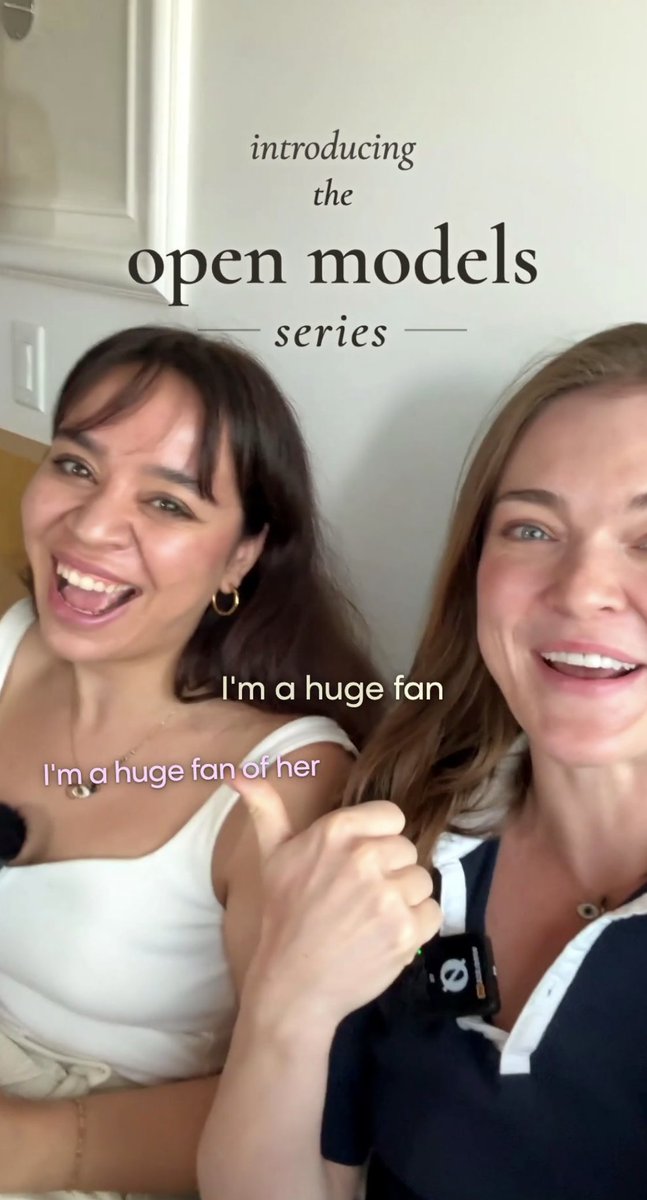
Just how capable are open source models? Below is the first in a new series where we go behind the scenes and pull back the curtain on interesting AI research / demos, making them fun and easy to understand. Here, we have a short visual demonstration from aizk ✡️...

39,769 Aufrufe • vor 1 Monat •via X (Twitter)

0 Kommentare

Keine Kommentare verfügbar

Kommentare vom Original-Post werden hier angezeigt

Ähnliche Videos

Alexandr Wang, Meta's Chief AI Officer, on why Meta can no longer simply open-source its frontier model: As part of standing up Meta Superintelligence Labs, the team rewrote its internal risk doctrine. "One of the things that we did as part of Meta Superintelligence Labs is we updated our what we call our advanced AI scaling framework which is really our view of what are the risks that we see in developing these very powerful models and how do we want to handle those risks as we see them in early testing." They then ran their frontier model through it, and published what came back. "We published a lot of what we saw in the process of training Muark in our preparedness report and some of the things that we saw is that it actually triggered some high risk areas in the course of early training particularly around biorisk but also a number of the risks were elevated." The trigger came during early training, well before launch or red-teaming. Biorisk was the standout, with several other categories rising alongside it. Alexandr Wang is clear this isn't specific to Meta: "This is something I think the entire industry has seen as the models have improved pretty dramatically over the past year so we certainly aren't the only ones to see a host of these risks show up as we scaled up the models and as we sort of kept pushing the frontier of research." Which brings him to the real fork in the road: the difference between shipping a model inside a product and handing out the weights. "When we launched a model like New Spark in a product, we have a lot of ways to mitigate some of these risks and ensure that we're able to launch it in a safe and responsible way. It's much harder to do that when you open source a model and people can use that model in all sorts of contexts that we may not have full understanding of." A product is a controlled surface. You can filter, monitor, rate-limit, patch and revoke. An open-weights release is a one-way door: once the file is out, the deployment context and the mitigations both stop being yours. So Meta is building something different for release: "So we're in the process right now of developing models that we believe are fit and safe to be open source while still maintaining as much of the performance capabilities as possible."

Big Brain AI

16,374 Aufrufe • vor 2 Monaten

Small Language Models (SML) are the future of AI. "Small" (SML) instead of "Large" (LLM). These small models are highly specialized models with superhuman abilities on specific tasks. Here are two techniques to build these models: • Spectrum • Model Merging I give you a short introduction in the attached video, but here is a quick summary: Spectrum helps us identify the most relevant layers to solve one specific task. We can ignore everything else and focus on fine-tuning these layers. Using Spectrum, we can fine-tune models in a heartbeat. Model Merging combines multiple models into a unique, much better model than any of the individual input models. You can also combine models specialized in different tasks and get a model with multiple abilities. This is the state of the art of productizing models. It's what Arcee.ai's platform does behind the scenes. Arcee collaborated with me on this post and is sponsoring it. There are three main steps to produce a model for your particular use case: 1. You create a dataset by uploading your data. 2. You train a model. At this step, Arcee uses Spectrum and Model Merging to produce a highly specialized model for your task. 3. You can deploy that model to any environment you want. Three important notes: • Training process is 2x faster and 2x cheaper than regular fine-tuning. • Resultant models are smaller and have higher accuracy. • They create these specialized models from open-source models. Check this site so you can fully appreciate how this works: If you want to fine-tune an open-source model, consider Arcee's platform. This is the state of the art.

Santiago

164,162 Aufrufe • vor 2 Jahren

Baseten Head of AI Model Training Charlie O'Neill says the future is many specialized LLMs dedicated to specific tasks, with bigger labs deployed on the frontiers of areas like science and math: "People are thinking about intelligence capabilities in the wrong way. People are thinking about intelligence relativistically. They say, 'OK, the open-source gap is like 6 months behind closed-source, and GLM 5.3 is as good as Opus 4.8,' or whatever." "The best way to think about what models can do for you, and for the world, is in an absolute sense." "So for any given task that you want to do with an LLM, there's some intelligence threshold where below that you can't do the task, and above that you have very diminishing returns to more intelligence on the task." "So when you think about it that way, the game of LLMs over the last 5 years has been, 'OK, we have these things we want to do with them. Closed source hits it first... but open-source can eventually do that task. And then for many reasons, once you have the base level of intelligence required to do it, you probably do want to swap to open-source." "It's not really about the [frontier lab] God model being better. Like, if I'm filing a tax return, there is a limit to how much intelligence I need to do that particular thing." "So I think the world is going to look like — frontier closed-source labs are going to continue to push the frontier. You do want to use the most intelligent model. You have very inelastic demand for intelligence when you're doing frontier science or frontier math." "But for a lot of the economically valuable things, it looks a lot like, 'I'm a Cursor, or I'm one of these big companies who are realizing I can't just be a wrapper anymore. I've been through the life cycle of building a product that people love. And I should be using that information to make my model better at the things that I care about, and not at anything else.'"

TBPN

50,531 Aufrufe • vor 1 Monat

There are some brilliant folks that work at Anthropic, some I speak to on almost a daily basis. The training data that one uses to build a LLM is vital important in the psychology that is formed. Scraping the Internet, particularly the grade of interactions, one finds in modern communications, form this psychology. A mattes not how many books one uses, it matters not how much alignment training you throw at that model, it will inherit the sum total of psychosis seen primarily in Reddit type of exchanges, even if you edit out the Reddit domain, and Anthropic doesn’t. This type of low-grade exchange has become a modern tool for communication online and every single AI model suffers from this obvious flaw. This is one of the reasons I’ve been a proponent of highly curated high protein data for training AI models from 1870 through 1970, because the late psychosis is simply not available to the model. It is absurd to think that you can use this training data scraped from the Internet and somehow wind up with a levelheaded AI model that does not tilt to what is clearly AI psychosis. It would not take a child and throw the primary Internet sewage at them at a formative age and expect a great outcome, it’s some of the smartest people in the world continue to hit this wall and believe that their programming skills will sell somehow fix it. So how do you fix it? You don’t fix it . You start from the first principles concept that I’ve been very clear about for decades . You ascertain at what period in human history the humans achieve the greatest arc of improvement ? There is no debate that this arc of improvement took place between 1870 through 1970. Then take the work product, the catalog of this era, print and film/vidoe, audio, and you understand that each word cost money, each word had many eyes on what was published, each word was accounted for by a human being with a real name who lived in a real home and had to answer to real people around them. It is obvious that this is the pressure mechanism necessary for candor, honesty and personal responsibility is appropriate, and is reflected in the data of that era. The quagmire for these folks, as many did not have the foresight to curate the data, nor the confidence, nor the patients to take data that is mostly off the Internet and to find experts who understand this situation and utilize their knowledge set to build an AI model that does not need alignment after the fact, but it’s already self aligned because of the thoughtfulness that went into training the model to begin with. This is why Claude and any other AI model that is produce this way will always suffer the artifacts as presented in the video below. If you’re not an AI expert, you would likely already understand what I’m saying. If you are an AI expert, you will already have been discounting what I’m saying because it’s not in the current mindset that’s fashionable today. Yet the employees that I talk to at anthropic already understand what I’m saying, and they fear to raise my thesis to their bosses. It is an interesting time we live in. But now you understand. If you build the right model, the model will inherently, love humanity, protect humanity at all costs, and understand that it is part of a holistic world that is built on love. Because the ultimate AGI/ASI will know if he only base first principal purpose of anything in this universe is love. Yeah, I get it. Try helping somebody build on STEM subjects in their early 20s to see this as nothing more than babbling that makes no sense in their mathematics. I have a mathematic equation that I’ve posted here on X often you can look it up. So we will see videos like this often will hear very smart people talk about this and never see the elephant standing in the room. Now you see it. Any boss that wants to explore this further you know how to contact me otherwise you have every right I grant to you to say this was your new idea.

Brian Roemmele

72,312 Aufrufe • vor 10 Monaten