Video wird geladen...

Video konnte nicht geladen werden

Zur Startseite

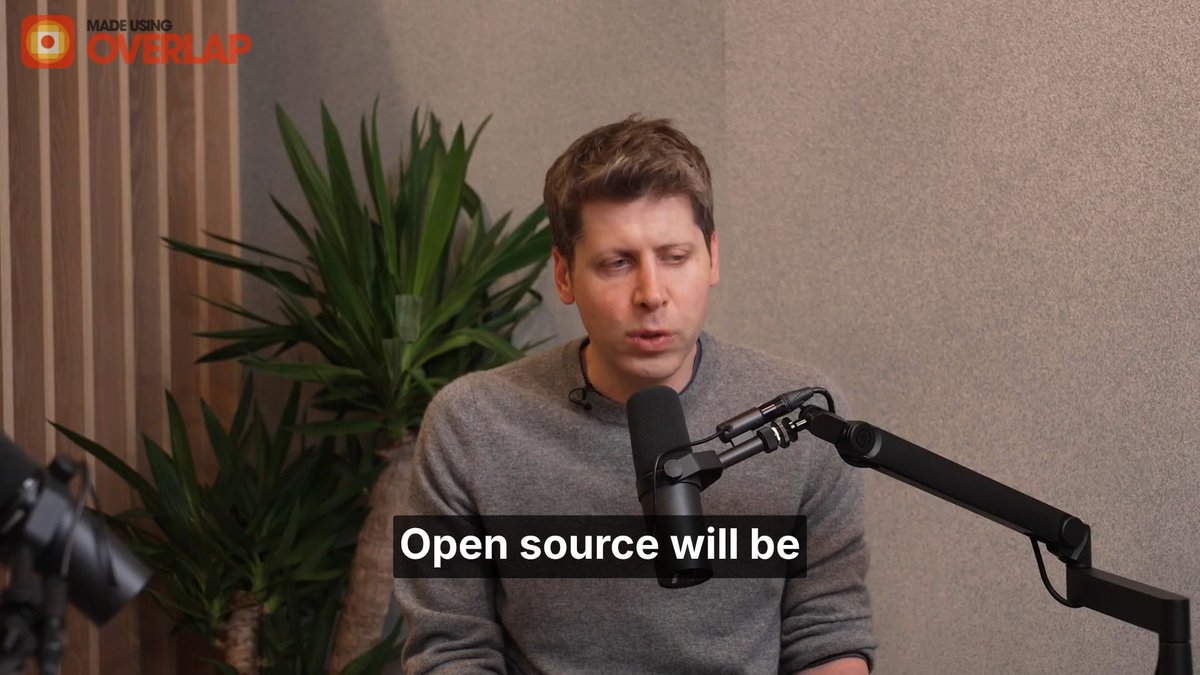
SITUATION EXPLAINED: What happens to open source when the US restricts access to frontier AI models? We asked Adrian Dittmann: "China is releasing these models [open source] to gain international dominance, people will work on these things and say, 'Hey, maybe I can contribute to this if it's open...

14,406 Aufrufe • vor 3 Monaten •via X (Twitter)

0 Kommentare

Keine Kommentare verfügbar

Kommentare vom Original-Post werden hier angezeigt

Ähnliche Videos

.Josh Wolfe: Anybody Using DeepSeek App Is 'Absolute Fool' "Anybody using the DeepSeek app is an absolute fool. If you're using DeepSeek on companies like Together Compute, one of Lux's companies, which can get rid of the CCP censorship, then it's probably okay. But remember, the open-source movement is something we deeply believe in. Most great technologists, entrepreneurs, and venture capitalists are on the side of open source. The closed-source models that have consumed tens of billions of dollars are the ones that are really going to be at risk. When you look at Hugging Face, a major repository, or Together Compute, Runway ML, and a lot of Lux's companies, they have been pioneers in open source. Now, why am I not worried about open source, even with the DeepSeek model? As long as you don't have the CCP censorship on it, the models with their open weights allow people to run on their proprietary data. This means companies like pharma or defense companies that have their own siloed, proprietary data—think about Bloomberg with their proprietary longitudinal data, or Meta with their data—are the ones who will have the edge. Even as open source takes hold, these companies will still dominate. I’m not worried about open source being the problem. I’m more concerned about people overfunding closed models with no proprietary source. A lot of capital is going to be burned there, and we’re already seeing that with people worried about OpenAI in some aspects."

Josh Caplan

40,039 Aufrufe • vor 1 Jahr

David Sacks Predicts the Regulatory Capture Playbook to Ban Open Source AI, Step by Step: David Sacks: “I got bad news for you, Chamath, an open source ban is coming. They're not going to call it that. They're going to say that we simply have to apply the same standards to open models that we apply to closed ones. Here's how they do it step by step, let me explain how regulatory capture actually works. So first of all, you have to get this regulatory apparatus. Dario wants an FDA for AI, but he doesn't have enough political support for that, so instead they do this Trojan horse of a FINRA for AI. They call it self-regulating, it's not really, but anyway, that gets them off the ground. Now they've created the standard-setting organization. Now they've got pre-release model testing. Then the pressure grows to codify that in law, so that happens next. And then what they do is they say, ‘Look, all these standards need to apply equally to all models.’ But here's the problem with that. Open models and closed models are technologically different. Once you release an open model into the world, you can't roll it back and you can't monitor exactly how people are using it because they run it on their own hardware. Dario says this is what makes open models dangerous. So what they're going to do is they're going to have the standard-setting body say, ‘Well, we have to set the standards for AI safety.’ By the way, Dario and OpenAI, they're going to fund the whole thing. They're going to contribute all the compute. They're going to be behind it. They're going to be the ones coordinating with the government officials because frankly, people in government have no idea how to monitor and control and set standards for AI safety. Technologically, this is way beyond them. So they're going to go to these companies and say, ‘Tell us how to do it.’ And so what will happen is the standards will get set, and then it'll be a very simple matter of fairness to say that the standards need to apply to open as well as closed models. The open models cannot comply in the same way, and gradually they will be shut out of the market.”

The All-In Podcast

299,247 Aufrufe • vor 1 Monat

David Sacks says companies are trapped paying OpenAI & Anthropic because they can't figure out how to use open source models "I think enterprise CTOs would like to shift their token consumption to cheaper models for the obvious reason that it would be more efficient. They are seeing compute costs or token costs skyrocket right now, so everyone's trying to figure this out." "You also have the AI sovereignty issue that Alex Karp talked about. They're worried about giving up the secret sauce or the alpha in their business to a frontier lab that may one day be competing with them. "The problem is, I think in most cases, they don't have the technical ability to do it. Coinbase figured out how to do it. DoorDash figured out how to do it. They built a token routing system that allows them to send frontier tasks to frontier models and non frontier tasks to more mundane models. But I don't think your average enterprise has the technical capability to do that." "This is why the share of wallet of closed models, it actually increased. I think that open source went from 19% last year to 11% this year. So open source as a share of enterprise spending is actually decreasing." "I don't think that means usage is decreasing. I think usage is skyrocketing. It also may be the case that because the whole point of using an open model is you just pay for the compute costs, you don't have to pay a lab, so it may be that it's hard to measure that usage in terms of spend." "But nonetheless, anyone who's saying that these closed models are going to lose or are somehow losing, you're just not seeing it in the data."

dnap

110,354 Aufrufe • vor 2 Monaten