Video yükleniyor...

Video Yüklenemedi

Ana Sayfaya Dön

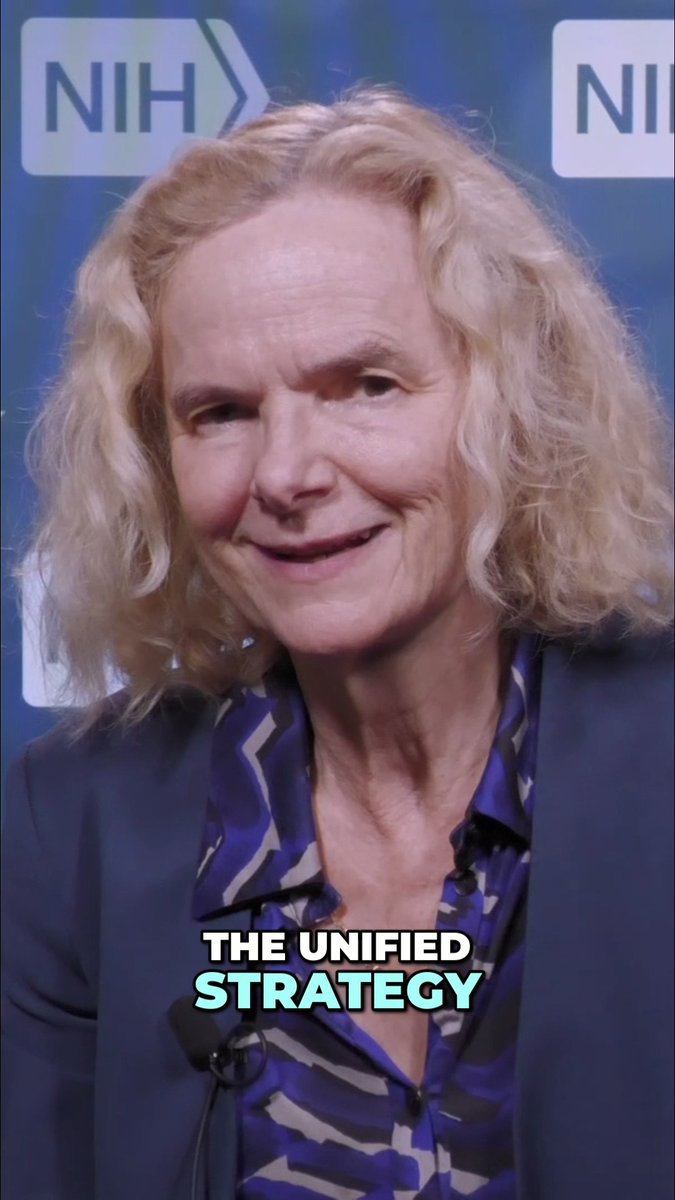
“Just the idea that 2-meter-long DNA can be wrapped up in a tiny cell is just mind-boggling” – Dr. Peter Park on how NIH-supported research led to key discoveries about DNA organization’s impact on health & disease. Watch the full video:

17,824 görüntüleme • 1 yıl önce •via X (Twitter)

8 Yorum

R Marcucio profil fotoğrafı
R Marcucio1 yıl önce

imagine that all of the next set of discoveries like this are not going to happen in the USA because NIH is being gutted.

Roland Dunbrack 🏳️‍🌈 @rolanddunbrack.bsky.social profil fotoğrafı
Roland Dunbrack 🏳️‍🌈 @rolanddunbrack.bsky.social1 yıl önce

This image of DNA sucks too. It's right-handed, but there are ~30 base pairs per turn (or 15 per half turn, between strand crossings). It should be ~10 per turn, or 5 per half turn. Do better, @NIH. I know you have good structural biologists at NIH who can help you.

Pipeline TGC profil fotoğrafı
Pipeline TGC1 yıl önce

💚💚💚

SHC TECHNOLOGIES profil fotoğrafı
SHC TECHNOLOGIES1 yıl önce

It's incredible what nature can do! The complexity of DNA organization really shows how advanced life is.

Ensemble Consultancy profil fotoğrafı
Ensemble Consultancy1 yıl önce

The way our DNA folds inside cells is astonishing—and this NIH-supported research sheds light on how that organization influences health and disease.

bizzy ziggy profil fotoğrafı
bizzy ziggy1 yıl önce

SICK BASTARDS.

ReneJayeee profil fotoğrafı
ReneJayeee1 yıl önce

It's the miracle of Nature. Everything well organized until Nature goes awry. The next miracle is the ingenuity of the scientific mind able to find ways to fix most things that go wrong. It's amazing how many problems can be fixed when a baby is in the womb using advanced microtechnology.

Barb Ginther profil fotoğrafı
Barb Ginther1 yıl önce

DEFUND NIH.

Benzer Videolar

Evolution says you can turn anything into anything if you tweak it long enough. But that house of cards collapses immediately when you realize what it takes to make even a single cell. They say new cell types arise one mutation at a time. Is that plausible? Here is the issue: Different cell types are created through a massive coordinated stack of genetic information, and it's not all just about DNA sequences. First you need a whole suite of new genetic systems related to the cell: new genes for the cell’s internal systems, instructions for its specific functional role in the body, the regulators that coordinate everything, markers to tell them where to go and when, and the controls that keep the wrong programs off. But the DNA structure itself must also be manipulated. You see, every cell in your body contains the DNA instructions to make any other cell. So how does a bone cell become a bone cell instead of a skin cell? Because of how the DNA is folded. DNA is folded in certain ways for different cell types, so that only the "bone cell instructions" are able to be read by the "cell construction program." The DNA fold decides which programs are open for each cell type. This is critical. If DNA is not folded properly so that specific cell-type information can be read, catastrophe ensues. Then you need placement blueprints, so the cells form in the right place, in the right number, and lock together to form a functional tissue. These developmental instructions are passed from parent to offspring - but research shows that tweaking these master developmental programs ends badly for the child. One mutation at a time cannot invent that entire programming stack and keep it coordinated. Research has confirmed this. To convert one cell type into another in the lab, researchers have to force many changes to happen at the same time in coordination. And even when directed by the researcher, cell conversion almost always fails. Change the sequence without the fold and you cannot get a new cell type. Fold the DNA without the new systems and you can only rearrange old programs. Make the cell without the map and it shows up in the wrong place. Break one layer in the stack and the others do not patiently wait - they fail. So creating a new cell type is not simply "tweak a gene one at a time." It requires a coordinated stack of entirely new programmed instructions: > New suite of internal systems, programmed into the DNA > New functional DNA fold so only the right systems are activated > New mapping blueprints so everything goes where it's needed Step-by-step mutation does not coordinate those layers. It produces broken cells before it produces new ones. Coordination of this level of complexity has only ever been known to come from one place: Intelligence.

Divinely Designed

16,974 görüntüleme • 1 gün önce