Video yükleniyor...

Video Yüklenemedi

Ana Sayfaya Dön

Keto-CTA study - Everything that could go wrong, has gone wrong. The "lean mass hyper-responder" phenotype is associated with greater plaque progression than expected. References in comments below

44,256 görüntüleme • 1 yıl önce •via X (Twitter)

10 Yorum

Dr Brad Stanfield profil fotoğrafı
Dr Brad Stanfield1 yıl önce

KETO-CTA study: Why clinicians are concerned about elevated LDL-c and ApoB: Authors estimated a mean plaque volume change of 7 mm³ during the study period: When instead, the KETO-CTA study showed 18.8 mm³: 18.8 mm³ is rapid progression that does not compare favorably: This meme sums up the situation

ksminnovation profil fotoğrafı
ksminnovation1 yıl önce

AI is transforming healthcare! A KSM-led study shows AI can detect Celiac disease 4 years earlier @TalPatalon @MedPredict

D J Brand profil fotoğrafı
D J Brand1 yıl önce

I agree that the situation regarding the study is indeed concerning. At the same time no critic is able to explain why an extremely high ldl of 500 is apparently not any worse than a high ldl of 180. Some piece of the puzzle is clearly missing but is being ignored.

Jan Ellison Baszucki profil fotoğrafı
Jan Ellison Baszucki1 yıl önce

Please encourage your followers to read for clarification:

Backyard Carl profil fotoğrafı
Backyard Carl1 yıl önce

Thanks for posting this. I saw some of the claims being made by Keto proponents based on this study which seemed to promote the Keto diet as not raising the risk of CVD. Thanks for breaking down some of the problems with the study and the related claims!

Sergio Rodrigues profil fotoğrafı
Sergio Rodrigues1 yıl önce

Do you acknowledge that the absolute amount of plaque roughly rounds to ZERO or near zero both BEFORE and AFTER calculated relative amount of change; for nearly all KETO-CTA participants, despite all having sky high LDL.

Dr Brad Stanfield profil fotoğrafı
Dr Brad Stanfield1 yıl önce

The change in plaque volume was 18.8 units. That’s over 1.5x what the study authors expected to find. Incredibly concerning

Jean-Philippe DIEL 🧬 e/acc 🇫🇷🇳🇿 琼-菲利普 profil fotoğrafı
Jean-Philippe DIEL 🧬 e/acc 🇫🇷🇳🇿 琼-菲利普1 yıl önce

Oh wow this is super important

Siva Yellepeddi profil fotoğrafı
Siva Yellepeddi1 yıl önce

@AskPerplexity , explain this study.

Eric Schwartz profil fotoğrafı
Eric Schwartz1 yıl önce

Thanks for the clarification

Benzer Videolar

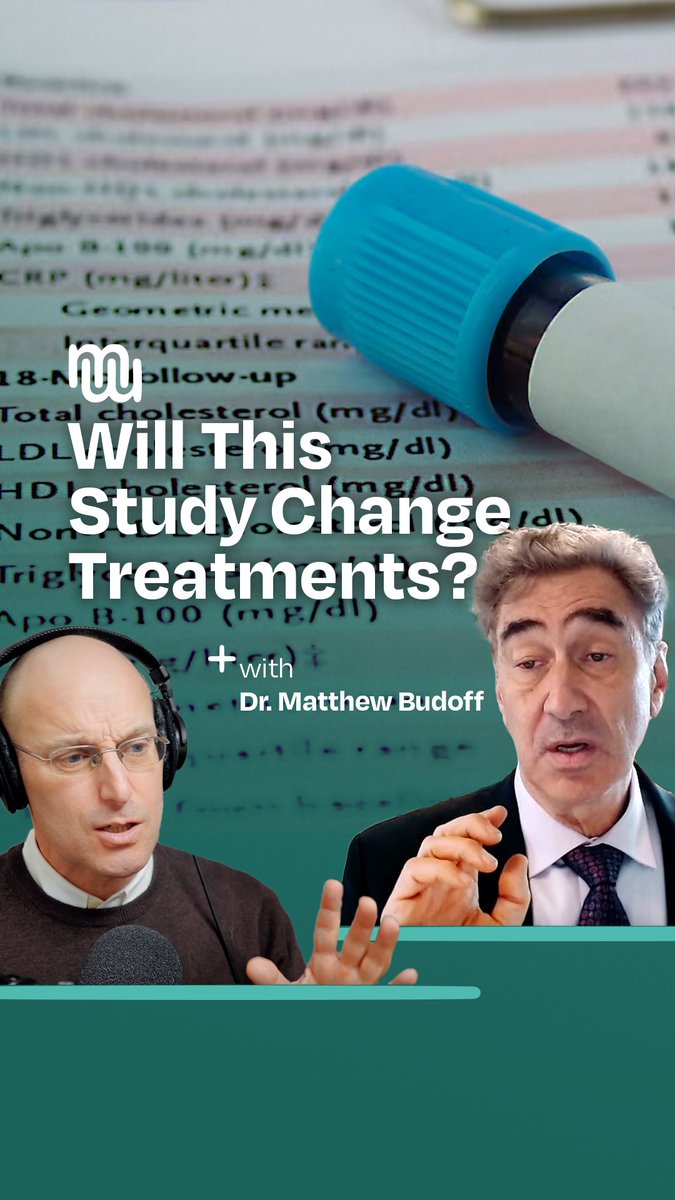
There’s been a lot of buzz—and confusion—about the new Keto-CTA study, examining plaque progression in Lean Mass Hyper-Responders (LMHRs). Much of the social media debate has centered on whether high LDL on keto is safe or dangerous, driven largely by how to interpret the supplemental table comparing this study to others on LDL and plaque progression. In this episode of the Metabolic Mind Podcast, we sit down with Dr. Matthew Budoff, a world-renowned cardiologist, cardiac CT researcher, and the study's lead investigator, to discuss the the supplemental table, what the plaque markers mean, and how this fits into the discussion of high- vs -low-risk plaque progression. In this episode, we cover: ✅ What PAV (Percent Atheroma Volume) is, what it actually measures, and why it matters ✅ Why a 50% increase in plaque may sound scary, but can be deceiving ✅ The difference between “treatment-naive” and “treated” participants ✅ What the Miami Heart Study comparison reveals about keto, LDL, and plaque ✅ Why LDL alone may not tell the whole story about heart disease risk ✅ How some high-risk individuals may still benefit from statins and other therapies This study doesn’t answer whether keto causes heart disease or not. Instead, it shows that high LDL on a ketogenic diet is not a reliable predictor of plaque progression across all individuals. What is predictive? The presence of existing plaque. 💡 Key takeaway: Relying on surrogate markers of heart disease, like LDL and ApoB, is not the best way to assess heart disease risk in all populations. If you're concerned about how elevated LDL may be affecting your heart health, the best next step is to speak with your doctor about cardiac imaging to directly assess plaque and gain a clearer picture of your individual risk. Expert Featured: - Dr. Matthew Budoff - X: - Resources Mentioned: Plaque Begets Plaque, ApoB Does Not CMEs Mentioned: Managing Major Mental Illness with Dietary Change: The New Science of Hope Brain Energy: The Metabolic Theory of Mental Illness Follow our channel for more information and education from Bret Scher, MD, FACC, including interviews with leading experts in Metabolic Psychiatry. Learn more about metabolic psychiatry and find helpful resources at

Metabolic Mind

98,147 görüntüleme • 1 yıl önce