Video wird geladen...
Video konnte nicht geladen werden
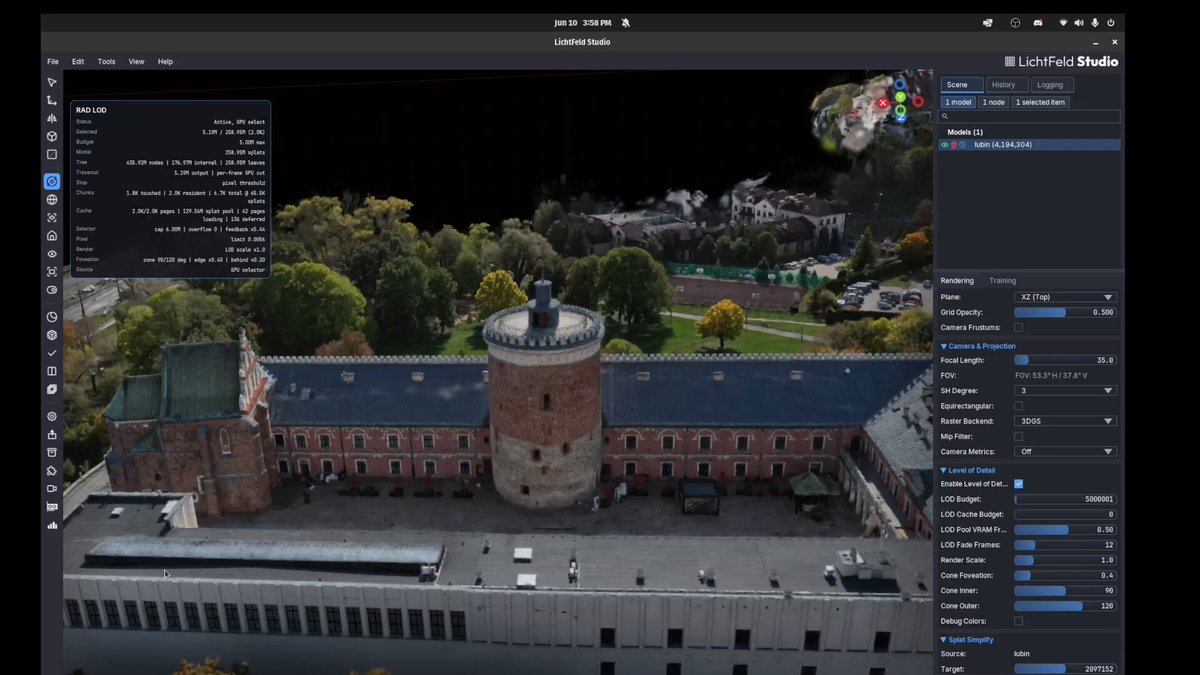
Learn how the Radiance Field method, Gaussian Splatting gets compressed with @wimost and Florian Barthel's Self Organizing Gaussians. Self Organizing Gaussians is also what nerfstudio uses for gsplat. Full episode is now live here:

16,630 Aufrufe • vor 1 Jahr •via X (Twitter)
0 Kommentare
Keine Kommentare verfügbar
Kommentare vom Original-Post werden hier angezeigt
Ähnliche Videos




0:28
Sensitive content
🦵Self-Tying The Legs🦵 Looking to explore self-tying? With very few knots in spots that are difficult to reach, practicing leg ties is a great way to get a feel for rope and begin to learn without a model. Watch the full three-part series here! ➡️
Shibari Study
21,847 Aufrufe • vor 2 Jahren


![Rupert Sheldrake: digital doesn't seem able to access morphic resonance field of memory [Akash, or cosmic consciousness], which is naturally built into self organizing systems. Possibly, analog or quantum computers might be able to create their own morphic memory field. Me: If megalithic structures are analog technologies designed with high dielectric materials, do they hold charge potential for analog intelligence, and if so, does that suggest Ancient stone temples access memory the way hueman temples do? And an even greater curiosity: what sort of memory, then, does Earth's origin Magneto-Dielectric load stone hold. And possible considerations: in the age of strong telepathy, all the various self-organizing systems of Life are able to embed in each other's morphic fields to communicate. Which may be how the plants used to be able to tell the Native Americans what their names and medicinal purposes were. As well as the stories of talking animals.](https://image.24vids.com/tw-2016115171253465555/ext_tw_video_thumb/2016115089900752896/pu/img/UYEqLm-Avze0GL4e.jpg)