Video yükleniyor...

Video Yüklenemedi

Ana Sayfaya Dön

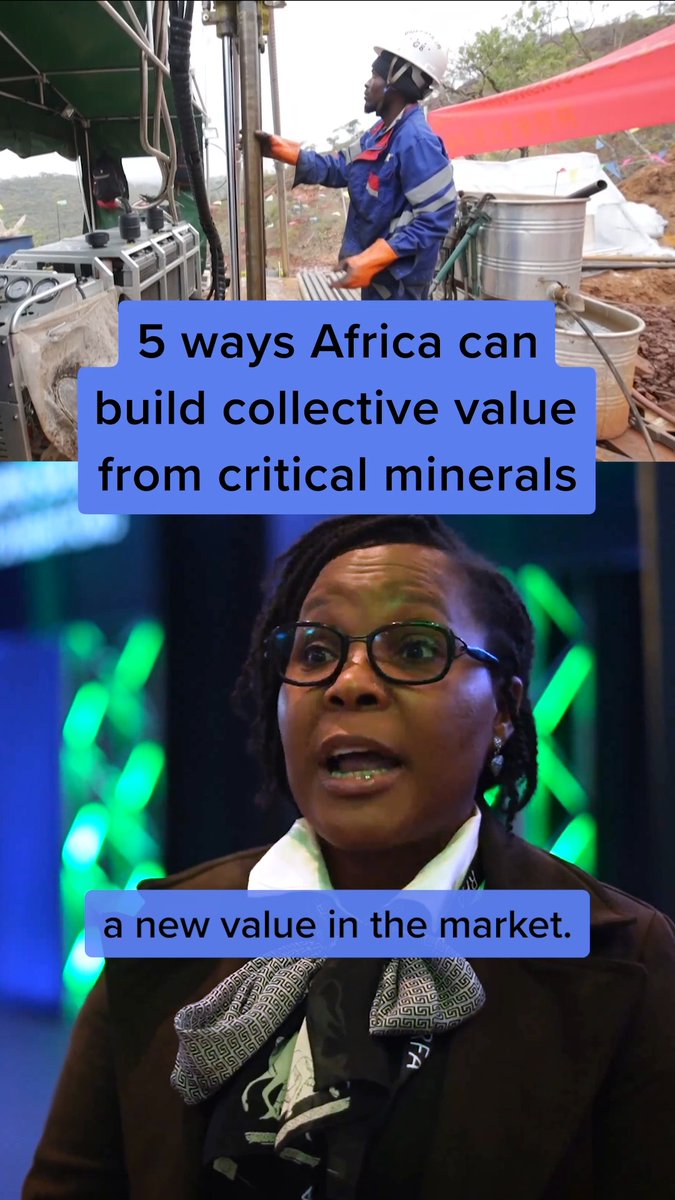
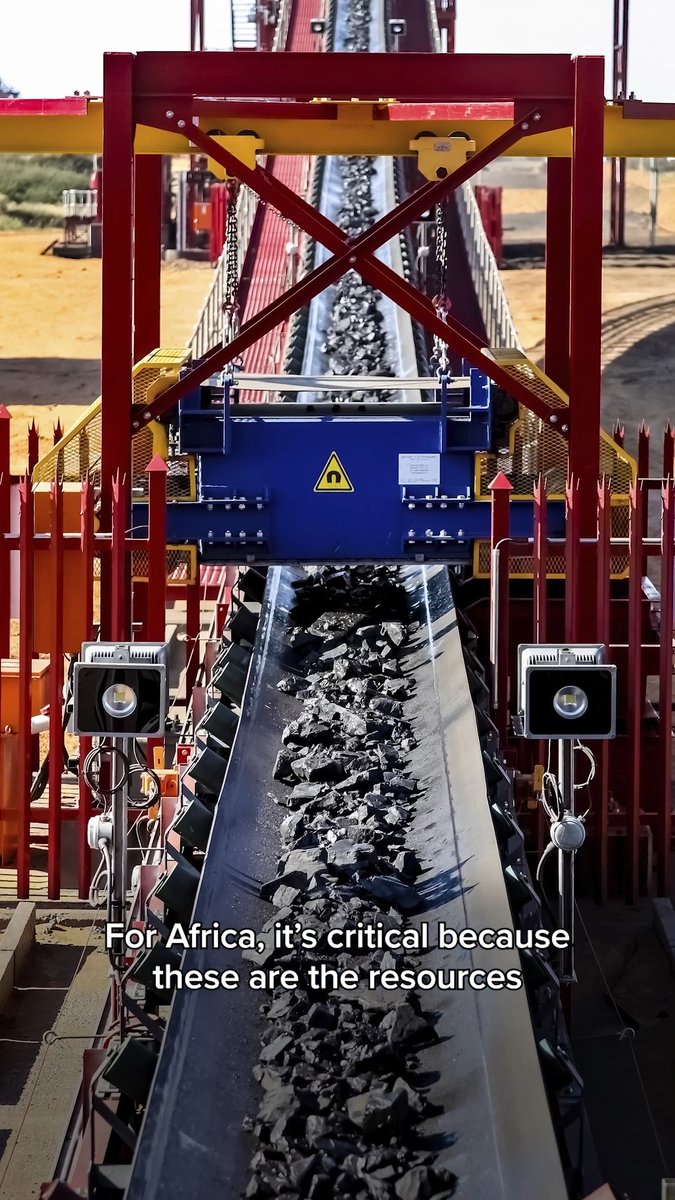
Lighter materials could reshape the future of manufacturing—and one critical metal is starting to attract attention. Scandium may not be a household name, but its ability to make aluminum stronger, lighter, and more durable is creating interest across aerospace, transportation, defense, and advanced manufacturing. Scandium Canada Ltd. is positioning...

29,893 görüntüleme • 1 ay önce •via X (Twitter)

0 Yorum

Yorum bulunmuyor

Orijinal gönderinin yorumları burada görünecek

Benzer Videolar

Sam Riggall, CEO of Sunrise Energy Metals appeared on Bloomberg TV Monday, June 15, to discuss our Syerston Scandium Project and G7 countries’ plans to reduce their dependence on China for critical metals…One could benefit by listening carefully to his conversation… Sunrise’s Syerston Scandium Project is the largest and highest-grade deposit of scandium in the world. As G7 countries seek to reduce Chinese supply for rare earths like scandium to a maximum of 60%, Sunrise will serve as an alternative, given that China currently produces approximately 85% of global supply. Sunrise’s deposit holds over 32,000 tonnes of contained scandium in mineral resources: enough to meet global scandium demand for many decades to come. Scandium’s absolutely critical applications are numerous and significant: both in defense (where it is primarily used as a lightweight yet incredibly strong alloy in military and space applications) and for thousands of civilian applications (such as Radio Frequency filtering chips to enable 5G and 6G wireless, and Solid Oxide Fuel Cells to produce energy efficiently). Scandium is also integral to the future of AI…Sunrise is a cornerstone investor in Agni Semi, the company developing the next-generation of non-volatile memory chips using ferro-diodes manufactured with aluminum scandium nitride (AlScN). Agni will produce the most energy-efficient non-volatile memory chips on the market, facilitating the massive rollout of AI that is only set to consume more energy and memory as models continue to snowball…Agni’s chips can operate up to 600ºC, which have the potential to benefit the geothermal drilling technology we are developing at I-Pulse Group. In scandium’s critical applications, there is no known substitute metal that can deliver the same level of efficiency. Founding and serving as Chairman of our companies is a passion. Like I-Pulse, Sunrise Energy Metals is not only a mining company; Sunrise will also become a leading technology powerhouse in all things scandium as we make strategic investments in the downstream scandium value chain. The importance of this rare earth metal that you may have just heard of cannot be overstated. Now is the right time to learn more about Sunrise Energy Metals…

Robert Friedland

66,858 görüntüleme • 2 ay önce

NordSpace is pleased to announce a groundbreaking Canada-Germany R&D collaboration and funding towards medium-lift rocket engine development with Fraunhofer ILT, receiving advisory services and up to $335,000 from the National Research Council of Canada Industrial Research Assistance Program (NRC IRAP). This collaboration will support a research and development project that will advance our large format multi-material additive manufacturing capabilities for medium-lift rocket engines. This collaboration between NordSpace, the Fraunhofer Institute for Laser Technology, and SWMS (Systemtechnik Ingenieurgesellschaft mbH) builds upon the recent launch of our Advanced Manufacturing for Aerospace Lab (AMA Lab), and marks an important step toward our ongoing efforts to advance orbital launch vehicles that are fully scalable from light to medium-lift payload capacities. NordSpace's Tundra and Tundra+ light lift vehicles, capable of 500 kg and 1,100 kg to LEO respectively, are being designed specifically to scale to the medium-lift Titan vehicle (5,000 kg+ to LEO) by the early 2030s. This advanced manufacturing project for space propulsion harnesses breakthrough methods such as large volume, high-speed, high-resolution, multi-metal deposition to optimize rocket engine design, fabrication, and testing. NordSpace will partner with Fraunhofer ILT – the German research institute that has developed the world-leading EHLA laser-based high-speed additive manufacturing capability, and SWMS – the German company that has developed the CAESA software for AI-powered advanced manufacturing path planning optimization. This collaborative project will support NordSpace in developing next-generation, large-scale, regeneratively cooled liquid engines, validated through rigorous hot-fire test campaigns and positioned for flight qualification and commercial scale-up.​​ This announcement builds on NordSpace’s AMA Lab launched earlier this year with Ontario Centre of Innovation support and another advanced manufacturing project that received funding from the Canadian Space Agency. The AMA Lab has already accelerated the design of our 3D-printed Hadfield engines and enhanced development cycles through AI-driven design methodologies and direct validation at our test range. Now, this new Canada-Germany collaborative R&D project will go further into efficient production methods for these advanced rocket engines. We will also present updates on this initiative at the Canadian Space Launch Conference on May 5, 2026 in Ottawa. NRC Canada Canadian Space Agency National Defence Defence Research and Development Canada Transport Canada Ontario Centre of Innovation (OCI) Fraunhofer-Gesellschaft Fraunhofer-Gesellschaft

NordSpace 🇨🇦

26,703 görüntüleme • 7 ay önce

🇮🇱 TECH THURSDAY: GLOBALIZATION IS DYING. ISRAELI TECH COULD BE ONE OF THE BIG WINNERS. (Part of our scheduled content...always pinned) The world is breaking into blocs. Supply chains are collapsing. Wars are redrawing trade routes. Countries are scrambling to bring manufacturing, defense and critical technologies back home. And Israel may be unusually well positioned for what comes next. On the Jerusalem Post’s Defense & Tech podcast, Yoni Heilbon, co-founder and managing partner at IL Ventures, makes a striking argument: Globalization as we knew it is effectively over. What replaces it is a world of technological sovereignty, shortened supply chains and countries increasingly asking one question: What can we no longer afford to depend on someone else for? That is where Israeli tech enters the picture. AI. Robotics. Cybersecurity. Autonomous manufacturing. Supply-chain security. Dual-use technology. Many of these systems were developed under extreme pressure—and some have now been tested in conditions most startups anywhere else in the world could never replicate. But here’s the part that may surprise you: Countries can condemn Israel publicly while quietly continuing to buy Israeli technology behind the scenes. Why? Because when national security, factories, infrastructure and billions of dollars are on the line, politics can suddenly take a back seat to performance. Heilbon believes one of the biggest transformations ahead will be manufacturing itself, as production returns closer to home and automation becomes essential to making that economically possible. And the opportunity for Israeli companies is no longer just America. India. Japan. Europe. Mexico. Brazil. Asia. A fractured world may actually create more demand for the technologies Israel does best. The Startup Nation was built under pressure. Now the rest of the world is entering an age of pressure too. That could change everything. Subscribe to the The Jerusalem Post and its Defense & Tech podcast. Link in comments.

Mossad Commentary

32,083 görüntüleme • 17 gün önce