Video yükleniyor...

Video Yüklenemedi

Ana Sayfaya Dön

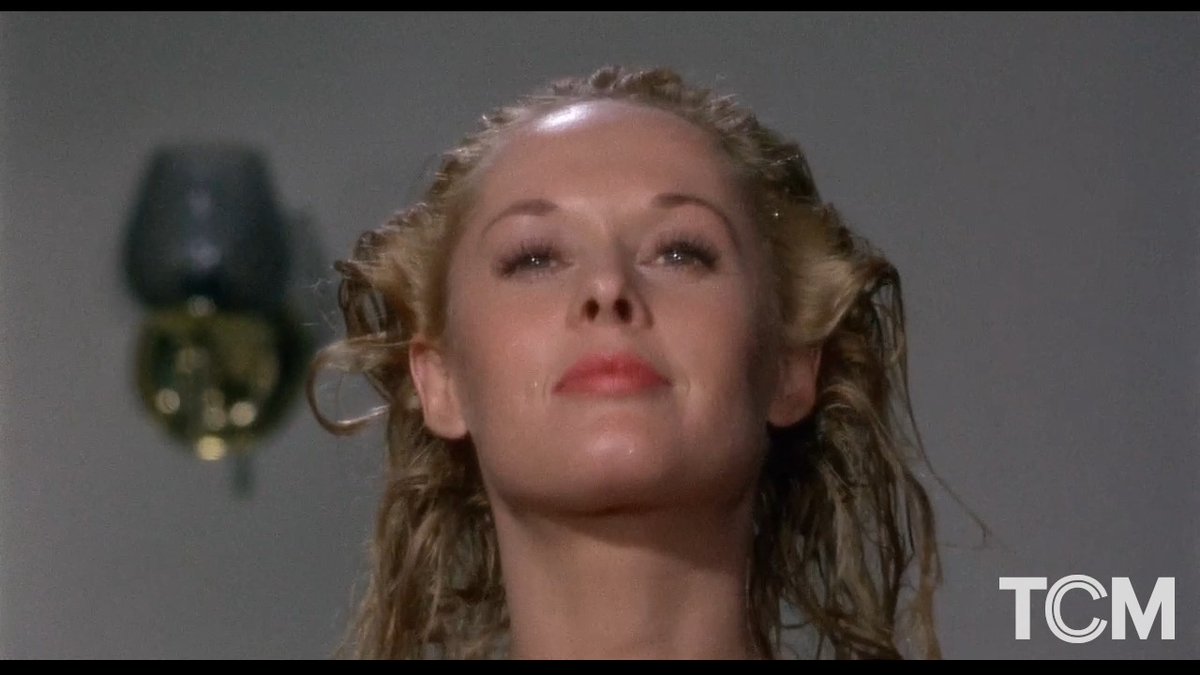
Lipstick (1976) A controversial rape-and-revenge thriller directed by Lamont Johnson. Despite being panned by critics upon its release, the film has since developed a significant cult following. Margaux Hemingway, in her film debut, the 1970s supermodel played Chris McCormick, a high-fashion model who seeks justice after being assaulted. While...

100,285 görüntüleme • 5 ay önce •via X (Twitter)

0 Yorum

Yorum bulunmuyor

Orijinal gönderinin yorumları burada görünecek
Benzer Videolar

Class of 1984 (1982) Class of 1984 was a commercial success relative to its modest $3.2–$4.3 million budget, earning over $6–$7 million at the box office. It achieved broader financial success through the home video and cable markets, estimated at $15–$20 million in total. The film is celebrated as a definitive cult classic of the early 1980s. Its "video nasty" reputation stemmed from extreme violence, including a graphic table saw death and a brutal rape scene, which nearly earned it an X rating. Modern audiences value it as a bleak, nihilistic time capsule of the early '80s punk aesthetic and urban decay. It is famous for featuring a young, pre-Family Ties Michael J. Fox in a supporting role. Its status is solidified by high-end boutique releases, such as the Shout! Factory Collector’s Edition. The film was directly influenced by A Clockwork Orange (1971) and Blackboard Jungle (1955). In turn, it influenced several "school violence" and vigilante films: It spawned two sci-fi-themed sequels: Class of 1999 (1990) and Class of 1999 II: The Substitute (1994). Films like The Principal (1987), The Substitute (1996), and Class of Nuke 'Em High (1986) are often cited as spiritual successors or parodies. Timothy Van Patten, who played the menacing gang leader Peter Stegman, is now better known as an Emmy-winning director of prestigious series like The Sopranos and Boardwalk Empire. Van Patten personally wrote and performed the piano concerto his character plays in the film, a scene often cited as a highlight that revealed Stegman's complex, "yuppie" background. While director Mark Lester expected Van Patten to become a major acting star following his "riveting" performance, Van Patten eventually found his greatest success behind the camera. His portrayal remains iconic for its use of low-angle shots to maximize his threatening presence despite his clean-cut appearance.

Tom😈Loves❤️Horror😱

11,070 görüntüleme • 6 ay önce

Videodrome (1983) 🕯️📹 Released on February 4, 1983, “Videodrome” faced a difficult theatrical run due to its transgressive content but eventually found a massive second life through home video and high-quality restorations. The film opened in 600 theaters across North America. It debuted at number 8 on the box office charts, earning approximately $1.19 million in its opening weekend. It was a significant commercial "bomb," grossing a total of $2.12 million against a budget of roughly $5.95 million. Director David Cronenberg noted that the film was difficult to categorize, neither fitting clearly as an "art-house" film nor a standard "exploitation" horror flick. Universal Pictures executives later expressed regret for giving it a wide release rather than treating it as a specialized art film. Home video was instrumental in transitioning “Videodrome” from a financial failure to a revered cult classic. The film was released on VHS and Betamax in the 1980s by companies like CIC Video. In the UK, early versions were heavily censored—cut by nearly three minutes—due to the "video nasty" moral panic of the era. The film's critical status was cemented with its inclusion in the Criterion Collection, which released a landmark DVD in 2004 and a Blu-ray in 2010. These editions featured the "unrated" version and extensive documentaries on its groundbreaking prosthetic effects. Arrow Video released a highly praised dual-format (Blu-ray/DVD) set in the UK with new restorations and archival content in 2015. New 4K restorations, approved by Cronenberg, were released to theaters and home media, further enhancing the film's "techno-surrealist" visuals for modern audiences. Today, the film is widely available for digital streaming on platforms like Peacock and for purchase through boutique labels.

Tom😈Loves❤️Horror😱

16,931 görüntüleme • 6 ay önce

Angel (1984) Released on January 13, 1984, Angel is an American exploitation slasher thriller that became a defining "sleeper hit" of the 1980s. It was the first film released by New World Pictures after the studio was sold by its founder, Roger Corman. The film mixed a gritty, "sleazy" premise with a "found family" of colorful street characters, including an aging cowboy (Rory Calhoun) and a flamboyant drag queen (Dick Shawn). The blend of "Afterschool Special" sweetness and "sleaze-fest" violence created a jarring but memorable experience that helped the film stand out from typical 1980s slashers. Despite failing to open in the top five, Angel was a major financial success. It grossed $2.2 million in its opening weekend and stayed in the top ten for several months, eventually earning $17.5 million domestically. It was New World's highest-grossing release of 1984. The film thrived during the 1980s VHS boom, where its lurid cover art and exploitation themes helped it populate video store shelves. This popularity led to three sequels: Avenging Angel (1985), Angel III: The Final Chapter (1988), and Angel 4: Undercover (1994), though the latter two were straight-to-video releases. Today, Angel is considered a prime example of '80s "sleaze-fest" cinema with a surprising amount of heart. Its cult following is driven by its campy "instant characters," its unpretentious tone, and its depiction of a now-gone era of Hollywood Boulevard. Its enduring status is reflected in modern high-definition re-releases from boutique labels like Vinegar Syndrome, which released a dedicated "Angel Collection" Blu-ray set in 2020.

Tom😈Loves❤️Horror😱

87,122 görüntüleme • 5 ay önce

Black Christmas (1974) 🎄 This film is considered one of the most influential horror films ever made, often cited as the "mother" of the modern slasher genre. Despite a modest initial financial performance, it has achieved massive cultural impact and critical re-evaluation over the last 50 years. Produced on a budget of roughly $686,000, it was a major hit in its native Canada, becoming the third-highest-grossing Canadian film of its time. It initially struggled in the U.S. due to competition from The Godfather Part II, but eventually grossed over $4 million worldwide, cementing its status as a financial success. Upon release, critics largely dismissed it as "senseless mayhem" or "trash". However, modern reviews are overwhelmingly positive, with a 71% rating on Rotten Tomatoes and rankings on numerous "Best Horror Movie" lists by outlets like IndieWire and Esquire. Cultural Impact and Innovation The film pioneered several tropes that defined the 1980s slasher boom: The "Final Girl": Jess Bradford (Olivia Hussey) is recognized as one of the first "final girls" in horror. Unlike later iterations, she was sexually active and had full agency, challenging the "virginal survivor" trope. It introduced the Killer's POV tracking shots, the concept of a killer stalking a group of young women, and the "calls are coming from inside the house" plot device later famously used in “When a Stranger Calls”. Influence on “Halloween”: Director Bob Clark’s discussions with John Carpenter about a hypothetical Black Christmas sequel (involving a killer escaping a psychiatric ward on Halloween) directly inspired Carpenter's 1978 classic. Released just one year after Roe v. Wade, the film is praised for its progressive treatment of reproductive rights, as Jess remains steadfast in her decision to have an abortion despite pressure from her boyfriend. Fun Fact Director Bob Clark later directed the 1983 holiday classic “A Christmas Story”. While the two films are tonally opposites, they both remain essential viewing for the Christmas season.

Tom😈Loves❤️Horror😱

23,369 görüntüleme • 6 ay önce

* NEW FROM THE CHIRLA FILES * CHIRLA, the taxpayer-funded nonprofit that has been fomenting opposition to immigration enforcement in Los Angeles, owns a film production company that has produced a full-length feature. CHIRLA’s “beleaguered” Executive Director, Angelica Salas, is credited as the Executive Producer of the movie. Seems strange for a nonprofit, right? Pouring over its publicly available financial records, there appear to be a number of irregularities—though I do not have the expertise to form a definitive opinion about whether there was actual malfeasance. Here are the details. As background to CHIRLA’s film-making enterprise: In 2018, the organization produced a 20-minute short called “America, I Too,” which was shown at some film festivals. According to its website, this was “the second film in the series following the first short, ‘Know Your Rights’ created in 2007.” The video by that name that I found online is ten minutes long and has poor production values. CHIRLA incorporated its film company, called CHIRLA Liberty Film, LLC, in January 2019. It is entirely owned by the nonprofit, and its finances are consolidated in CHIRLA’s financial audits. The audit for the year ending June 30, 2019, lists film production costs in the amount of $242,413 and $28,764 from 2018, noting that they relate to the “various costs associated with the production of a film.” The audit, however, does not mention the existence of the film company. Strangely, CHIRLA’s Form 990 (the tax form filed by nonprofits with the IRS) for 2019 also does not reference either the company or the costs of film production. Every year beginning in 2019, CHIRLA’s audits state: “Upon completion of the film, the Organization will review its total revenue estimates from the film, which may result in a change in the rate of amortization and/or a write-down of the film production costs to fair value.” But confusingly, there are never any revenue estimates provided in any audit. The cost of the film production is simply listed as an asset each year. CHIRLA’s 2020 audit is the first to acknowledge the existence of the film company: “CHIRLA has teamed up with CHIRLA Liberty Films LLC to bring to life a dramatized film series about undocumented immigrants called Know Your Rights.” It’s a strange statement, given that the “Know Your Rights” video was produced in 2007. The 2020 audit lists $124,483 as an additional investment in the production of the unnamed film, and the Form 990 for that year lists a cumulative investment in film production of $366,896. Its financials for 2021 are essentially consistent, showing an additional $419,052 spent on the film, totaling $785,948. CHIRLA’s 2022 audit adds $151,658 in production costs, and the 2023 audit adds another $109,437, for a grand total of $1,047,043. Both audits state that the film still had not been completed as of June 30 of their respective years. But contradictorily, CHIRLA’s feature-length film—titled “America’s Family”—is listed on IMDb with a release date in 2022, and there are websites advertising showings in Los Angeles and Boston in June 2022—prior to June 30. Though CHIRLA’s Form 990s for 2020 and 2021 list a dollar value under “Investment in Liberty Film,” the Form 990s for 2022 and 2023 include no record of the investment in film production or acknowledgment of the wholly owned film company. After the initial showing of “America’s Family” in June 2022, the film had a number of additional showings in late 2023. In late 2024, CHIRLA presented the film for free or low cost at several local community centers in Mexico. It is now available for streaming on Amazon Prime. I know little about the film industry, but my suspicion is that the company may have spent more on these screenings than it earned in revenue. This brings me back to the auditor’s recurring statement: “Upon completion of the film, the Organization will review its total revenue estimates from the film, which may result in a change in the rate of amortization and/or a write-down of the film production costs to fair value.” Again, the audit does not include revenue estimates, so it is difficult to guess what this refers to. The $1 million spent on film production was considered an asset on financials. On what planet would this film break even? And what is the movie like? Judging from the trailer, it’s clichéd propaganda. It presents an idyllic life of a Spanish-speaking “American” family, suddenly torn apart by brutal ICE agents. You can judge its artistic merit for yourself. More important will be the judgment about the legality of CHIRLA’s financial filings.

Laura Powell

23,203 görüntüleme • 1 yıl önce