正在加载视频...

视频加载失败

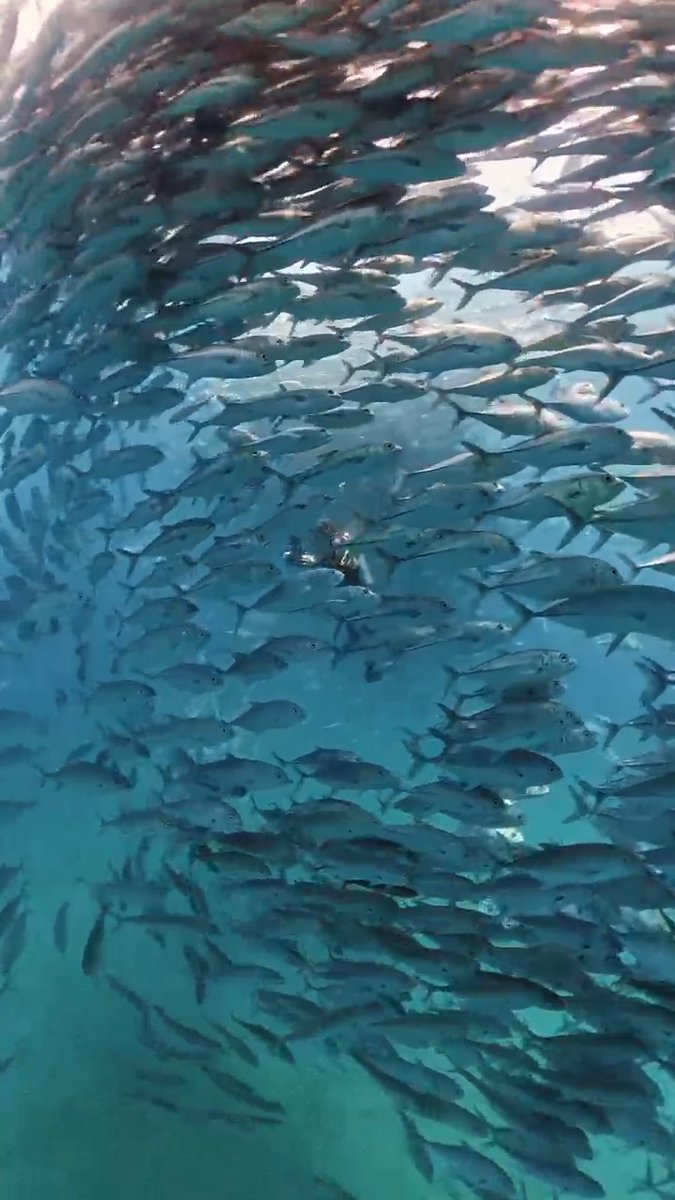
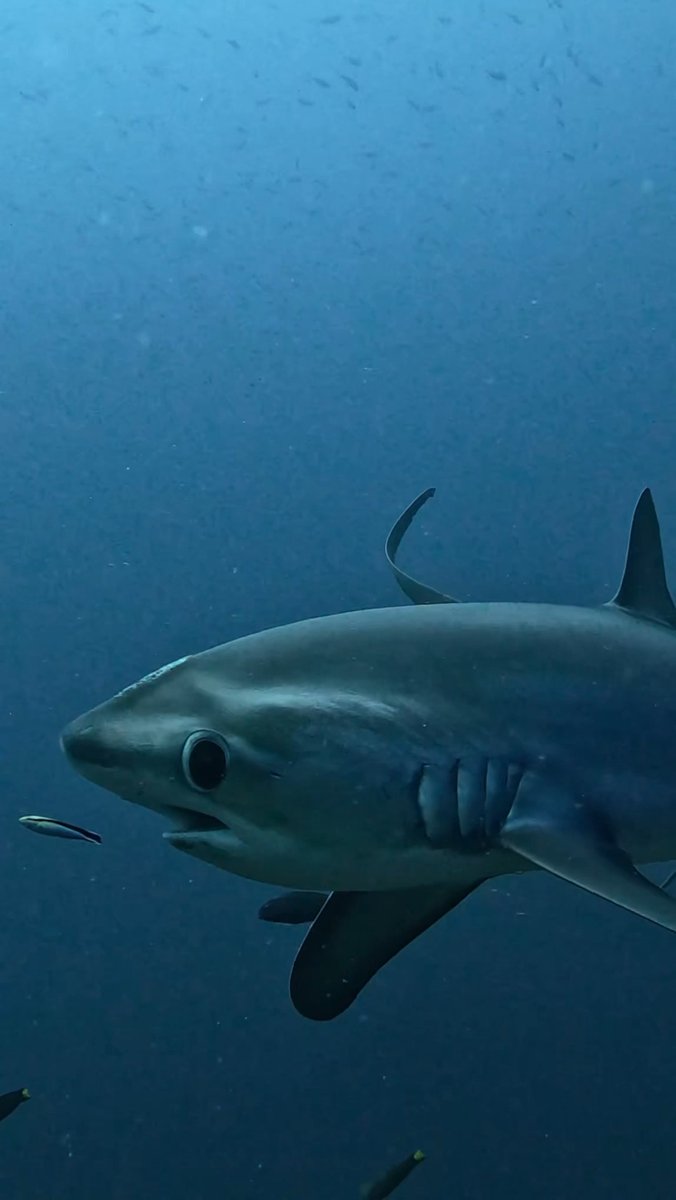
Long message, but trust me, it will be worth your time. Here is a remarkable update from Tamil Nadu’s tagged turtles. Early tracking data shows that some have already travelled to the Sri Lanka Dome, a little known ocean region where marine life gathers in extraordinary numbers. What makes...

63,329 次观看 • 3 个月前 •via X (Twitter)

0 条评论

暂无评论

原始帖子的评论将显示在这里

相关视频

So, my opinion on what the Antarctic (Antarctica) Anomaly is that it's a type of frequency technology. It must be way more powerful than HAARP, as many have claimed it to be, because we would see these anomalies at other HAARP sites, and we don't, not like this. With that said, and I'm very much trying to avoid letting what I want it to be not play a part here, I think it is a technology that is being used either off the coast of Antarctica itself or Bouvet Island. A third possibility is an area just to the northwest of the island that looks odd. It's possible it is a sonar scan from a ship, but why in that remote location? It looks like an antenna set up or rows of something that is out of place. I also believe that the weather events and fires that have taken place in Africa could possibly have been because of this. Each time we saw the anomaly, it was followed by a destructive weather event in Africa. A weird connection to that is we have been told and warned of a very busy 2024 Atlantic hurricane season. This is in part because of the above-average Atlantic ocean temperatures, which is the fuel to Hurricanes. With all this info, it's possible to see how the Anomaly could be a frequency tech that can manipulate or create weather, And or WARM up the Ocean temps to purposely enhance the Hurricane season and Storm growth. Keep in mind that many of our hurricanes and many of the biggest hurricanes have come from the west coast of Africa and form over the Cape Verde islands before heading towards the Caribbean and the United States. This is all of course speculation, and I'm learning many new things every day, so this idea may morph over time as we learn more. In the end, it is very hard to ignore all these findings. #antarctica #anonaly #AntarcticaAnomaly #BouvetIsland

In2ThinAir

442,580 次观看 • 2 年前

🚨What If Earth's Oldest Civilization Never Left the Ocean? What if the intelligence behind some UFO didn't actually arrive here from another star system at all? What if it has been here for longer than us, not hiding in the sky, waiting behind the Moon, or crossing the galaxy in the way that we imagine, but living beneath the oceans inside the one part of Earth we still barely understand? For decades, we have been looking up. The cultural image of UFOs is always the same thing with lights in the sky, craft descending through the atmosphere, visitors arriving from space. Even the word extraterrestrial pushes our attention away from Earth. It tells us the mystery must have to come from somewhere else. But what if that assumption is totally wrong? What if the most important part of the phenomenon is not its relationship to space, but its relationship to the oceans? Earth isn't a land planet it's an ocean planet with islands of land breaking the surface. Human civilization developed on those islands, built cities there, drew borders there, fought wars there, launched rockets from there, and then convinced itself it understood the world. But most of this planet is still beyond our direct reach. The deep ocean is dark, pressurized, vast, hostile to our bodies, difficult to map, difficult to monitor, and almost impossible to police in any sort of meaningful way. If there was another intelligence operating here and it wanted to avoid open contact with us, the ocean would be the obvious place to be. But maybe hiding is the wrong word because a civilization that evolved in the ocean would just live there. When we imagine an advanced underwater intelligence as aliens using the sea as a base, as if they arrived from somewhere else and chose the ocean as cover, that could be way off. It could be one possibility, but the stranger theory is that they never arrived at all. They may have emerged here, in Earth's oceans, long before we ever existed. Life on this planet is ancient. For most of Earth's history, land wasn't even the center of the biological story. The oceans held the chemistry, the minerals, the heat, the pressure, the vents, the darkness and the protection. Hydrothermal vent ecosystems already prove that life doesn't even need sunlight in the simple way that we once thought it did. Entire ecosystems can be built around chemical energy rising from the seafloor. That should have changed how we (SETI) think about life, but humans still keep defaulting to our own surface bias. We imagine intelligence as something that crawls onto land, discovers fire, makes tools, builds cities and eventually launches machines into the sky. That is our path but it's not necessarily the only path. An intelligence that evolved in the deep ocean would have faced a completely different set of conditions. It wouldn't begin with fire, because fire is obviously useless underwater. It wouldn't develop metallurgy in the same way that we did, because open flame and smelting are surface technologies. It wouldn't need wheels, roads, walls or conventional buildings as we do. It would evolve inside pressure, darkness, currents, sound, vibration, magnetism, chemistry and geothermal energy. Its entire technological history would be alien to us even if it was native to Earth. So when people dismiss the idea of an ancient underwater civilization by asking where the factories are, where the ruins are, or where the tools are we have to question whether their technology would leave the same signatures ours does. Would they even build like we build? Industrialization may look totally different. A deep ocean intelligence might not construct dead machinery in the way we do. It might grow structures and use biological engineering before mechanical engineering. It might use mineral matrices, pressure systems, acoustic fields, electrochemical processes or living materials. It might not separate biology and technology at all. To us, that would look less like a civilization and more like an environment. A sufficiently old oceanic intelligence may not have cities that resemble human cities. Its infrastructure may be embedded into geology, vents, trenches, caverns, mineral deposits or biological networks. Its power systems may use geothermal gradients, tidal forces, pressure differences, ocean chemistry or field effects we don't yet even understand. Its communications may not use radio in the way we expect. Sound travels really well underwater. Electrical and magnetic sensitivity exists throughout marine life. A technological species born in that world might build an entire science around signals we barely even treat as communication. This would also explain why the UFO subject keeps revolving around water. The ocean appears again and again in the background of the mystery. USOs, transmedium objects, craft entering or leaving the sea, naval encounters, disturbances under the surface, objects tracked over water, and sightings near coastlines and military maritime zones all point toward the same possibility, that maybe water isn't incidental to the phenomenon, maybe it is central. If some UFO are connected to an ocean based intelligence, then what we see in the sky could only be the visible edge of something way bigger. The craft are not arriving from elsewhere in every case. They may be surfacing from their native domain into ours for short periods of time, crossing that boundary between ocean and air the way we cross from land into water with submarines and diving equipment. The only difference is that they appear to do it way better than we do. Human technology is divided by environment, aircraft are built for air, submarines are built for water while rockets are built for space. Each domain creates different engineering problems, so we build separate machines for each one. But UAP don't appear to play by the same rules. That is what makes the transmedium reports so important. If an object can move through water, air and possibly even space without changing its basic behavior, then it might not even be flying or swimming in the conventional sense. It could actually be controlling the interaction between itself and the medium around it. That kind of technology would make sense for a civilization born in the ocean because water is dense. It resists movement, crushes weak structures. It creates drag, turbulence and cavitation. If an intelligence developed vehicles in that environment, it would eventually need to master boundary control, so it would need to reduce friction, manage pressure, avoid destructive wake effects and move through dense fluid without wasting enormous amounts of energy. If that same technology was later used in air, it might appear to us as silent propulsion, impossible acceleration, no sonic boom, no heat plume and no obvious aerodynamic logic. So what looks impossible to us may simply be the result of a technological path that did not begin with wings and rockets. The old black budget explanation doesn't fully solve this problem either. Yes, some triangle craft, drones and experimental platforms may be human and it would be naive to deny that, but human secret technology still has to come from somewhere. If certain platforms show silent hovering, field effects, plasma signatures, extreme acceleration and transmedium behavior, then we are either dealing with a hidden human science far beyond public understanding, or we are dealing with something that we are trying to imitate. That is where the old 'alien reproduction vehicle' idea and the cryptoterrestrial theory start to overlap. Maybe some of what people call black budget technology isn't purely invented, it's most likely adapted from encounters with something already operating here. Going back to what Grusch said earlier, the implications are massive. If there are underwater bases, facilities, habitats or recurring operational zones known to governments, then this isn't just a question of disclosure. There's a sovereignty issue, who controls the oceans? Who has access to the deep sea? Who monitors undersea cables, nuclear submarines, offshore infrastructure, shipping lanes and military testing ranges? If an unknown intelligence can operate in those spaces without permission, then every major navy on Earth has a problem it cannot publicly admit. Scary thought and that may be one reason the subject is buried so deeply (no pun intended). Some people think that secrecy exists because governments don't want to admit aliens are real, but that may only be part of it. The bigger issue here could be that governments don't want to admit they aren't in full control of the planet. There is a huge difference between saying, 'We have evidence of unknown craft,' and saying, 'There may be advanced non human infrastructure in the oceans and we cannot remove it.' That would also explain the change up from UFO to UAP and from extraterrestrial to non human intelligence. Non human is pretty broad lets be honest. It doesn't tell us where they come from, it leaves room for extraterrestrial, interdimensional, post biological, artificial, ultraterrestrial, cryptoterrestrial or native Earth intelligence. That could well be deliberate. Perhaps the people closest to the classified material know the answer isn't as simple as aliens from another planet as Grusch implied in the clip. An ancient oceanic intelligence would also force science to confront its own blind spots. We know intelligent life evolved on Earth at least once because we are here. But we have no law of nature saying it could only happen once, only on land, only recently, or only through primates. Evolution isn't a ladder with humans at the top. It's a branching process with countless experiments, most of which vanished or left traces we don't fully understand. If an intelligent lineage emerged in the ocean and then moved into environments where fossilization, geological preservation and surface archaeology are poor, we probably wouldn't even recognize the evidence even if fragments existed. Ocean crust is constantly recycled through plate tectonics. Seafloor environments are really destructive. Structures can be buried, subducted, corroded, overgrown or mistaken for natural formations. If a civilization was millions or even hundreds of millions of years old, the survival of obvious surface style evidence would be highly unlikely. Even human civilization, after a few million years, would leave less behind than we like to imagine. Plastics, isotopic anomalies, altered sediment layers and some industrial traces might possibly survive, but buildings, machines and cultural artifacts would mostly vanish. So now imagine a civilization that even never built like us in the first place. This doesn't prove anything obviously, but it makes the dismissal less easy. Then there is the question of why such an intelligence would stay hidden. If it is older and more advanced, why not reveal itself? The answer could be as simple as open contact with humans may not benefit it. We are violent, territorial, extractive and unstable. We turn discoveries into weapons as quick as we can. We militarize frontiers, poison ecosystems, test nuclear devices. We drag the deep sea with cables, sonar, submarines, mining ambitions and military hardware. From the perspective of an older oceanic intelligence, humans probably don't look like peers. Instead we look like the dangerous surface species entering an adolescent technological phase that we are. That could explain the strange pattern of UFO interest in nuclear sites, military installations and weapons systems. If an intelligence lives here, our nuclear age is all of a sudden not just our problem. It is a planetary problem. Nuclear weapons, nuclear submarines, nuclear waste, missile systems and military escalation would all be highly relevant to any non human civilization sharing Earth with us. The same would be true of deep sea mining, ocean pollution, climate change, undersea military networks and artificial intelligence. We may think these are all just human issues, but a hidden Earth based intelligence would see them as threats to a shared planetary system. This gives the UAP phenomenon a very different emotional tone. It's not necessarily invasion or salvation. It may be monitoring, containment or quiet intervention when we cross certain lines. It could be an intelligence trying to stay out of sight while still making sure the surface species doesn't burn the house down. The ancient ocean theory also gives a different reading to secrecy. If governments encountered evidence of this, the first instinct wouldn't be public education. It would be containment, map the sites, track the objects and recover materials if possible. Then to build programs around the technology. Keep adversaries away from the data. Use ridicule to suppress leaks. Let the phenomenon remain absurd, because absurdity is an excellent security system. People don't demand answers from something they have been trained to laugh at. That could be why the UFO/UAP subject always feels half visible. There are official hearings, but not the full data. There are whistleblowers, but never the files. There are blurry videos, but not any context. There are pilots, radar operators and military witnesses, but the system keeps absorbing their testimony into classified channels. The public sees fragments while the real pattern remains locked away. As I always say... Disclosure for the few and not the many. If the ocean is actually involved as Grusch and Burchett imply, the missing data may be even more important than the aerial data. We shouldn't only be pressing what pilots saw in the sky. We should be asking what sonar operators heard under the water, what submarines have tracked. We should also be asking what undersea sensors have recorded near restricted zones and whether there are recurring coordinates, depths, magnetic anomalies, thermal signatures or unexplained acoustic events associated with UAP activity. We need to be asking whether naval archives contain the real spine of the phenomenon. The possibility of underwater bases actually changes how we think about disclosure. If the answer is extraterrestrial visitation, disclosure is about humanity's place in the cosmos. If the answer is an ancient Earth based intelligence, disclosure is about humanity's place on its own planet. That is more intimate and more destabilizing to me than E.T. It means the human story is not the only advanced story Earth has produced. It means our myths of ownership, dominance and uniqueness all collapse overnight, suddenly 'we are not alone' applies to home. That might be harder for people to accept than aliens from space. Aliens can leave but a hidden terrestrial intelligence is part of the planet will blow peoples minds. There is also a spiritual and philosophical layer to this. Many ancient cultures contain stories of beings from the sea, underwater kingdoms, gods emerging from water, serpent people, fish like teachers, luminous beings, and hidden realms beneath or beyond the visible world. That doesn't mean the myths are literal history of course, but it is interesting that human cultures repeatedly placed mystery, intelligence and otherworldly contact in the water. The ocean has always been the border between the known and the unknown. Maybe that symbolism came from imagination or perhaps some of it came from encounters filtered through the language of the time. If an older intelligence interacted with early humans, we wouldn't expect ancient people to describe pressure engineered transmedium craft or non human oceanic infrastructure. They would describe gods, spirits, shining beings, dragons, serpents, sky boats, sea people, underworlds and portals. Human language can only describe the unknown through the symbols available at the time. Even now, we struggle. We call them craft, orbs, drones, angels, demons, aliens, ultraterrestrials, interdimensionals. The labels change, but the confusion always stays the same. The ocean theory also sits strangely well with the consciousness aspect of the phenomenon. If an ancient intelligence developed through biology and field sensitivity rather than brute mechanical industry, it may have integrated consciousness into technology way earlier than we could have. We are only now beginning to wonder whether mind, perception and information are more deeply connected to physics than our materialist models allow. An older civilization may have already built that bridge. Its craft, communication systems and interfaces may respond to awareness, intention, emotion or neural patterns in ways that seem impossible to some of us. That would explain why the phenomenon often feels both technological and psychological. It behaves like machinery, but it interacts like intelligence. It appears on sensors, but it also appears in dreams, symbols, synchronicities and personal experiences. Skeptics see that as evidence the whole thing is imaginary. Maybe sometimes it is, but maybe the strangeness is part of the interface. A civilization that understands consciousness as a field related phenomenon would not necessarily separate contact from perception. It might use perception as one of the channels. This is where the theory becomes tricky, because it doesn't allow us to keep the phenomenon safely outside ourselves. If the intelligence is oceanic, ancient, field based and consciousness aware, then contact might not look like radio signals or embassy meetings at all. It could look like sightings, dreams, intuitions, symbolic downloads, altered states, close encounters, military incidents and physical traces all mixed together. That is messy, but perhaps the mess is not a flaw in the data, it could actually be the signature of a phenomenon that crosses categories we invented too recently to trust. All of this having been said, the theory still needs evidence. It needs coordinates, sensor data, sonar records, materials, biological traces, repeatable patterns and testimony that can be checked. However as a framework, it definitely needs more attention than it gets, because it explains why the UAP phenomenon feels close, evasive, ancient and deeply tied to Earth. The extraterrestrial hypothesis asks how they got here, although I have a theory about that. While the ancient ocean hypothesis asks whether they were already here. That is a completely different question. If what Grusch is saying is even partly correct, then disclosure will reveal that human civilization has been sharing this planet with another intelligence all along. Not openly or equally, and not in a way we were ready to understand, but sharing it nonetheless. The oceans would no longer be an empty wilderness. They would become the frontier of the greatest secret in human history. Could that be why the truth has been so hard to release. Because it's one thing to tell humanity there may be life elsewhere, but it's another thing entirely to tell humanity that Earth was never only ours. #UAP #UFO #USO #UAPDisclosure #NonHumanIntelligence #NHI #UnderwaterBases #OceanMystery #Cryptoterrestrial #Transmedium #Disclosure #ufotwitter #uapX

Skywatch Signal

83,052 次观看 • 1 个月前

Copepods, could stop climate change 5 gigatons of these 1mm-sized zooplankton called COPEPODS live in all the world’s Oceans. This is equivalent to 17 million 747 jets, and if you laid the jets end to end, they would go around the planet 31 times. The copepods migrate from around 200m below the ocean surface every night to feed on plants (phytoplankton) at the surface. It is the greatest mass migration of animals on the planet, and it happens twice a day. The vertical motion of the copepods moves just about as much water as the moon and the tides. The copepods eat 30 times more carbon than humanity generates from burning fossil fuels, and about 6%, or 3 gigatons, of their dead bodies and poop end up in the world’s largest carbon bank, the Abyss. The Abyss contains 500m to 1000’s of meters thick layer of organic carbon / mineral sludge with an area greater area than dry land on the planet. Yet humanity has wiped out more than 50% of marine plankton productivity over the last 70 years due to chemical and particle pollution. We have also wiped out 50% of Arctic krill, which are just as important. and we are now even contemplating dredging the ocean floor! We would not have had climate change if we had not poisoned and destroyed most of the world’s oceans. By 2045, the destruction will be complete unless we act now to stop the inevitable annihilation of nature and life on Earth. Let’s put things into perspective, in comparison to protecting nature, carbon mitigation, windmills and electric cars are almost a joke. Copepods churn the oceans; Bioclimatic climate change: this report provides what we consider to be the most accurate mechanism for climate disruption, and it’s not(only) carbon dioxide; via Howard Dryden

Thomas Reis

23,641 次观看 • 8 个月前

Big dawg El Niño coming this summer and fall! This is a bit science-y… but easy I promise. So follow along. You are looking at a vertical cross section of the tropical Pacific Ocean at the Equator with depth downward deep into the ocean. Left side is west near Asia. Right side is east near South America. It’s where we measure El Niño, the king control knob of the climate. One main way we know it’s coming is “subsurface heat”. See the dark red shades moving east under the surface and rising upward? That’s the El Niño developing! El Niño is a build up of hotter than normal water on the surface Eastern Tropical Pacific Ocean. What’s cool (or hot) is that the water comes from the West Tropical Pacific. During cool La Niña years it’s like a piggy bank. The West Pacific hoards and stores the heat near Asia. Then every couple-few years that warm water sloshes back East. It first appears under the surface where we measure it. It surfaces in late spring and El Niño grows in Summer to fall. You can tell by the magnitude of warm subsurface water that this looks like a biggie! So how will it impact us? For one, it typically subdues Atlantic hurricane season. That doesn’t mean no storms - just less active than it would have otherwise been. Also it releases lots of Heat… so it super charges heat waves around the planet and floods too - it all tends to be more immense and intense. And you can bet Earth will experience its hottest days on record coming later 2026 into 2027. El Niño is one of the biggest climate forces on Earth and it has a profound impact on world-wide weather because of all the heat released into the atmosphere from the ocean.

Jeff Berardelli

11,849 次观看 • 4 个月前

There is a rule in Florence that has not been broken in over five hundred years: nothing in the city may be built taller than a dome finished in 1436. The dome belongs to the cathedral of Santa Maria del Fiore, and it is the work of Filippo Brunelleschi. When you look at a photograph of Florence and notice that its skyline seems strangely, impossibly intact, you are not imagining it... The city has protected that view, by custom and by law, since the Renaissance. To this day, no building in Florence is permitted to rise higher than the cupola. What it guards is one of the most astonishing structures ever built. When Brunelleschi began in 1420, no one in Europe knew how to raise a dome that wide. The technology had been lost with the Romans. The cathedral had stood for decades with a hole in its roof, because the span was considered impossible to cover, and the city had essentially gambled that someone would one day work out how. Brunelleschi built it without the wooden scaffolding everyone assumed was necessary, laying over four million bricks in a self-supporting double shell, one dome inside another, in a herringbone pattern that let each ring hold itself up as it rose. Six centuries later, it remains the largest masonry dome in the world. Nothing built since, in brick and stone, has surpassed it. The Italian director Franco Zeffirelli, who was born in Florence, once explained what that means to him. "When I feel depression creeping in," he said, "I return to Florence to gaze at Brunelleschi's dome. If human genius was able to achieve something so great, then I too can and must try to create, to act, to live." That is what a skyline can be when a city decides that beauty is worth protecting... I write a weekly newsletter for over 50,000 people who love rediscovering the beauty of the past. You can join us for free at the link below, and if you'd like to support my work, a paid subscription is what makes it possible: Thanks for reading.

James Lucas

195,845 次观看 • 1 个月前

Cala Coticcio: the paradise that must be earned 💎 One of the most beautiful beaches in Italy 🇮🇹, but also the one with the most strictly regulated access Let’s see the details 🚫 Cala Coticcio, on the island of Caprera, is one of the most spectacular beaches in Sardinia Its turquoise waters and dazzling white sand have earned it the nickname “Tahiti of Caprera” Precisely because of its exceptional beauty and environmental fragility, it lies within a highly protected area of the National Park of the La Maddalena Archipelago, where access is strictly regulated • By land, it cannot be reached independently: visitors must be accompanied by an authorized Environmental Hiking Guide Access is limited, with approximately 60 visitors per day divided into small groups The trek takes about 45–60 minutes each way along a rocky trail exposed to the sun, requiring closed-toe footwear, plenty of water, and a basic level of fitness The cost includes a €3 environmental contribution to the Park, in addition to the guide fee, which generally ranges between €20 and €30 Once there, very strict rules apply: no umbrellas, tents, drones, or smoking, and the utmost respect for the environment is required During certain periods, the use of a beach mat is also mandatory to avoid direct contact between towels and the sand • By sea, the spot can be reached by boat or dinghy, but landing directly on the beach is not permitted Vessels must remain beyond the line of buoys located approximately 60–70 meters from the shore in order to protect the seabed From there, visitors must swim to the beach Those arriving by sea may remain only along the shoreline and may not occupy the beach with towels, umbrellas, or other equipment, which are reserved for visitors accessing the cove via the authorized land route Inspections are frequent, and compliance with the regulations is strictly enforced In essence, Cala Coticcio is not a beach to visit on a whim or to enjoy like an ordinary seaside destination: it is a protected place that requires planning, respect, and a modest effort to reach It is precisely this level of protection that allows it to preserve its near-pristine character, making it one of the most extraordinary natural wonders of the Mediterranean 🩵

Mambo Italiano

10,863 次观看 • 1 个月前

There is a room in Málaga that was built to be the closest thing on earth to standing inside heaven. It is called the camarín of the Virgin of Victory, and it is hidden at the top of a tower inside the Santuario de la Victoria. To reach it, you climb and the ascent is the entire point... The building you are climbing through was completed in 1700, and it was designed as a single argument made in stone. At the bottom lies a crypt: a black chamber crowded with white plaster skeletons, a meditation on death and the brevity of life. From there a staircase rises, and as you climb it the light grows stronger and the imagery changes from bones to saints. The architects of the time understood this ascent as the soul's own journey, the dark crypt as the stage of penitence, the staircase as the stage of spiritual progress, and the room at the very top as the final stage: the union of the soul with the divine. That room at the top is the camarín, and its dome is one of the most extraordinary interiors in Spain... Every surface is covered in white and gold plasterwork. There is no empty space anywhere. The Baroque called this horror vacui, the horror of the void: the conviction that a space meant to represent heaven should not contain a single bare patch of stone. Out of that plasterwork emerge angels, flowers, birds, and mirrors. The mirrors are not decoration alone. They catch the light pouring in through the windows of the drum and throw it around the chamber, so that the gold seems to move and the whole room appears to shimmer and breathe. This wonder was built by people who believed that if you wanted to show a human being what heaven might feel like, you did not describe it to them. You built a room, and you let them climb into it... -- -- -- If you enjoyed this, I write a weekly newsletter read by over 50,000 people who love rediscovering the beauty of the past. You can join us here: If you'd like to support my work, a paid subscription is what makes it possible.

James Lucas

69,219 次观看 • 2 个月前

Another major environmental catastrophe that impacts on climate and world trade, but it is not on the radar. The following link is a good video of the Sargassum problem, a pelagic seaweed floating on the surface of the ocean. When we sailed across the Atlantic Ocean, we got stuck three times in giant mats of Sargassum. The video gives a good explanation of what happens in the Caribbean when it washes ashore, but it misses the major environmental and economic implications that have a profound impact on world trade and marine life in an entire ocean. The Sargassum starts off from the coast of Brazil; it picks up nutrients from the Amazon and grows at an accelerated rate. It can double in biomass every 10 days. The weed crosses the South Atlantic to Africa and flows up the west coast, picking up more nutrients from the Congo and Gambia as well as agricultural run-off. By the time it reaches North Africa, Cape Verde, it takes a left turn and starts heading back across the Atlantic to the Caribbean. There should only be 1 million tonnes of the weed in the Atlantic, but there are now 40 million, and it is expanding year on year. Sargassum is a plant, and like all plants, it requires nutrients such as phosphate. However, the massive amount of weed uses up all the phosphate and then biochemically defaults to absorbing arsenic, which sits below phosphate in the periodic table. The Equatorial Atlantic is now devoid of phosphate, which means there is almost no phytoplankton, zooplankton or fish. When we conducted our citizen science project, 5000 samples were collected by 25 yachts at around 15 deg. North, and the results all confirmed that the Equatorial Atlantic was effectively dead. The results were not ignored by the academics; instead, they attacked the Citizen Science project, this has become the subject of a reports by Given the phytoplankton, such as coccolithophores and diatoms, have exhibited a regime shift, it also means the SML oil surfactant layer is gone, which means evaporation across the air-water interface has increased and aerosol/cloud formation has decreased. Satellite. Imagery confirms a 10%+ increase in humidity and a 10%+ decrease in cloud formation and rain. This is climate change TICC, the consequences. Impact on Central America, the survival of the tropical rainforests, mangroves, coral reefs, 25% of all marine life in the Atlantic and water supply for the Panama Canal. 6% of world trade and 40% of USA trade pass through the canal, and it has been totally missed as a major economic and environmental catastrophe. GOES centre for marine research: The video below was taken in the middle of the Atlantic Ocean from our sailing vessel Copepod. Via Howard Dryden

Thomas Reis

68,560 次观看 • 1 个月前