正在加载视频...

视频加载失败

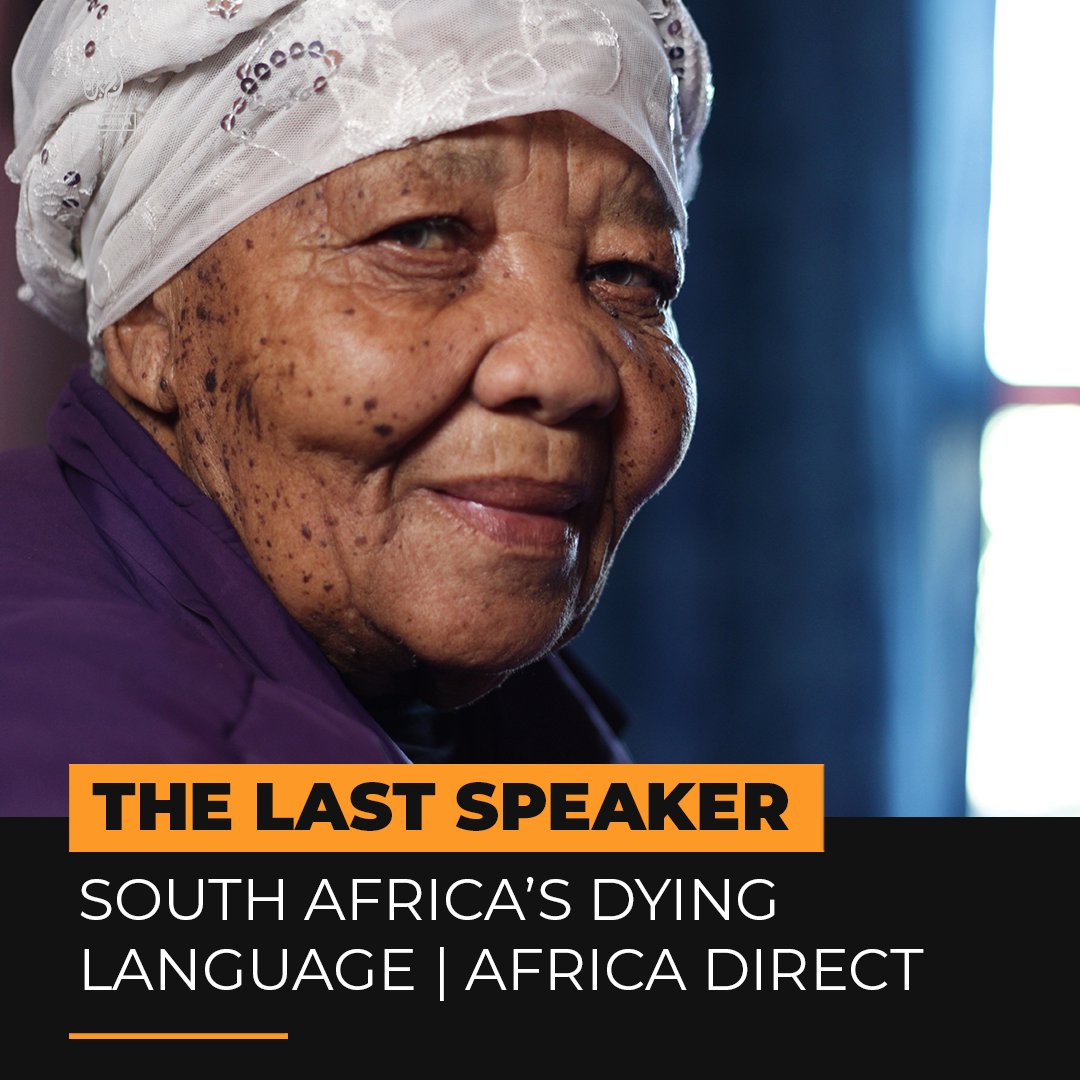
Many African languages and dialects have been lost and history forgotten due to colonialism and neocolonialism, where must Africans are now speaking colonial languages and abandoning their own language. Katrina 91 years is the last remaining fluent speaker of Nuu, the ancient language of the San, or Bushman, people...

147,790 次观看 • 1 年前 •via X (Twitter)

9 条评论

Vicalias Null 的头像
Vicalias Null1 年前

The loss of the Nuu language is a cultural tragedy @Joe__Bassey. Katrina's efforts with her granddaughter to preserve this ancient tongue are not just about saving words, but safeguarding the heritage, wisdom, and identity of the San people. Their work is a poignant reminder of what's at stake when a language dies.

La Sombra Negra .... 的头像
La Sombra Negra ....1 年前

This is beautiful. I hope they have many recordings of grandma sharing story and songs with everyone. Protect the language and history.

Chinonye DeviDasi 的头像
Chinonye DeviDasi1 年前

I want to learn 🙏🏾

Obi Wan 👽 的头像
Obi Wan 👽1 年前

All this ai we have and we can't use it to capture this language and preserve it though technology?

Robert Yawe 的头像
Robert Yawe1 年前

But those foreign languages aren't homogenous they are an amalgamation of many others which died away, so stop lamenting and move on.

#FeesMustFall 的头像
#FeesMustFall1 年前

Languages die as cultures change. Even English was not a language until traders started interacting and ended up borrowing words from each other’s language and the ancient ones like Gothic, Yola, Gaelic, etc went extinct over time.

Nan 的头像
Nan1 年前

Grandma Katrina is absolutely beautiful, and what a legacy. Claudia, keep going Sis. ❤️❤️

Sam Dixon 的头像
Sam Dixon1 年前

There are over 3000 languages in Africa, which was okay pre-industrialization. Having a common 2nd language enables African's to engage not just with each other but globally. I do agree that as many as possible must be protected though.

031 的头像
0311 年前

@CyrilRamaphosa let’s try to keep this culture alive.
相关视频

LINGUISTIC IMPERIALISM Linguistic imperialism is the process whereby dominant powers impose their language on those they colonise, suppressing indigenous languages and thus marginalising their speakers and sustaining power inequalities. Indigenous languages in colonial Africa were frowned upon, while colonial languages were made mandatory. In Anglophone Africa, policies were all written in English; media and broadcasting used English; and there were many systemic policies forbidding the use of indigenous languages. For example, students in many Kenyan schools were punished for using any other languages, with most of these punishments involving shaming tactics such as the wearing of bones from dead animals as chains around the neck. This also happened to the indigenous people who were forced to speak Arabic and change their names in places like Sudan. This warped the consciousness of individuals, leading to a loss of appreciation for indigenous languages and cultures - and promoted the adoption of the coloniser’s worldview, values, systems and structures. UNESCO's 1953 report, The Use of Vernacular Languages in Education, indicated that around 40% of the global population received education in an unfamiliar language. Sub-Saharan Africa, which is home to nearly 30% of the world’s languages, still uses the colonisers’ languages as national languages. Consequently, the education and values instilled remain those of the colonisers. Many languages are at risk of extinction, with only a few speakers left. The loss of these languages is equivalent to the loss of African heritage and culture.

African Stream

20,321 次观看 • 1 年前

WHY WERE AFRICAN LANGUAGES MADE TO BE CONSIDERED INFERIOR? Why were Africans made to feel ashamed of their own languages? Kenyan literary giant Ngũgĩ wa Thiong'o traces that question back to colonialism and to an experience that changed his own life. In 1977, Ngũgĩ was imprisoned by the Kenyan government for helping create the play “Ngaahika Ndeenda”– translated in English as "I Will Marry When I Want" – performed in Kikuyu, a local indigenous language. He had previously written plays in English critical of the post-colonial condition of his country, yet had never ended up in a maximum security prison. Ngũgĩ recounts how baffling it was for a post-colonial African government to imprison an African writer for helping produce a play in an African language. While in prison, he examined language as a tool of colonial power and concluded, “The colonizer always, in all situations, suppresses the language or the languages of the colonized and elevates their own language." Decades later, we can still see that colonial hierarchy in everyday life. If a parent wants to send a child to a “good school", that often means an English or French-speaking school. Speaking a Western language is often treated as a marker of education, class or sophistication, while our own languages and accents are too often dismissed as “local” or “backward”. Thus it’s important to remember that decolonization is not only about land, borders or political power, it’s also about whose language and whose knowledge we are taught to value.

Sovereign Media

14,118 次观看 • 1 个月前

DON’T TELL US HOW TO SPEAK! Just as any two living creatures have a common ancestor in the tree of life, so any two languages have a common tongue from which they ultimately derived. Scientists currently believe that the world’s 6,000 modern languages, from English to Mandarin, can all be traced back to a ‘mother tongue’ - an ancestral language spoken in Africa 50,000 to 70,000 years ago. Differently put: all languages are descended from primordial African! This makes it all the more galling that Africans who visit, work or live outside of the continent are often taunted and laughed at because sometimes they don’t pronounce English words ‘properly’ - even though these words are ‘deviations’ (however far removed) from African-language words. The continent’s turbulent history of colonisation is the reason for the use of European languages in African schools, commerce and governments today. However, something that is overlooked is that most Africans are accustomed to speaking multiple languages, perhaps three or more, throughout the course of a single day. That’s one reason Africans pronounce certain words with an accent - they can speak other languages fluently enough for those languages to interfere with their English. In this clip, Anna Mwalagho (@mamaafricaanna) - an African storyteller living in the United States - gives a passionate defence of the uniqueness of African accents, arguing that this diversity is something to celebrate and be proud of. Hit like if you agree. Video Credit: @mamaafricaanna (IG)

African Stream

64,170 次观看 • 1 年前