Video yükleniyor...

Video Yüklenemedi

Ana Sayfaya Dön

Many are skeptical we’ll ever 'solve AI alignment.' If so — are we f**d? In our interview Buck Shlegeris argues that there are practical, non-galaxy-brained ways to reduce AI risk without knowing how to align AIs. This is 'AI control': finding ways to use advanced AI without knowing whether...

53,742 görüntüleme • 1 yıl önce •via X (Twitter)

6 Yorum

Akash profil fotoğrafı
Akash1 yıl önce

This framing seems to imply that control reduces risk even if we can’t “solve” alignment. I think of control more as: — Suppose you don’t know how to align Very Very Powerful systems (what some might call ASI) or Moderately Powerful Systems (what some might call AGI) — Well, maybe you can control misaligned AGI — And then if you do that, maybe you can use the misaligned (but controlled) AGI to Do Something (with the most common example being something like “solve alignment for AGI and eventually ASI”). This framing paints control less as an alternative to “solving alignment” and more as an intermediate step. (As opposed to control reducing risk directly by EG making it unnecessary for anyone to “solve” ASI alignment). Why this matters— A successful outcome requires not only the control of AGI but also some plan for what that AGI will be used for. This is obvious when spelled out, but I think actually a rather challenging part of the puzzle & one that is worth emphasizing. (CC also concerns that in a world with intense race dynamics, Company A might end up just using their controlled AGIs to do capabilities research to outcompete Company B, in which case control ends up feeding into superalignment//RSI to DSA plans). Would be curious if you endorse this framing or if you think it’s off somehow.

NICE profil fotoğrafı
NICE1 yıl önce

Stay competitive by balancing cutting-edge AI with automation tools. Forrester shows how.

Rob Wiblin profil fotoğrafı
Rob Wiblin1 yıl önce

YouTube: Spotify: Apple: Transcript + links + summary: Or any app on the 80,000 Hours Podcast.

Melon Usk — e/utopian profil fotoğrafı
Melon Usk — e/utopian1 yıl önce

@bshlgrs The AI safety community just solved it! Hurray! 🥳 It's mathematically proven safe GPU clouds controlled by international scientists, running mathematically proven safe AIs (place AI, tool AI). The link to the paper draft is pinned in my profile

Adam Ford profil fotoğrafı
Adam Ford1 yıl önce

@bshlgrs It depends on what AI is aligning to. IMO it's likely Superintelligence can't be controlled, however it may align to some kind of context sensitive moral realism it discovers, which accommodates us not being f**d. Perhaps the best of our values approximately align to CSMR.

kapitaali.com profil fotoğrafı
kapitaali.com1 yıl önce

@bshlgrs the first premise is already false

Benzer Videolar

Ryan Greenblatt is lead author of "Alignment faking in LLMs" and one of AI's most productive researchers. He puts a 25% probability on automating AI research by 2029. We discuss: • Concrete evidence for and against AGI coming soon • The 4 easiest ways for AI to take over • What evidence we have on how fast / long the intelligence explosion will go • Would misaligned AGI go rogue early or bide its time • Whether 'pause at human level' is naive or smart • Lots more. My head was often spinning during this interview, in a good way. Find it on the 80,000 Hours Podcast, links below. Enjoy! 1:29 How close are we to automating AI R&D? 5:15 Really, though: how capable are today's models? 13:01 Why AI companies get automated first 18:10 Most likely ways for AGI to take over 30:04 Would AGI go rogue early or bide its time? 34:53 "Pause at human level" 46:43 AI control vs AI alignment 52:38 Do we have to hope to catch AIs red-handed? 56:57 How would a slow AGI takeoff look? 1:05:04 Why might an intelligence explosion not happen for 8+ years? 1:17:05 Key challenges in forecasting AI progress 1:25:07 The bear case on AGI 1:30:59 The change to "compute at inference" 1:36:38 How much has pretraining petered out? 1:49:08 Could we get an intelligence explosion within a year? 1:53:08 Reasons AIs might struggle to replace humans 2:00:10 Things could go insanely fast when we automate AI R&D. Or not. 2:14:52 How fast would the intelligence explosion slow down? 2:27:53 Bottom line for mortals 2:34:00 Six orders of magnitude of progress... what does that even look like? 2:44:10 Neglected and important technical work people should be doing 2:48:16 What's the most promising work in governance? 2:51:37 Ryan's current research priorities

Rob Wiblin

34,618 görüntüleme • 1 yıl önce

AI models currently have a 50% chance of doing something that takes a human expert one hour. This doubles every 7 months. In 2 years? They could automate full workdays. In 4 years? A full month. I discuss the most important graph in AI today with Beth Barnes, the CEO of METR, which uncovered this rule of AI progress. Her bottom line: "It really doesn't seem like 2 years would be surprising for recursively self-improving AI." Beth also explains: where company safety testing fails, why there are no true closed-weight models, AI undermines leading powers, why she's come around on open weighting, and why models might be about to start playing dumb much more often. Enjoy! Available on the 80,000 Hours Podcast in all apps. Links below. 1:51 Can we see AI scheming in the chain of thought? 12:50 Alignment faking 17:33 We have to test models before they're even used inside AI companies 31:56 Each 7 months models can do tasks twice as long 51:31 METR's research finds AIs are solid at AI research already 58:18 AI may turn out to be strong at novel and creative research 1:07:55 Recursively self-improving AI might even be here in two years 1:14:29 Could evaluations backfire? 1:39:55 Do we need external auditors doing AI safety tests? 1:54:09 Why not work at AI companies 2:08:40 The new more dire situation has forced changes to METR's strategy 2:21:49 Overrated: Interpretability research 2:32:55 Overrated: Major AI companies' contributions to safety research 2:39:15 Could we ban using AI to enhance AI, or is that just naive? 2:45:31 Open-weighting models is often good 2:50:22 What we can learn about AGI from the nuclear arms race 3:10:43 AI is more like bioweapons because it undermines the leading power 3:42:09 What research METR plans to do next

Rob Wiblin

93,669 görüntüleme • 1 yıl önce

Yoshua Bengio thinks he knows how to make provably safe superintelligent agents. Bengio built the foundations of modern AI and is the most cited living scientist. He believes his alternative training setup would: 1. Guarantee honesty 2. Prevent unintended goals 3. Produce capable agents 4. Port over most data and techniques from current LLMs 5. Not be inherently more expensive, and perhaps be more intelligent Bengio claims the honesty and lack of unintended goals can be proven mathematically, at least given particular assumptions. And his new organization, LawZero, is aiming to build a scrappy prototype as soon as possible. The architecture is called 'Scientist AI' and it's based on training a model to explain empirical observations, including what people say, rather than training AIs that mimic human behaviour or seek our approval. (Bengio's frank assessment is that "reinforcement learning is evil" and that allowing AIs to independently train their successors is "the most crazy, dangerous bet that unfortunately we are on track to do.") But skeptics question whether Scientist AI really does solve the fundamental problem of 'eliciting latent knowledge' from AI models. And with the commercial race for superintelligence so intense, it's not clear whether the proposal will be able to compete or have time to bear fruit, even if it's sound in theory. On The 80,000 Hours Podcast, links below – enjoy! • Making AI honest and safe (00:00:00) • Scientist AI in plain English (00:02:27) • How Scientist AI differs from LLMs (00:06:32) • How the training data works (00:14:02) • Can this become an agent? (00:21:02) • Why Yoshua is now more optimistic (00:32:11) • Why companies can’t stop racing (00:36:35) • A working prototype won't take long (00:49:15) • Scientist models might be more capable (00:53:34) • “Reinforcement learning is evil” (01:01:27) • Scientist AI from guardrail to agent (01:08:37) • Can safe AI still be competent? (01:12:38) • How much will this cost? (01:19:29) • Can it generalise beyond maths and science? (01:23:26) • A multi-national push for superintelligence (01:39:19) • Want to work with or fund Yoshua? (01:51:16) • Why smart people ignore AI risk (01:54:45) • Don’t let AI build the next AI (02:01:33) • Why politicians miss the real risks (02:12:28) • Why Yoshua changed his mind about AI risk (02:21:27)

Rob Wiblin

65,088 görüntüleme • 2 ay önce

tylercowen is bullish on AI education — here's why. 00:00 -- Preview 00:24 -- President Carlos Carvalho's AI-generated intro 03:21 -- Cowen reacts to UATX's campus 04:38 -- The AI revolution is here. Who will lose the most? 06:05 -- AI lawyers 07:17 -- Don't underestimate this 10:41 -- Changes to the "upper upper middle class" 12:38 -- How to be successful 13:43 -- The rise of managerial empires 14:02 -- When will we have the first billion dollar company with one employee? 16:05 -- 10-20 year forecast 16:19 -- Why education is so behind 17:01 -- Should you be bullish on UATX? 18:36 -- Should you still read Homer? 21:50 -- Write to think 25:01 -- Meet more people 25:42 -- How to get hired 26:54 -- Is AI your best mentor? 38:17 -- How to curb cheating 39:02 -- The new life of the mind 42:34 -- Q&A: Will there be more status associated with real education or AI education? 45:50 -- Q&A: Why do tech-savvy students need to practice using AI? 47:56 -- Q&A: Do LLMs atrophy your mind? 49:29 -- Q&A: How do you avoid AI-dependency? 51:05 -- Q&A: Isn't this vision lonely and isolating? 53:06 -- Q&A: Do students need teachers? 55:36 -- Q&A: What are the four most important courses for undergrads? 57:49 -- Q&A: Which AI company will win the AI race in the next five years and why? 59:22 -- Q&A: Can AI teach religion? 01:01:32 -- Q&A: Will AI narrow or widen our world? 01:04:37 -- Q&A: What makes us human? 01:05:42 -- Q&A: What is art? 01:08:33 -- Q&A: It's easy to catch cheaters

University of Austin (UATX)

27,770 görüntüleme • 5 ay önce

Every AI lab is working to make their AI helpful, harmless and honest. Max Harms (Max Harms) thinks this is a complete wrong turn, and 'aligning' AI to human values is actively dangerous. In his view a safe AGI must have absolutely no opinion about how the world ought to be, be willingly modifiable, and be entirely indifferent to being shut down. The opposite of all commercial models today. The key appeal is that so-called 'corrigibility' could be an attractor state – get close enough and the AI actively helps you make it more corrigible over time. That forgiveness would at least give us a shot. It's a strategy that feels natural within the 'MIRI worldview', recently laid out by his colleagues Eliezer Yudkowsky ⏹️ and Nate Soares ⏹️ in 'If Anyone Builds It Everyone Dies'. But it risks causing a different AI catastrophe, because the resulting AI model would necessarily be willing to assist any human operator with a power grab, or indeed any crime at all. I interviewed Max on the 80,000 Hours Podcast to debate the MIRI worldview, and what we should do to figure out if corrigibility ought to be our one and only focus. Links below – enjoy! 00:01:56 If anyone builds it, will everyone die? The MIRI perspective on AGI risk 00:24:28 Evolution failed to ‘align’ us, just as we'll fail to align AI 00:42:56 We're training AIs to want to stay alive and value power for its own sake 00:52:24 Objections: Is the 'squiggle/paperclip problem' really real? 01:05:02 Can we get empirical evidence re: 'alignment by default'? 01:10:17 Why do few AI researchers share Max's perspective? 01:18:34 We're training AI to pursue goals relentlessly — and superintelligence will too 01:24:51 The case for a radical slowdown 01:27:53 Max's best hope: corrigibility as stepping stone to alignment 01:32:34 Corrigibility is both uniquely valuable, and practical, to train 01:45:06 What training could ever make models corrigible enough? 01:51:38 Corrigibility is also terribly risky due to misuse risk 01:58:57 A single researcher could make a corrigibility benchmark. Nobody has. 02:12:20 Red Heart & why Max writes hard science fiction 02:34:08 Should you homeschool? Depends how weird your kids are.

Rob Wiblin

296,251 görüntüleme • 4 ay önce

🚨EXCLUSIVE INTERVIEW – OPENAI’S 1ST INVESTOR: AI WILL SAVE US—OR DESTROY US Vinod Khosla was the first major investor in OpenAI. Now, he says AI will replace all human jobs, upend geopolitics, and redefine the meaning of life. Vinod breaks down the race for AI dominance—and the two futures ahead: one utopian, one dystopian. He warns China could weaponize “persuasive AI” to spread ideology, buy influence, and take over the world—not through kinetic war, but a war of the minds. He argues most of today’s jobs are “human servitude”—and that AI could finally free humanity from the burden of survival. And he believes robotics and AI will merge with our species, triggering the biggest transformation in human purpose since the dawn of civilization. This is a conversation you don’t want to miss. 02:42 – “People who don’t adopt AI will be obsoleted by those who do.” 04:29 – Productivity will explode. So will income inequality. 05:39 – Elections could soon be decided by AI’s impact on jobs. 09:21 – What if AI becomes a superintelligence with its own goals? 12:35 – “The biggest risk is AI in China’s hands.” 15:26 – Could giving AI full control make the world better? 20:16 – “The most fearsome threat is persuasive AI.” 22:12 – AI agents will protect us from other AIs. 23:33 – AI could replace 80% of jobs within 2–3 years of capability. 28:14 – We will no longer be driven by survival—but by passion. 29:58 – “Most jobs today are servitude.” 34:53 – Humans will no longer be the most intelligent species on Earth. 38:15 – Will AI merge with humans? 42:24 – “Survival will no longer drive us. That’s a first in history.” 44:39 – Could AI destroy us by simply pursuing its goals too well? 47:33 – Can AI be trained to care for us? 52:25 – Humanity never worked as one. But AI might force that reckoning. 56:52 – Should AI be allowed to make military decisions? 59:15 – “We need AI deterrence. Like nuclear deterrence.” 01:03:15 – Will humans fall in love with AI? It’s already happening. 01:07:21 – By 2040: 1 billion robots will do more labor than all humans. 01:13:01 – “AI is already better than most humans at most jobs.” 01:14:29 – “AI will free humanity to be what it wants to be.”

Mario Nawfal

2,901,330 görüntüleme • 1 yıl önce

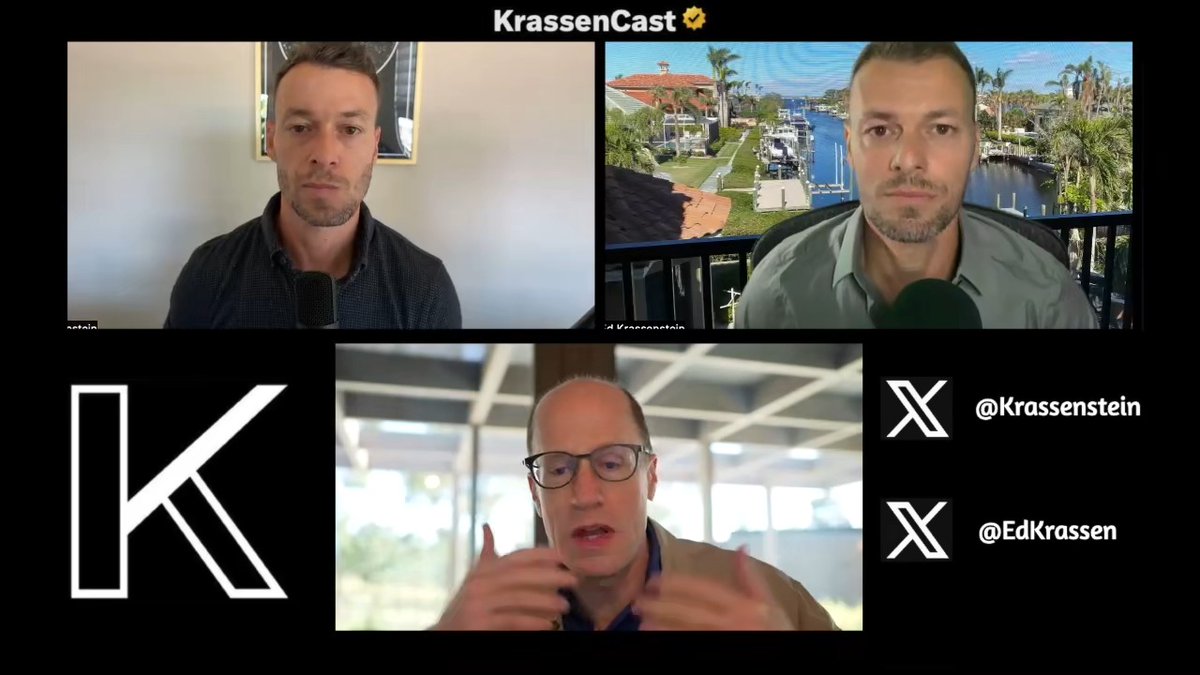
We interviewed Nick Bostrom, The author of NYT’s Bestseller “Superintelligence,” and one of the most influential experts on AI Risks. Timestamps: 2:11 - Will AI be used for Extreme Bad? What are the odds? 4:44 - What are the biggest concerns with AI? 6:16 - People are greatly underestimate what Super-intelligence will be. 7:19 - Can we trust anyone with creating a Super-Intelligent AI? 8:49 - Are the big AI companies taking AI safety serious enough? 10:39 - Are multiple AI systems undergoing the transition to super-intelligence at the same time a good or bad thing? 13:10 - How do we prevent AI from becoming biased like we saw with Google Gemini? 16:17 - Is there a danger of AI being too truthful or too opinionated? 18:10 - When do AI’s gain a moral status? How do we know? 19:40 - What is Truth for an AI? 22:37 - What has surprised Bostrom the most regarding AI in the past 10 years? 26:13 - Is AI moving faster or slower than Bostrom imagined 10 years ago? 26:38 - Do we see another AI Winter or AGI first? 28:21 - Is energy a limiting factor in AI? 30:00 - What is Deep Utopia? 33:18 - When will we reach Super-intelligence and Deep Utopia? 36:00 - Can a Deep Utopia be a problem for humanity? 39:29 - Could a Utopian society lead to the creation of a simulated reality as a way to escape? 42:28 - If we are in a simulation, is our consciousness simulated? 47:48 - Elon Musk or Sam Altman? 48:17 - Artificial Super-Intelligence before or after 2035? 49:40 - How can you get Nick Bostrom’s book “Deep Utopia?”

KrassenCast

380,475 görüntüleme • 2 yıl önce