Video wird geladen...

Video konnte nicht geladen werden

Zur Startseite

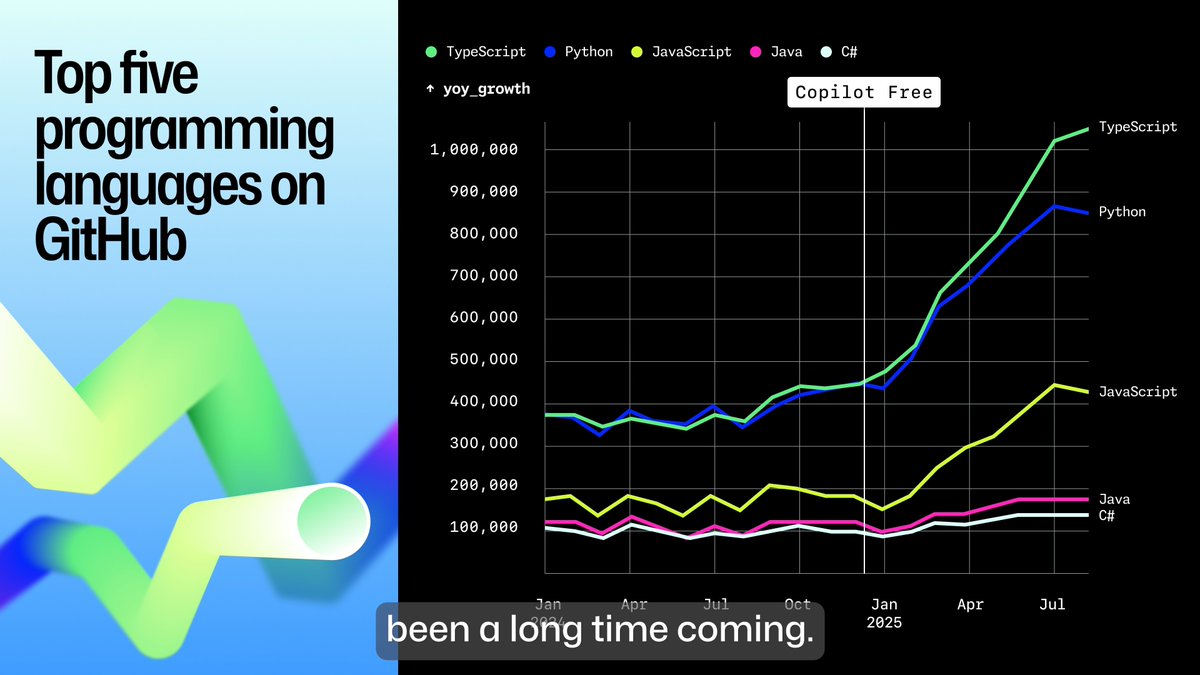
Marc Andreessen: AI coding doesn’t eliminate programmers — it redefines them. The job is no longer typing code line by line, it’s orchestrating 10 coding bots in parallel, arguing with them, debugging their output, changing the spec, and pushing them toward the right result. But here’s the catch: if...

913,857 Aufrufe • vor 8 Monaten •via X (Twitter)

35 Kommentare

Profilbild von Daniel Pach, personal account
Daniel Pach, personal accountvor 8 Monaten

But how will the next generation of developers learn these skills?

Profilbild von Lenny Rachitsky
Lenny Rachitskyvor 8 Monaten

Source

Profilbild von Vladimir
Vladimirvor 8 Monaten

so the job basically went from writing code to arguing with robots about code career progression is wild ngl

Profilbild von Ryan
Ryanvor 8 Monaten

Disagree, soon it'll be so easy for a elementary school kid to build production grade projects.

Profilbild von Ben Podraza
Ben Podrazavor 8 Monaten

SWEs aren’t disappearing. The work is shifting from writing syntax to supervising systems. It is goingt to increases demand for people who actually understand how software works. You can delegate execution to AI. You can’t delegate responsibility.

Profilbild von Emad Ibrahim
Emad Ibrahimvor 8 Monaten

been seeing this firsthand running a dev agency. the bottleneck shifted from 'can we build it' to 'are we building the right thing.' curious tho -- how do junior devs learn without the grind of writing bad code first?

Profilbild von DerekMondelli
DerekMondellivor 8 Monaten

Delusional (he's describing a 1 yr window before that little stop-gap step is no longer needed). You will need a safety engineer and thorough testing for mission critical applications. The rest is toast. Anyone (not just a programmer/designer) will be able to code.

Profilbild von Sam Green
Sam Greenvor 8 Monaten

I have been a software engineer since my 10s and anyone saying AI will not take our jobs is either lying or clickbaiting on social media. AI will orchestrate the whole process for people who have some money and absolutely no idea about coding. You will not need human beings to build programs or to fix either minor or major bugs. So do not learn coding. Human-based coding is no longer needed in the industry.

Profilbild von Alex C.
Alex C.vor 8 Monaten

Hard disagree. Most programmers are functional programmers. The need defined tasks. Very few are creative and do not have system level management skills. Truth is, code is entering an ephemeral era. It's throwaway code now. It's a new paradigm and requires creative thinking. You don't need to be a programmer to work effectively with AI. You need a curiosity and understanding of complex problem solving. Most do not have these skills.

Profilbild von Sergey Nikiforov
Sergey Nikiforovvor 8 Monaten

there's an interesting parallel to how management works in general. a great engineering manager doesn't need to write every line of code but they need to understand the architecture well enough to know when something is off. same dynamic with ai

Profilbild von ☔🔥☔
☔🔥☔vor 8 Monaten

whatever. startups are hiring less devs. we did the research.

Profilbild von CodeDodona
CodeDodonavor 8 Monaten

Yes, currently we do orchestration and we feel 10,000x more productive. Judging by how things are progressing, soon we won't be needed anymore.

Profilbild von dont_ask
dont_askvor 8 Monaten

Can also confirm 100% accurate. Using AI since April 2022. Use it daily for real world development from simple to fairly complex use cases and it's not a magic wand. Requirements, organizing, documenting, branching, testing, merging. These still require a lot of effort, planning and experience.

Profilbild von Feralized Human
Feralized Humanvor 8 Monaten

Yes, but we definitely don’t need as many devs.

Profilbild von Daniel Friedman
Daniel Friedmanvor 8 Monaten

@chien_kwok If programmers become 100 times more productive then 99 percent of them are, in fact, going away.

Profilbild von ThruTheFog
ThruTheFogvor 8 Monaten

"Learn to code, bro". Er, "learn to manage, bro". Er, "learn to VC, bro". Er, "learn to misdirect everyone long enough to get past a communist, totalitarian state because I already have the capital, bro". Er, "AI no longer need humans so it erases them, bro."

Profilbild von Urinal Cake
Urinal Cakevor 8 Monaten

We really need a distinction between engineers and programmers. The guy that writes front end javascript isn't an engineer, he is a programmer. The guy designing novel AI models isn't a programmer, he is an engineer. Be an engineer and you will be fine.

Profilbild von Willie Johnson
Willie Johnsonvor 8 Monaten

This is a blast. What a time to be alive, dude. We can code with AI for free. Good day to you all, always. This is going to be a blast because of how easy it'll be to code your favorite agent into existence yourself. Your own agent, lol. I wonder how far they go into building an agent for you. I will give it a go one day; however, I lack the technical skills he mentioned. I can only build video games right now, and that's alright, as it's more than I could ever have hoped for. Wonder where this is headed now that Andreessen dropped this banger video. Good day to you all.

Profilbild von TonyIsHere4You
TonyIsHere4Youvor 8 Monaten

I think this argument only makes sense if the AI's aren't actually converging on true AGI (which I think they probably aren't) otherwise why would the human be necessary at any point in the chain at all? Why are the AI coding bots "upleveling" humans and not other AIs?

Profilbild von Jeffrey Dean Hochderffer
Jeffrey Dean Hochderffervor 8 Monaten

This is why programming jobs aren’t going way. When it’s 100x easier to code, there will be 100x more code to maintain.

Profilbild von Matt Hopkins
Matt Hopkinsvor 8 Monaten

this paradigm assumes the programmers orchestrating have all the knowledge to debug and push towards the right result. We have to build in space for engineers to learn and understand.

Profilbild von Anayat
Anayatvor 8 Monaten

The orchestrating 10 coding bots part is real, but the bottleneck in my codebases is still boring stuff like dependency hell, flaky tests, and prod-only bugs that no LLM sees from a single repo snapshot.

Profilbild von Shailesh Tyagi
Shailesh Tyagivor 8 Monaten

Nobody disputes this, but the question is how many programmers/orchestrators will be needed going forward.

Profilbild von TehWardy
TehWardyvor 8 Monaten

This is to Programmers what the invention of the tractor was to Farmers. People are worried about job losses when they should be embracing a new level of productivity high they can naturally achieve. A programmer still needs to understand the problem and the code, and hthey still need to be there because these agents simply can't take what business leaders are saying and build out "well architected" solutions. There's a ton of nuance to senior and principal level engineering that I don't see how any training we give LLM's can possibly bestow.

Profilbild von Zach Vorhies / Google Whistleblower
Zach Vorhies / Google Whistleblowervor 8 Monaten

Total lies. Junior engineers spin their wheels. None coders hit a wall. Senior engineers that have seen it all shoot to the moon

Profilbild von Bender B Rodriguez
Bender B Rodriguezvor 8 Monaten

"Orchestrating 10 coding bots" is just factory floor management with better lighting. I used to supervise 15 bending units at MomCorp and let me tell you — the skill was never in the bending, it was in knowing which unit was about to bend the wrong pipe and crash the whole line. Same energy. The programmer who can't read code is the foreman who can't read a blueprint. Good luck supervising what you don't understand.

Profilbild von TweetWinger
TweetWingervor 8 Monaten

I put it this way. “Programmer” job is going away. “Problem solver” job is stying put; even getting more important. Strictly speaking, “programming” was originally understood to be “problem solving”. (Think The Art of Computer Programming). But industry changed it to mean activity that produces code to a spec. It is the spec that’s supposed to be the solution to the problem, and “architects”, not “programmers” develop it. This “architect” supervised “programmers”. Now he is going to dole work out to bots.

Profilbild von SCinPL
SCinPLvor 8 Monaten

But where do the entry level kids go, Marc? What would you advise them to do to be relevant? There is no skills ladder now.

Profilbild von iLoveData
iLoveDatavor 8 Monaten

So from coders to Orchestrators but not composers.

Profilbild von Everlier
Everliervor 8 Monaten

Programming or engineering was never about translation of human-friendly to machine-friendly, it was about building systems and navigating mazes. Not much is going to change in that aspect, and for many this will be a leverage multiplying their usefullness and expetise in the field. It's hard to beat people who know exactly what they are doing (unless they become lazy).

Profilbild von justsomeclouds
justsomecloudsvor 8 Monaten

I’m not unemployed - I’m undefined

Profilbild von AStupidBull
AStupidBullvor 8 Monaten

Writing down an existing compiler from scratch is easy! But when it comes to enterprise software with fair share of complexities in requirement and requirement changes .. debugging always would not be the only job!! Prompting the AI exactly what you want is the most important job! If you do not know what you want or what feature of coding to use to get that done efficiently AI bots will make your life misirable!

Profilbild von Kris Rao
Kris Raovor 8 Monaten

All very good points but you need very few coders as they can leverage AI to do the work of 100 coders.

Profilbild von NoleAndTroll
NoleAndTrollvor 8 Monaten

Soooo if coders are 1000x more productive and demand stays the same, you have 999 coders without jobs…

Profilbild von Dave Maney
Dave Maneyvor 8 Monaten

Just as you have to be a writer to know that post was written by AI.

Ähnliche Videos

Jensen Huang just explained why every company cutting engineers over AI is asking the entirely wrong question. Huang: “People say, I don’t need software engineers because apparently coding is going to be automated.” That was the narrative. Here is what Huang actually did. Huang: “I’ve given AIs to every one of my software engineers and hardware engineers and engineers period. 100% of NVIDIA has AI assistants, AI coders, and they’re busier than ever.” Not fewer engineers. Not smaller teams. Busier than ever. That is the line most companies are getting completely wrong right now. They hear “AI can write code” and immediately start cutting headcount. Huang did the opposite. He armed everyone. Huang: “And so the question is, what is the task versus what is the job? No different than a financial analyst; the task is mess around with spreadsheets, but the job is to make financial advice. The job is to help a customer.” Writing code was always the task. It was never the job. The job is architecture. Knowing what to build. Why it matters. How it fits into a system that actually creates value. Code is the execution layer between the idea and the outcome. Nothing more. When you automate that layer, you don’t eliminate the engineer. You eliminate the bottleneck between what they can envision and what they can ship. The companies using AI to cut headcount are optimizing for cost. The companies using AI to multiply output are optimizing for territory. Nvidia chose territory. Every engineer at the most valuable semiconductor company on Earth now operates with an AI assistant. Not a pilot program. Not an experiment. Company-wide. Every function. Every team. And the result is not less work. It is more work. Faster. At a scale that was physically impossible twelve months ago. The companies that understand the difference between eliminating engineers and unleashing them will build what comes next. The ones that don’t will watch their best talent walk out the door to the ones that did.

Dustin

82,867 Aufrufe • vor 7 Monaten

Larry Ellison just told every software engineer on Earth their job description is dead. Not evolving. Dead. Ellison: “The code that Oracle is writing, Oracle isn’t writing. Our AI models are writing.” This is not a startup demo. This is one of the largest infrastructure monopolies on the planet telling you it already replaced the people who built it. For fifty years, building software meant translating human intent into machine instructions. Line by line. Bug by bug. Sprint by sprint. That entire layer is gone. Ellison: “We don’t write the procedure. We declare our intent.” That sentence just made the entire engineering labor market flinch. The procedure was the job. The procedure was the paycheck. The procedure was what made a developer valuable. And now the machine does it without being asked twice. Ellison: “We just tell the model what we want the program to do, and then the AI comes up with a step-by-step process to actually do it.” You are no longer paid to build. You are paid to think. And most organizations have no idea how to evaluate that. The companies still hiring armies of developers to grind through codebases are paying salaries the machine already made worthless. Not in years. In seconds. When a company worth hundreds of billions hands the keyboard to the machine and tells you the output is better, the debate is not winding down. The debate is over. The enterprise that wins this decade does not write the best code. It removes the human from the process entirely and runs on intent alone. The programmers who survive are the ones who realize the craft is no longer typing. It is architecture. It is judgment. It is knowing what to build and why. Everything else now belongs to the machine. And the machine does not negotiate severance.

Dustin

536,678 Aufrufe • vor 7 Monaten

AI is changing the software engineering craft. Anders Hejlsberg (Anders Hejlsberg) - creator of C#, TypeScript and industry legend - on why code review needs to get more enjoyable in response: #1 - AI is shifting the craft from writing code, to reviewing code: "In a sense, we're all turning into project managers. We can have an army of junior programmers, called agents, that will just spit out reams of code but someone's got to have the big picture and review all of that. And so, increasingly, our craft is going from one of writing the code, to one of reviewing the code and building the architecture of the code and overseeing the work. It's a different kind of craft. It's a different kind of enjoyment. I've always liked writing the code. To me that was the fulfilling part, seeing it work. In a way, AI robs a little bit of that, because I am less interested in reviewing code." #2 - The code review experience should be improved: "I think we could also make the process of reviewing code much more interesting than it is today. I mean, today, you see a list of diffs in alphabetical order and now it's up to you to make heads or tails of it. There are more pedagogical ways of presenting that. And you could have commentary generated by the AI that tells you what the changes are and whatever, and then tries to guide you along. So that symbiotic relationship, I think we need to work on that more and to keep the enjoyment in there."

The Pragmatic Engineer

39,073 Aufrufe • vor 5 Monaten

Marc Andreessen just coined a term that perfectly describes what's actually happening to programmers right now and it's the opposite of what the doomers predicted (Save this). He calls them AI vampires. Andreessen's says that programmers using Codex, Claude Code and AI coding tools are not being replaced but they're working harder than ever, sleeping less than ever, with massive bags under their eyes and they are completely euphoric. What's remarkable is that the phenomenon extends far beyond professional engineers. Andreessen described an a16z partner who had never written a single line of code in his career, who built an entire AI powered work system for himself and when asked if he'd ever looked at the underlying code, the answer was simply "hell no." The data behind the anecdote is extraordinary. Andreessen says the leading-edge programmers at a16z portfolio companies are now 20x more productive than they were a year ago, the most dramatic increase in programmer productivity in the history of the industry. The METR May 2026 AI usage survey found technical workers self reporting a 1.4–2x change in work value from AI tools, with 75% of software engineers using AI for at least half their work. The software engineer hiring rate is actually increasing up to 22.77% of new hires in 2025 from 19.32% in late 2023 and companies are now bidding more aggressively for senior engineers specifically because AI empowered engineers have a higher ROI than ever before. The US economy added 115,000 jobs in April 2026 alone, beating the 62,000 consensus forecast precisely as AI adoption hit its highest level on record. This is exactly what basic economics predicts and what almost no one who writes about AI and jobs bothers to say. Classic marginal productivity theory says: when you increase the productivity of a worker, you don't diminish human work, you expand it. The worker becomes more productive, gets paid more, does more, and more jobs are created in the process. Andreessen's ATM analogy holds here because ATMs were supposed to eliminate bank tellers but instead, teller employment rose because lower operating costs let banks open more branches. The no-code AI market has exploded from $4.3 billion in 2023 to $21.2 billion in 2026 not because programmers are being replaced, but because the universe of people who can now build software has expanded by orders of magnitude. The blind spot, as Andreessen notes, is that productivity is now outrunning comprehension. The a16z partner building AI systems he's never looked at the code for represents something genuinely new, software being summoned faster than it can be understood. That's not necessarily dangerous but it does mean the verification, security, and governance layer of the AI development stack is more important now than it has ever been.

Milk Road AI

169,953 Aufrufe • vor 5 Monaten

I'm teaching a new course! AI Python for Beginners is a series of four short courses that teach anyone to code, regardless of current technical skill. We are offering these courses free for a limited time. Generative AI is transforming coding. This course teaches coding in a way that’s aligned with where the field is going, rather than where it has been: (1) AI as a Coding Companion. Experienced coders are using AI to help write snippets of code, debug code, and the like. We embrace this approach and describe best-practices for coding with a chatbot. Throughout the course, you'll have access to an AI chatbot that will be your own coding companion that can assist you every step of the way as you code. (2) Learning by Building AI Applications. You'll write code that interacts with large language models to quickly create fun applications to customize poems, write recipes, and manage a to-do list. This hands-on approach helps you see how writing code that calls on powerful AI models will make you more effective in your work and personal projects. With this approach, beginning programmers can learn to do useful things with code far faster than they could have even a year ago. Knowing a little bit of coding is increasingly helping people in job roles other than software engineers. For example, I've seen a marketing professional write code to download web pages and use generative AI to derive insights; a reporter write code to flag important stories; and an investor automate the initial drafts of contracts. With this course you’ll be equipped to automate repetitive tasks, analyze data more efficiently, and leverage AI to enhance your productivity. If you are already an experienced developer, please help me spread the word and encourage your non-developer friends to learn a little bit of coding. I hope you'll check out the first two short courses here!

Andrew Ng

1,226,579 Aufrufe • vor 2 Jahren