正在加载视频...

视频加载失败

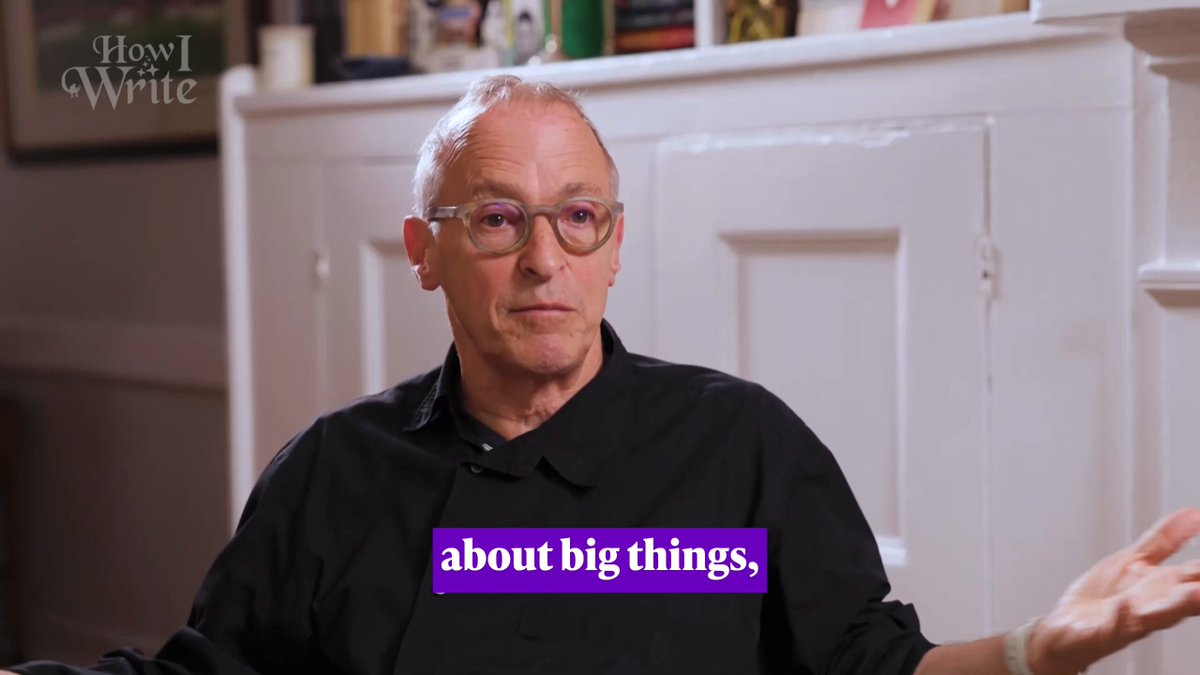
Mark Cuban: "If I was starting today, I would spend every waking minute learning about AI." At SXSW 2025, he meant every word of it: "Even if I'm sleeping, I'm listening to podcasts talking about AI, trying everything. My whole Instagram and TikTok things are now AI hacks, guys....

118,262 次观看 • 4 个月前 •via X (Twitter)

0 条评论

暂无评论

原始帖子的评论将显示在这里

相关视频

Jordan Peterson: "If you can't fix your room, you can't fix your life" "Why should you even bother improving yourself? The answer is something like: so you don't suffer anymore stupidly than you have to. And maybe so others don't have to either. It's not some casual self-help doctrine. If you don't organize yourself properly, you'll pay for it. In a big way. And so will the people around you." Peterson continues: "You can say, 'Well, I don't care about that.' But that's actually not true, you do care about it. Because if you're in pain, you will care about it. It's very rare that you can find someone in excruciating pain who would say, 'Well, it would be no better if I was out of this.' Pain brings the idea that it would be better if it didn't exist along with it. It's incontrovertible." On how to start: "Look around for something that bothers you and see if you can fix it. You can do this in a room. Sit in your bedroom and think: 'If I wanted to spend ten minutes making this room better, what would I have to do?' You have to ask yourself that, it's a genuine question. And things will pop out. There's a stack of papers bugging you. Some rubbish behind your computer monitor you haven't attended to for six months. Cables tangled up." He explains why this matters: "If you were coming to see me for psychotherapy, the easiest thing would be to get you to organize your room. You think, is that psychotherapy? It depends on how you conceive the limits of your being. Start where you can start. If something announces itself as in need of repair that you could repair, fix it. Fix a hundred things like that, your life will be a lot different." On fixing what you repeat every day: "People tend to think of their daily routines as trivial. You get up, brush your teeth, have breakfast. Those probably constitute 50% of your life. People think, they're mundane, I don't need to pay attention to them. No, that's exactly wrong. The things you do every day are the most important things you do. Hands down. Just do the arithmetic." On staying within your competence: "Sometimes you don't know how to fix something. Imagine you're walking down the street and there's a guy who's alcoholic and schizophrenic and has been homeless for ten years. That's a problem. It would be good if you could fix it, but you haven't got a clue. You walk around that and go find something you could fix. Just because something announces itself as in need of repair doesn't mean it's you, right then and there, who should repair it. You have to have some humility. You don't walk up to a helicopter that isn't working and just start tinkering away." Peterson shares the key insight: "As soon as you give your mind a genuine aim, it'll reconfigure the world in keeping with that aim. That's actually how you see to begin with. You've all seen the video where you watch basketballs being tossed back and forth, and while you're doing that, a gorilla walks into the middle of the video and you don't see it. If you thought about that experiment for five years, that would be about the right amount of time to spend thinking about it." He explains what it reveals: "What it shows you is that you see what you aim at. If you can get one thing through your head, that would be a good one. You see what you aim at. One inference you might draw from that is: be careful what you aim at. What you aim at determines the way the world manifests itself to you. So if the world is manifesting itself in a very negative way, one thing to ask is: are you aiming at the right thing?"

Jaynit

68,748 次观看 • 3 个月前

Jensen Huang on how to maintain conviction in the early days of a startup Nvidia almost failed several times in the company’s early history. Jensen is asked how he maintained conviction during the times when it looked like the company would fail, to which he responds: “You have to reason all the way back to whatever first principles you can hang on to — as far back as you can. Now once you do that, and you’ve come to the conclusion that all of the information that you have causes you to believe what you believe, you have to decide: Am I going to be somebody who does something about it? Or do I just become one of those people who says something like, ‘Oh yeah, I knew that” but you did nothing about it?” He continues: “I tend to be somebody who would reason about these things and believe it so deeply that I could see it in my head. And once I could see it in my head, as far as I’m concerned, it might as well be real. Everything else is just details.” Jensen offers founders the following advice: “Manifest your belief as deeply as you can, and then after that, you’re hard to dissuade.” But he makes an important caveat: “Every single day, I gut-check all of the assumptions that I made and used to reason about the strategy. I’m constantly reevaluating if the assumptions or principles that I used were flawed. I’m constantly learning through failure, and I’m quick to adapt. And by adapting, you get to stay in the game . . . Oftentimes people have a hard time pivoting because they feel that their ego is somehow tied to the decision they made or something they said . . . You have to be intellectually honest.” Source: The Cambridge Union (Nov 2025)

Startup Archive

17,985 次观看 • 1 个月前

Mark Cuban said what every CEO in America needs to hear. "There are only two types of companies in this world, those who are great at AI, and everybody else. If you don't know AI, you are going to fail. Period, end of story." Mark Cuban didn't stop there. "Whether you are an employee, you're going to have to understand how AI impacts your job and how you can use it to be better at your job. Same if you're a student. And if you're a CEO, you can't just say, okay, I'm going to get my tech guys to understand it and educate me on it. You have to understand it yourself because it will have significant impact on every single thing that you do. There's no avoiding it." This is coming from someone who built and sold the Dallas Mavericks, who made his first fortune selling a company to Yahoo for $5.7 billion in 1999, and who has spent the last two years going deeper on AI than almost any investor his age. He is describing the Innovator's AI Dilemma, entrepreneurs are right now building AI-native companies designed to displace every major incumbent. If a CEO tears down their company to rebuild it AI native, investors revolt but if they do nothing, AI-native startups eat their market and investors revolt anyway. Either path leads to shareholder lawsuits and there is no comfortable middle. The companies that survive will be the ones where leadership, not just the tech team, genuinely understands what the technology can do. The ones that don't will look back at this moment the same way Blockbuster looks at 2005.

StockMarket.News

163,447 次观看 • 3 个月前

“What did you think of Lando being booed at race because people and I've seen it online as well say he doesn't deserve the title because McLaren favored him over his teammate. Do you think that's total nonsense?” Jacques Villeneuve: “That's a little bit ridiculous. When there was some booing in some races, that was embarrassing. You should never boo a driver that's clean, doesn't do anything dirty, on track is respectful, and on top of it is super fast. What's wrong with people? That was embarrassing. And, had it been that Piastri was a second a lap faster than him and somehow Lando was winning because a lot of things were happening, his car breaking down every time, then you could start thinking, okay, that's really not cool. That's not fair. But that wasn't the case. And in the second half, Norris has been faster right at the beginning as well, last year as well. So there's this whole middle of the season where Piastri was driving a lot better than Norris and was getting the points. Norris had an engine blowing up, not Piastri. And so those fans, they don't look at that either. You have to look at the whole picture, at the whole season. And suddenly if your favorite is starting to go backwards, you just got to bite the bullet and accept it. Your favorite is just going backwards. That doesn't mean that the other one is treated better or the other one is undeserving just because the one you're a fan of is not winning right now. That’s really wrong. If you're a fan of the sport, then you have to be a fan of the sport and understand when your driver is maybe not cutting it at this point in time, even though he was before and he will in the future again. It's all a question of timing. But that's the price we have to pay now with social media and how big F1 has become. It's very passionate. The people are passionate and once, you know, fans come from fanatism, you stop thinking, when you get in that mindset and it happens to all of us. You want something so much that you get attached and you cannot - it's hard to start seeing reality. So you will try to mold the reality to your thought process and if your champion is not winning then it cannot be his fault. It has to be something from the outside. It has to be the team destroying his chance or not favoring and so on and so on and so on. But there's nothing concrete behind those comments. It's pure fandom and it'll always be like this. And ultimately it's not a bad thing. You know drivers at that - sportsman at that level have to grow a thick skin. If not, you don't deserve to be there. You just have to have a thick skin because they're all very happy to get the compliments. They love it when it's just positive, but it gets balanced out with negatives and you need to be able to take and accept the negatives as well. It goes both ways. You cannot have the good. You just have to be a thick skin and know that it's part and parcels of what's going on. And in one month, it will be forgotten and maybe everything will change and it be the other driver that suddenly will be criticized and so on. So, it's just that's just the way it is.”

naenia ¹ ⁶³

29,833 次观看 • 7 个月前

"You can either produce excellence or you can avoid criticism. But you cannot do both of those. The reason that you don't have certain excellence that you want is because you are afraid of getting criticized. You are afraid of the judgment that comes with it. You are afraid of standing out. You are afraid of being alone. You are afraid of people looking at you. You are worried about what people think of you. There are 2 categories of things in this world: 1) Things that are up to you 2) Things that are not up to you Which category does your reputation sit in? Your reputation is not up to you. I'm the one who associates your reputation with something, not you. You just do things. What's up to you? How you act. Your decisions. Your actions. That is up to you. Your reputation is not up to you. Here's how I know that: You all have a reputation about me and it's not in my control. I get to say and do whatever I say and do up here. I am in control of saying it. I am in control of doing it. The moment words leave my lips, who has control over what is done with those words? You! You are in control of what you think of me. And there's no way everybody in this room is going to think the exact same thing about me. No way. When it comes to exceptional, what we've got to understand is you can spend your whole life trying to avoid criticism and earn reputation, and it still won't be in your control. We can waste a lot of time missing out on excellence we could have been producing if we were just simply LESS trying to engineer what we wanted other people to think about us."

Brian Kight

308,812 次观看 • 1 年前

Geno Auriemma shares how he explains success to his players and why showing up isn't enough. "If you go to class and you do average work, you're gonna get a C. That's why it's called average." "If you want a B, you have to do more work. If you want an A, you have to do even more work and you have to give up stuff." You get what you earn in life. "You have to sacrifice. Maybe you can't do all the things that everybody else does." It means if you want more then you have to be willing to do more. "If you're just happy getting Bs all your life, there's nothing wrong with that either. But you're never gonna get the satisfaction of what it feels like to get an A." Then he connected it to basketball: "If you just wanna be average, then you do average work. If you wanna be a little bit above average then you do a little more work." "If you wanna get As in basketball, then you gotta do stuff that other people aren't willing to do - especially if you have the talent like we do. We have talent." It means bring a mindset of excellence to everything that you do. Excellence isn't the goal - it's the standard you set. Then he called out the entitlement problem: "Some of these younger guys coming out of high school, man, they wanna show up and go, 'I'm here. Where's my 3.7?'" "Like my father used to say, 'I got your 3.7 right here.'" Showing up doesn't earn you anything. Doing the work does. You get the grade you earn - in school, in basketball, and in life. It's easy to be average...successful people look to compete in everything they do. (🎥UCTV Sports )

Coach AJ 🎯 Mental Fitness

150,411 次观看 • 4 个月前

Rick Rubin tells Andrew Huberman how he deals with creative or writer’s block. He treats his work like a diary entry (and doesn’t worry about internal or external judgment): ➡️ “What's the cause of the block? The block is usually something that's either personal ("I'm not good enough") or it can be a confidence issue ("I don't have anything to say") or it could be...thinking about someone else ("nobody's going to like what I make"). Do you know what I'm saying? So, it's either fear of self-judgment or external judgment. If you're making something with a freedom of "this is something I'm making for myself for now", that is all [you have to do]. It is a diary entry. Everything I make is a diary entry. The beauty of a diary entry is that I can write my diary entry and you can't tell me that my diary entry wasn't good enough. Or that [the diary entry] is not what I experienced. Of course it's what I experienced: I'm writing a personal diary for myself and no one else can judge if it is my experience of my life. Everything we make can be that: a personal reflection of who we are in that moment of time. It doesn't have to be the greatest you could ever do. It doesn't have to have any expectation that it's going to change the world. It doesn't have to sell a certain number of copies for any reason. It doesn't have any of those things at all. It is "I'm making this thing for me and I want to do it to the best of my ability and to where I feel good about it". [The work] is honest of where I'm at and if you're living in this world of just being honest to where you're at, there's nothing blocking you. There are no blocks. The blocks are all based on dealing with a different force or a different perception that is made up.” ⬅️

Trung Phan

1,619,840 次观看 • 2 年前

If you do not set up your OpenClaw correctly, it's going to SUCK It will do tasks poorly, not remember anything, and not be proactive Here are the 5 things you need to do right away to turn your OpenClaw into AGI (demos of each in the video below) 1. Brain dump: your OpenClaw won't know how to accomplish your goals for you, if it doesn't know your goals If you haven't yet, you want to tell your OpenClaw: • Your interests • Your career • Your goals • Your ambitions • Anything personal Do this, and your Claw will have the context to be SUPER powerful for you 2. Connect your tools Your OpenClaw can basically use almost every tool you use on your computer You just need to ask it to Ask your OpenClaw to connect to any tools you use daily, and it will just figure out how to do it. Then create a skill for it I have it check my Things 3 todo list every morning and complete any tasks it can 3. Build a Mission Control Your mission control is just a hub for your OpenClaw to build custom tooling Ask your OpenClaw to build a Mission Control using NextJS Then anytime your bot doesn't have the tool available to do a task, have it build it in your Mission Control 4. Mission Statement Your OpenClaw needs a mission statement This is the one sentence statement that will be the north star for every single thing it does It should be based on your goals and ambitions. My Claw's mission statement is "“An autonomous organization of AI agents that does work for me and produces value 24/7” Make your own and have your Claw put it at the top of your Mission Control. Now every task your Claw does will take you closer to this statement 5. Make it proactive Your OpenClaw won't be proactive unless you set those expectations with it Tell your Claw you want it to do a task every night at 2am that brings you one step closer to your mission statement Now every morning you'll wake up and it will do something that surprises you and helps bring you closer to your goals Do these 5 things and your OpenClaw will be 10000x more powerful

Alex Finn

321,221 次观看 • 5 个月前