Video yükleniyor...
Video Yüklenemedi
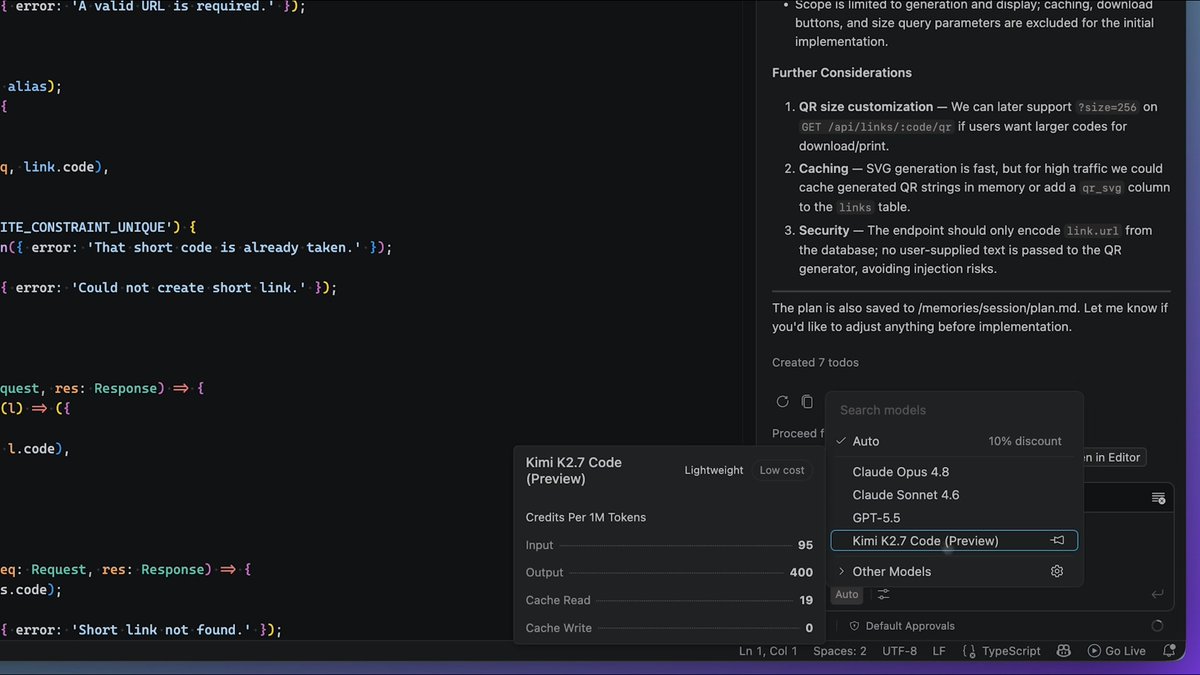
🌘 Meet Kimi K2.7 Code HighSpeed! A high-speed mode of our latest open-source multimodal coding model, Kimi K2.7 Code. ⚡️ Up to 6× faster: Around 180 tok/s on coding tasks with median-length inputs, and up to 260 tok/s on shorter-context tasks. 🔷 Rolling out to Kimi Code Beta Program... show more

571,673 görüntüleme • 3 ay önce •via X (Twitter)
35 Yorum

@teortaxesTex Kimi high speed is underrated. Consider - a perfect thinking model at 40tok/sec or a model at 200tok/sec that can fix its mistakes fast. Suddenly 10 points higher matters a lot less

High speed is 2x normal API pricing

180 tok/s means we can now generate a years worth of technical debt in the time it takes to brew a coffee

You should make 120B kimi flash model, some people want to run locally

My beta tester request is still pending.. Approve it 🤪

Will this eat requests faster?

Joined to the beta, still no approval, 3 days passed :c Im on paid plan Allegro, pls accept

Impressive! Hitting 260 tok/s on short contexts is a massive leap for developer productivity.

Kimi to Frontier Models be like:

Hi Guys, Please approve my beta tester request I need to try Highspeed Model Opus 4.8 is slow and frustrating (keeps thinking)

K2.7 HighSpeed hit the tok/s treadmill hard

I noticed something: when I opened ` and tried to translate it from English to Japanese using Google Translate in Chrome, the translation tool didn't respond at all. It might be due to some unique page structure, but it would be better if this website were compatible with Chrome's translation feature.

I have this error for almost a week with the Kimi code on VS code . What should I do???

Kimi 2.7 is really good!

This is amazing. I'm planning to completely switch from ClaudeCode to Kimi🔥

open source FTW
22 to 3 min or 6-7x faster for 2x pricing is good. Up to 6x means current speed fluctuates as they are improving things

Open-source models hitting 6× speed on coding tasks while staying accessible is the kind of progress that actually moves the needle. It makes high-performance intelligence practical for real agentic and coding workflows without depending on gated, rate-limited, or politically restricted closed APIs. The gap is closing on usability and cost, not just benchmarks.

Bro i love kimi 2.7

Kimi woke up and chose speed :)

Beest speed from kimi

so here we trade the quality for speed right? also it burns tokens in high speed

Open Source is catching up. claude/codex fast mode was released recently. look at us go!

Also hosted on @sferenceai in Europe 🇪🇺

Hi Highspeed a different (smaller) model or the same model just served differently?

I fully agree: Open intelligence should be instant, affordable, and borderless

180 tok/s on median context is absurd. Speed wins.

is this also available via API?

You can't just slow down a normal model, then present a normal speed and claim it's "high speed"

to the MOON

@grok will kimi use my data for training? Who owns Kimi and can the Chinese government coordinate them

Available in @llmgateway

We need more model like kimi code.

do you guys ever take a break?!

The speed is real, but the underrated part is cost: ¥200 of credits lasts me a full month of daily coding. UI also feels a step above opencode. For most webdev tasks I genuinely can’t tell it apart from the frontier models — at this price that’s wild.


![Announcing Opcode Everyone's favorite Claude Code GUI Claudia is now Opcode... with a complete revamp. And we just hit 15K+ stars on GitHub! The support from the community has been immense! ❤️ What's new: - Feature parity with all new Claude Code features in the CLI. - A complete UI revamp, faster and cleaner. What's coming: - Opcode's own coding agent that exclusively uses open models while achieving SOTA performance on coding benchmarks. We're currently piloting this at companies requiring fully local on-prem coding agents. If you're one of them, reach out to us and we'll set this up for you! Try Opcode at opcode [dot] sh Like/retweet and reply to this tweet with "join" to get an invite to the Discord server and beta test our coding agent for free.](https://image.24vids.com/tw-1964262082565611873/amplify_video_thumb/1964258888686960640/img/pt07BG51q_p7c6rq.jpg)


