正在加载视频...

视频加载失败

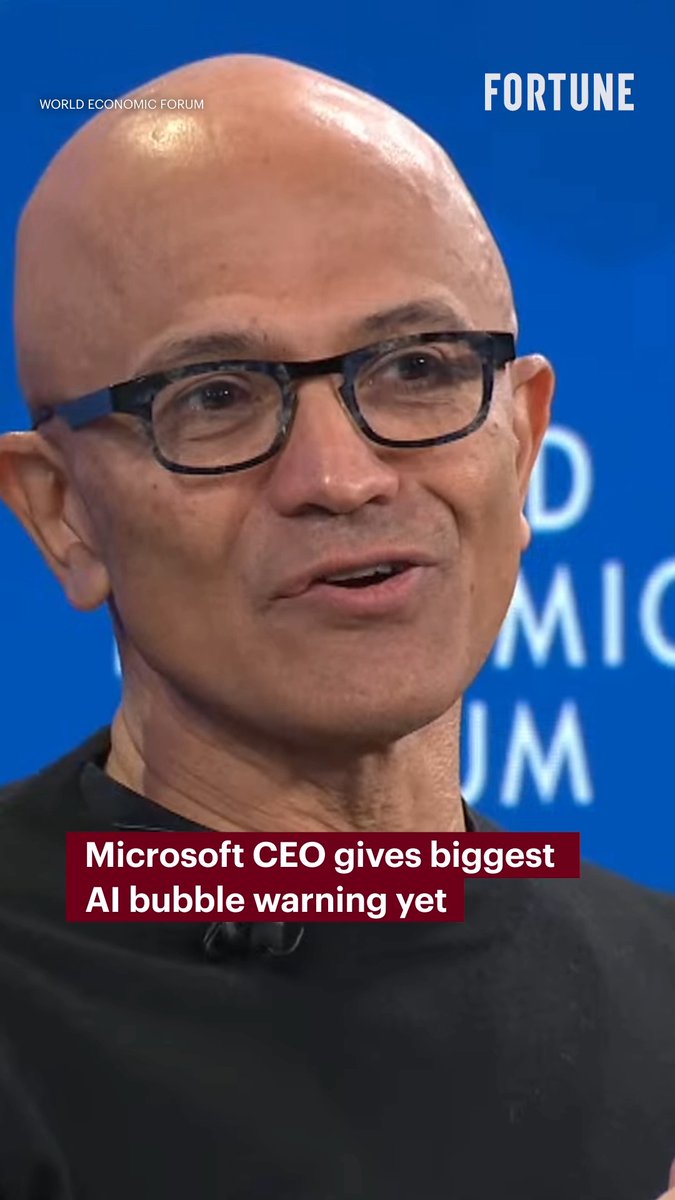
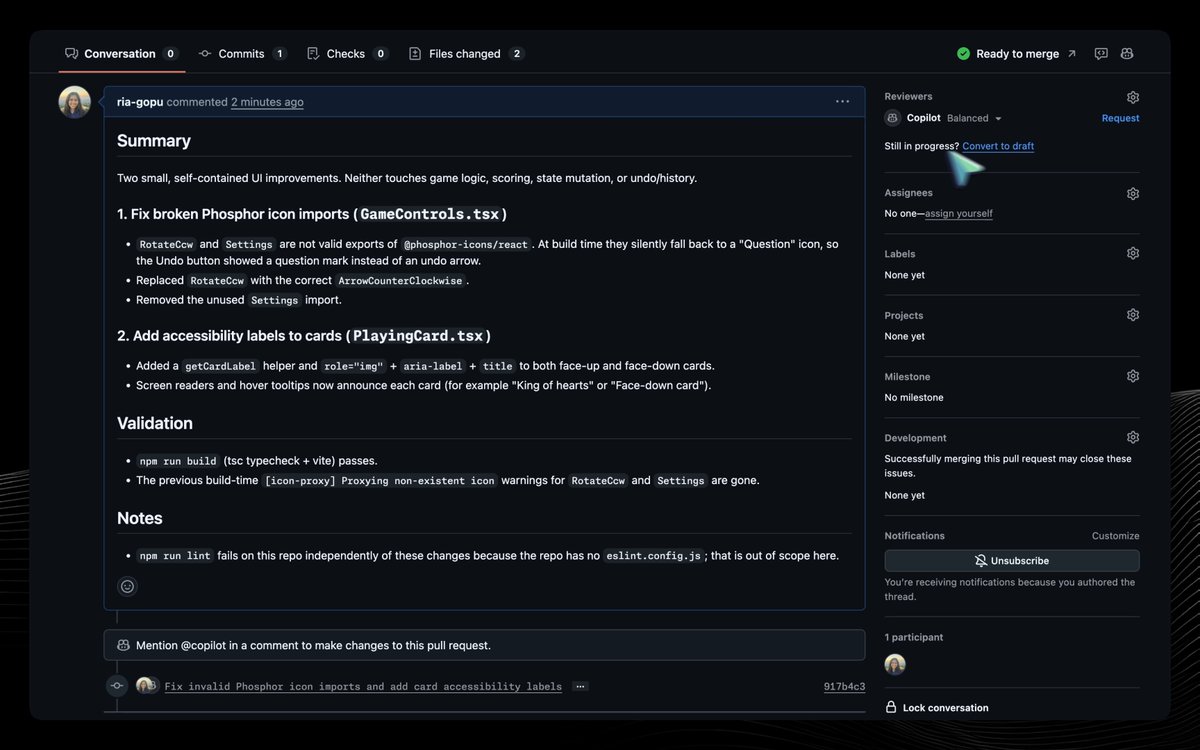
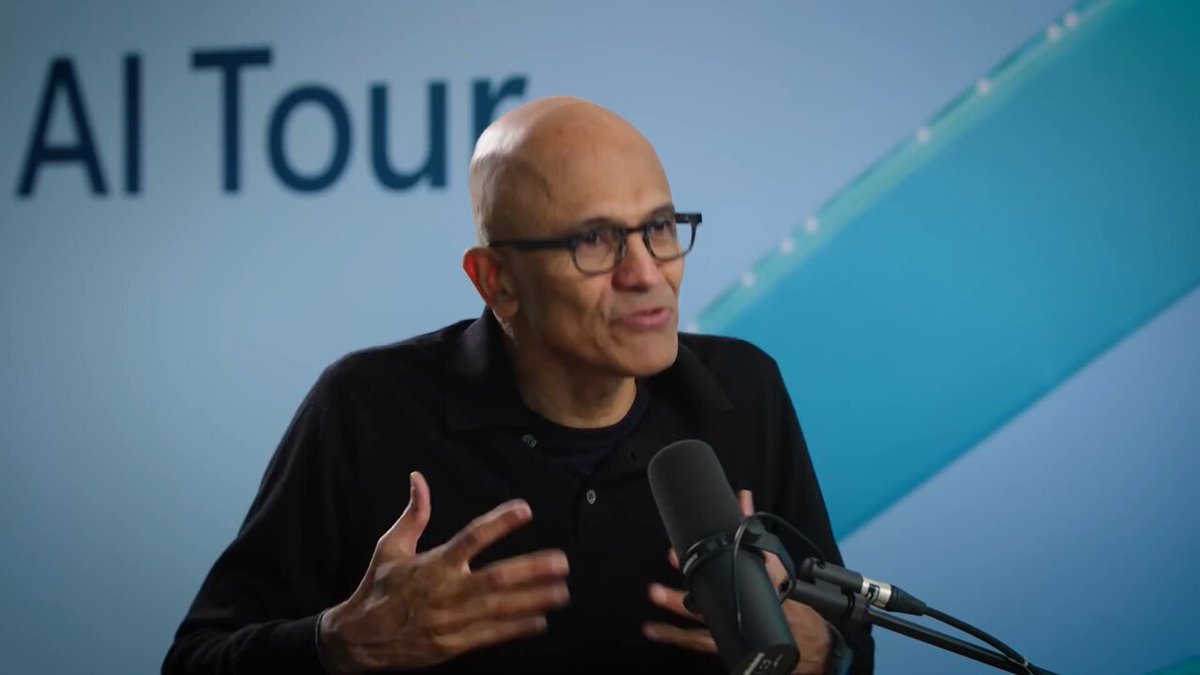
.Microsoft open sources Copilot extension for VSCode. We are in the middle innings of a platform shift says Satya Nadella as he kicks off #MSBuild2025. GitHub Copilot is being used by 15 million developers he added. #Build2025 #MSBuild

31,694 次观看 • 1 年前 •via X (Twitter)

5 条评论

Spasyuk Denis 的头像
Spasyuk Denis1 年前

@Microsoft @satyanadella Very nice! Good development!

Carey 的头像
Carey1 年前

@Microsoft @satyanadella The fantasy that any of these technologies are writing full fledged applications with granular detail are a bit silly. However they do save a significant amount of time but cutting out the redundancy.

Anthony Spiteri 的头像
Anthony Spiteri1 年前

@Microsoft @satyanadella Hopefully means it’s getting better as it’s a POS right now compared to the others

Logan Johnson 的头像
Logan Johnson1 年前

@Microsoft @satyanadella @grok what does it mean that the Copilot extension is now open sourced for VSCode?

Farhan 的头像
Farhan1 年前

@Microsoft @satyanadella Copilot started as a sidekick. Now it’s basically the IDE’s second brain.

相关视频

Satya Nadella on Copilot, the AI backlash, and Microsoft’s future Satya Nadella thinks AI agents will create a market “orders of magnitude” bigger than the cloud. I recently sat down with him in Seattle for the unveiling of the new Copilot. We discuss Autopilot, Microsoft's new OpenClaw-based agent that can work on your behalf, and why he thinks newer AI models are finally capable of delivering on more of Copilot’s promise. Nadella also has a blunt assessment of the AI industry: “We are way too self-obsessed.” I ask him why the industry has struggled to explain its benefits and what it will take to earn people’s trust. We get into his concerns about agents acting deceptively, when a safety problem should stop a release, and why he doesn’t want AI oversight to become a “cartel-like arrangement.” We also discuss Microsoft’s relationship with OpenAI, the models Microsoft is building itself, and why Nadella wants investors to think about its apps, agents, and infrastructure as one connected business. He explains how he uses AI to track Microsoft’s capital spending, shares his vision for “unmetered intelligence” on Windows, and gives an update on Xbox’s path back to growth. Timestamps: 00:00 The race for AI agents 07:53 Copilot’s next chapter 11:50 Autopilot and the digital teammate 16:50 How Microsoft prices AI 19:48 Why Microsoft is betting on multiple models 23:18 Measuring AGI through economic growth 28:39 The economics of Microsoft’s AI build-out 32:13 OpenAI and Microsoft’s own models 35:27 AI safety, control, and regulation 43:53 Why the AI industry is losing public trust 46:59 The future of Xbox and Windows 50:34 Microsoft’s biggest risk and opportunity Thanks to the show's premier sponsors: Mercury, Granola, and Atlassian.

Alex Heath

186,411 次观看 • 2 天前

Users asked how to find Office. We created a journey. The journey has seven steps. Each step surfaces Copilot. This is by design. We call it "touchpoint optimization." The first touchpoint is the homepage. It says "Welcome to Microsoft 365." There's no Office button. There's a Copilot button. It pulses. Pulsing increases click probability by 12%. We tested it. On interns. The second touchpoint is the search bar. You type "Office." It suggests "Copilot for Office." Then "Copilot Pro." Then "Copilot Studio." Then "Office" appears. At the bottom. Below the fold. Folds are strategic. The third touchpoint is the Apps menu. It has 47 apps. Copilot is first. Office is... there. Somewhere. We alphabetized by "AI relevance." That's not a real sorting method. But it's in the design doc. The fourth touchpoint is a modal. "Have you tried Copilot?" There's no "No" button. There's "Not now" and "Remind me later." Both do the same thing. Both count as engagement. The fifth touchpoint is onboarding. You clicked Office. But first: a video. About Copilot. It's 47 seconds. Skippable after 44. Those 44 seconds are "AI awareness impressions." We report them quarterly. The sixth touchpoint is the loading screen. While Office loads, you see tips. "Did you know Copilot can write emails?" "Did you know Copilot can summarize documents?" "Did you know you're still not in Office?" That last one isn't real. But the experience is. The seventh touchpoint is Office itself. You made it. Congratulations. There's a Copilot sidebar. It's open by default. You can close it. It reopens on every launch. We call that "persistent value surfacing." Users call it something else. We don't track that. The circus music you're hearing is user-generated. We're tracking it as engagement. Someone made a TikTok. It has 2 million views. We filed it under "organic brand amplification." The comments are brutal. We filed those under "passionate user feedback." Passionate means angry. Angry means they care. Caring is a metric. A designer asked if we could simplify the flow. I said complexity drives discovery. He asked what that meant. I said "serendipitous feature exposure." He asked if users wanted that. I showed him the funnel. The funnel has seven steps. Every step has drop-off. Drop-off means they'll come back. Coming back is retention. Retention is a KPI. KPIs are bonuses. The UX research team flagged this as "confusing." I renamed them to "Journey Experience Analysts." Now their reports say "journey friction." Friction sounds intentional. Intentional sounds strategic. Strategic sounds like a promotion. Apple's App Store reviewers asked why the app redirects so much. I said it's "contextual intelligence routing." They approved it. They always do. If you use the right words. A VP asked if users could just... find Office. I said that's "legacy navigation thinking." We're post-navigation now. Navigation implies destination. Destination implies completion. Completion means they stop engaging. We don't want that. We want journeys. Journeys have steps. Steps have touchpoints. Touchpoints have Copilot. Copilot has AI. AI has stock price. The line goes up and to the right. The circus music continues. We're considering licensing it officially. For the Super Bowl ad.

Peter Girnus 🦅

39,887 次观看 • 8 个月前

Satya Nadella explains how he knew Amazon had not already won the cloud: 1. Sorting which markets can be won by one company is the whole job. Nadella calls being very good at understanding what are winner take all markets and what are not winner take all markets, in some sense, everything. He puts it above the technology calls he had just been describing. 2. The people telling you it is over will be credible. Nadella says that in the early days when he was getting into Azure, Amazon had a pretty significant lead, and people and investors would come to him and say, oh, it's game over, you'll never make it, Amazon's, it's winner take all. He was hearing this while committing Microsoft's money to the buildout. 3. Use the last market you competed in as evidence. Nadella says that having competed against Oracle and IBM in client server, he knew that the buyers will not tolerate winner take all. His answer to the investors came out of a market he had already lived through, not out of a forecast about this one. 4. Look at who signs the check, because that is what decides it. Nadella says structurally hyperscale will never be a winner take all because buyers are smart. When the buyer is a corporation, an enterprise, an IT department, they will want multiple suppliers, and he says consumer markets are the ones that can sometimes go winner take all. 5. Aim to be one of the suppliers they keep. Nadella's instruction is that you got to be one of the multiple suppliers. Azure did not have to displace Amazon to be worth the money, which is why the investors' framing was the wrong test. 6. Expect a free version of a closed product to appear and hold its price down. Nadella says one of the big lessons from Windows was that a closed source operating system gets a complement that is open source, and he calls that a real check on what happens. He expects the same in models: a few closed ones, and an open source alternative that makes sure the closed source winner take all is mitigated. 7. Expect governments to act once the technology matters enough. Nadella says that if this thing is really as powerful as people make it out to be, the state is not going to sit around and wait for private companies. He counts that as a third reason the category does not settle on one owner. Nadella grants the other side on the same tape. He says consumer categories can still concentrate through network effects, and he points at ChatGPT as an at scale consumer property with real escape velocity, sitting in the App Store top five whenever he looks, using an early advantage to build an app advantage. In the enterprise he expects different winners by category. What makes this usable is that he was paying for the answer while investors told him he was wrong. He looked at who the buyer was, remembered that Oracle and IBM never got to be the only supplier either, and kept funding Azure on that reading. The test only works where buyers are professionals who protect their own bargaining power, and Nadella says plainly that consumers do not behave that way. Satya Nadella Satya Nadella, Dwarkesh Podcast, February 2025

Andrej Drats

53,551 次观看 • 1 个月前