Video yükleniyor...

Video Yüklenemedi

Ana Sayfaya Dön

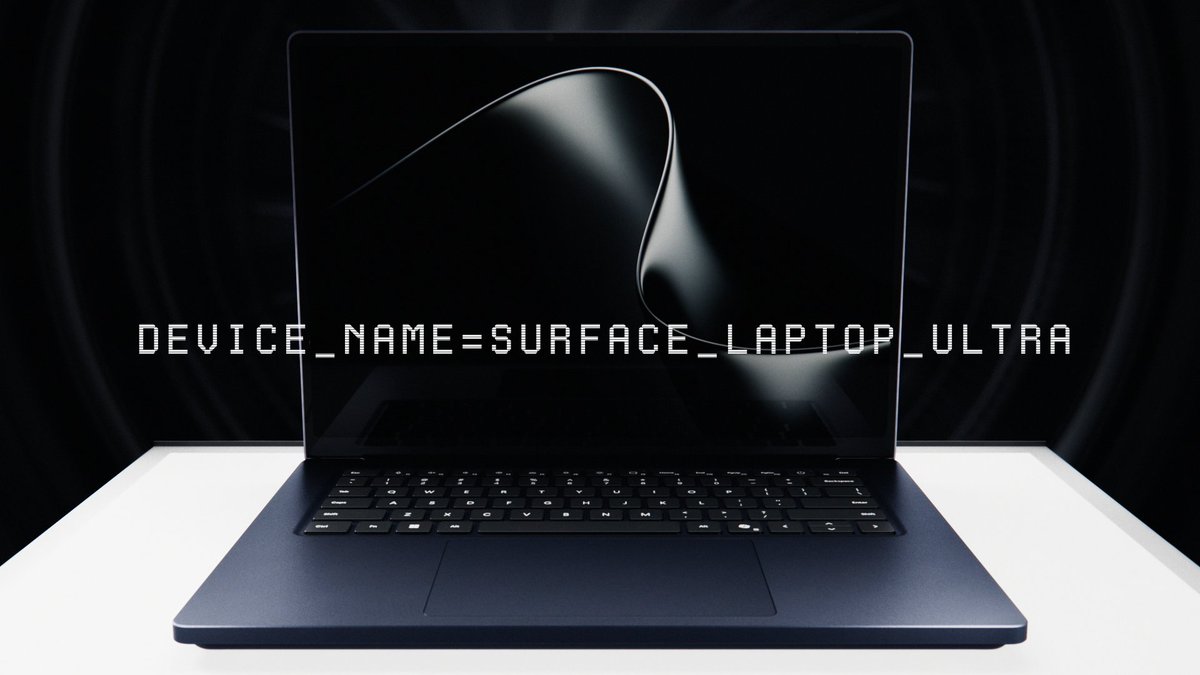
Microsoft’s MacBook Pro competitor is here: Surface Laptop Ultra - 15" Mini-LED touchscreen display - Up to 2000nits of peak HDR brightness - Large haptic touchpad - Nvidia RTX Spark (20-core ARM CPU) - Blackwell GPU (6144 CUDA Cores) - Up to 128GB unified memory - 1 petaflop of...

782,681 görüntüleme • 2 ay önce •via X (Twitter)

0 Yorum

Yorum bulunmuyor

Orijinal gönderinin yorumları burada görünecek

Benzer Videolar

NVIDIA just handed every solo creator and freelancer an unfair advantage. Jensen Huang walked on stage and announced RTX Spark. An ARM-based laptop chip that nobody saw coming. They called it the most power efficient PC chip ever built. 20 cores. Blackwell graphics. 6144 CUDA cores. Up to 128GB of LPDDR5X memory. But forget the spec sheet for a second. Here is what actually matters. RTX Spark is built to run AI models locally. No cloud subscription. No API costs. No waiting on a server somewhere. Everything runs directly on the laptop at full speed. That changes the math completely for anyone using AI to make money. The guy generating 3D assets in Blender with Claude his renders now take minutes instead of hours. More projects per day. More income per week. The girl producing AI kids content for YouTube local rendering means no upload wait times, no generation limits, no monthly fees eating into her margins. The freelancer building websites and automating outreach every AI tool in his stack now runs faster and cheaper than before. 30 laptops from Asus, Dell, Lenovo, MSI and others. Available this fall. For years the barrier was hardware. You needed an expensive setup to run serious AI workflows locally. NVIDIA just put that power inside a thin laptop anyone can carry anywhere. The people who already figured out how to monetize AI are about to move twice as fast. The people who haven’t started yet just ran out of excuses. Save this.

Shelpid.WI3M

27,789 görüntüleme • 2 ay önce

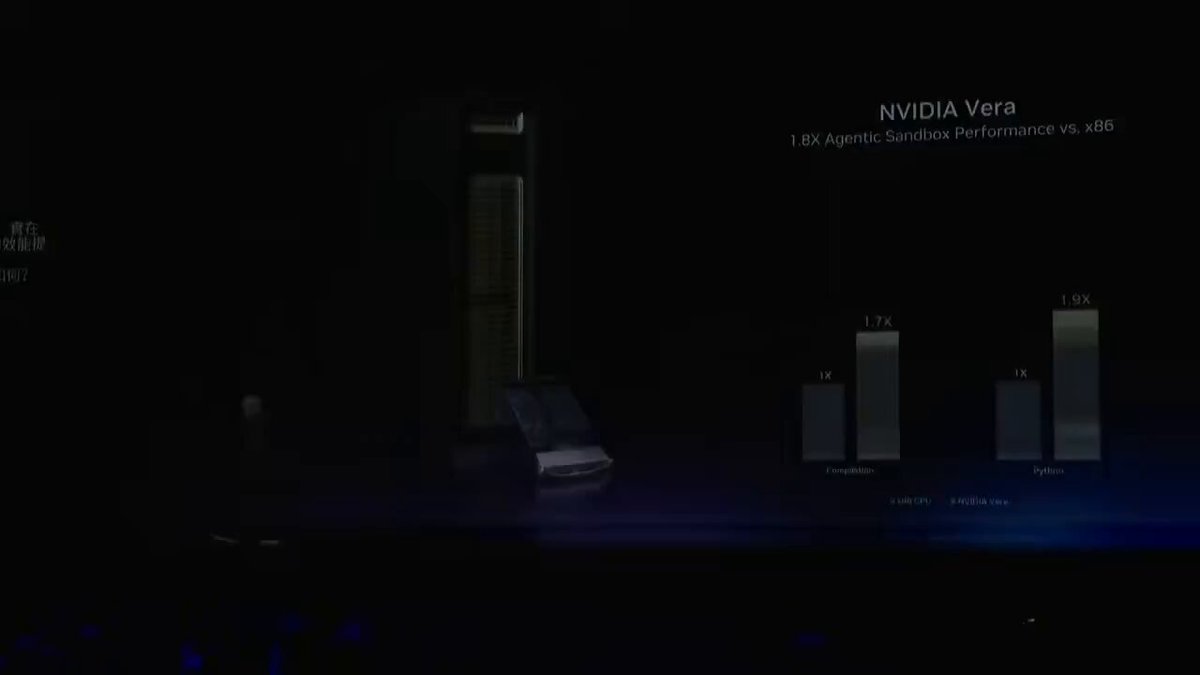
Jensen Huang just identified the next $200 billion market (Save this). The shift starts with a observation about agentic AI that changes everything about infrastructure. In the era of training and inference, the GPU was everything while CPU was a traffic cop, scheduling work, managing memory, dispatching tasks while the GPU did the heavy lifting. Agentic AI breaks that model entirely. An AI agent does not just run a single inference pass but rather it plans, calls tools, executes code in sandboxes, retrieves data from multiple sources and loops through complex multi-step reasoning sequences often thousands of times per second at scale. Every one of those operations runs through the CPU and the GPU sits idle waiting for the CPU to prepare the next task, supply the right context and execute the retrieval and tool calling logic fast enough to keep the accelerators fed. The CPU is now the conductor and the GPU is the orchestra and the bottleneck is the conductor falling behind. This is showing up in production AI factory utilization right now, which is exactly why Jensen built Vera from scratch rather than licensing x86. Vera achieves 40% lower peak memory latency than x86, 50% faster core to core communication, and 1.8 times the agentic sandbox performance of current x86 processors on a purpose-built architecture designed around the agentic loop. Now here is where the investment thesis gets interesting. The obvious beneficiary is Nvidia itself, and that thesis is real. Nvidia's CFO has guided for nearly $20 billion in Vera CPU revenue this fiscal year alone, a market Nvidia had zero presence in just three years ago. Intel held 60% of server CPU market share as recently as Q4 2025 and that transition is now happening at a pace Intel structurally cannot respond to. But the deeper question is, what architecture is Vera actually built on? Vera's Olympus cores are ARM compatible and every single Vera CPU deployed in every Vera Rubin rack in every data center in the world runs on ARM architecture. And ARM Holdings collects a royalty on every one of them. ARM does not make chips but rather licenses the instruction set architecture and CPU core designs that others build on top of. Every time Nvidia ships a Vera CPU, every time a hyperscaler deploys a Vera Rubin rack, every time an enterprise qualifies Vera for their AI factory, ARM earns a royalty. The secular tailwind here is almost perfectly constructed for ARM's business model. Amazon's Graviton, Microsoft's Cobalt, Google's Axion, Apple's silicon stack, and Qualcomm's data center push all run on ARM. And now Nvidia's Vera, which is projected to displace Intel as the largest server CPU supplier by revenue in a single fiscal year, is ARM. ARM's royalty rate on high end server chips is estimated at roughly 1 to 2% of chip selling price. At $5,000 per Vera CPU and 4 million units projected for FY2027, that is a royalty line growing from near zero to potentially $400 million to $800 million annually from Nvidia's data center CPU business alone before counting Amazon, Microsoft, Google, Apple, and Qualcomm. The total ARM addressable royalty base across all the silicon it already licenses is compounding at a rate that the current $130 billion market cap does not fully reflect. Jensen's CPU thesis is the most underappreciated catalyst in ARM's fundamental story, and the royalty compounding has barely started. Come join Milk Road Pro and get our full ARM royalty model and our entire AI trade thesis. Link below!

Milk Road AI

11,819 görüntüleme • 2 ay önce

So what is the new Commodore 64 Ultimate and what do you get in the box? Everything you need to know is below... OVERVIEW • The Commodore 64 Ultimate comes in 3 varieties: Basic Beige, Starlight Edition, and Founders Edition. • This is the first official Commodore 64 released in over 30 years!!!! COMPATIBILITY • Works with your original Commodore 64 gear (99% compatible). • Supports cartridges, datasette, and 1541 disk drives. • Plug in your datasette, 1541 disk drive, and cartridges and play your favourite games. DISPLAY OPTIONS • Supports both HDMI and CRT. WHAT'S IN THE BOX? • Spiral-bound User Guide • Power Supply • Quick Start User Guide • HDMI cable • Commodore 64 Ultimate (of course) • Stickers • 64GB USB drive with 50+ fully licensed games POWER SUPPLY • 12V, 100-240V with worldwide adapters • Usable in any corner of the Earth CONNECTIONS • 3x USB-A 2.0 • 1x USB-C • Internal MicroSD • HDMI • 8-pin DIN • 3.5mm audio headphone jack • Optical S/PDIF • Ethernet (100Mbps) • Wi-Fi (Built-in) • Cartridge Port • Datasette Port • Disk Drive Port • 2x DB-9 joystick ports • User Port • Power (12V DC) TECH SPECS • Core: AMD Xilinx Artix-7 FPGA • Memory: 128MB DDR2 RAM, 16MB NOR flash • Video: ○ 1080p @ 50Hz (PAL) or 60Hz (NTSC) ○ HDMI-certified ○ Virtually zero-lag ○ DVI-compatible via HDMI ○ Analog via DIN-8: CVBS, S-Video, or RGB • Audio: ○ 2 × SID sockets (6581/8580) with auto voltage and filter detection ○ UltiSID octal core FPGA SID emulation ○ SID-TAP header • Controls: ○ Rocker switch (power, reset, menu, freeze) • Storage & Compatibility: ○ USB thumb drives: FAT, FAT32, exFAT ○ File formats: .D64, .D71, .D81, .G64, .T64, .TAP, .PRG, .ROM, and more ○ C64 OS support coming soon ○ Original Commodore 64 ROMs included under license or via guided ROM setup on first boot ○ ISO-9660 image support ○ Integrated Ultimate-II+ functionality with tape emulation and DMA loader • Keyboard: ○ 66-key mechanical ○ Gateron Pro 3.0 55g switches ○ Original C64 layout and shapes ○ Full NKRO, USB plug ○ 70 RGB LEDs ○ Industry standard stabilizers and wires The Commodore 64 Ultimate is well, ultimate! Pre-order from their website COMMODORE (dot) NET

Commodore Computer Museum 🕹

37,234 görüntüleme • 1 yıl önce

AMD CEO Lisa Su just killed Nvidia’s $4,000 AI box with a $1,499 lunchbox. She walked on stage, held it in one hand, and ran a 235 billion parameter model live. No data center. No cloud. No rented GPU. The chip inside is something nobody saw coming. AMD’s Ryzen AI Max+ 395 is the first x86 silicon where CPU and GPU share the same 128GB of memory. That single trick lets a desktop run models that used to need a server rack. Out of those 128GB, Linux hands the GPU 110GB to play with. For context, an RTX 5090 gives you 32GB. A 4090 gives you 24. This box gives you more than three times either of them, in a chassis the size of a thick paperback. The benchmark that broke the room: this chip beat an Nvidia RTX 5080 by more than 3x on DeepSeek R1 inference. A $1,499 lunchbox outrunning a $1,000 discrete graphics card on a real AI workload. Nvidia spent a decade convincing the world you needed their hardware for serious AI. AMD just put that on a desk for half the price. Here is what nobody is telling you. A heavy AI user right now pays $200 for Claude Code Max, $200 for ChatGPT Pro, $20 for Cursor, $20 for Gemini. That is $5,280 a year leaving your account. The box pays itself off in 9 months and then runs free for the rest of its life. Install Ollama. Pull Qwen3 235B. Point Claude Code at localhost. Same interface you already use, except now nothing leaves your machine, nothing costs per request, and no company throttles your usage at 3am when you finally have time to build. This is the moment every AI subscription becomes optional. Lawyers stop fearing OpenAI leaks. Developers stop watching the token meter. Founders stop renting H100s for prototypes that never ship because the bill scared them. The first thousand people to figure this out will own the next two years of private AI consulting. Save this, and read the full breakdown article below you are watching the next shift hit before everyone else does.

AdiiX

3,393,092 görüntüleme • 2 ay önce

The AI boom just hit a wall nobody saw coming. And it's not software. It's not regulation. It's not even energy... It's memory chips. Right now, Dell is raising PC prices by 30%. Intel can't ship chips. Nvidia is slashing GPU production by 40%. And almost nobody understands why. Here's the "hidden" crisis the AI industry is trying to hide: AI data centers are hoarding memory. Not GPUs. Not processors. MEMORY. Every AI server needs massive amounts of high-bandwidth memory (HBM) to run those models everyone's hyping. One problem: There are only 3 companies in the world that can make it. Samsung. SK Hynix. Micron. That's it. And all 3 just diverted their entire production capacity away from normal RAM to feed AI data centers. The math that breaks everything: 1 gigabyte of HBM takes 4X the manufacturing capacity of regular DRAM. AI will consume 20% of global DRAM production in 2026. But the thing is, consumer demand for RAM didn't disappear. PCs still need memory. Phones still need memory. Cars still need memory. But there's no capacity left to make it. The price explosion: RAM prices are up 246% in the last 6 months. DDR5 contract prices jumped 100% month-over-month in some cases. Dell's CFO said he's "never witnessed costs escalating at this pace." SK Hynix and Micron? Sold out through all of 2026. Micron straight up EXITED the consumer memory market entirely to focus on AI customers. If you're not building an AI data center, you're not getting memory chips. AI data centers pay 3-5X margins compared to consumer products. So memory manufacturers are rationally choosing: Serve Microsoft and Google's AI buildout, or serve Dell's laptop business? Easy choice. Every wafer allocated to an Nvidia H100 GPU is a wafer DENIED to your next laptop. It's a zero-sum game. And consumers are losing. The dangerous cascade effect: Nvidia is cutting RTX 50-series GPU production by 30-40% because they can't get GDDR7 memory. Dell, Lenovo, HP are all raising PC prices 15-30% in early 2026. Xiaomi and other smartphone makers are cutting shipment targets. Even Intel's crash last week? Partially driven by memory shortages limiting chip production. This is a PERMANENT reallocation of the world's silicon capacity. Not a temporary supply hiccup. For decades, consumer electronics (phones, PCs, laptops) drove memory production. Now? AI data centers are the priority customer. And that priority shift is reshaping the entire tech economy. The timeline Is worse than you think: Industry analysts project shortages lasting through 2027, maybe 2028. Why? Because building new memory fabs takes 3-5 YEARS. Micron's new Idaho fab won't meaningfully impact supply until 2028. Samsung and SK Hynix are too busy ramping up HBM4 production to expand consumer DRAM. So we're stuck. AI companies need memory to scale. But producing that memory DESTROYS the supply chain for everything else. My question here: Everyone's betting on AI scaling infinitely. But what if the AI boom STALLS because there's not enough memory to support it? What if we're not in an "AI supercycle" but a "memory shortage that kills the AI buildout"? Intel crashed 17% because they can't manufacture enough chips. The root cause though? Memory shortages limiting what they can even produce. Nvidia is cutting GPU production by 40%. AMD is struggling to get GDDR6 for Radeon cards. This isn't just a consumer problem. It's an AI infrastructure problem. And if memory doesn't scale, AI doesn't scale. The AI industry sold you on infinite scaling. But they forgot to mention the part where there's only 3 companies making the memory chips that power everything. And all 3 just chose AI data centers over you. Even Nvidia can't make enough GPUs to meet demand. Not because of energy. Not because of regulation... But because the memory supply chain is BROKEN. And it won't be fixed until 2028.

Ricardo

594,643 görüntüleme • 6 ay önce