Video yükleniyor...

Video Yüklenemedi

Ana Sayfaya Dön

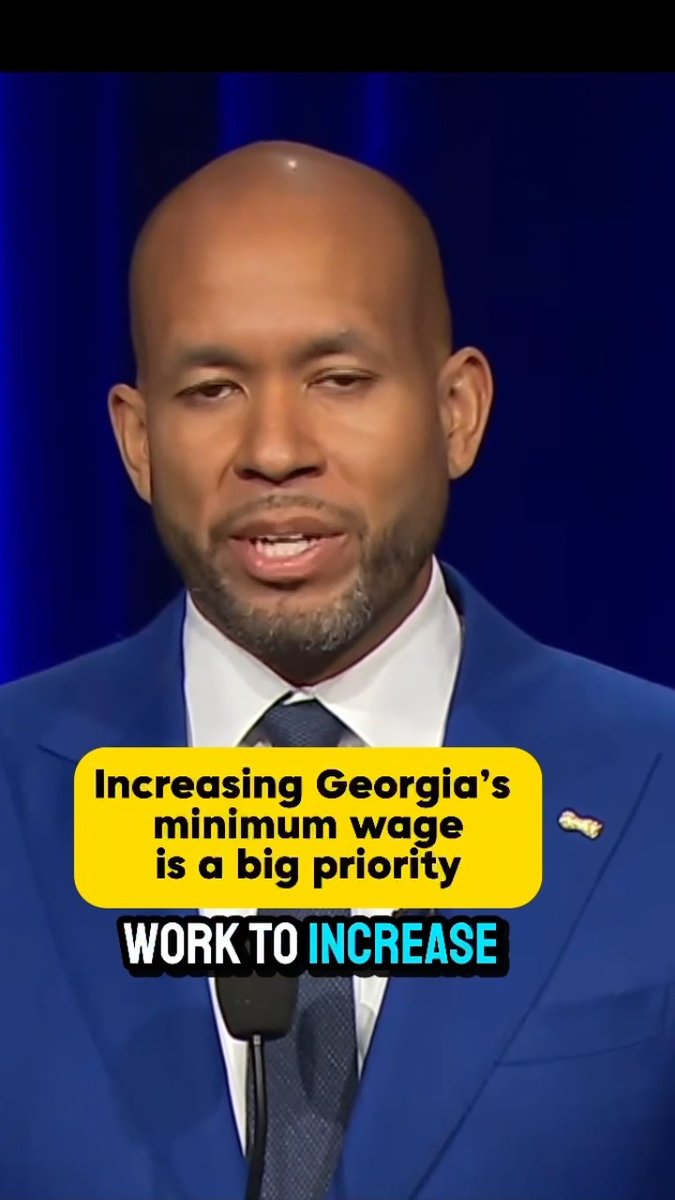
“Minimum wage isn’t the problem — PROFITS are.” “They say if minimum wage matched 1970s buying power, companies would go out of business. Back then? One job paid for a home, two cars, and a decent life. Here’s what they don’t say. In the 1970s, corporations ran on 5–7%...

57,564 görüntüleme • 9 ay önce •via X (Twitter)

0 Yorum

Yorum bulunmuyor

Orijinal gönderinin yorumları burada görünecek

Benzer Videolar

MINIMUM WAGE = MAXIMUM POLITICS 🍕 This Brooklyn pizza shop owner just dropped the most based, no-BS breakdown you’ll see all year. Frank from Paesan’s Pizza was asked what he’d say to people demanding “livable wages” for teenagers working cashiers at Burger King and Hooters. His answer? “Well, they live in their mom’s basement. What livable wage?” Then he went nuclear: The market dictates wages — not politicians, not activists. These are entry-level jobs for kids still in school or living at home. They’re meant to teach work ethic, skills, and how to climb: dishwasher → counter → manager → owner. Force “livable wage” math on thin-margin businesses (10-15% profit) and you get exactly what happened to Hooters — closures, skyrocketing prices, and workers replaced by kiosks and AI. He even says he wishes minimum wage was $25–$30 an hour… because he’d just charge more for pizza and make more money. But the numbers don’t work. This is the entire game in one video. Politicians don’t care about giving teenagers their first shot or teaching them the value of a dollar. They care about sounding compassionate while buying votes. Every time they jack up the minimum wage, they price the bottom rung of the ladder out of existence. The free market isn’t cruel — it’s the only system that actually creates real opportunity and real wealth. Mandates just create unemployment, automation, and $10 coffees.

DocumentingLibs

631,243 görüntüleme • 2 ay önce

The idea that career politicians are completely disconnected from the financial struggles of average Americans is a valid critique, but the standard talking point of simply raising the minimum wage fundamentally misses the mark. Forcing a higher minimum wage doesn’t solve the underlying economic crisis; it merely triggers an immediate inflation spiral where the cost of daily goods and services jumps to absorb the new labor costs, ultimately leaving working-class citizens in a worse position than where they started. ​The "minimum wage" debate is completely missing the point. Everyone is fighting over raising wages by a few bucks, but that’s like putting a band-aid on a broken leg. The real crisis isn’t just what people are getting paid—it’s the fact that the buying power of the U.S. dollar has been utterly destroyed, while the cost of basic goods and housing has gone into orbit. ​Let’s look at the actual math using the ultimate benchmark of financial stability: buying a home. ​In 1970, the federal minimum wage was $1.45 an hour, and the median home price was around $23,400. A single minimum-wage worker brought in about $3,016 a year, meaning an average house cost roughly 7.7x their annual salary. It wasn’t effortless, but with a dual income or some careful budgeting, owning a home on basic wages was mathematically possible. ​Today, standard inflation calculators will tell you that $1.45 in 1970 equals about $11.64. But look at the actual cost of assets. The median home price has exploded to roughly $420,000. ​If you want to walk into a bank today, factor in current interest rates, property taxes, homeowners insurance, and strict debt-to-income limits, you don't need $11 an hour to qualify. You don't even need $25 an hour. When factoring in standard modern debts like student loans or car payments alongside the inflated cost of everyday necessities, a single earner needs closer to $70 to $80 AN HOUR ($145k–$165k/year) just to secure the exact same purchasing power and financial security a basic worker had 56 years ago. ​This structural gap hits on a massive point that raw home-price-to-income ratios completely miss: we don't buy sticker prices, we buy monthly payments. Comparing raw prices assumes you are paying in cash, but modern buyers are forced to absorb the real-world cost of borrowing and qualifying. ​Treating the symptom (the wage) without fixing the disease (the collapse of our currency's purchasing power and the artificial inflation of assets) is a losing game. If we just hike wages without fixing the underlying economy, the cost of goods just keeps chasing the new printing press. We don't just need higher numbers on our paychecks; we need a dollar that actually means something again.

✨️Serenitee♡Sam✨️

16,078 görüntüleme • 4 ay önce

Most of the women couldn't read. 🖊️🇬🇧 They signed anyway. Cradley Heath. The Black Country. 1910. Women making chains. Twelve hours a day. Six days a week. For tuppence halfpenny an hour. In 1909 Parliament passed a law. The Trade Boards Act. It set a minimum wage for chain-makers. For many women nearly double what they were earning. 💰 But the factory owners refused to pay it. There was a loophole in the Act. Workers could sign a form opting out of the minimum wage. Most of the women couldn't read. They signed. Her name was Mary Macarthur. She had spent years in these forges. She called them some torture chamber of the Middle Ages. She knew what it felt like to stand in one. 🔥 She organised the women. 22 August 1910. Eight hundred women laid down their hammers. 🔨 Ten weeks. A strike fund was raised across the country. Four thousand pounds. They held. They won. Every penny of their back pay secured. A Workers' Institute was built in their honour. It still stands today. Today ninety percent of countries on earth have a minimum wage law. All of it traces back to eight hundred women who laid down their hammers. And didn't pick them up. Until they were paid what the law said they were owed. 🇬🇧 This channel exists because people like you chose to make it happen. Thousands of stories like this one are waiting to be told. Battles won. Names forgotten. History that belongs to all of us but gets told to none of us. If you want to be part of keeping it alive: Be Part Of Us. Be Proud Of Us. 🇬🇧

Proudofus.uk

21,176 görüntüleme • 6 ay önce

There is a new movement is gaining traction to increase the federal minimum wage to $25 per hour The minimum wage would jump to $12 the first year, and it would increase over several years depending on the size of the company Senate sponsors of the ‘Living Wage For All Act’ • Chris Murphy (D-CT) • Richard Blumenthal (D-CT) • Andy Kim (D-NJ) • Ron Wyden (D-OR) House sponsors companion bill: • Delia Ramirez (D-IL) • Analilia Mejia (D-NJ) • Jesús “Chuy” García (D-IL) • Lateefah Simon (D-CA) If this were to actually pass, here’s what Grok says prices would increase to - Fast food meal (Big Mac combo): $8–10 → $13 - Cup of coffee (drip, cafe): $3–4 → $5.50 - Basic haircut: $20–25 → $35 - Grocery bagging/delivery fee or low-wage retail markup: Small increase in overall basket (~5-15%) - Restaurant entree (casual dining): $15–20 → $25 - Car wash (basic): $10–15 → $20 - Hotel room (budget, per night): $100–150 → $170 - Supermarket produce (e.g., bunch of bananas): $1.50–2 → $2.50 - Dry cleaning shirt: $8–12 → $15 - Pizza delivery (large pie): $15–20 → $25 -Nail salon manicure: $25–35 → $45 - Retail clothing item (basic shirt): $15–25 → $30 - Childcare (daily rate, low-wage centers): $50–80 → $100 - Janitorial/cleaning service (hourly home): $25–40 → $50 - Movie ticket (matinee): $10–15 → $18 So many businesses couldn’t handle these new wage expenses

Wall Street Apes

54,604 görüntüleme • 2 ay önce