Video yükleniyor...

Video Yüklenemedi

Ana Sayfaya Dön

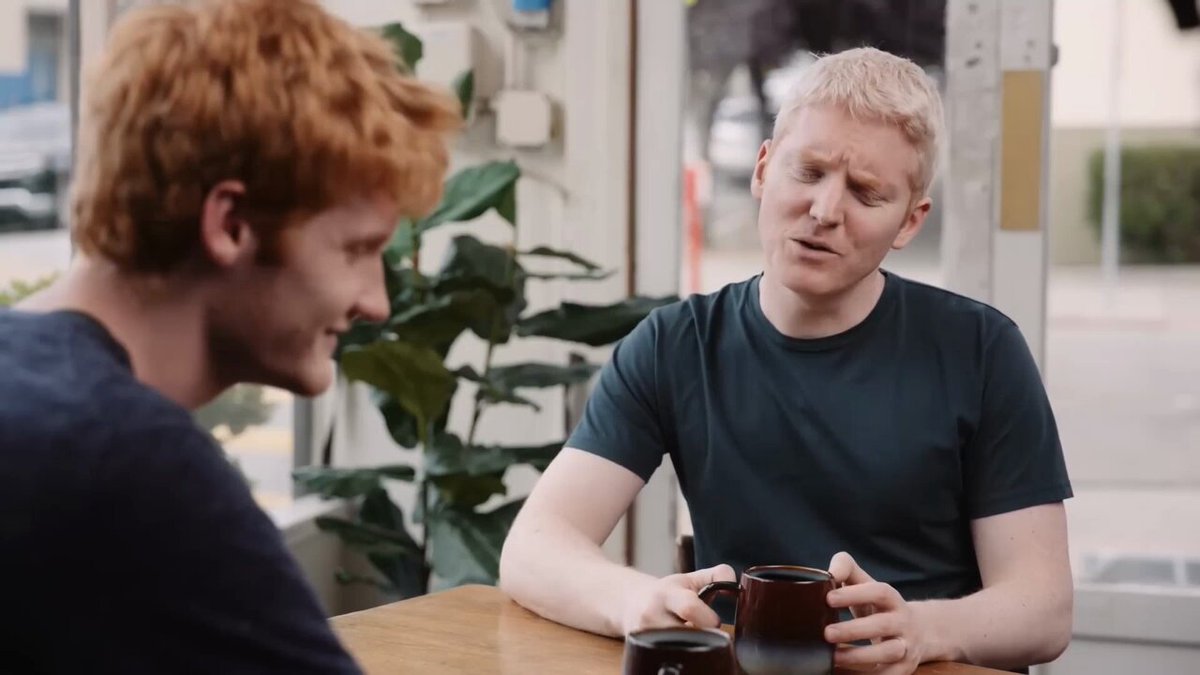
Mirendil Co-Founder and CEO Behnam Neyshabur explains the path to self-accelerating AI: " When you think about what does a scientist or an engineer do, the main skill they have is get very deep in a domain... and build a very sharp expertise that accumulates over time." "As you...

54,735 görüntüleme • 2 ay önce •via X (Twitter)

0 Yorum

Yorum bulunmuyor

Orijinal gönderinin yorumları burada görünecek

Benzer Videolar

I got to ask Jensen a question today at CES 2026. Question: What advice would you give to a new robotics founder for them to choose the right application space or the right idea so that they can have the most impact and most differentiation? Jensen's answer (short summary): The real strategic choice is between a horizontal play and a vertical one. Horizontal competition comes from every direction, but focusing on a specific vertical allows you to solve the hardest problems for a specific industry. Whether it’s EMS manufacturing or surgical robotics, that deep domain expertise is very beneficial. Jensen's full answer: Well, first of all, let's take a step back. As you know, NVIDIA, here we were just talking about AI factories. And that AI factory—our contribution, our chips, systems, infrastructure, which is software, and model technology. Is that right? That's kind of the NVIDIA stack. And that's an AI factory. In order to build robotic systems, you really need three different computers. You need the training computer, which I just described. And then you need another computer for doing simulation, because the robot needs to learn how to practice and be evaluated inside a virtual world that's physically precise, so that it doesn't have to do crazy stuff in the physical world while it's still learning. And so we create a virtual world that obeys the laws of physics, and I've demonstrated it several times, and that virtual world is called Omniverse. And so that's a second computer. And that computer is much more like one of our gaming computers, and the GPU that we use for that is RTX Pro. Basically an RTX. And then the third computer is the computer that goes into the robot. It's the robot brain. And that robot computer we call Orin today, and then the next generation is called Thor. And it has its own stack. So Thor has a super-fast inference stack. It runs a safety operating system, like the safety operating system we have in the car, because you want the robot to stay in its guardrails and not do things that it's not confident in doing. And so, you have your stack, and then you have your model. And the model could be fine articulation, manipulation, and locomotion, and each one of those, it could be system one and system two thinking. The technology necessary to build a robot is incredible. And so I just described for you, in order to be a robotics company, you have to have three computers. You have to understand all three stacks, and you have to build this robotic system, not to mention all the electronics and the mechanicals necessary to do it. It's incredibly hard. However, as you know, these pieces of technology independently have been coming together. Isn't that right? Which is really what happens to a new industry, is when there's enabling technology necessary for the industry itself, but it rides on the contributions of the technology advances in other industry that it doesn't have to worry about. And so the humanoid industry is riding on the work of the AI factories we're building for other mainstream stuff and other AI stuff. And our Omniverse was designed for other applications and different other digital twin capabilities. And so all this stuff is now coming together. The question is for robotics, ultimately, it comes down to a couple of different questions. Do you want to be a horizontal company, or do you want to be a vertically domain-specific company? The benefit of a horizontal company, of course, is that you less worry about the application, you more worry about the technology, and if you succeed, your scale can be quite large. However, horizontal plays are incredibly hard. Your competition comes from every single direction. Now, on domain, if you want to be domain-specific, then you're going to have to understand the particular application quite deeply. So maybe it's something to do with EMS manufacturing, assembly of these AI supercomputers. Maybe it's related to building cars in factories. Whatever the reasons are, your domain expertise—could be surgical robots—domain expertise could really be a benefit. My preference usually—and you asked, so I'll offer—my preference tends to be to go find verticals, but that's kind of my preference. Some companies, some leaders just would prefer to build horizontal capability, and that's fine, too.

The Humanoid Hub

40,043 görüntüleme • 7 ay önce

Elon Musk on Grok: “I think an AI that is sort of SpaceX’s baby will be a very good AI. I think SpaceX is a collection of some of the very best humans on Earth, both in capability and morality and goodness, and I think we want to have an AI that is born of that capability and that morality and that goodness. I think that’s very, very important. So I’d like to encourage people to help out, actually, with the AI hardware on the ground and the AI software and, of course, with the AI satellites. Solar is going to be a very important part of that. The TerraFab will be a very important part of that, but we must also succeed on the software front, and we’re going to be training Grok on the sum total of all SpaceX information. So in a way, it will be trained on you. You will effectively be the parents of the AI. It will inherit your thoughts and ideas and beliefs, and I think that’s a good thing. So, yeah, we’ve got to win here on the AI hardware and the AI software. That maybe is the most important message. I think that is actually the most important message I wanted to convey today is that we must win on AI because the future is overwhelmingly AI and robots. So we won’t ultimately be able to control the AI. It’ll be too smart for that. But just like if you have a child that is a super genius child, you can still instill in that child the values and beliefs that you think are good and right. And so that’s why it’s incredibly important that we succeed with Grok. So, yeah, well, Grok 4.5 you’ve tried probably. We’ve got 4.6 coming out in about a week. And then 4.7 should be really pretty special. So I’d like to encourage everyone at SpaceX to use AI and to make it better.”

DogeDesigner

64,019 görüntüleme • 19 gün önce

Chamath: "Nvidia is not doing what's in the best interest of the United States." 🇺🇸🇨🇳 "I think we can all do the math. About 47% of all of NVIDIA's revenue goes to China and Chinese-related countries." "And I think when you peel back this onion, what you will find is a whole raft of companies that were stood up to buy these Nvidia GPUs to essentially act as a waystation for China." "And I think that is the big problem." "Let's have a thought starter: if 47% of all of the AI capability and horsepower is being shipped to three Asian countries, where do you think the apps that require that amount of horsepower live?" "Is there a Cursor of Bhutan that we did not know? Is there a great shopping app in Cambodia that's come out of nowhere, that's AI powered?" "I think the answer is no." "Every single time we have an advance in the United States, how is it that Alibaba shows up with something incredible? DeepSeek shows up with something better?" "At every turn and at every step of AI, they are at the same rate or one step ahead." "To be honest with you, I think the real problem that we have is that Nvidia is not doing what is in the best interest of the United States." "You have a American company that has been working around the guidelines at every turn to try to land silicon into the hands of China." "Late last year, they introduced this thing called the H20 that was explicitly designed for China and to be compliant with US rules at the time." "Which again, gives these guys substantial performance." "This is a case where (Nvidia) has plausible deniability. I sell something to a Singaporean registered company? Plausible deniability." "What am I supposed to do? You can't expect me to audit it. I think that's what NVIDIA's answer will be to this question." "But what is the real expectation? At a minimum, the United States should have a mechanism to understand it." "It is implausible that if you did one or two layers of work, you would not find that most of this traffic is being used by Chinese organizations."

The All-In Podcast

910,450 görüntüleme • 1 yıl önce

$ABCL CEO Carl Hansen explains the net negative overall value creation in biotech and how AbCellera plans to beat it: “I really think it can be beat because there’s a lot of mistakes that get made in where you allocate capital.” “If you’re a biotech and you start a company on a drug, and you go public and have a drug, and now the data is looking not that great, you just keep running that drug. … Because if you quit that drug, the company is done.” “So, because you’re so concentrated on one thing, you end up having blinders. It’s like a cult of a molecule. And even a real, practical, capital access problem that makes you continue to move things forward” ______________________________________ “Another problem is that many of the drugs that get started, get started by people who don’t understand the competitive or commercial landscape and have no intent of ever actually manufacturing it. … Because they know someone else is going to buy it. So then their framework is not ‘Am I making a drug that’s going to make a difference for people?’ The framework is ‘Can I make something that I think someone will take off my hands?’ And that happens a lot.” “There are many acquisitions where a big pharma company spends $10B, $20B, and it’s a complete bust. So really no value is generated for patients but someone was able to get a good exit on that because they anticipated what someone would want. And a lot of decision making gets done like that”. _______________________________________ “I’m not saying that we have this all solved. But what we’re trying to do is create a framework where we are able to take many bets so that we don’t fall in love with anything, or we don’t have to fall in love with anything. … And then always hold up very explicitly what we know and what we don’t know along the dimensions that matter. The dimensions that matter are - Will it work? That’s a science. - When it gets where will people care? - Is it differentiated? - Does it solve a big problem? In order to get it there, is there a path with our resources and expertise that would allow us to see it through?” “When you start to hold things up like that, you start to see where the mistakes are, where the uncertainties are, and you can be more rational in deciding ‘We’re going to run it to here because we get to flip the card and if the card goes the wrong way we’re going to kill it because we’ve got something else behind it.’” “I do think that if done right, and if you can pick the right opportunities, the success rate can be well higher than an order of magnitude better. … And there are examples of this… companies I’ve mentioned, you know, Regeneron, their success rate is at least 10x the industry in bringing programs forward and getting them approved. … So it’s… you can do it better that way”

Jack Prescott

31,505 görüntüleme • 29 gün önce

Jeff Bezos on how to be innovative “To me, true innovation is something that is not only an invention but an improvement,” Jeff explains. “It’s not hard to make things different, but it is hard to make things different and better.” In Jeff’s view, there are endless opportunities for innovation: “Most of the problems in the world already have solutions of one kind or another, and all of those solutions can be improved upon. There’s no chance that anything is perfected yet. I don’t believe that . . . People have been working on solutions to most problems for a long time, but it wasn’t that long ago that somebody figured out that you should add wheels to suitcases. Pretty good improvement!” It’s hard work though, Jeff caveats: “It’s easy to have ideas. It’s very hard to turn an idea into a successful product. There are a lot of steps in between and it takes persistence and relentlessness. I always tell people who think they want to be entrepreneurs that you need a combination of stubborn relentlessness and flexibility. And you have to know when to be which.” Jeff explains: “Basically you need to be stubborn on your vision because otherwise it’ll be too easy to give up. But you need to be very flexible on the details because as you go along pursuing your vision, you’ll find that some of your preconceptions were wrong, and you’re going to need to be able to change those things.” He concludes: “Taking an idea successfully all the way to market and turning it into a real product that people care about and really improves people’s lives is a lot of hard work.”

Startup Archive

13,007 görüntüleme • 7 ay önce