Загрузка видео...

Не удалось загрузить видео

На главную

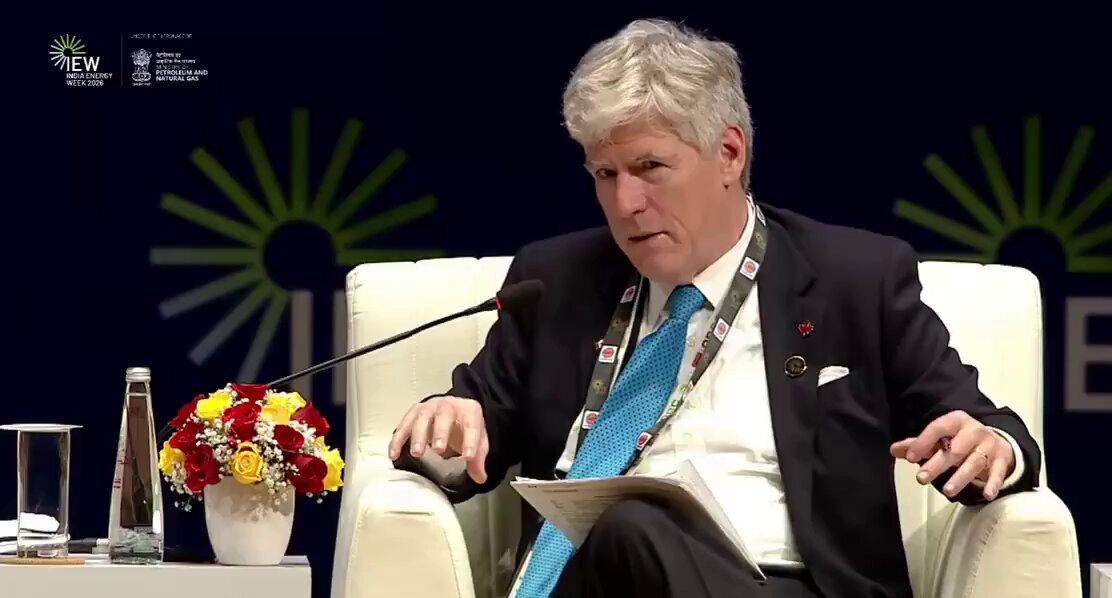
Modi didn't just survive Trump's 50% tariffs, he used them as leverage to reshape India's entire trade architecture. By sequencing landmark free trade agreements with the UK and EU before engaging Washington, Modi created a multilateral pressure system that forced Trump to slash tariffs from 50% to 18% in...

55,482 просмотров • 4 месяцев назад •via X (Twitter)

Комментарии: 0

Нет доступных комментариев

Здесь появятся комментарии из оригинального поста

Похожие видео

🇺🇸Trump’s Tariff Plan Explained: Destroy or Help The US Economy? Trump describes tariffs as his "favorite word." To understand the concept, think of it like this: Imagine you’re an accountant seeking business referrals. You meet someone who sells auto insurance, and you agree to exchange referrals equally. A month later, you’ve given them five referrals, but they haven’t given you any. You now have a "referral deficit" while they have a "referral surplus." This is similar to a trade deficit versus a trade surplus. Now, on a larger scale, the U.S. has a global trade deficit of $1.1 trillion, meaning it has provided $1.1 trillion more business to other countries than it has received. China, on the other hand, has a trade surplus of $823 billion, receiving more business than it gives. Trump’s use of tariffs is an attempt to address these imbalances and renegotiate trade deals. Tariffs are tools that governments can use to create leverage in trade negotiations. Historically, tariffs have been used as a form of taxation on imports, dating back to the Roman Empire and becoming prominent in the mercantilist policies of the 16th and 18th centuries. Economist Adam Smith, known for his book Wealth of Nations, argued that tariffs can disrupt free trade, but he noted 2 exceptions: protecting industries critical to national security and counteracting tariffs imposed by other nations. These points remain relevant in modern trade discussions. When examining trade surpluses and deficits globally, China leads with a significant surplus, while countries like the U.S., UK, and India experience deficits. Tariffs can serve as leverage to balance these relationships and ensure fair trade practices. Understanding tariffs and trade negotiations is key to grasping how governments seek to protect their economies and industries in a globalized world. Source: Patrick Bet-David , @ValuetainmentTV

Mario Nawfal

322,734 просмотров • 1 год назад

Arnab Tears Into Trump’s Tariff Deadline Praises PM Modi For Putting Nation First Arnab Goswami sharply criticized President Trump's threats of 500% tariffs on countries like India buying Russian oil, calling it economic bullying amid global instability. In a January 8, 2026, segment, he praised PM Narendra Modi for prioritizing national interest over external pressure, emphasizing India's sovereign energy policy. Goswami outlined six strategic points for India to counter the threats independently. Tariff Threat Context Trump's administration advanced a bill imposing at least 500% tariffs on imports from nations trading Russian petroleum or uranium, targeting India's discounted oil purchases from Russia. This follows US seizures of Russian-flagged tankers and Trump's exits from over 66 international bodies, including India's solar alliance. Indian officials rejected related claims of stalled trade deals due to Modi's unresponsiveness. Key Criticisms Goswami dismissed viewing Trump as mere amusement, warning of his global bullying post-Venezuela operations and threats to multiple nations. He questioned the feasibility but stressed preparation, assuming Trump would act unreasonably. In his interview with Jeffrey Sachs, both highlighted US instability and urged India to avoid alignments like the Quad. Praise for PM Modi Goswami expressed full confidence in the Modi government's firm stance, refusing further accommodation beyond limits. Modi refused US trade terms harming Indian farmers and fishermen, leading to higher tariffs but upholding "nation first." This aligns with India's rejection of pressure on Russian oil deals. India's Six-Point Strategy Goswami proposed proactive steps assuming worst-case tariffs: 🔴 Reaffirm energy policy driven by national interest, not US pressure. 🔴 Maintain cordial US ties while building alternatives with Europe and others. 🔴 Boost indigenous defense to reduce reliance on American supplies. 🔴 Position India as Global South leader amid US estrangement. 🔴 Leverage US firms in India to prevent isolation, as America needs the market. 🔴 Accelerate self-reliance in defense R&D, green hydrogen, and energy independence. Credit : Republic Media Network.

Augadh

30,820 просмотров • 6 месяцев назад

DUMB TRUMP DIDN'T EVEN REALISE .Narendra Modi JI IS 10 STEPS AHEAD OF HIM! Trump's pressure on EU to impose 100% Tariffs on Bharat ISN'T GOING TO WORK! Bharat's Exports to EU will remain INTACT by rerouting. MODI'S MASTERSTROKE: BHARAT- EFTA FTA🔥Tariff Shield Against Trump! In a shrewd geopolitical maneuver, Modi Sarkar has orchestrated a masterstroke with the Trade and Economic Partnership Agreement (TEPA) signed with the European Free Trade Association (EFTA)—comprising Iceland, Liechtenstein, Norway, and Switzerland—in March 2024, which took effect on October 1, 2025. Amid escalating U.S. President Donald Trump's tariff blitz—including a 50% levy on Bharatiya imports and his September 2025 push for the EU to impose up to 100% duties on Bharatiya goods over Russian oil purchases—this deal fortifies Bharatiya export fortress by granting duty-free access to 99% of EFTA markets for key sectors like textiles, pharmaceuticals, and engineering goods. As non-EU nations deeply embedded in the European Economic Area (EEA) and bilateral pacts with the EU, the EFTA quartet serves as a seamless conduit, enabling Bharatiya exporters to route goods through their low-tariff hubs for re-export into the broader European single market, sidestepping potential EU barriers without violating rules of origin. This not only sustains Bharat's $100+ billion annual EU trade flow but also attracts a pledged $100 billion in EFTA investments over 15 years, fueling domestic manufacturing and job creation—turning Trump's protectionist pressure into an opportunity for diversified, resilient supply chains that bolster Bharat's global trade sovereignty. Trump can keep licking his ego, Bharat will keep scaling high.

BhikuMhatre

440,941 просмотров • 9 месяцев назад

🚨 In an interview with Fox Business, President Donald Trump recounted his tough negotiating approach with Switzerland on trade issues: "Switzerland was paying almost zero tariffs on their exports to the United States, and we had a massive trade deficit of $42 billion with them. So I hit them with 30% tariffs. Then I received an emergency call from the President of Switzerland (Karin Keller-Sutter). I didn’t like her tone at all — she was very aggressive and demanding. Instead of lowering the tariffs as I had been considering, I immediately raised them to 39%." Trump added that he felt the original 30% was still too low, especially given the size of the ongoing trade deficit. ### The Final Outcome of This Strategy: After months of pressure and negotiations, the United States and Switzerland reached a historic framework agreement in November 2025. Under the deal, the U.S. reduced tariffs on most Swiss goods to 15% (matching the level applied to the European Union). In return, major Swiss companies (such as Novartis, Roche, ABB, and others) committed to investing up to $200 billion in the United States by 2028 — including $67 billion in 2026 alone. This is expected to create thousands of American jobs and help reduce the trade deficit. This story perfectly illustrates Trump’s “Reciprocal Trade” policy: using tariffs as a powerful leverage tool to secure better deals for America, even if it involves strong personal reactions during negotiations. What do you think about President Trump's bold tariff strategy with Switzerland? Do you see this as smart, results-driven negotiation that puts America first, or do you worry it risks escalating trade tensions? Would you like Trump to apply this same reciprocal trade approach with other countries running large deficits with the U.S.?"

Stand Up For Trump

21,465 просмотров • 3 месяцев назад