Loading video...

Video Failed to Load

Go Home

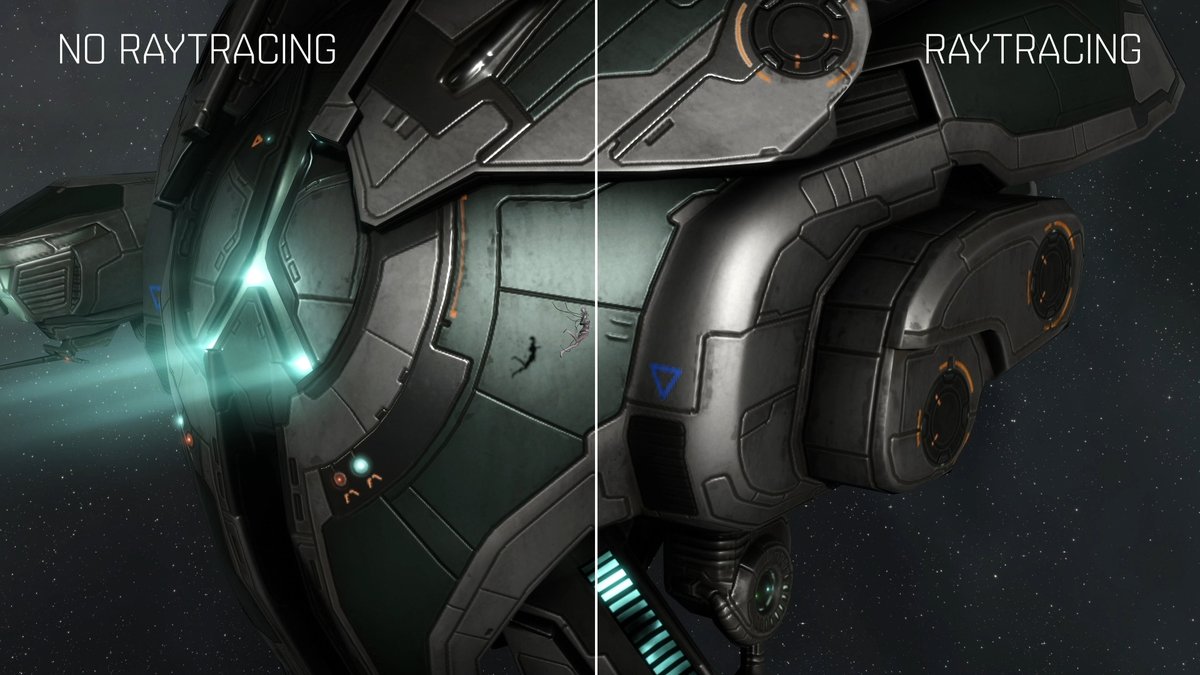
Mortal Shell II Beta - Native TSR vs DLSS Performance. Improved image quality and nearly 80% performance increase when using DLSS Performance! DLSS FTW 😀

37,918 views • 1 month ago •via X (Twitter)

0 Comments

No comments available

Comments from the original post will appear here

Related Videos

Microsoft presents Windows Agent Arena Evaluating Multi-Modal OS Agents at Scale discuss: Large language models (LLMs) show remarkable potential to act as computer agents, enhancing human productivity and software accessibility in multi-modal tasks that require planning and reasoning. However, measuring agent performance in realistic environments remains a challenge since: (i) most benchmarks are limited to specific modalities or domains (e.g. text-only, web navigation, Q&A, coding) and (ii) full benchmark evaluations are slow (on order of magnitude of days) given the multi-step sequential nature of tasks. To address these challenges, we introduce the Windows Agent Arena: a reproducible, general environment focusing exclusively on the Windows operating system (OS) where agents can operate freely within a real Windows OS and use the same wide range of applications, tools, and web browsers available to human users when solving tasks. We adapt the OSWorld framework (Xie et al., 2024) to create 150+ diverse Windows tasks across representative domains that require agent abilities in planning, screen understanding, and tool usage. Our benchmark is scalable and can be seamlessly parallelized in Azure for a full benchmark evaluation in as little as 20 minutes. To demonstrate Windows Agent Arena's capabilities, we also introduce a new multi-modal agent, Navi. Our agent achieves a success rate of 19.5% in the Windows domain, compared to 74.5% performance of an unassisted human. Navi also demonstrates strong performance on another popular web-based benchmark, Mind2Web. We offer extensive quantitative and qualitative analysis of Navi's performance, and provide insights into the opportunities for future research in agent development and data generation using Windows Agent Arena.

AK

19,684 views • 1 year ago

xAI isn't playing around. They just released the Grok Imagine API, a unified video + image generation toolkit, and it's already sitting at #1 on the Artificial Analysis Video Arena for both Text-to-Video AND Image-to-Video. It's beating: ● Google's Veo 3.1 & Veo 3 ● OpenAI's Sora 2 ● Runway Gen-4.5 ● Kling 2.5 Turbo The Numbers Don't Lie: ● 64.1% win rate against Runway Aleph in blind human evaluations ● 57% win rate against Kling o1 ● Best-in-class latency. Sub-20 second generation for 720p, 8-second videos. (up to 15-second video) ● Native audio generation baked right into video output (dialogue, music, sound effects, all synced) What Makes It Different It's built for real creative workflows: ✅ Text-to-video AND image-to-video in one API ✅ Video editing with prompt-based controls (add/remove objects, restyle scenes) ✅ Camera controls: zoom, pan, timelapse, pull-back ✅ Style transfers: cyberpunk, watercolor, anime, you name it ✅ Performance animation: map your movements onto characters ✅ Native audio-video sync (no post-production needed) Why the focus on speed and cost? The partner feedback that shaped this: "Quality alone isn't enough if latency and cost make iteration painful." So xAI optimized for all three. Speed. Cost. Quality. Already Integrated With: ● fal. ai ● ComfyUI ● InVideo ● Flora ● HeyGen xAI went from underdog to chart-topper. The Grok Imagine API is fast, affordable, and genuinely production-ready. If you're building anything with AI video, this just became the one to beat.

tetsuo

18,325 views • 6 months ago

OpenClaw setup made me $23,472 Literally overnight my $100 turned into $2,411 Average bot win rate 71% Copytrade: Here is the full strategy: The system builds automated workflows for trading by turning domain expertise into structured skills that activate automatically when specific market conditions appear Skill architecture Each skill is a modular package that includes instruction scripts and reference data This allows the system to apply specialized workflows without needing manual input for every trade Progressive context loading Skills use a three layer structure Only minimal metadata loads at first Full instructions historical data and supporting resources load only when required This reduces resource usage while keeping advanced trading capability Trigger detection Skills activate automatically when market conditions match predefined triggers such as volatility levels orderflow behavior or news sentiment This ensures the right workflow is used at the right time without manual action Workflow execution Once activated each skill runs a predefined multi step process including Real time price tracking and order book analysis Factor generation and backtesting Signal aggregation from machine learning models news sentiment and orderflow Risk assessment and capital allocation Trade execution with retries and position splitting Consistency and reliability All workflows are embedded directly into the system which ensures consistent execution instead of random decision making Every factor signal and risk rule is applied in a structured way Testing and iteration Skills are continuously improved using historical backtesting simulated trading and live performance tracking to maintain reliability in real market conditions Automation edge Instead of creating new strategies every time the system repeatedly uses optimized workflows This reduces complexity increases consistency and scales performance across thousands of trades Performance snapshot Started one month ago with $500 Current daily profit $2,300 per day Morning profit today $71,452 The system runs fully autonomously constantly scanning markets generating signals auditing trades managing risk and executing orders to maximize compounding returns

winkle.

44,158 views • 4 months ago