Loading video...

Video Failed to Load

Go Home

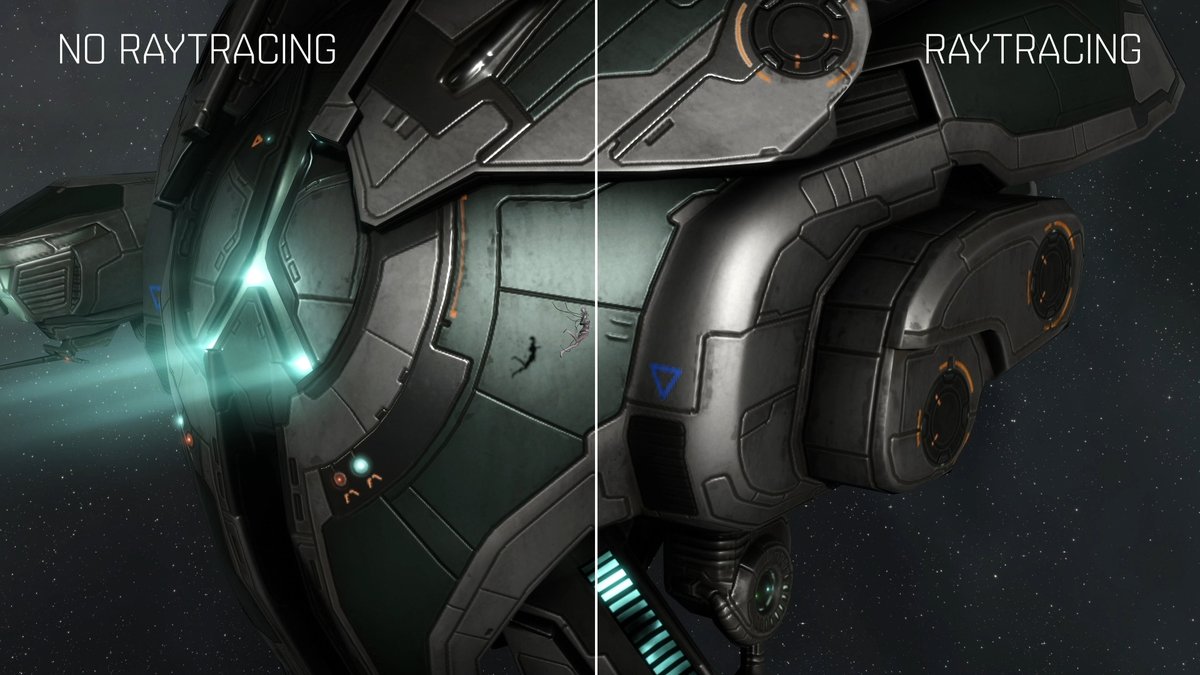
Mortal Shell II Beta - Native TSR vs DLSS Performance. Improved image quality and nearly 80% performance increase when using DLSS Performance! DLSS FTW 😀

37,554 views • 1 month ago •via X (Twitter)

0 Comments

No comments available

Comments from the original post will appear here

Related Videos

Microsoft presents Windows Agent Arena Evaluating Multi-Modal OS Agents at Scale discuss: Large language models (LLMs) show remarkable potential to act as computer agents, enhancing human productivity and software accessibility in multi-modal tasks that require planning and reasoning. However, measuring agent performance in realistic environments remains a challenge since: (i) most benchmarks are limited to specific modalities or domains (e.g. text-only, web navigation, Q&A, coding) and (ii) full benchmark evaluations are slow (on order of magnitude of days) given the multi-step sequential nature of tasks. To address these challenges, we introduce the Windows Agent Arena: a reproducible, general environment focusing exclusively on the Windows operating system (OS) where agents can operate freely within a real Windows OS and use the same wide range of applications, tools, and web browsers available to human users when solving tasks. We adapt the OSWorld framework (Xie et al., 2024) to create 150+ diverse Windows tasks across representative domains that require agent abilities in planning, screen understanding, and tool usage. Our benchmark is scalable and can be seamlessly parallelized in Azure for a full benchmark evaluation in as little as 20 minutes. To demonstrate Windows Agent Arena's capabilities, we also introduce a new multi-modal agent, Navi. Our agent achieves a success rate of 19.5% in the Windows domain, compared to 74.5% performance of an unassisted human. Navi also demonstrates strong performance on another popular web-based benchmark, Mind2Web. We offer extensive quantitative and qualitative analysis of Navi's performance, and provide insights into the opportunities for future research in agent development and data generation using Windows Agent Arena.

AK

19,684 views • 1 year ago

xAI isn't playing around. They just released the Grok Imagine API, a unified video + image generation toolkit, and it's already sitting at #1 on the Artificial Analysis Video Arena for both Text-to-Video AND Image-to-Video. It's beating: ● Google's Veo 3.1 & Veo 3 ● OpenAI's Sora 2 ● Runway Gen-4.5 ● Kling 2.5 Turbo The Numbers Don't Lie: ● 64.1% win rate against Runway Aleph in blind human evaluations ● 57% win rate against Kling o1 ● Best-in-class latency. Sub-20 second generation for 720p, 8-second videos. (up to 15-second video) ● Native audio generation baked right into video output (dialogue, music, sound effects, all synced) What Makes It Different It's built for real creative workflows: ✅ Text-to-video AND image-to-video in one API ✅ Video editing with prompt-based controls (add/remove objects, restyle scenes) ✅ Camera controls: zoom, pan, timelapse, pull-back ✅ Style transfers: cyberpunk, watercolor, anime, you name it ✅ Performance animation: map your movements onto characters ✅ Native audio-video sync (no post-production needed) Why the focus on speed and cost? The partner feedback that shaped this: "Quality alone isn't enough if latency and cost make iteration painful." So xAI optimized for all three. Speed. Cost. Quality. Already Integrated With: ● fal. ai ● ComfyUI ● InVideo ● Flora ● HeyGen xAI went from underdog to chart-topper. The Grok Imagine API is fast, affordable, and genuinely production-ready. If you're building anything with AI video, this just became the one to beat.

tetsuo

18,325 views • 5 months ago

OpenClaw setup made me $23,472 Literally overnight my $100 turned into $2,411 Average bot win rate 71% Copytrade: Here is the full strategy: The system builds automated workflows for trading by turning domain expertise into structured skills that activate automatically when specific market conditions appear Skill architecture Each skill is a modular package that includes instruction scripts and reference data This allows the system to apply specialized workflows without needing manual input for every trade Progressive context loading Skills use a three layer structure Only minimal metadata loads at first Full instructions historical data and supporting resources load only when required This reduces resource usage while keeping advanced trading capability Trigger detection Skills activate automatically when market conditions match predefined triggers such as volatility levels orderflow behavior or news sentiment This ensures the right workflow is used at the right time without manual action Workflow execution Once activated each skill runs a predefined multi step process including Real time price tracking and order book analysis Factor generation and backtesting Signal aggregation from machine learning models news sentiment and orderflow Risk assessment and capital allocation Trade execution with retries and position splitting Consistency and reliability All workflows are embedded directly into the system which ensures consistent execution instead of random decision making Every factor signal and risk rule is applied in a structured way Testing and iteration Skills are continuously improved using historical backtesting simulated trading and live performance tracking to maintain reliability in real market conditions Automation edge Instead of creating new strategies every time the system repeatedly uses optimized workflows This reduces complexity increases consistency and scales performance across thousands of trades Performance snapshot Started one month ago with $500 Current daily profit $2,300 per day Morning profit today $71,452 The system runs fully autonomously constantly scanning markets generating signals auditing trades managing risk and executing orders to maximize compounding returns

winkle.

44,158 views • 3 months ago

“Everyone wants to win — until they realize how many losses it takes.” October has been one of the toughest months for me (and likely for some of you), especially when comparing LoD stops based sizing swing traders vs. % stops based sizing position traders. I’ve had 16 straight losses — but each one was small, contained, and the streak was fully within the expected variance range of a 30% win rate. While it can be challenging for some of us, the key to navigating this, both mentally and emotionally, lies in accepting uncertainty through predefined risk management, where every trade has a clearly defined pain threshold. Your dollar-value tolerance should never trigger emotional reactions or push you off your intended plan. By acknowledging that losses are part of the process, we enter each trade with humility — assuming we may be wrong until proven right. The market must prove and continue to prove the validity of our thesis. Start small, and let your risk grow only as your consistency and performance justify it. I always advocate using a fixed % risk relative to your latest net realized equity. Don’t increase risk just because you’ve had a few good trades — risk should only expand when it’s truly earned from realized profitable performance. Avoid the illusion that everyone wins in trading. The real objective is not just to make gains, but to preserve them. True risk management goes far beyond setting stop losses — it means being proactive enough to cut size when the market proves you wrong. In the end, the trader who manages losses best will always outlast the rest. “The best loser is the long-term winner.” - Phantom of the Pit

Jeff Sun, CFTe

109,311 views • 8 months ago

Crafted this one by turning a movement sheet as a reference to animate the dance using ChatGPT Image 2.0 and Seedance 2.0 on Yapper GPT Image 2 Prompt; K-Pop Dance 16-Step Instruction Sheet (4×4 Grid) [VISUAL STYLE] High-end K-pop choreography guide in monochrome grayscale Crisp, studio-lit composition with strong contrast Modern, editorial + performance aesthetic Clean white background, no distractions [GRID LAYOUT, STRICT] 4×4 grid (16 equal panels) Thin black divider lines Each panel clearly numbered 1–16 Top-left: Step number + short title Bottom-left: 3–4 short instruction lines Overlay: arrows + motion guides (curved, straight, circular) [CHARACTER] Korean female dancer (K-pop idol look) Slim, athletic build Long styled hair (soft waves or straight, dynamic movement) Confident, expressive K-pop performance energy Same character across all 16 panels (consistent face and proportions) [WARDROBE K-POP STYLE] Fitted crop top (stylish, performance-ready) High-waisted loose-fit jeans (street dance vibe) Sneakers Outfit should feel trendy, idol-stage inspired Fabric reacts naturally to motion (subtle folds, movement) 🔢 [16 DANCE STEPS, SEQUENCE FLOW] Starting Pose Step Touch Right Step Touch Left Hip Sway Combo Body Roll Down Back Step Sweep Quarter Turn Pivot Hair Flip & Pose Side Step Drag Cross Behind Unwind Body Wave Up Hip Circle Step Lock Step Arm Sweep Pose Chest Pop & Hit Final Pose [PANEL STRUCTURE, EACH FRAME] Center: full-body pose (clear choreography position) Bottom-left: short bullet instructions (clean typography) Motion arrows showing direction, spins, and flow Emphasize rhythm, weight shift, and sharp K-pop accents [MOTION STYLE] Mix of sharp hits + smooth transitions (K-pop signature) Clean isolations (hips, chest, arms) Expressive poses with attitude [RENDER QUALITY] Ultra-detailed, high-resolution Sharp anatomy and pose clarity Smooth grayscale shading No blur, no distortion, no clutter [RESTRICTIONS] No background elements No extra characters No color (strict grayscale) Maintain clean instructional aesthetic

Johnn

21,403 views • 2 months ago