Video yükleniyor...

Video Yüklenemedi

Ana Sayfaya Dön

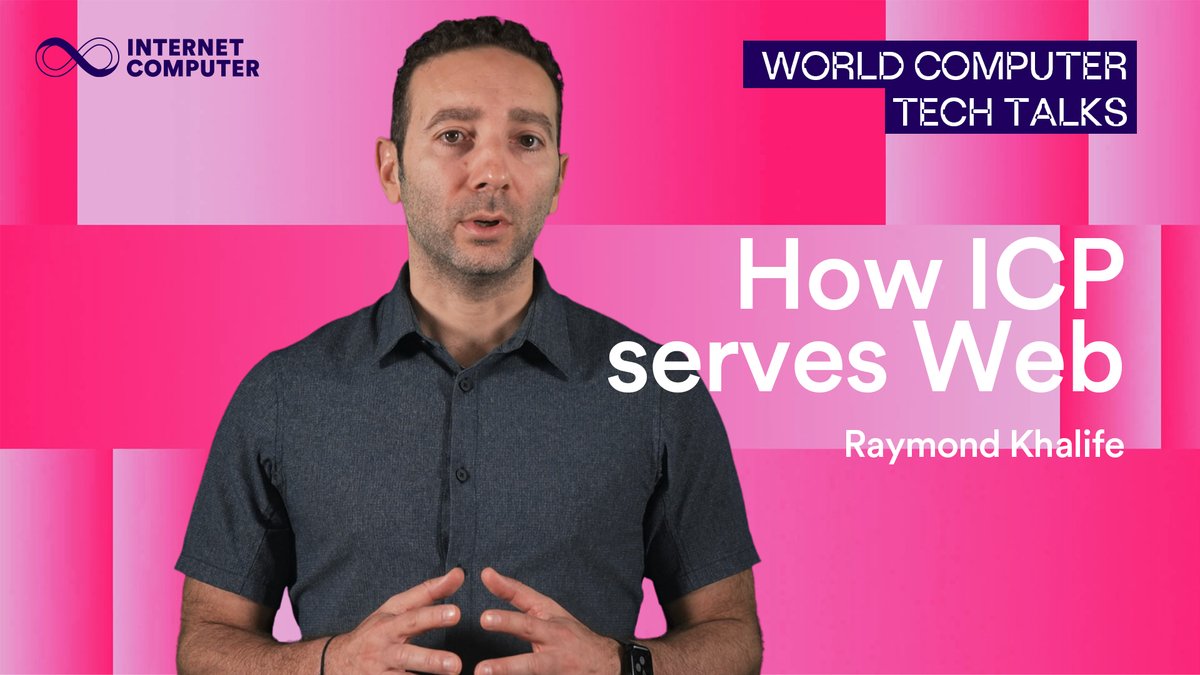
Most blockchains hit a storage limit. The Internet Computer scales past it. David Derler explains how the IC reaches: - 2 TB per subnet - 94 TB total replicated capacity - Fully onchain compute and data

39,157 görüntüleme • 8 ay önce •via X (Twitter)

0 Yorum

Yorum bulunmuyor

Orijinal gönderinin yorumları burada görünecek

Benzer Videolar

NEWS: BYD has launched its next-generation battery energy storage system. It has a unit capacity of 14.5 MWh, the highest globally to date. The energy storage system achieves an ultra-large capacity of 10 MWh within a space equivalent to a 20-foot container, BYD said. For a 1 GWh storage plant, it will cut the number of required units by more than half, reduce land use by one-third, and trim cell count by 76%, according to the manufacturer. It uses BYD’s self-developed 2,710 Ah Blade Battery cell, which the company claims is the largest energy storage cell in the world. "This next-generation cell delivers three times the capacity of conventional storage batteries, boasts a cycle life of over 10,000 cycles, and reduces the total lifecycle cost per kilowatt-hour to below $0.014 – a milestone that could reshape the economics of large-scale storage." BYD says it can cut project-level levelized costs (LCOS) by 21.7%. For a typical 1 GWh installation, total costs related to equipment procurement, transportation, and installation are expected to drop by around 30%. In addition, BYD has launched its new GC Flux grid-forming inverter solution, which covers the 2.5–10 MW capacity range. According to BYD, the inverter boasts a performance level approximately 38% higher than common industry standards and a maximum power density of 1,474 kW/㎡, which is around 130% above typical values in today’s market. The system provides an overload capacity of up to 3x for 10 seconds and reaches a peak efficiency of 99.35%.

Sawyer Merritt

384,738 görüntüleme • 10 ay önce

For anyone trying to understand Bittensor from first principles, this lecture is a useful place to start. Presented by Bittensor co-founder const. Learn Bittensor > Start with Bitcoin, distributed systems, incentives, > How Bitcoin leads to Bittensor Subnets coordinating AI infrastructure. Topics: // Start - Bitcoin as more than a digital currency // Risks of AI centralization + closed systems // "The incentive computer" // How Bittensor subnets work (mining, validating) // How distributed AI infrastructure could scale globally // Impact on students, builders & future founders Recorded at the National University of Singapore Computer Science Club. NUS Computing Chapters - Bitcoin, AI, and Bittensor - Bitcoin history and decentralization - AI changes how engineers work - The danger of centralized AI power - Why most crypto visions fail - Bitcoin as the world’s largest compute network - Bitcoin as a market for compute - The idea of an “incentive computer” - Bitcoin compared to Bittensor - Classroom example of decentralized scoring - A simple subnet example - SN62 :: Ridges AI | SN62 SWE agents - SN3 templar :: Distributed AI Training - SN52 lium.io :: GPU rentals on Bittensor 128 subnets, some examples Why this matters for the future of work Q&A Subnet examples mentioned @ SN64 - Serverless + TEE Compute :: Chutes SN8 - Prop firm Vanta Trading SN52 - AutoML :: Gradients SN62 - SWE agents :: Ridges AI | SN62 SN51 - Compute / GPU rental lium.io SN4 - TEE compute for enterprise :: Targon SN3 - 72B Distributed Training run :: templar SN41 - Prediction markets :: Almanac SN44 - Computer Vision Score - Subnet 44 SN68 - Drug discovery :: METANOVA SN18 - Weather Forecasting Zeus | SN 18 SN50 - Bitcoin prediction data :: Synthdata SN61 - Quantum computing :: qBitTensor Labs SN14 - Bitcoin mining pool :: TaoHash SN34 - Perp Dex :: 0xMarkets SN17 - 3D model generation :: 404 SN33 - Data analytics :: ReadyAI SN19 - [Since relaunched] RPC infrastructure :

Openτensor Foundaτion

1,173,212 görüntüleme • 4 ay önce