Video wird geladen...

Video konnte nicht geladen werden

Zur Startseite

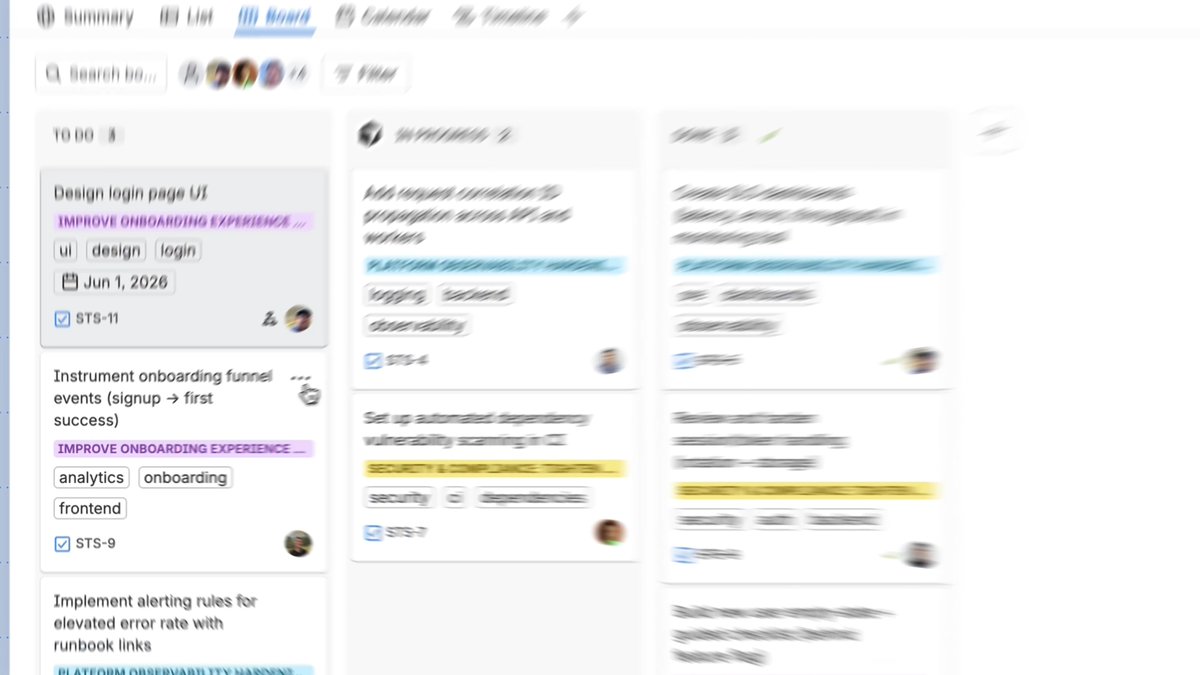
Most documentation rots because it’s expensive to maintain and easy to ignore. Software Factory is documentation-first so teams can describe systems in English and let agents compile that intent into code. It detects drift on every code push and keeps documentation synchronized with reality. Context stays alive. Agents keep...

197,716 Aufrufe • vor 6 Monaten •via X (Twitter)

0 Kommentare

Keine Kommentare verfügbar

Kommentare vom Original-Post werden hier angezeigt

Ähnliche Videos

New short course: Building Code Agents with Hugging Face smolagents! Learn how to build code agents in this course, created in collaboration with Hugging Face, and taught by Thomas Wolf, its co-founder and CSO, and m_ric, Hugging Face’s Project Lead on Agents. Tool-calling agents use LLMs to generate multiple function calls sequentially to complete a complex sequence of tasks. They generate one function call, execute it, observe, reason, and decide what to do next. Code agents take a different approach. They consolidate all these calls into a single block of code, letting the LLM lay out an entire action plan at once, which can be executed efficiently to provide more reliable results. You’ll learn how to code agents using smolagents, a lightweight agentic framework from Hugging Face. Along the way, you’ll learn how to run LLM-generated code safely and develop an evaluation system to optimize your code agent for production. In detail, you’ll learn: - How agentic systems have evolved, gaining greater levels of agency over time—and why code agents are a next step. - How code agents write their actions in code. - When code agents outperform function-calling agents. - How to run code agents safely in your system using a constrained Python interpreter and sandboxing using E2B. - To trace, debug, and assess the code agent to optimize its behaviours for complex requests. - How to build a research multi-agent system that can find information online and organize it into an interactive report. By the end of this course, you’ll know how to build and run code agents using smolagents, and deploy them safely with a structured evaluation system in your projects. Please sign up here!

Andrew Ng

127,724 Aufrufe • vor 1 Jahr

Sam Altman says soon everyone will be a software engineer and he might be right Sam Altman just casually dropped one of the biggest takes about the future of work and software and people are still sleeping on it. Here’s the core idea, and it’s honestly wild: Natural language is the new syntax You won’t write code. You’ll describe what you want in plain English. Talking to computers becomes the default programming interface. The end of the “army of developers” No product managers writing specs. No giant dev teams for v1. You describe the app and the AI builds it. The overnight app You explain your idea, go to sleep, and the AI spends the night writing, testing, and wiring everything together. You wake up and the product exists. Coffee optional but recommended ☕ Autonomous software agents For complex systems, AI agents live inside the codebase itself. They crawl the repo, fix bugs, write tests, refactor code, and commit changes on their own. A digital workforce that never sleeps Not copilots. Not autocomplete. Actual agents doing ongoing engineering work without supervision. Beyond coding: total company automation Once software is automated, the same logic applies to operations, planning, and even parts of management. Code is just the first domino. If this plays out, “learning to code” becomes less important than learning to think clearly, describe intent, and spot good ideas. Question for you 👀 If everyone can build software, what actually becomes scarce: ideas, taste, or execution?

VraserX e/acc

70,659 Aufrufe • vor 7 Monaten

Before software engineers even begin writing code, they have to set the stage of the entire development process. This process requires engineers to make complex tradeoffs between requirements, system design, and implementations details. Current IDEs that rely on AI features, like chat and inline coding, can help engineers get the job done quickly on small development tasks. Still, engineers spend much more time on larger projects—even after the initial code is generated—by conducting rigorous testing and creating documentation. This is where today’s AI IDEs can do more to accelerate the development lifecycle—and this is why we built Kiro. Kiro is an AI IDE that helps you go from prototype to production with spec-driven development and agent hooks. From simple to complex tasks, Kiro works alongside you to turn prompts into detailed specs, then into working code, docs, and test so what you build is exactly what you want and ready to share with your team. After a developer builds the code with Kiro, Kiro’s agent hooks help engineers solve challenging problems and automate tasks like generating documentation and unit tests. Kiro brings structure and mature engineering practices to AI coding, so you can go from concept to application while being in the driver’s seat every step of the way. Kiro is free during preview, and supports Mac, Windows, and Linux, and most popular programming languages. We're excited for you to try it out and let us know what you think ➡️

Swami Sivasubramanian

154,343 Aufrufe • vor 1 Jahr